Posts tagged with: Divorce Car Financing

Vehicle Repair Finance After Separation in BC | Sk...
Facing vehicle repair financing during a marital separation in BC? We get it. Our process skips the...
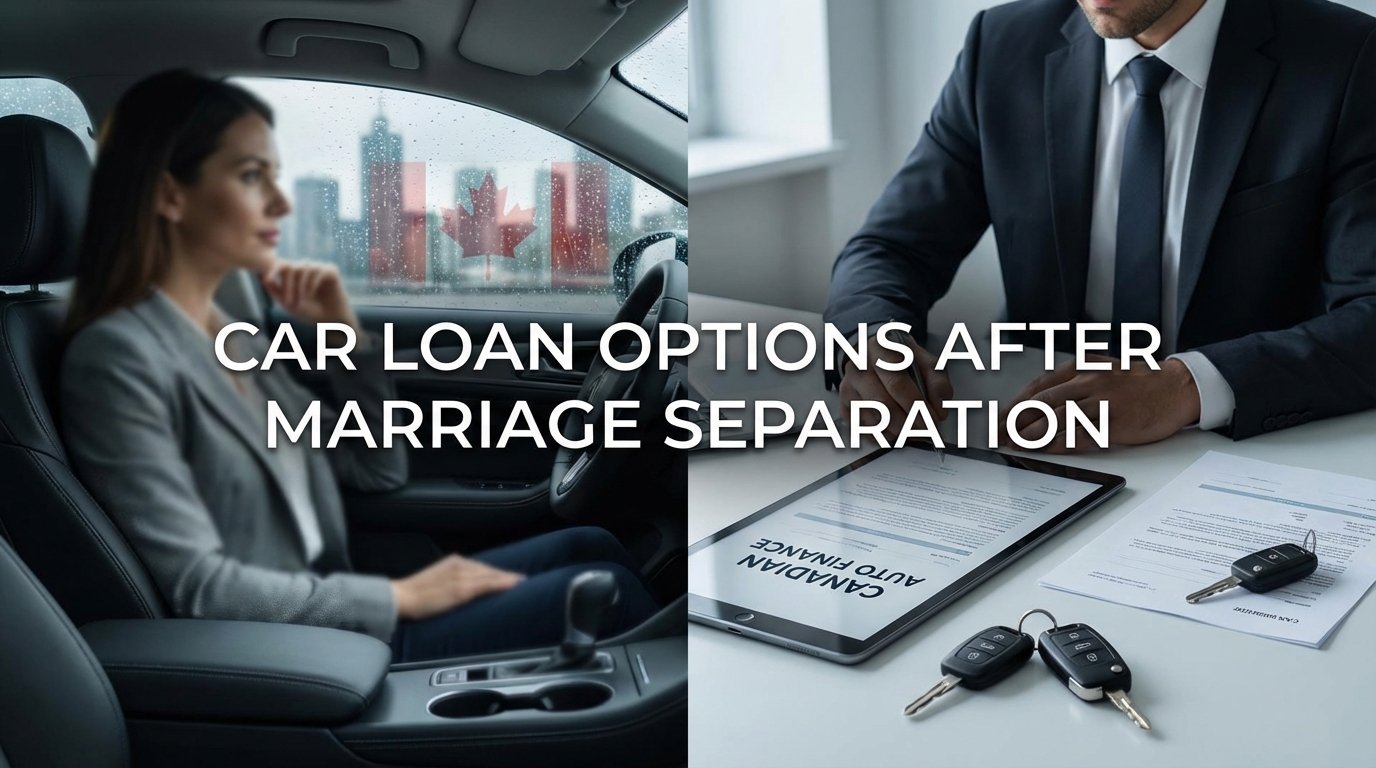
Splitting Assets? Car Loan Options After Marriage...
Financially uncoupling? Don't let it stall your life. We specialize in car loan options after marria...
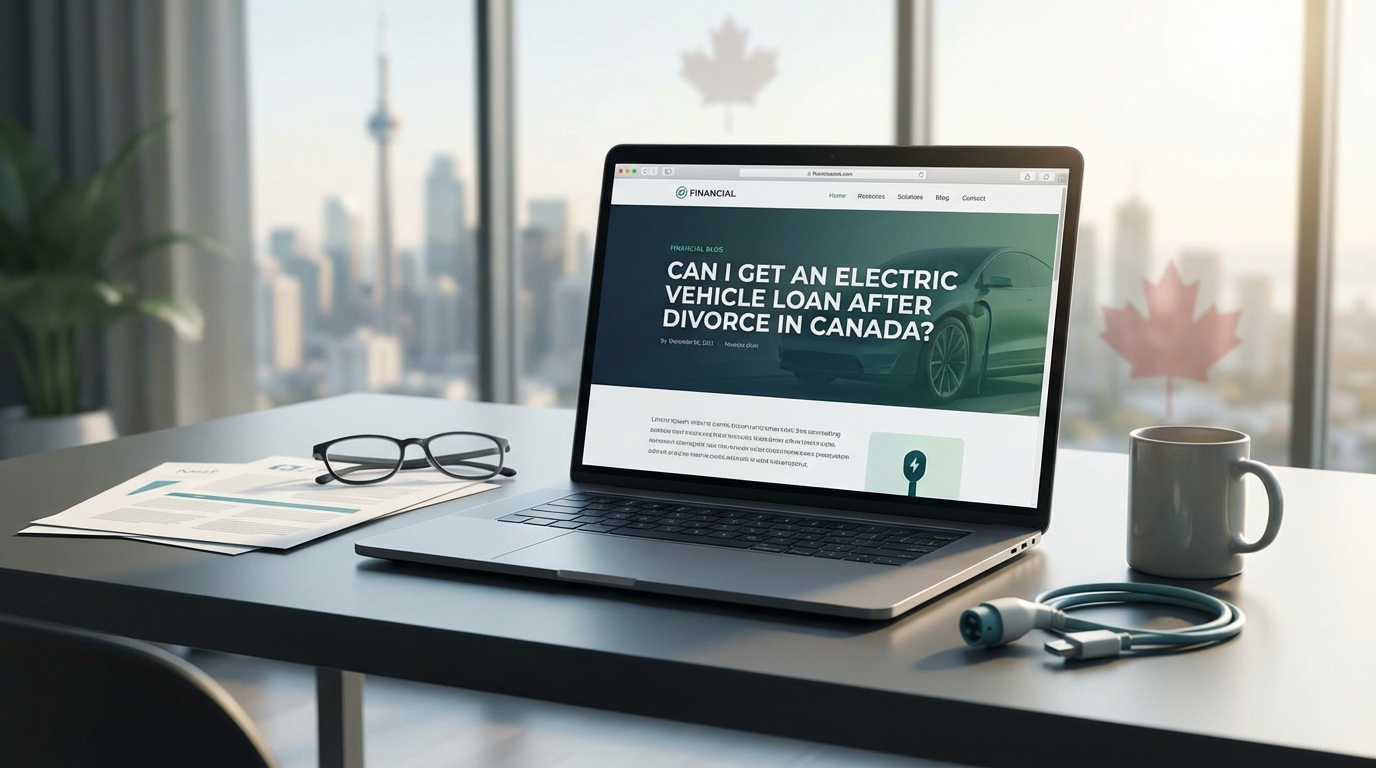
EV Loan After Divorce? Your 2026 Approval Guide
Finalized your divorce? Getting an electric vehicle loan is your next step forward. Our 2026 guide s...

Ontario Divorcees: Your Assets Outrank Your Ex. Dr...
High net worth divorce in Ontario? Secure private auto credit solutions that value your assets, not...

Your Ex Can't Block Your New Ride. Trade Joint Car...
Navigating a separation? Wondering 'Can I trade in a jointly owned car during separation'? SkipCarDe...

Ontario Divorcees: Your Car Loan Just Signed Its O...
Find the best car loan options for divorcees without spousal support Ontario. Drive confidently into...
Divorce & Your Car Loan: A Canadian Guide to Auto Finance During Separation
Divorce is undoubtedly one of life's toughest challenges, bringing with it a whirlwind of emotional, legal, and financial decisions. Among the many assets and debts that need to be sorted, your car loan can often become a point of contention. It's a common scenario, and navigating your auto financing during a separation requires careful thought to protect your credit and ensure a smooth transition. Let's break down your options from a Canadian perspective.
Understanding Joint Car Loans During Divorce
If you and your soon-to-be ex-partner bought a car together, chances are you have a joint car loan. This means both of your names are on the loan agreement, and critically, both of you are legally responsible for the debt. Even if your divorce agreement states that one person will take over the payments, the lender still views both of you as equally liable until the loan is refinanced or paid off. This is a crucial distinction: a divorce decree doesn't automatically remove someone from a loan in the eyes of the bank.
Option 1: One Partner Keeps the Car and the Loan
Often, one person wants to keep the vehicle. If this is the case, there are a few things to consider:
- Lender Approval is Key: The person keeping the car will likely need to qualify for the loan on their own. This usually means refinancing the existing loan solely in their name. The lender will assess their income, debt-to-income ratio, and credit score to ensure they can manage the payments independently.
- Buy-Out Clauses: If there's equity in the car (meaning the car is worth more than what's owed), the person keeping the car might need to 'buy out' the other person's share of that equity as part of the divorce settlement.
- Impact on Credit: The person being removed from the loan will see a positive impact, as that debt is no longer on their credit report. The person taking on the loan will have the full debt reflected on theirs.
Option 2: Selling the Car
Sometimes, the cleanest solution is to sell the vehicle. Here's how that usually works:
- Pay Off the Loan: The proceeds from the sale are used to pay off the outstanding car loan. This frees both parties from the debt.
- Dealing with Negative Equity: If you owe more on the car than it's worth (this is called 'negative equity' or being 'upside down' on your loan), you'll both need to cover the difference out of pocket. This can be a significant cost and should be factored into your financial separation agreement.
- Splitting Equity: If there's money left over after paying off the loan, you'll divide those funds according to your divorce agreement.
Option 3: Refinancing the Car Loan
Refinancing is often the preferred route when one person wants to keep the car but remove the other from the loan. It involves taking out a new loan, usually with a new interest rate and terms, to pay off the old one. The new loan is then solely in the name of the person keeping the car.
- Protecting Credit: This is vital for the person being removed from the loan. Once their name is off the refinanced loan, they are no longer responsible for payments, protecting their credit score from any future missed payments by their ex-partner.
- New Terms: Refinancing can also be an opportunity to secure a lower interest rate if your credit has improved, or to adjust the loan term to make payments more manageable.
Option 4: Trading In the Car
If both partners need new vehicles or simply want a fresh start, trading in the existing car towards a new purchase is an option. However, be cautious:
- Negative Equity Roll-Over: If there's negative equity, it can sometimes be 'rolled over' into the new car loan. This means you'll be paying interest on money you owe from the old car, making your new loan more expensive and potentially longer.
- Joint Responsibility: If you trade in a jointly-owned car, both parties typically need to agree and sign off on the transaction.
The Importance of Your Credit Score
During a divorce, protecting your credit score is paramount. Any missed or late payments on a joint car loan will negatively impact both partners' credit histories, making it harder to secure future loans for a home, another car, or even a credit card. Ensure that payments continue to be made on time, even if it means one person covers the full payment temporarily while options are being sorted out.
Legal Advice is Key
While we're here to offer financial guidance, it's crucial to remember that this article does not constitute legal advice. You absolutely need to consult with a family lawyer who specialises in Canadian divorce law. They can help you draft a comprehensive divorce agreement that outlines who is responsible for the car and its loan, and how any equity or negative equity will be handled. This legal agreement is your protection, even if the lender's records still show both names.
Moving Forward: Building Your Credit Post-Divorce
Once the car loan is sorted, whether you've refinanced, sold, or kept the vehicle, focus on rebuilding your financial independence. Continue to make all your payments on time, monitor your credit report regularly (you can get a free copy from Equifax and TransUnion in Canada), and consider secure credit cards or small loans if you need to build up your credit history independently. A strong credit score is a powerful tool for your future financial stability.
