New to Vancouver? Your Global Bank Account is Your Credit Score.
Table of Contents
- Key Takeaways: Your Blueprint for High-Value Vehicle Financing in British Columbia
- I. Deconstructing the Canadian Credit System: Why 'No History' Isn't 'No Worth'
- Understanding the Pillars: Equifax and TransUnion in Canada
- The Newcomer's Catch-22: Needing Credit to Get Credit
- Why Traditional Banks Hesitate: Risk Aversion and Lack of Data
- II. Your Global Financial Footprint: The Foundation of Your 'New' Canadian Credit Score
- A. Beyond the Border: Leveraging International Bank Relationships for Vancouver
- B. The Weight of Your Assets: Proof of Funds and Collateral Power in British Columbia
- C. International Credit Reports & References: Bridging the Information Gap
- III. Navigating Vancouver's High-Value Vehicle Market as a New Permanent Resident
- A. The Vancouver Luxury Car Scene: What to Expect
- B. Dealerships vs. Direct Lenders: Where to Start Your Search in British Columbia
- C. Building a Local Network: Advisors Who Understand Newcomers
- IV. Crafting Your Application: The Art of Presenting Your Global Worth for a Loan
- A. The 'Newcomer Package': What Lenders *Really* Want to See
- B. Understanding Loan Types for High-Value Vehicles: Secured vs. Unsecured vs. Leasing
- C. Interest Rates, Fees, and the Full Cost of Financing in British Columbia
- V. Beyond the Loan: Smart Ownership Strategies in British Columbia
- A. Insuring Your High-Value Vehicle as a New Permanent Resident in Vancouver
- B. Building Your Canadian Credit Score, One Payment at a Time
- C. Maintenance and Resale Value Considerations for High-Value Vehicles in Vancouver
- VI. Your Next Steps to Approval: A Strategic Blueprint for Success
- Step 1: Consolidate Your Global Financial Proof
- Step 2: Establish Your Canadian Financial Presence
- Step 3: Research Vancouver's Dealerships and Lenders
- Step 4: Prepare a Comprehensive 'Newcomer Application Package'
- Step 5: Be Ready to Negotiate and Ask Questions
- Step 6: Plan for Post-Purchase Credit Building
- VII. Frequently Asked Questions about Financing High-Value Vehicles as a New Permanent Resident in Vancouver
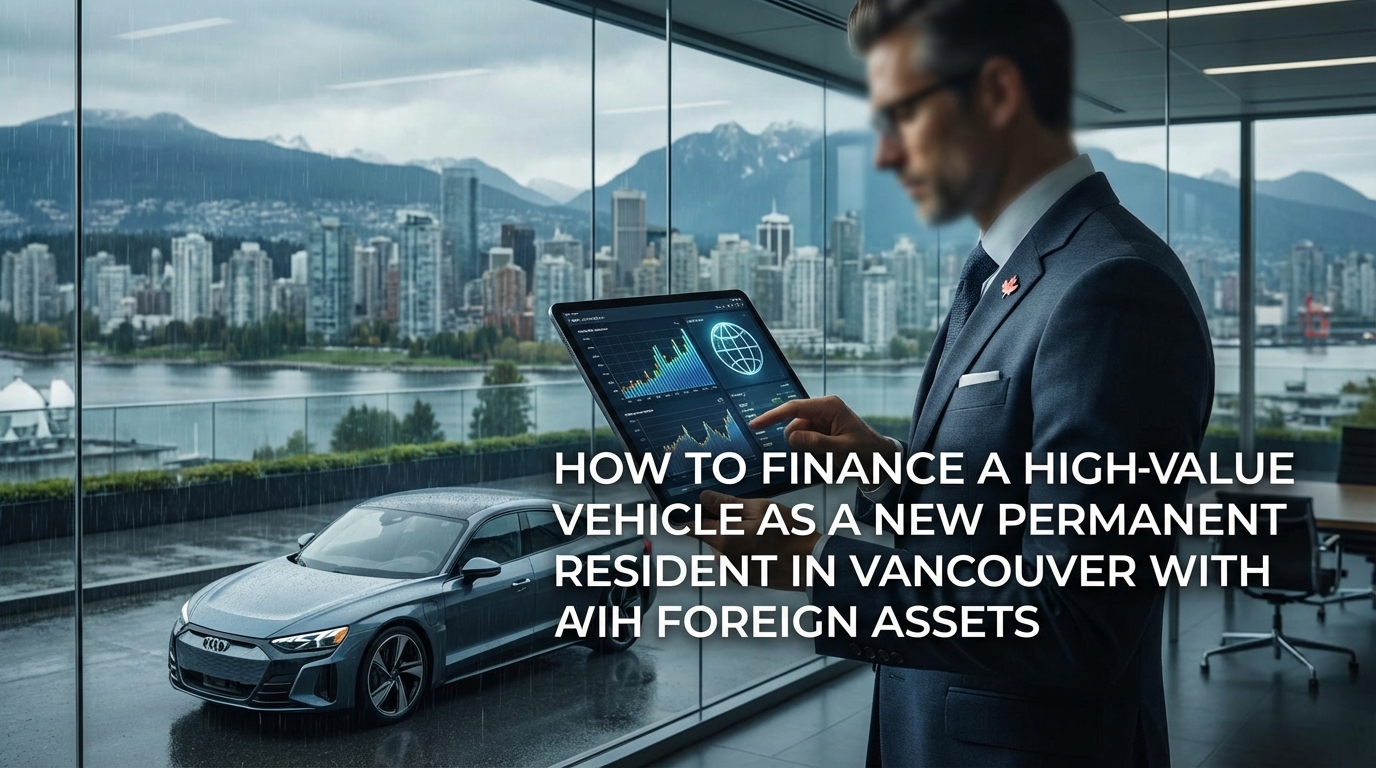
Welcome to Vancouver, the land of stunning vistas, vibrant culture, and… a credit system that doesn't know you yet. You've meticulously built a life, accumulated wealth, and established a strong credit history abroad. Now, the question arises: how do you translate that impressive global financial footprint into financing a high-value vehicle in Canada, specifically in the dynamic market of Vancouver, British Columbia? This deep-dive article cuts through the red tape, dispelling myths and showing you precisely how your international banking relationships and foreign assets can effectively become your new Canadian credit score, paving the way for your desired vehicle.
Key Takeaways: Your Blueprint for High-Value Vehicle Financing in British Columbia
- Your international banking history and significant foreign assets are powerful, underutilized tools that can substitute for a nascent Canadian credit score.
- Secured loans, leveraging your existing wealth, and exploring specialized lenders are often the most accessible pathways for new permanent residents seeking high-value vehicle financing.
- Strategic preparation, initiated both before and immediately after your arrival in Vancouver, British Columbia, is absolutely critical for a smooth application process.
- Vancouver's unique luxury car market presents specific opportunities and considerations that differ from other major Canadian cities; understanding these nuances is an advantage.
- You can proactively begin building a robust Canadian credit history simultaneously with your first major purchase, like a high-value vehicle, setting a strong financial foundation.
I. Deconstructing the Canadian Credit System: Why 'No History' Isn't 'No Worth'
Understanding the Pillars: Equifax and TransUnion in Canada
In Canada, your creditworthiness is primarily assessed by two major credit bureaus: Equifax and TransUnion. These agencies collect data from lenders, utility companies, and other creditors to compile your credit report, which includes details of your borrowing and repayment history. From this report, a three-digit credit score is generated, typically ranging from 300 (poor) to 900 (excellent). This score acts as a quick snapshot for lenders, indicating your reliability as a borrower. Every credit card you open, every loan you take out, every bill you pay on time (or miss) contributes to this score and report. The critical distinction for new permanent residents is that these Canadian bureaus do not automatically import or recognize your credit history from your home country. Even if you had a perfect credit score in London, England, or Sydney, Australia, to a Canadian lender, you essentially have 'no history' when you first arrive. This isn't a judgment on your financial character, but rather a limitation of cross-border data sharing.
The Newcomer's Catch-22: Needing Credit to Get Credit
This absence of a Canadian credit history creates a perplexing dilemma, often referred to as the 'newcomer's catch-22.' To obtain credit products like a credit card, car loan, or mortgage, you need a demonstrable history of managing credit responsibly. Yet, to build that history, you first need access to those very credit products. For high-value vehicle financing, this paradox becomes even more pronounced. Lenders are inherently more cautious when substantial sums are involved, and without a Canadian track record, you may find traditional avenues closed off or offered at less favourable terms. This can be a source of significant frustration for individuals who have spent decades building impeccable financial reputations elsewhere, only to feel like they are starting from scratch in a new country. Understanding this fundamental challenge is the first step towards strategically overcoming it.
Why Traditional Banks Hesitate: Risk Aversion and Lack of Data
Major Canadian banks, while offering a wide range of financial products, tend to be quite conservative in their lending practices, especially for high-value loans. Their risk assessment models are heavily reliant on predictable data points – primarily your Canadian credit score and history, alongside verifiable Canadian income and employment. When these key data points are absent or minimal, as is the case for most new permanent residents, the bank perceives a higher level of risk. Without a track record of timely payments within Canada, banks lack the comfort of empirical evidence to support a substantial loan. This isn't personal; it's a systemic approach to managing risk across millions of clients. They prioritize applicants who fit neatly into their established lending criteria, making it crucial for newcomers to present alternative forms of assurance that speak to their global financial strength. For more insights into navigating challenging credit situations, you might find our article Your 'Bad Credit' Isn't a Wall. It's a Speed Bump to Your New Car, Toronto helpful, though focused on a different city.
Pro Tip: Don't just apply blindly. Understand the 'why' behind potential rejections to strategically tailor your approach and documentation for subsequent attempts. Each "no" is an opportunity to refine your presentation of global worth.
II. Your Global Financial Footprint: The Foundation of Your 'New' Canadian Credit Score
A. Beyond the Border: Leveraging International Bank Relationships for Vancouver
Your existing relationships with global banks can be an incredibly powerful asset when establishing yourself financially in Vancouver, British Columbia. Many international banks, such as HSBC, Citibank, and even Canadian giants like RBC, TD, and Scotiabank, have significant global presences. If you hold accounts or have a long-standing relationship with them in your home country, these institutions often offer specialized "newcomer programs" or "international banking services" designed to facilitate your transition to Canada. They can sometimes leverage your foreign credit history and account activity to provide you with Canadian credit products, including credit cards and even car loans, much sooner than if you started from scratch with a purely domestic bank. The process usually involves transferring your banking relationship, providing documentation of your accounts, and sometimes a letter of introduction from your foreign branch. This can bridge the credit gap by providing a Canadian lender with an established financial narrative. For instance, HSBC Premier clients might find it easier to open Canadian accounts and access credit based on their global standing. Documents that can be shared internationally include detailed statements showing consistent savings, investment portfolios, and proof of income over several years.
B. The Weight of Your Assets: Proof of Funds and Collateral Power in British Columbia
Your substantial foreign assets are perhaps your strongest bargaining chip. While foreign property rarely serves as direct collateral for a car loan in Canada, its existence, along with other liquid or easily verifiable assets, paints a clear picture of your financial stability and capacity to repay a loan. This includes detailed bank statements from your home country (preferably translated and notarized if not in English or French), comprehensive investment portfolios (stocks, bonds, mutual funds), property deeds, and even proof of business ownership or significant shareholdings. These documents demonstrate that you have significant wealth beyond your immediate Canadian income, reducing the perceived risk for lenders. You can use these assets to make a substantial down payment on a high-value vehicle, which is often a requirement for newcomers. Alternatively, these funds can be used to secure a Guaranteed Investment Certificate (GIC) with a Canadian bank, which then serves as collateral for a secured car loan – a very accessible pathway for newcomers. When converting foreign currency for large purchases in British Columbia, be mindful of exchange rates and transfer fees. Consider using specialized foreign exchange services (like Wise, KnightsbridgeFX, or OFX) which often offer more competitive rates than traditional banks for large transfers.
C. International Credit Reports & References: Bridging the Information Gap
While Canadian credit bureaus don't directly import foreign credit data, official international credit reports and letters of reference can provide valuable supplementary information. Services like Nova Credit, while not universally integrated in Canada, aim to translate foreign credit histories into a format recognizable by Canadian lenders. More commonly, obtaining official letters of reference from your foreign banks or financial institutions is a crucial step. These letters should be on official letterhead, signed by a bank manager, and explicitly detail: your account tenure, the types of accounts held (chequing, savings, credit cards, loans), your credit limits, and most importantly, a clear statement confirming your excellent repayment history with no defaults or late payments. Specific details about the highest credit limits managed and the promptness of payments are highly impactful. Such documentation, when presented alongside your Canadian application, can significantly strengthen your case by giving a Canadian lender a qualitative understanding of your financial responsibility, even in the absence of a Canadian score.
Pro Tip: Initiate contact with your international bank's Canadian branch before you even land in British Columbia. Pre-arranging your financial transfers and relationship can significantly expedite your financing process, allowing you to hit the ground running.
III. Navigating Vancouver's High-Value Vehicle Market as a New Permanent Resident
A. The Vancouver Luxury Car Scene: What to Expect
Vancouver boasts one of Canada's most vibrant and discerning luxury and high-value vehicle markets. The city's affluent population, combined with a strong appreciation for quality and performance, drives demand for premium brands. You'll frequently see a wide array of Mercedes-Benz, BMW, Audi, Porsche, Land Rover, Lexus, and Tesla vehicles gracing the streets, from downtown Yaletown to the exclusive neighbourhoods of West Vancouver. Compared to other major Canadian cities like Toronto, Ontario, or Calgary, Alberta, Vancouver's market often features a higher concentration of certain luxury models and a strong demand for electric and hybrid high-end vehicles, reflecting the region's environmental consciousness. Pricing can be competitive, but demand for popular models can also lead to higher sticker prices or longer wait times for specific configurations. Understanding these local trends – which models hold their value best, what the typical depreciation looks like for luxury cars in this market, and the availability of specialized servicing – is a significant advantage for any newcomer looking to make an informed purchase.
B. Dealerships vs. Direct Lenders: Where to Start Your Search in British Columbia
When seeking financing for a high-value vehicle as a new permanent resident in British Columbia, you generally have two primary avenues: through a dealership's finance department or by approaching direct lenders. Each has its advantages. Dealerships, especially those specializing in luxury brands, often have established relationships with a network of lenders, including major banks, captive finance companies (like Mercedes-Benz Financial Services or BMW Financial Services), and specialized finance companies. Many of these have dedicated newcomer programs or are more accustomed to assessing applicants with non-traditional credit profiles, making them an excellent starting point. They can streamline the application process and potentially find lenders more willing to consider your global assets. On the other hand, approaching direct lenders like major Canadian banks, credit unions, or specialized finance brokers yourself allows you to shop around for the best rates. Local credit unions in British Columbia, such as Vancity or Coast Capital Savings, often offer more personalized service and may be more flexible in evaluating individual circumstances beyond a strict credit score. They might be more willing to understand your unique financial story as a newcomer. For those with less conventional income streams, our article Cash Income Only? That's Not a Problem, It's Your Car Loan, Vancouver provides further insights relevant to the local market.

C. Building a Local Network: Advisors Who Understand Newcomers
One of the smartest moves you can make as a new permanent resident in Vancouver is to build a strong local network of professional advisors. Connecting with financial advisors, mortgage brokers, and even immigration consultants who specialize in assisting newcomers can be invaluable. These professionals possess a deep understanding of the Canadian financial landscape and the unique challenges faced by recent immigrants. They can provide tailored advice on managing your finances, suggest the best strategies for leveraging your foreign assets, and often have direct connections to lenders or financial institutions that are more accommodating to newcomer applications. A knowledgeable advisor can help you structure your application strategically, ensuring all your compelling financial proof is presented effectively. They can also guide you on other essential financial steps, such as opening a Canadian bank account, obtaining a Social Insurance Number (SIN), and navigating tax implications related to your foreign assets. Their expertise can save you time, reduce stress, and significantly improve your chances of securing favourable financing for your high-value vehicle.
Pro Tip: Don't limit your search to just the 'Big Five' banks. Specialized lenders, credit unions, and even some luxury car dealerships have dedicated programs or more flexible criteria for high-net-worth newcomers in Vancouver. Explore all options.
IV. Crafting Your Application: The Art of Presenting Your Global Worth for a Loan
A. The 'Newcomer Package': What Lenders *Really* Want to See
When applying for a high-value vehicle loan as a new permanent resident, your goal is to present a comprehensive "newcomer package" that leaves no doubt about your financial stability and commitment. This package should meticulously combine both your newly established Canadian documentation and your robust foreign financial proof. Essential Canadian documents include your Permanent Resident (PR) Card, Confirmation of Permanent Residence (COPR), Social Insurance Number (SIN), a Canadian employment contract or offer letter (preferably from a reputable company), Canadian bank account statements (showing consistent activity, not just a recent opening deposit), utility bills, and a rental agreement or property deed (establishing stable residency in Vancouver). Supplement this with your carefully curated foreign financial documentation: detailed bank statements, investment portfolio summaries, property deeds from your home country, and any official letters of reference from foreign financial institutions confirming excellent credit history. Clarity, organization, and completeness are paramount. Ensure all foreign documents are translated into English or French by a certified translator and notarized if required by the lender. A well-prepared package demonstrates professionalism and reduces the administrative burden on the lender, making your application more appealing.
For individuals whose income might not come from a traditional pay stub, or who are self-employed, our guide Your Luxury Ride. No Pay Stub Opera. offers strategies for presenting alternative proof of income and assets, which can be highly relevant for high-value vehicle financing.
B. Understanding Loan Types for High-Value Vehicles: Secured vs. Unsecured vs. Leasing
Navigating the various financing options is key to securing your high-value vehicle. For newcomers, understanding the distinction between secured and unsecured loans, and the option of leasing, is crucial:
| Loan Type | Description | Pros for Newcomers | Cons for Newcomers | Typical Accessibility for Newcomers |
|---|---|---|---|---|
| Secured Car Loan | The vehicle itself (or another asset like a GIC) acts as collateral. If you default, the lender can seize the asset. | Higher approval rates, potentially lower interest rates, helps build Canadian credit. Leveraging foreign assets (e.g., via a GIC) makes this very accessible. | Risk of asset seizure if payments are missed. | Most Accessible: Especially with a substantial down payment or GIC collateral. |
| Unsecured Car Loan | No collateral is required. Approval is based solely on your creditworthiness and income. | No risk of losing assets beyond the vehicle itself. | Very difficult to obtain without an established Canadian credit history. Higher interest rates are common if approved. | Least Accessible: Rarely an option for high-value vehicles without Canadian credit. |
| Leasing | You pay to use the vehicle for a set period (e.g., 3-5 years) and kilometres, then return it or buy it out. | Lower monthly payments than financing, opportunity to drive a new car every few years, often simpler approval process for newcomers with good employment. Can build credit. | No ownership equity, mileage restrictions, wear-and-tear charges, costly to terminate early. | Moderately Accessible: Dealerships often have competitive lease programs for newcomers, especially for luxury brands. |
For new permanent residents, secured car loans are often the most accessible pathway, particularly if you can leverage your existing wealth through a substantial down payment or by using a GIC (Guaranteed Investment Certificate) as collateral. Leasing can also be a viable option, especially for high-value vehicles, as it often entails lower monthly payments and can be easier to qualify for with a strong employment offer in Canada. While unsecured loans are generally the most challenging to secure initially, your strategic use of foreign assets and a compelling newcomer package can significantly improve your chances.
C. Interest Rates, Fees, and the Full Cost of Financing in British Columbia
When financing a high-value vehicle as a new permanent resident in British Columbia, it's realistic to expect interest rates that might initially be higher than those offered to long-term residents with excellent Canadian credit scores. This is simply a reflection of the perceived higher risk due to your nascent credit history. However, your strong foreign asset base is a powerful bargaining chip. Be prepared to negotiate. Highlight your substantial down payment, your stable Canadian employment, and the comprehensive financial package you've assembled. Beyond the interest rate, be aware of various fees that can add to the total cost. These commonly include administrative fees, PPSA (Personal Property Security Act) registration fees in British Columbia (which registers the lender's interest in the vehicle), and potential charges for extended warranties or additional services. Always ask for a full breakdown of all costs. Do not just focus on the monthly payment; request the total cost of the loan over its entire term, including all interest and fees. This transparent view is essential for accurately comparing offers and avoiding hidden expenses. Understanding every component of the loan allows you to make an informed decision and potentially negotiate better terms.
Pro Tip: Always ask for the total cost of the loan over its entire term, not just the monthly payment. This transparent view helps you compare offers accurately and avoid hidden expenses, ensuring you understand the true financial commitment.
V. Beyond the Loan: Smart Ownership Strategies in British Columbia
A. Insuring Your High-Value Vehicle as a New Permanent Resident in Vancouver
Insuring your high-value vehicle in British Columbia involves specific steps, primarily through ICBC (Insurance Corporation of British Columbia), the province's mandatory public auto insurer. All vehicles registered in British Columbia require basic vehicle insurance through ICBC. For new permanent residents, securing this insurance can sometimes be more expensive initially, as ICBC's system primarily recognizes Canadian driving history. However, you can potentially reduce your premiums by leveraging your foreign driving history and claims records. Collect official driving abstracts, letters of experience, or claims history reports from your previous insurers in your home country. These documents, especially if translated and notarized, can help ICBC assess your driving experience and potentially grant you discounts. For luxury vehicles, beyond basic ICBC coverage, you'll likely want to consider private insurance top-ups. These specialized policies offer enhanced liability, collision, comprehensive, and loss of use coverage that goes beyond ICBC's basic offerings, providing crucial peace of mind for your significant investment. Researching these private options and their specific coverage for high-value vehicles in British Columbia is highly recommended.
B. Building Your Canadian Credit Score, One Payment at a Time
Securing your high-value vehicle loan is not just about getting approved; it's a golden opportunity to rapidly establish and improve your Canadian credit score. The paramount strategy is consistent, timely payments on your car loan. Every on-time payment reported to Equifax and TransUnion will contribute positively to your credit file. Simultaneously, continue to build your credit through other means: obtain a secured credit card (where you put down a deposit as your credit limit) and use it responsibly, making small purchases and paying the balance in full each month. Consider a small, short-term personal loan, again ensuring impeccable repayment. Ensure any utility bills or rental payments that are reported to credit bureaus are paid promptly. Regularly monitor your credit reports (you are entitled to a free copy annually from both Equifax and TransUnion) to check for accuracy and track your progress. Building a robust Canadian credit history strategically and consistently will open doors to more favourable financing terms for future purchases, be it another vehicle, a mortgage, or other credit products.
C. Maintenance and Resale Value Considerations for High-Value Vehicles in Vancouver
Owning a high-value vehicle in Vancouver comes with specific maintenance and resale value considerations. Researching specialized servicing for luxury brands is crucial. Vancouver has numerous authorized dealerships and independent garages with expertise in high-end vehicles, ensuring your car receives the proper care using genuine parts and trained technicians. Adhering to the manufacturer's recommended maintenance schedule is vital not only for performance and longevity but also for preserving the vehicle's resale value. High-value vehicles can depreciate rapidly, so making informed decisions about your vehicle choice, mileage, and maintenance is key. Factors like colour, trim level, and optional features can influence desirability in the secondary market. Furthermore, British Columbia's climate (rainy winters) and driving conditions (mountain roads, city traffic) can affect wear and tear, necessitating specific maintenance checks. Be aware of any specific environmental regulations in British Columbia that might impact vehicle modifications or ownership costs. Understanding these aspects before purchase will help you make a financially sound decision and protect your investment.
Pro Tip: Research the typical depreciation rates for your target vehicle in the Vancouver market before purchasing. High-value vehicles can depreciate rapidly, impacting your long-term financial planning and ensuring you're aware of the true cost of ownership.
VI. Your Next Steps to Approval: A Strategic Blueprint for Success
Step 1: Consolidate Your Global Financial Proof
Begin by meticulously gathering all necessary foreign bank statements, detailed investment summaries, any international credit reports, and official reference letters from your foreign financial institutions. Ensure all documents are current, clear, and, if not in English or French, are professionally translated and notarized as required. This forms the bedrock of your "global worth" presentation.
Step 2: Establish Your Canadian Financial Presence
Upon arrival in Vancouver, prioritize opening a Canadian bank account, obtaining your Social Insurance Number (SIN), and acquiring a secured credit card. Simultaneously, work on establishing residency by getting utility bills and a rental agreement or property deed in your name. These Canadian touchpoints are crucial for showing your integration into the local economy.
Step 3: Research Vancouver's Dealerships and Lenders
Invest time in identifying luxury dealerships in Vancouver known for working with newcomers, as well as financial institutions (major banks with international divisions, local credit unions, and specialized lenders) that have specific programs or flexible criteria for new permanent residents in British Columbia. Compare their offerings and requirements.
Step 4: Prepare a Comprehensive 'Newcomer Application Package'
Assemble all your Canadian and foreign documentation into a single, clear, and well-organized package. This includes your PR card, employment contract, Canadian bank statements, utility bills, rental agreement, and all your meticulously prepared foreign financial proofs. A coherent presentation significantly aids the lender's assessment.

Step 5: Be Ready to Negotiate and Ask Questions
Approach discussions with lenders and dealership finance managers with confidence. Be armed with your financial proof and a solid understanding of market rates for both vehicles and loans. Do not hesitate to ask detailed questions about all terms, conditions, interest rates, and fees. Negotiation is expected, and your strong financial position gives you leverage.
Step 6: Plan for Post-Purchase Credit Building
Once approved and driving your high-value vehicle, commit unequivocally to making all loan payments on time, every time. This is the single most important action for building your Canadian credit score. Continue strategic credit-building activities like responsible secured credit card use and regularly monitoring your credit reports from Equifax and TransUnion to solidify your financial foundation in Canada for all future endeavours.