Bursary Income? That's Your Car Loan Superpower, British Columbia.
Table of Contents
- Your Bursary: The Unexpected Key to Car Ownership in British Columbia
- Key Takeaways
- Beyond Tuition: How Lenders in British Columbia Truly See Your Bursary Income
- The Bursary Blueprint: Crafting an Application That Shines in Vancouver, Victoria, and Beyond
- Decoding the Dollars: Real-World Budgeting for Your BC Car Loan with Bursary Support
- Navigating the Lender Labyrinth: Banks, Credit Unions, and Alternative Options Across British Columbia
- Major Banks (e.g., Scotiabank, RBC, TD Canada Trust)
- Credit Unions (e.g., Vancity, Coast Capital Savings, Prospera Credit Union in British Columbia)
- Dealership Financing
- Alternative Lenders
- Beyond the Books: Strengthening Your Application Without a Traditional Paycheck
- Co-signers: A Powerful Ally
- Credit Score: Your Financial Reputation
- Savings/Down Payment: Reducing Lender Risk
- Part-time Employment: Supplementary Income
- Debt-to-Income Ratio: Keep Other Debts Low
- Your Next Steps to Approval: Driving Off Confidently in British Columbia
- Frequently Asked Questions About Auto Financing with Bursary Income in British Columbia
Your Bursary: The Unexpected Key to Car Ownership in British Columbia
For many students and individuals receiving academic funding in British Columbia, the idea of applying for a car loan can feel like navigating a complex maze. There's a common misconception that bursary income, scholarships, or grants aren't considered "real income" by lenders, leaving you feeling sidelined from the dream of owning your own vehicle. But what if we told you that your bursary isn't just funding your education; it's a powerful asset – a true superpower – in securing the car loan you need to navigate the stunning landscapes and bustling cities of British Columbia?
At SkipCarDealer.com, we understand that financial paths are diverse, especially in a vibrant province like British Columbia. Your academic funding demonstrates stability, responsibility, and a clear financial plan, qualities that many lenders value. This article will challenge those outdated notions and dive deep into how you can leverage your bursary to unlock auto financing, transforming your educational support into a tangible step towards independence on the road.
Key Takeaways
- Bursary as a Legitimate Factor: When properly presented and understood, your bursary income can be a significant factor in securing auto loan approval in British Columbia. It's not just "extra money"; it's a financial resource that can enhance your application.
- Lender Policies Vary: Not all lenders view bursaries the same way. Identifying and approaching financial institutions that are flexible or experienced with non-traditional income sources is paramount to your success.
- Meticulous Documentation is Power: Comprehensive and clear documentation of your bursary funds and overall financial planning are your strongest assets. The more clearly you articulate your financial picture, the better your chances.
- Budget for BC's Unique Costs: Beyond the car payment, you must budget for the total cost of vehicle ownership, including British Columbia's distinctive ICBC insurance premiums and provincial sales taxes, which can significantly impact affordability.
- Strategic Presentation Reduces Risk: Presenting your academic funding strategically can reduce perceived risk for lenders, potentially leading to better loan terms, lower interest rates, or even serving as a de facto down payment by freeing up other funds.
Beyond Tuition: How Lenders in British Columbia Truly See Your Bursary Income
When you think of "income" in the context of a loan application, traditional employment wages or a stable salary usually come to mind. It's true that most lenders initially look for predictable, recurring income from a job. However, the financial landscape is evolving, and so is the understanding of what constitutes a stable financial picture, especially in a diverse province like British Columbia.
Bursaries, scholarships, and grants are often viewed differently than a regular paycheck. They aren't earned income in the same way employment wages are, which means they don't always fit neatly into a lender's standard "income" category. This is where the nuance comes in. While a lender might not count your bursary as "gross annual income" for tax purposes, they absolutely recognize its impact on your overall financial health.
Consider the difference: a lump sum bursary that covers a full academic year's living expenses, compared to a smaller, recurring grant. Lenders will assess the duration of the funding, its source (government, university, private foundation), and whether it's renewable. A consistent, multi-year bursary from a reputable institution in British Columbia, such as the University of British Columbia or Simon Fraser University, can hold more weight than a one-time award, as it demonstrates ongoing financial stability. Even a single large bursary, however, can be incredibly persuasive.
Contrast this with some competitor insights: for instance, Scotiabank's "Grad Auto Loan" often focuses on recent graduates with a job offer, even if they haven't started working yet. This approach prioritizes traditional employment. But what about current students in Vancouver, Victoria, or Kelowna who have substantial bursaries but no immediate full-time job offer? This is where your bursary shines. While it might not be classified as "income" in the strictest sense, it directly reduces your other living expenses – rent, groceries, textbooks, utilities. By covering these essentials, your bursary frees up cash flow, making your potential car payment more manageable and less risky for a lender.
A bursary demonstrates that you have a plan. It shows financial support, reduces your need for other loans, and effectively increases your disposable income. This isn't just about paying tuition; it's about providing for your daily needs, thereby strengthening your capacity to take on a car loan. It's a clear signal of financial stability, even without a conventional pay stub.
The Bursary Blueprint: Crafting an Application That Shines in Vancouver, Victoria, and Beyond
Securing a car loan with bursary income in British Columbia requires a meticulous, well-organized approach to your application. It's not enough to simply mention your bursary; you need to present it in a way that clearly demonstrates its value and reliability to lenders. Think of it as building a compelling financial narrative, especially in competitive markets like Vancouver, Victoria, or even smaller communities like Nanaimo or Prince George.
So, what exactly do lenders need to see? The goal is to provide undeniable proof of your funding and how it integrates into your overall financial picture. Here’s a detailed guide to preparing your application:
- Official Award Letters: This is your cornerstone document. You'll need official letters from the institution or organization granting the bursary, scholarship, or grant. These letters should clearly state:
- Your name as the recipient.
- The name of the awarding body.
- The total amount awarded.
- The terms and conditions of the award.
- The duration of the funding (e.g., one semester, full academic year, multi-year).
- Any specific disbursement dates or schedules.
- Detailed Disbursement Schedules: If your bursary is paid out in installments, provide a clear schedule of these disbursements. Lenders want to see a predictable flow of funds that aligns with your proposed car payment schedule.
- Bank Statements Showing Consistent Deposits: Gather recent bank statements (typically 3-6 months) that clearly show the bursary funds being deposited into your account. This provides tangible proof that the funds are real and accessible. Highlight these deposits to make them easy for the lender to identify.
- Proof of Enrollment: A letter of enrollment from your educational institution in British Columbia confirms your student status and often the context for your bursary. This assures lenders that the funding is tied to an ongoing, legitimate academic pursuit.
- Academic Transcripts (Optional but Recommended): While not always mandatory, providing academic transcripts can subtly strengthen your application. Good grades demonstrate commitment and responsibility, reinforcing the idea that you are a reliable individual, which can positively influence a lender's perception.
- Budget & Financial Plan: Prepare a personal budget that clearly outlines all your income sources (including your bursary) and all your expenses. Show how the bursary covers your living costs, leaving sufficient funds for a car payment. This demonstrates financial literacy and responsible planning.
Common pitfalls include incomplete documentation or vague explanations. Don't just hand over a stack of papers; guide the lender through them. Explain the nature of your bursary, its consistency, and how it contributes to your ability to manage a car loan. For instance, if you have a substantial bursary from a provincial program, highlight its government backing and reliability.
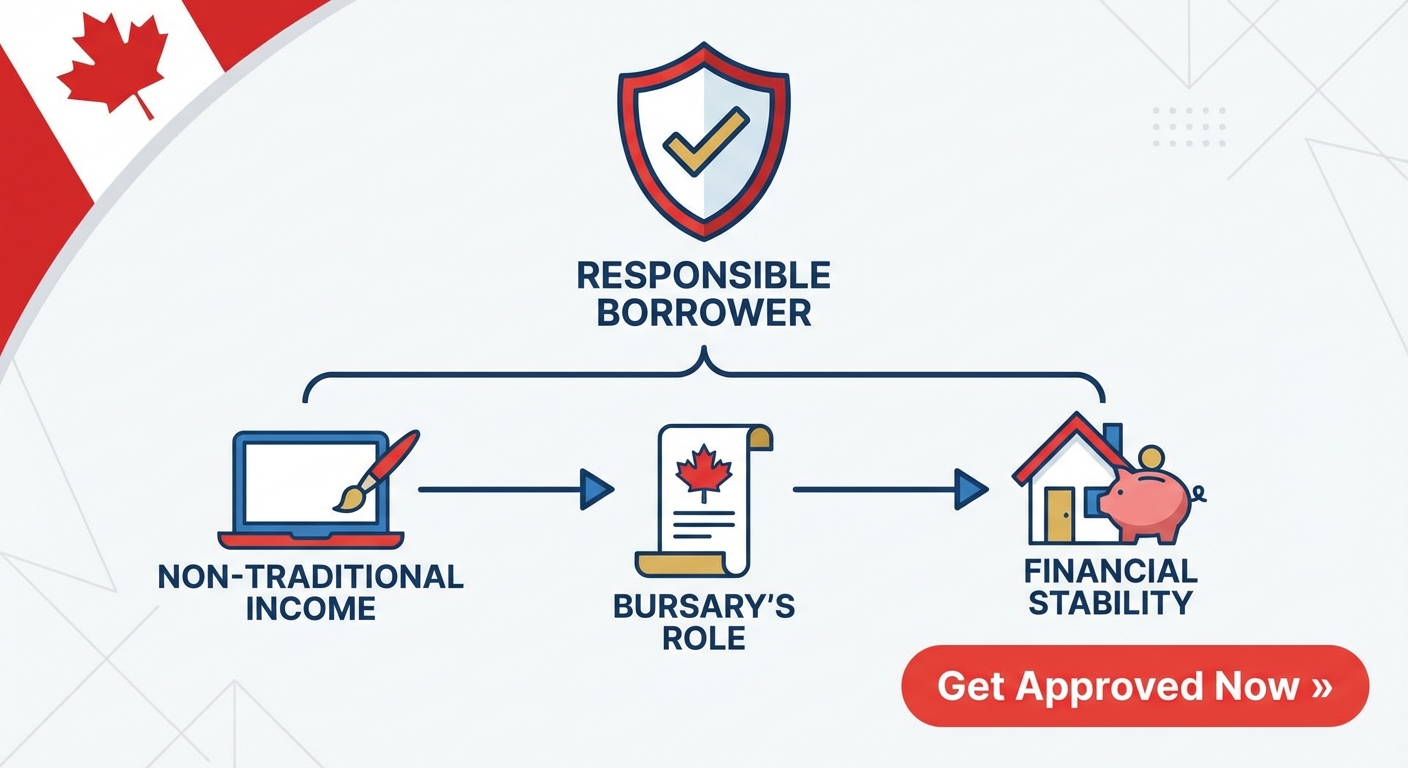
A well-prepared application can overcome initial skepticism. Imagine walking into a dealership in Surrey or a credit union in Victoria with a neatly organized folder, a clear budget, and all your bursary documentation in order. This level of professionalism makes a strong impression and signals that you are a serious, responsible borrower, even if your income stream is non-traditional. It integrates your bursary's role into a strong overall financial narrative, painting a picture of stability and capability.
Decoding the Dollars: Real-World Budgeting for Your BC Car Loan with Bursary Support
Getting approved for a car loan is just the first step; long-term affordability is where your financial planning truly shines. For residents of British Columbia, especially those relying on bursary income, a realistic budget must account for the province's unique and often higher cost considerations. This isn't just about the monthly car payment; it's about the total cost of ownership.
Start by creating a comprehensive budget that meticulously tracks all your income and expenses. Your bursary income forms a crucial part of this, but don't forget other potential sources like part-time work, government benefits, or savings you might draw upon. On the expense side, list everything: rent, utilities, groceries, phone, internet, entertainment, and, of course, your education-related costs not covered by the bursary.
Now, let's delve into British Columbia's specific vehicle-related costs:
- ICBC Insurance Rates: This is perhaps the most significant differentiator in British Columbia. Unlike other provinces with a competitive private insurance market, ICBC (Insurance Corporation of British Columbia) is the sole provider of basic auto insurance. Rates can be considerably higher, especially for new drivers, younger individuals, or those with less driving history. Factors like where you live (e.g., Greater Vancouver and the Fraser Valley typically have higher rates due to traffic density and claims frequency), the type of vehicle, and your driving record all play a role. You MUST obtain an insurance quote before committing to a car loan.
- Provincial Sales Tax (PST) on Vehicles: When you purchase a vehicle in British Columbia, you'll pay PST on the purchase price. For most vehicles, this is 7%. However, for vehicles priced over $55,000, the PST rate increases progressively (10% for $55,000-$59,999, 15% for $60,000-$69,999, and 20% for $70,000+). This can add thousands of dollars to your initial outlay.
- Fuel Costs: British Columbia, particularly the Lower Mainland, often sees some of the highest fuel prices in Canada. Your budget needs to account for this. Consider your typical commute, weekend trips, and the fuel efficiency of the car you're considering.
- Maintenance and Repairs: All vehicles require regular maintenance (oil changes, tire rotations, brake inspections) and occasional repairs. Set aside a monthly amount for this. New cars come with warranties, but older used cars might require more frequent attention.
- Tires: While not legally mandated for most of British Columbia, winter tires are highly recommended, if not essential, for safe driving in many regions, especially if you plan to travel through mountain passes or live in areas like the Interior or Northern British Columbia. This represents a significant upfront cost and ongoing storage/changeover expense.
- Parking Fees: In urban centres like Vancouver and Victoria, parking can be expensive and hard to find. Factor in potential parking costs if you live in an apartment building, work, or attend school in a paid parking zone.
Framework for Calculating Total Cost of Ownership:
Monthly Income:
- Bursary Disbursement: $X
- Part-time Work: $Y
- Other Income: $Z
- Total Monthly Income: $X+Y+Z
Monthly Expenses (Non-Vehicle):
- Rent/Housing: $A
- Utilities: $B
- Groceries: $C
- Phone/Internet: $D
- Tuition/Books (if not fully covered by bursary): $E
- Discretionary Spending: $F
- Total Monthly Non-Vehicle Expenses: $A+B+C+D+E+F
Monthly Vehicle Expenses (Estimated):
- Car Loan Payment: $G
- ICBC Insurance: $H (get a real quote!)
- Fuel: $I (estimate based on driving habits and local prices)
- Maintenance/Repairs Savings: $J (e.g., $50-$100)
- Tire Savings/Changeover: $K (e.g., $20-$30)
- Parking (if applicable): $L
- Total Monthly Vehicle Expenses: $G+H+I+J+K+L
Remaining Disposable Income: Total Monthly Income - Total Monthly Non-Vehicle Expenses - Total Monthly Vehicle Expenses.
Your bursary can be instrumental in covering the "Non-Vehicle Expenses" category, thereby increasing your "Remaining Disposable Income" and making the "Total Monthly Vehicle Expenses" more manageable. For instance, a student in Nanaimo might have lower parking costs than one in downtown Victoria, but their ICBC rates could still be significant. A student in Prince George might face higher fuel costs in winter but potentially lower insurance due to less traffic congestion.
Navigating the Lender Labyrinth: Banks, Credit Unions, and Alternative Options Across British Columbia
Finding the right lender is crucial when financing a car with bursary income in British Columbia. Different financial institutions have varying appetites for non-traditional income sources, and understanding these differences can significantly impact your approval odds. From major banks in downtown Vancouver to community credit unions in the Okanagan or Northern British Columbia, the approach can differ widely.
Major Banks (e.g., Scotiabank, RBC, TD Canada Trust)
Canada's large banks are generally conservative. They often favour traditional employment income, established credit histories, and low debt-to-income ratios. As mentioned, programs like Scotiabank's Grad Auto Loan, while excellent for recent graduates, typically require a firm job offer to demonstrate future income stability. This can be a hurdle for current students solely relying on bursaries.
However, a strong bursary profile can still open doors. If your bursary is substantial, consistent (multi-year), and from a reputable institution, it can act as a strong supporting factor, especially if paired with:
- A Co-signer: A co-signer with strong credit and stable income can significantly reduce the risk for the bank.
- Excellent Credit History: If you've been diligently building your credit (e.g., through a secured credit card) and have a clean payment record, it demonstrates financial responsibility. For more insights on building credit, you might find our article on The Truth About the Minimum Credit Score for Ontario Car Loans helpful, as many principles apply across provinces.
- A Down Payment: Even a modest down payment shows commitment and reduces the loan amount, making it less risky for the bank. If your bursary has allowed you to save, leveraging those savings as a down payment can be very effective. You can learn more about securing a loan without a down payment by checking out Your Down Payment Just Called In Sick. Get Your Car.
While major banks might initially seem less flexible, their vast resources mean they can sometimes offer competitive rates if your application is exceptionally strong.
Credit Unions (e.g., Vancity, Coast Capital Savings, Prospera Credit Union in British Columbia)
Credit unions often stand out for their community-focused approach and greater flexibility. Because they are member-owned, they tend to be more willing to understand individual circumstances and build relationships with their members. This often translates into a more nuanced view of non-traditional income sources like bursaries.
Many credit unions in British Columbia, such as Vancity or Coast Capital Savings, have a strong presence in student communities and may be more receptive to applications where bursaries demonstrate clear financial stability. They might look at your entire financial picture, including your academic standing and future career prospects, rather than just strict income figures. They are excellent places to start your inquiry, especially if you have an existing banking relationship with them.
Dealership Financing
Dealerships, whether in bustling Surrey or the more suburban Abbotsford, frequently offer on-site financing. They act as intermediaries, connecting you with a network of various third-party lenders, which can include major banks, credit unions, and even specialized auto finance companies. The finance manager at a dealership is skilled at matching applicants with lenders most likely to approve them.
When approaching dealerships, be upfront and confident about your bursary-centric pitch. Bring all your documentation, as outlined earlier. A good finance manager can present your unique financial situation to lenders in the most favourable light, emphasizing your bursary's stability and how it contributes to your ability to make payments. They often have access to lenders who are more flexible with non-traditional income.
Alternative Lenders
If traditional banks and credit unions prove challenging, alternative lenders might be an option. These lenders specialize in financing individuals with unique financial situations, including limited credit history, low credit scores, or non-traditional income. However, it's crucial to proceed with caution, as these loans often come with higher interest rates and less favourable terms due to the increased perceived risk. They should generally be considered a last resort after exploring all other avenues.
Regardless of the lender type, transparency and preparedness are your best allies. Be ready to explain your financial situation clearly and demonstrate how your bursary makes you a reliable borrower.
Beyond the Books: Strengthening Your Application Without a Traditional Paycheck
While your bursary is a powerful asset, it's not the only factor that lenders consider. To truly maximize your chances of approval for a car loan in British Columbia, especially without a traditional full-time paycheck, you need to strategically strengthen other aspects of your financial profile. Think of it as building a robust case for your financial reliability, ensuring you're seen as a low-risk borrower by lenders across the province.
Co-signers: A Powerful Ally
A co-signer can dramatically boost your approval odds. When you have a co-signer, they legally agree to be responsible for the loan if you default. This significantly reduces the risk for the lender. A strong co-signer typically has:
- Excellent credit history.
- Stable and verifiable income.
- A low debt-to-income ratio.
This is particularly beneficial if you have limited credit history or if your bursary alone isn't quite enough to satisfy the lender's income requirements. Approaching a family member or trusted friend to be a co-signer requires an open and honest conversation about the responsibilities involved, but it can be the key to unlocking your car loan.
Credit Score: Your Financial Reputation
Your credit score is a numerical representation of your creditworthiness. Even as a student, building and maintaining a good credit history is paramount. Lenders use this score to assess how responsibly you've managed past debts. Actionable tips for students in British Columbia to establish and improve their credit include:
- Secured Credit Cards: These cards require a deposit, which acts as your credit limit. Using it responsibly and paying balances on time helps build a positive credit history.
- Paying Bills on Time: This includes phone bills, utility bills (if in your name), and any student loan payments. Consistency is key.
- Keeping Credit Utilization Low: Don't max out your credit cards. Aim to keep your usage below 30% of your available credit.
A strong credit score signals reliability, potentially leading to better loan terms and lower interest rates. For those with a challenging credit history in British Columbia, options exist. For example, our article That '69 Charger & Your Low Credit? We See a Future, British Columbia offers insights into how to approach financing with less-than-perfect credit.
Savings/Down Payment: Reducing Lender Risk
Even a modest down payment can make a significant difference. It reduces the amount you need to borrow, thereby lowering your monthly payments and the overall interest paid. More importantly, it signals to lenders that you have financial discipline and personal investment in the vehicle. If your bursary has allowed you to save a surplus, directing some of those funds towards a down payment is a smart move. It shows commitment and reduces the risk for the lender, making your application much more appealing.
Part-time Employment: Supplementary Income
While your bursary is your primary financial support, even a modest or inconsistent part-time job can add credibility to your financial picture. It demonstrates initiative, work ethic, and provides an additional, albeit smaller, stream of income that can contribute to your capacity for loan repayment. Many students in British Columbia balance studies with part-time work, and lenders recognize this effort.
Debt-to-Income Ratio: Keep Other Debts Low
Lenders look at your debt-to-income (DTI) ratio to assess your ability to manage additional debt. This ratio compares your total monthly debt payments to your gross monthly income. While bursaries aren't always counted as traditional "income," they free up cash flow. By keeping other debts (credit card balances, student lines of credit, etc.) low, you demonstrate that your bursary income is more than sufficient to cover your existing obligations, making your overall financial profile more attractive for a new car loan.
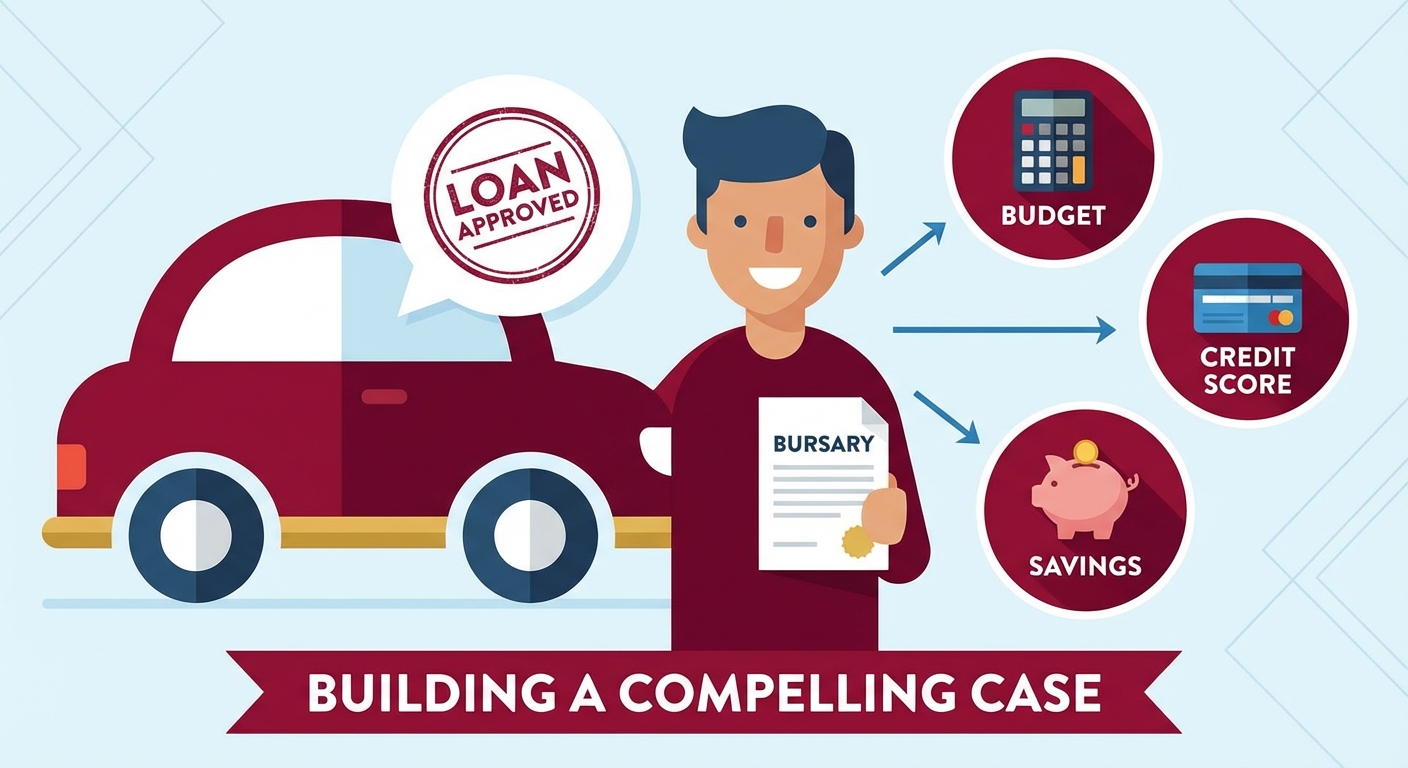
By focusing on these areas, you can build a compelling case for a car loan, even if your bursary is your primary financial backing. It's about presenting a holistic view of your financial responsibility and capacity.
Your Next Steps to Approval: Driving Off Confidently in British Columbia
The journey to car ownership in British Columbia with bursary income is entirely achievable, but it requires strategy, meticulous preparation, and confident communication. You now understand that your bursary is far more than just academic aid; it's a powerful financial tool that, when presented correctly, can unlock the doors to auto financing.
Your next steps are clear: gather all your bursary documentation, craft a detailed and realistic budget that accounts for British Columbia's specific costs like ICBC insurance and PST, and be ready to articulate your financial stability. Approach lenders with confidence, whether they're major banks, flexible credit unions, or experienced dealership finance managers. Remember to leverage any additional strengths you have, such as a co-signer, a strong credit score, or a modest down payment.
Don't be discouraged by initial skepticism. The key is to find the right lender who understands and values your unique financial situation. Compare offers, thoroughly understand all loan terms, and ensure that your chosen vehicle fits comfortably within your long-term budget. SkipCarDealer.com is here to connect you with lenders who see your potential, not just your pay stub.
Achieving mobility and independence through smart financial choices in British Columbia is within your grasp. With your bursary as your superpower, you're well on your way to driving off confidently.