No Credit? Great. We're Not Your Bank.
Table of Contents
- The Starting Line: Your Car Loan Compass (Key Takeaways)
- The Roadblock Revealed: Why Banks Say 'No' and Why We Don't Care
- The Traditional Credit Conundrum
- Understanding the 'Risk' Factor
- The Student's Catch-22
- Our Different Philosophy
- Competitor Insight Integration
- Beyond the Bureau: Unpacking 'No Credit' vs. 'Bad Credit'
- The Crucial Distinction
- Why a Clean Slate Can Be an Advantage
- Building from Zero
- The Student's Playbook: What You *Do* Bring to the Table (No Credit Required)
- Beyond the Paycheck: Identifying All Forms of Verifiable Income
- Proof of Potential: The Significance of Enrollment and Academics
- Stability Signals: Proof of Residence and Reliable Personal References
- The 'Human Factor' in Underwriting
- Cracking the Rate Code: Affordable Interest Rates Without a Score
- Risk Assessment Reimagined
- Factors Influencing Your Rate
- Dispelling the 'Sky-High Rate' Myth
- The 'Affordable Interest Rate' Promise
- The Vehicle Vetting: What Cars Are 'Student Loan Friendly'?
- Reliability First: Emphasizing Used Cars
- Why Used Cars Are Your Best Bet
- Top Picks for Students
- Balancing Desire with Financial Reality
- The Importance of a Pre-Purchase Inspection
- The Application Navigator: Your Step-by-Step Guide to Approval
- Pre-Application Checklist
- Online vs. In-Person: Which is Right for You?
- The Interview/Discussion Process
- Transparency is Key
- Understanding Loan Terms
- The Hidden Costs Compass: Beyond the Monthly Payment
- Insurance Imperatives: A Deep Dive for Young Drivers
- Maintenance & Repairs Budget
- Fuel & Parking Realities
- Registration & Licensing Fees
- Emergency Fund Importance
As a student in Canada, navigating the complexities of daily life is a skill in itself. From balancing demanding coursework to managing part-time jobs and social commitments, your plate is full. Adding the challenge of securing reliable transportation, especially when you have no credit history, can feel like an impossible task. Traditional banks often see a blank credit slate as a red flag, leaving many students feeling stuck.
But here at SkipCarDealer.com, we see things differently. We understand that not having a credit history isn't a sign of irresponsibility; it's simply a sign that you haven't had the chance to build one yet. And we believe that shouldn't stand between you and the independence a car can offer. Whether it's for commuting to campus, getting to your part-time job, or visiting family, a car can be a game-changer for your student life. This comprehensive guide is designed to empower you with the knowledge and strategies needed to secure a student car loan, even without a credit score. We're not your bank; we're your partner in getting you on the road.
The Starting Line: Your Car Loan Compass (Key Takeaways)
Embarking on the journey to secure your first car loan as a student with no credit can seem daunting, but it's entirely achievable with the right approach. Here are the essential takeaways to guide you:
- Myth Busted: No credit history doesn't mean no car loan – It simply means you need to look beyond the rigid criteria of traditional banks. Specialized lenders understand your unique situation.
- Opportunity Knocks: A student car loan is a powerful tool for both transportation and building a strong credit future. It's often the first major step in establishing your financial credibility.
- Focus on Reality: Affordable used cars are often the smartest first step for students. They align better with a student budget, reduce financial strain, and are easier to get approved for.
- Beyond the Score: Lenders who understand students look at income, enrollment, and potential, not just past credit. Your current stability and future prospects are key indicators for us.
- Empowerment: This guide provides the specific knowledge to navigate the process with confidence, from understanding what lenders look for to mastering your payments.
The Roadblock Revealed: Why Banks Say 'No' and Why We Don't Care
It's a common story: a bright, ambitious student walks into a traditional bank, excited about the prospect of their first car, only to be met with a polite but firm "no." Why does this happen so frequently? The answer lies in the traditional banking system's reliance on a credit score, a metric that measures your past financial behaviour.
The Traditional Credit Conundrum
The banking system is built on assessing risk, and their primary tool for this is your credit score. This three-digit number, calculated from your credit report, summarizes your history of borrowing and repaying money. It tells lenders how many credit accounts you have, how long you've had them, your payment history, and how much debt you carry. The problem for students? You haven't had a chance to build this history yet. You might have diligently paid your phone bill or rent, but these aren't typically reported to credit bureaus, meaning your file remains largely blank.
Understanding the 'Risk' Factor
For conventional lenders, a blank credit slate is perceived as high-risk. Without any data to analyze, they have no way to predict your future payment behaviour. From their perspective, lending money to someone without a credit history is like flying blind. They see an unknown quantity, and their internal algorithms often automatically flag such applications for rejection, regardless of your current income or potential.
The Student's Catch-22
This creates a classic Catch-22 situation for students: you need credit to get credit. How can you establish a payment history if no one will give you a loan or credit card in the first place? This cycle traps many young individuals, forcing them to rely on public transit or the generosity of family members, even when they're perfectly capable of managing a car loan. It's a frustrating reality that leaves many feeling overlooked and undervalued by financial institutions that simply aren't equipped to handle unique situations like yours.
Our Different Philosophy
At SkipCarDealer.com, we operate with a fundamentally different philosophy. We understand that your financial story isn't just about a number. Specialized lenders like us evaluate potential differently. We focus on your current situation, your future prospects, and your overall stability, rather than solely on a past financial history that doesn't exist yet. We look at factors like your enrolment status, your income (even if it's part-time or from alternative sources), and your ability to make consistent payments moving forward. We believe in giving you the opportunity to prove your financial responsibility, not penalizing you for lacking a history you haven't had the chance to create. For more insights into how a credit score might not be the be-all and end-all, explore our article on Alberta Car Loan: What if Your Credit Score Doesn't Matter?
Competitor Insight Integration
It's not just us who recognize this gap. Other forward-thinking lenders, like Bonnybrook, also highlight the common rejections students face from 'most banks.' This isn't an isolated issue; it's a systemic one. We directly address these challenges because we know the frustration you've experienced. Our goal is to be the solution, offering a pathway to car ownership that traditional banks simply won't. We're here to bridge that gap and help you get approved.
Beyond the Bureau: Unpacking 'No Credit' vs. 'Bad Credit'
When discussing car loans, especially for students, it's crucial to understand the distinction between having 'no credit' and having 'bad credit.' While both can present challenges, they are fundamentally different situations with different implications for lenders and your path to approval.
The Crucial Distinction
No Credit History: This means you simply haven't borrowed money or used credit products (like credit cards, lines of credit, or loans) in the past. Your credit report is essentially blank, and you don't have a credit score because there's no data to generate one. This is a common scenario for students, recent graduates, or newcomers to Canada. It's a clean slate, not a problematic one.
Bad Credit History: This, on the other hand, indicates a history of financial difficulties. This could stem from missed payments, defaulted loans, bankruptcies, consumer proposals, or high credit utilization. A bad credit score signals to lenders that you've had trouble managing debt responsibly in the past, making you a higher perceived risk.
Here's a quick comparison:
| Feature | No Credit History | Bad Credit History |
|---|---|---|
| Credit Score | Non-existent / "Thin File" | Low (e.g., below 600) |
| Lender Perception | Unknown risk, but opportunity to build | High risk due to past behaviour |
| Approval Challenge | Lack of data to assess | History of poor financial management |
| Primary Goal | Establish first credit line | Rebuild damaged credit |
Why a Clean Slate Can Be an Advantage
While traditional banks might shy away from a blank slate, it can actually be an advantage with the right lender. When you have no credit, you present an opportunity for responsible financial behaviour from day one. You don't have past mistakes or negative marks to overcome. This means your first car loan becomes a foundational step, allowing you to build a positive payment history without the baggage of past financial missteps. Specialized lenders see this as potential, not just an absence of data.
Building from Zero
The unique journey of establishing credit begins with that first significant credit account. A car loan is often one of the best ways to do this. It's an installment loan with fixed monthly payments over a set period, making it straightforward to manage. By consistently making your payments on time, you demonstrate reliability and financial discipline, which are then reported to credit bureaus. This positive activity starts to build your credit file, leading to the generation of your first credit score, and opening doors to future financial opportunities.
[PRO TIP]: The Power of a Co-Signer Explained
If you're finding it challenging to get approved on your own, even with specialized lenders, a co-signer can be a game-changer. A co-signer is a trusted individual (often a parent or close family member) with established credit who agrees to take legal responsibility for the loan if you fail to make payments. This significantly reduces the risk for the lender, as they have a financially responsible backup. For you, it can mean easier approval, and potentially better interest rates and terms. However, it's a serious commitment for both parties. The co-signer's credit will be affected if you miss payments, and they are equally responsible for the debt. Ensure open communication and a clear understanding of responsibilities before pursuing this option.
The Student's Playbook: What You *Do* Bring to the Table (No Credit Required)
Forget what the banks told you about needing a credit score. At SkipCarDealer.com, we understand that students, particularly those new to the credit world, have a wealth of valuable information and indicators of financial responsibility that go far beyond a credit report. When you apply for a student car loan with us, you're not just a number; you're an individual with potential and a unique story. Here’s what you *do* bring to the table:
Beyond the Paycheck: Identifying All Forms of Verifiable Income
While a part-time job is a fantastic asset, we look at a broader spectrum of income sources that are relevant to students. This comprehensive view helps us understand your true financial capacity:
- Part-time Jobs: Pay stubs or employment letters from your part-time work are strong indicators of regular income.
- Scholarships, Grants, & Bursaries: Financial aid that directly supports your education and living expenses can be considered as income, especially if it's consistent.
- Stipends: If you're involved in research, internships, or special programs that provide a stipend, this is also valuable.
- Parental Contributions: Many students receive regular financial support from parents or guardians. Documented proof of these contributions (e.g., bank statements showing transfers) can be included.
- Employment Insurance (EI): For students who might be transitioning or have received EI benefits, this can also be considered. For those relying on such income, our article EI Income? Your Car Loan Just Said 'Welcome Aboard!' offers further insights.
The key is verifiability. We need to see consistent, documented proof of funds coming in to ensure you can comfortably manage your loan payments.
Proof of Potential: The Significance of Enrollment and Academics
Your student status itself is a powerful indicator of future potential. We look at:
- Enrollment Verification: An official letter from your educational institution confirming your full-time or part-time student status.
- Academic Standing: While not always a strict requirement, good academic standing can reflect discipline and commitment, which are positive traits for a loan applicant.
- Future Career Prospects: For students in programs with strong job market demand, your chosen field can signal future earning potential and stability, which helps us assess long-term risk.
Stability Signals: Proof of Residence and Reliable Personal References
Even without a long rental history or property ownership, you can demonstrate stability:
- Proof of Residence: Utility bills, a lease agreement (even if you're renting a room), or a letter from parents confirming you live at home can establish your living situation.
- Reliable Personal References: Providing contact information for individuals who can vouch for your character and reliability (not family members, ideally) can add another layer of trust. These could be professors, employers, or long-term friends.
The 'Human Factor' in Underwriting
Our approach to underwriting is less about automated algorithms and more about understanding your overall profile. We consider your unique circumstances, looking beyond the numbers to the person behind the application. We take the time to listen to your story, understand your needs, and assess your potential for success. This 'human factor' allows us to be flexible and creative in finding financing solutions where traditional banks might simply see obstacles.
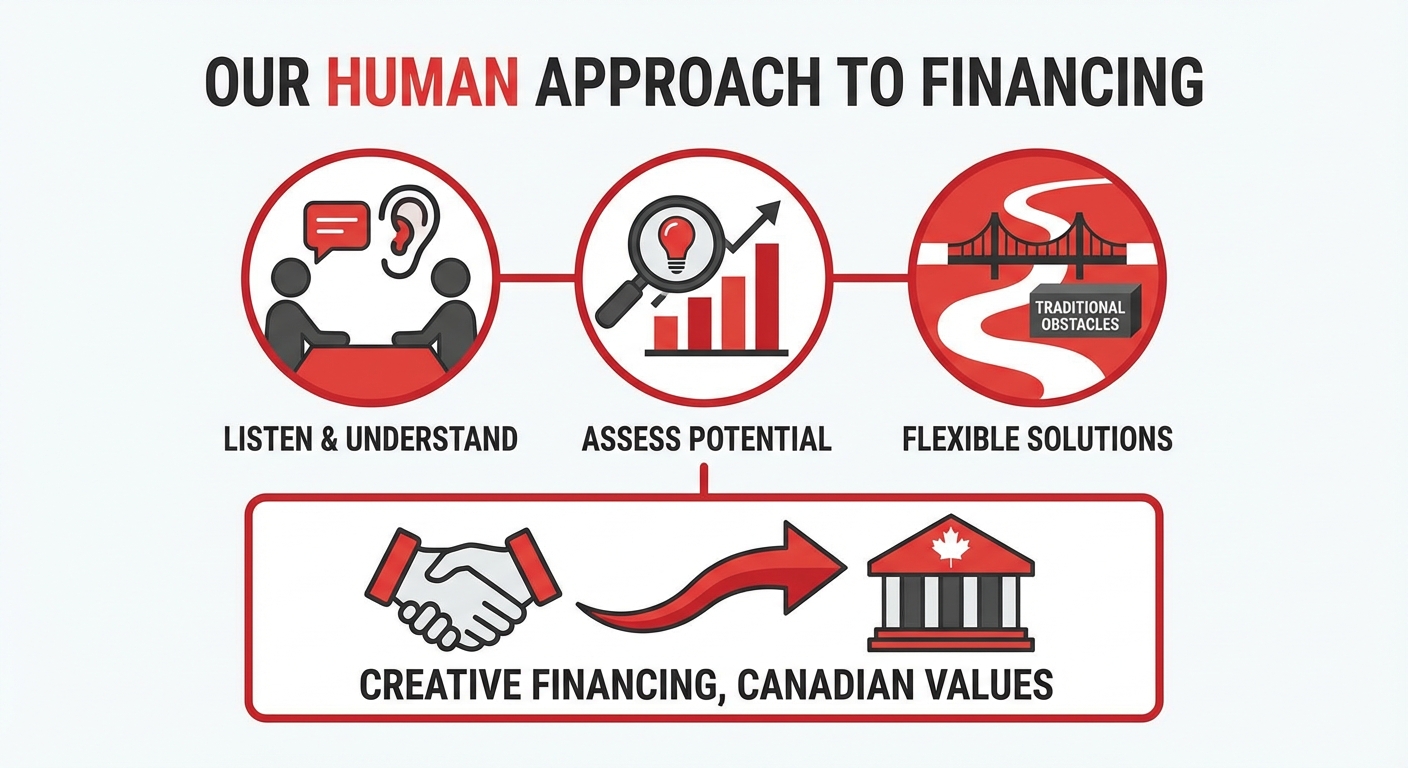
Caption: 'Showcasing Your Potential: What You Bring to Your Student Car Loan Application.'
Cracking the Rate Code: Affordable Interest Rates Without a Score
One of the biggest concerns for students without a credit history is the fear of being saddled with sky-high interest rates. While it's true that having no credit or bad credit can sometimes lead to higher rates, it's not a universal truth, especially when you're working with specialized lenders who understand your situation. Let's demystify how interest rates are determined for no-credit students and how you can secure the most affordable terms.
Risk Assessment Reimagined
Since traditional credit scores are absent, lenders like SkipCarDealer.com use alternative data points and internal scoring models to assess risk. Instead of relying on past borrowing behaviour, we focus on predictive indicators of future payment capability. This includes a thorough review of your income stability (as discussed in the previous section), your enrolment status, the length of time you've been in Canada (for international students), and even the type of vehicle you're looking to purchase. We build a comprehensive picture of your financial present and future, allowing us to make an informed decision without penalizing you for a blank slate.
Factors Influencing Your Rate
Several variables play a significant role in determining the interest rate you'll be offered:
- Down Payment Size: A larger down payment reduces the loan amount, which in turn reduces the lender's risk. This can often translate into a lower interest rate.
- Loan Term Length: Shorter loan terms typically come with lower interest rates because the lender's money is tied up for a shorter period. However, shorter terms mean higher monthly payments.
- Vehicle Age and Value: Newer, lower-kilometre vehicles are generally perceived as lower risk because they hold their value better and are less likely to require expensive repairs. This can sometimes lead to better rates.
- Presence of a Co-Signer: As discussed, a co-signer with good credit significantly mitigates risk for the lender, almost always resulting in a more favourable interest rate.
- Income Stability & Source: Consistent, verifiable income from a stable source (e.g., long-term part-time job, consistent scholarships) is viewed more favourably than sporadic income.
Dispelling the 'Sky-High Rate' Myth
It's a common misconception that all no-credit loans come with exorbitant interest rates. While some predatory lenders might target vulnerable individuals with unreasonably high rates, reputable specialized lenders understand the importance of setting students up for success. Our goal isn't just to approve you; it's to provide a loan that you can comfortably afford, allowing you to build positive credit. We work with a network of lenders who specialize in non-traditional financing and are willing to offer reasonable rates to students who demonstrate potential and stability.
The 'Affordable Interest Rate' Promise
Lenders who prioritize long-term financial relationships, like us and others in the market (including Bonnybrook, as they highlight for students), understand that providing affordable interest rates to students is a smart investment. A student who successfully manages their first car loan is likely to return for future financing needs and recommend the service to others. This philosophy drives us to find the best possible rates for your unique situation, ensuring your first foray into credit building is a positive one.
[PRO TIP]: The Art of the Down Payment
Even a modest down payment can significantly improve your approval odds and reduce your overall borrowing costs. A down payment shows the lender you have 'skin in the game' and are committed to the purchase. It reduces the amount you need to finance, which lowers your monthly payments and the total interest paid over the life of the loan. Aim for at least 10-20% of the vehicle's price if possible. Even 5% can make a difference. Consider saving up for a few months or exploring gift funds from family to boost your down payment and unlock better loan terms.
The Vehicle Vetting: What Cars Are 'Student Loan Friendly'?
Choosing the right car is just as important as securing the right loan, especially for students with no credit history. Your vehicle choice can significantly impact your approval odds, your monthly payments, and your overall financial well-being. The key is to prioritize practicality, reliability, and affordability over flash and luxury.
Reliability First: Emphasizing Used Cars
For students, a reliable, fuel-efficient used car is almost always the smartest choice. New cars come with a premium price tag and rapid depreciation, making them a less financially sound investment for a first-time borrower. A dependable used car provides the necessary transportation without the heavy financial burden.
Why Used Cars Are Your Best Bet
- Lower Purchase Price: Used cars are significantly cheaper than new ones, directly reducing the amount you need to borrow and making your loan more manageable.
- Slower Depreciation: New cars lose a substantial portion of their value in the first few years. Used cars have already taken that initial depreciation hit, meaning they hold their value better over the course of your loan.
- Lower Insurance Costs: Insurance premiums for used cars are typically lower than for new vehicles, which can be a substantial saving for young drivers who already face higher rates.
- More Manageable Loan Amounts: A smaller loan amount means lower monthly payments, making it easier to fit into a student budget and reducing the risk of defaulting.
Top Picks for Students
When considering used vehicles, look for models known for their longevity, low maintenance costs, and good fuel economy. Here are a few popular choices that are often student-friendly:
- Honda Civic: Consistently praised for its reliability, fuel efficiency, and affordable parts.
- Toyota Corolla: Another leader in reliability and low running costs, known for lasting for hundreds of thousands of kilometres.
- Mazda 3: Offers a great balance of reliability, fuel efficiency, and a more engaging driving experience.
- Hyundai Elantra / Kia Forte: These Korean brands offer excellent value, good warranty coverage (even used, if recent models), and modern features.
- Volkswagen Golf: A European option known for its solid build quality and fun-to-drive nature, often found at reasonable prices on the used market.
Focus on models that are 3-7 years old, as they offer a good balance of modern features, lower price points, and remaining lifespan.
Balancing Desire with Financial Reality
It's natural to dream of a specific car, but as a student, practicality must come first. Guide your choices by asking: Is this car reliable? Is it affordable to insure and maintain? Does it fit comfortably within my budget, considering all ownership costs? Making a sensible choice now will set you up for financial success and allow you to build credit, paving the way for your dream car down the road.
The Importance of a Pre-Purchase Inspection
Before finalizing any used car purchase, always insist on a pre-purchase inspection by a trusted, independent mechanic. Even if the car looks great, a professional inspection can uncover hidden issues that could lead to costly repairs down the line. This small investment can save you thousands and provide peace of mind that you're buying a sound vehicle.
The Application Navigator: Your Step-by-Step Guide to Approval
Applying for your first car loan as a student with no credit doesn't have to be a confusing ordeal. By understanding the process and preparing thoroughly, you can navigate it with confidence. Here's your step-by-step guide to securing approval with SkipCarDealer.com.
Pre-Application Checklist
Preparation is key. Gathering all necessary documents beforehand will streamline the process significantly:
- Identification: Valid Canadian driver's license (or learner's permit with a co-signer), passport, or provincial ID card.
- Proof of Enrollment: Official letter from your college or university confirming your student status, program, and anticipated graduation date.
- Income Verification: Recent pay stubs (for part-time jobs), employment letter, scholarship/grant letters, bank statements showing consistent parental contributions, or EI statements.
- Proof of Residence: Utility bill, lease agreement, or letter from parents confirming residency if living at home.
- Bank Statements: Recent statements (3-6 months) to show financial activity and ability to manage funds.
- References: Contact information for 2-3 personal references (not family members) who can vouch for your character.
For a general idea of documentation requirements, especially in Alberta, you might find our article Approval Secrets: Exactly What Paperwork You Need for Alberta Car Financing helpful, as many of the principles apply universally.
Online vs. In-Person: Which is Right for You?
- Online Application: Offers convenience and speed. You can apply from anywhere, often receiving a pre-approval decision quickly. This is great for an initial assessment of your eligibility.
- In-Person Discussion: Ideal for complex situations or if you prefer a personal touch. Visiting us allows for a direct conversation, where you can explain your unique circumstances, ask questions, and get personalized advice. We can help you gather any missing documents and guide you through each step.
We offer both options, so choose what makes you most comfortable. Often, an online start followed by an in-person discussion works best.
The Interview/Discussion Process
Once you submit your application, our finance specialists will review it. If there are questions or further clarification needed, we'll reach out for a discussion. Be prepared to answer questions about:
- Your current financial situation (income, expenses, savings).
- Your academic plans and future career goals.
- Why you need a vehicle and how it will support your education or work.
- Your ability to manage monthly payments.
This isn't an interrogation; it's an opportunity for us to understand your situation better and tailor a solution for you.
Transparency is Key
Honesty and openness during the application process are crucial. Provide accurate information and be transparent about your financial situation. Building trust from the outset helps us advocate for you with our lending partners and find the best possible terms.
Understanding Loan Terms
Before you sign anything, ensure you fully understand all aspects of your loan:
- APR (Annual Percentage Rate): The total cost of borrowing, including interest and any fees, expressed as a yearly percentage.
- Loan Term: The length of time you have to repay the loan (e.g., 48, 60, 72 months).
- Principal: The original amount of money borrowed.
- Total Cost of Borrowing: The sum of the principal and all interest paid over the life of the loan.
Don't hesitate to ask questions until you feel completely comfortable with the terms.
[PRO TIP]: Preparing for the Unexpected: Common Application Hurdles
Even with preparation, unique situations can arise. If you have inconsistent income, be prepared to provide more bank statements to show a pattern of deposits. If you lack traditional references, consider a letter from a professor or community leader. For international students, be ready with your study permit and any Canadian banking history. Proactively addressing these potential hurdles with documentation or explanations will significantly strengthen your application. Don't assume a challenge means an automatic 'no' – communicate it, and we'll help find a solution.
The Hidden Costs Compass: Beyond the Monthly Payment
Securing a car loan is a significant achievement, but it's crucial for students to understand that the monthly car payment is just one piece of the financial puzzle. Owning a vehicle comes with a range of additional costs that, if not budgeted for, can quickly become overwhelming. Being aware of these 'hidden' costs upfront will help you maintain financial stability and avoid unexpected stress.
Insurance Imperatives: A Deep Dive for Young Drivers
Car insurance is a non-negotiable expense in Canada, and for young drivers or those new to insurance, it can be substantial. Factors affecting your premiums include:
- Age and Driving Experience: Younger, less experienced drivers typically face higher rates.
- Vehicle Type: More expensive, high-performance, or frequently stolen vehicles cost more to insure.
- Location: Urban areas with higher traffic and theft rates generally have higher premiums.
- Driving Record: Even as a new driver, any traffic infractions can impact your rates.
- Coverage Level: Basic third-party liability is mandatory, but comprehensive and collision coverage (often required by lenders) adds to the cost.
Tips for finding affordable coverage:
- Shop around and get multiple quotes from different providers.
- Ask about student discounts or good student discounts.
- Consider a higher deductible to lower your premium (but ensure you can afford the deductible if you need to make a claim).
- Bundle your car insurance with other policies (e.g., tenant insurance) if possible.
Maintenance & Repairs Budget
Cars need regular care to run smoothly. Budgeting for maintenance is essential:
- Routine Maintenance: Oil changes, tire rotations, filter replacements, and fluid checks are recurring costs. A good rule of thumb is to budget $500-$1000 per year for a used car, depending on its age and condition.
- Unexpected Repairs: Even reliable cars can have surprises. A flat tire, a dead battery, or a minor mechanical issue can pop up. Having an emergency fund specifically for car repairs is invaluable.
Fuel & Parking Realities
The cost of simply driving your car can add up quickly:
- Fuel: Gas prices fluctuate, but they are a constant expense. Calculate your estimated weekly or monthly fuel costs based on your commute and planned usage.
- Parking Fees: If you commute to campus or work in an urban area, parking fees can be significant. Factor in daily, monthly, or yearly parking passes.
Registration & Licensing Fees
These are administrative costs associated with legal vehicle ownership:
- Vehicle Registration: Annual fees to register your vehicle with the provincial government.
- License Plate Renewals: Regular renewal fees for your license plates.
- Driver's License Renewal: Don't forget the cost of renewing your own driver's license.
Emergency Fund Importance
We cannot stress this enough: an emergency fund is your financial safety