Ramen Budget? Drive a Real Car. Student Loan Approved.
Table of Contents
- Ramen Budget? Drive a Real Car. Student Loan Approved.
- The Fast Lane to Freedom: Key Takeaways for Student Car Loan Approval
- Myth vs. Reality: Debunking Student Car Loan Misconceptions in Canada
- The Student's Financial Footprint: How Lenders Evaluate Your Application
- Architecting Your Approval: Strategies for Students with Part-Time Jobs
- Navigating the Lender Labyrinth: Banks, Dealers, and Beyond
- The Smart Student's Ride: Choosing the Right Car & Loan Terms
- Beyond Approval: Managing Your Loan & Accelerating Your Financial Future
- Your Next Steps to Approval: Driving Forward with Confidence
- FAQ: Burning Questions from Canadian Students with Part-Time Jobs
- Q1: 'How much income do I *really* need from my part-time job to get approved?'
- Q2: 'Can I get a car loan with no credit history at all, or do I need to build it first?'
- Q3: 'What's the absolute best type of car for a student on a tight budget?'
- Q4: 'Is it generally better to get a loan from my personal bank or directly through the dealership?'
- Q5: 'What happens if I lose my part-time job or my income significantly changes during the loan term?'
- Q6: 'Are there any specific 'student car loan' programs or grants available in Canada that I should look for?'
- Q7: 'How does car insurance factor into the overall cost of owning a car as a student, and how can I minimize it?'
Ramen Budget? Drive a Real Car. Student Loan Approved.
Are you tired of juggling textbooks and bus schedules? Does the thought of a spontaneous road trip, or even just a stress-free commute to your part-time job, feel like an impossible dream while you're navigating student life? For many Canadian students, the idea of owning a car seems as far-fetched as a five-star meal on a ramen budget. You're balancing studies, perhaps a part-time job, and the ever-present student loan debt. It's easy to assume that a car loan is simply out of reach. But what if we told you that driving a reliable car isn't just a fantasy? What if, even with a part-time job and a student budget, you could secure a car loan and unlock a new level of independence? At SkipCarDealer.com, we understand the unique financial landscape students face. We know that public transit isn't always reliable, and personal freedom is a powerful motivator. This comprehensive guide will show you exactly how students with part-time jobs can navigate the world of car loans, turning that dorm room dream into a dashboard reality. Get ready to put the pedal to the metal on your journey to car ownership.
The Fast Lane to Freedom: Key Takeaways for Student Car Loan Approval
Ready for the good news? Here’s what you need to know upfront:
- Yes, securing a car loan as a student with a part-time job is absolutely possible.
- Building and demonstrating responsible credit behavior is your strongest asset.
- A meticulous budget is non-negotiable for proving affordability and managing repayments.
- Explore all lender types – banks, dealerships, and specialized finance companies – for the best fit.
- Your part-time income, even if modest, is a legitimate and valuable factor in your application.
Myth vs. Reality: Debunking Student Car Loan Misconceptions in Canada
The world of finance is often shrouded in myths, and student car loans are no exception. Let's clear the air and arm you with the truth.
Myth 1: 'Students can't get car loans.'
Reality: This is perhaps the biggest misconception. While it's true that students face unique challenges – often limited credit history and lower income – getting approved for a car loan is far from impossible. It simply requires a strategic approach, understanding what lenders look for, and presenting yourself as a responsible borrower. Many lenders recognize the long-term potential of students and are willing to work with you.
Myth 2: 'You need a full-time job for approval.'
Reality: Not necessarily. Consistent part-time income, especially if it's been stable for a few months, can be sufficient. Lenders value predictability. If you can demonstrate a steady income stream that comfortably covers potential car payments, insurance, and other associated costs, your part-time job becomes a legitimate factor in your favour. The key is proving the income is reliable and sustainable throughout the loan term.
Myth 3: 'Only big banks offer loans.'
Reality: While major banks are an option, they often have stricter criteria, especially for applicants with limited credit history. Dealerships, credit unions, and specialized auto finance companies (like SkipCarDealer.com) often have more flexible options tailored to diverse financial situations, including those of students with part-time employment. Exploring these alternatives can significantly increase your chances of approval.
Myth 4: 'It's too expensive and not worth the hassle.'
Reality: While car ownership comes with costs, strategic choices can make it highly affordable and immensely beneficial. Opting for a reliable used car, choosing a manageable loan term, and diligently budgeting for all expenses (including insurance and maintenance) can turn car ownership into a smart financial move. Beyond convenience, a car loan, responsibly managed, is a powerful tool for building a strong credit history, which opens doors to future financial opportunities.
PRO TIP: Don't let initial rejections or discouraging advice derail your journey. Understand the specific reasons for any 'no' and pivot your strategy accordingly. Ask for feedback, review your application, and consider what adjustments you can make to strengthen your next attempt.
The Student's Financial Footprint: How Lenders Evaluate Your Application
When you apply for a car loan, lenders aren't just looking at your current bank balance. They're assessing your overall financial footprint to determine your risk level. Understanding what they scrutinize is your first step towards approval.
4.1 Your Credit Score: The Invisible Handshake
Your credit score is a three-digit number that acts as your financial reputation. It tells lenders how reliably you've managed debt in the past. For students seeking 'car loan approval for students with part time job', this score is paramount. A higher score signals lower risk, potentially leading to better interest rates and easier approval.
In Canada, you can access and understand your credit report from the two major credit bureaus: Equifax and TransUnion. It's crucial to check these reports regularly for accuracy and to understand your current standing. Knowing your score and history empowers you to address any inaccuracies or areas for improvement.
Navigating the challenge of limited or non-existent credit history as a student is common. Many students haven't had the opportunity to build a robust credit file. This doesn't mean you're out of luck, but it does mean you'll need to focus on other aspects of your application. For more insights on building credit from scratch, you might find our article No Credit? Great. We're Not Your Bank. particularly helpful.
Even if your credit history is thin, demonstrating financial responsibility in other areas can help. Lenders want to see a pattern of timely payments, even for things like cell phone bills or rent. Understanding the fundamentals of credit is key; for a deeper dive into what influences your score, check out The Truth About the Minimum Credit Score for Ontario Car Loans.
4.2 Income & Expenses: Proving You Can Pay
This is where your part-time job truly shines. Lenders need to see stable, verifiable income that shows you can afford the monthly loan payments without undue financial strain. They'll look at the consistency of your employment and the regularity of your pay. Even if your income isn't massive, its reliability is a significant asset.
Essential documentation for proving your income typically includes recent pay stubs (usually 2-3 months' worth), an employment letter from your employer confirming your status and hourly wage, and bank statements showing regular deposits. Being organized with these documents makes the application process smoother and demonstrates your preparedness.
A critical metric lenders use is the Debt-to-Income (DTI) ratio. This compares your total monthly debt payments (including any existing student loans, credit card minimums, and the proposed car loan payment) to your gross monthly income. A lower DTI ratio indicates you have more disposable income to cover your new car payment. This is where your 'ramen budget' strategy can actually work in your favour – by keeping your other expenses low, you improve your DTI ratio and demonstrate responsible financial habits.
For more detailed information on what paperwork you'll need to gather for your application, including income verification, our guide Approval Secrets: Exactly What Paperwork You Need for Alberta Car Financing offers comprehensive advice relevant across Canada.
PRO TIP: Create a highly detailed and realistic budget spreadsheet *before* applying. List all your income sources (part-time job, scholarships, parental support) and every expense (tuition, rent, groceries, entertainment, existing debt payments). Being able to articulate your financial situation with hard numbers demonstrates incredible responsibility and preparedness to lenders, making them more confident in your ability to repay.
4.3 The Co-Signer Advantage: A Strategic Alliance
If your credit history is thin or your part-time income is borderline, a co-signer can significantly improve your approval odds and potentially secure better loan terms (like lower interest rates). A co-signer, typically a parent or a trusted adult with good credit, essentially guarantees the loan. They agree to be legally responsible for the debt if you fail to make payments.
While a co-signer can be a game-changer, it's crucial to understand the full legal and financial responsibilities involved. Their credit will be impacted by your loan, and if you default, they are on the hook. Therefore, having a transparent and respectful conversation with a potential co-signer is paramount. Discuss your budget, your repayment plan, and what steps you'll take to ensure timely payments. This isn't just a favour; it's a serious financial commitment for both parties.
Architecting Your Approval: Strategies for Students with Part-Time Jobs
Securing a car loan as a student with a part-time job isn't about luck; it's about strategy. Here are actionable steps to bolster your eligibility and put you in the driver's seat.
5.1 Building Your Credit Foundation (Even from Scratch)
If you have little to no credit history, it’s time to start building it. This isn't an overnight process, but every responsible financial action contributes.
- Secured Credit Cards: The Student's Secret Weapon: A secured credit card requires a cash deposit, which acts as your credit limit. This significantly reduces the risk for the issuer, making them easier to obtain. Use it for small, regular purchases you can pay off in full each month (e.g., groceries, gas). This demonstrates consistent, responsible credit use and gets reported to credit bureaus.
- The Power of Paying All Bills on Time: While not all bills directly impact your credit score, consistent on-time payments for things like your cell phone, internet, and utility bills demonstrate reliability. Some service providers may report late payments to credit bureaus, so maintaining a perfect payment record across all your obligations is crucial.
- Small, Manageable Loans as Stepping Stones: If accessible, a small student line of credit for tuition or books, responsibly managed and paid back on time, can also help establish creditworthiness. The key is to borrow only what you need and adhere strictly to repayment schedules.
5.2 Maximizing Your Part-Time Income's Impact
Your part-time job isn't just about pocket money; it's a vital component of your loan application.
- Consistency is Key: Lenders prefer stable employment. Even if it's part-time, demonstrating several months of consistent employment through your pay stubs and employment history shows reliability. Avoid frequent job changes right before applying for a loan.
- Highlighting Future Potential: While current income is primary, if you have an internship offer in a high-demand field, or are studying a career-track program, mentioning your future income potential (if specifically asked or if you can present a compelling case) might subtly influence a lender's perception, particularly with specialized student loan programs.

A student confidently presenting financial documents or reviewing a credit report on a laptop, symbolizing proactive financial management and transparency.
5.3 Down Payment Power: More Than Just a Number
A down payment is a lump sum of money you pay upfront towards the purchase price of the vehicle. For students seeking 'car loan approval for students with part time job', its importance cannot be overstated.
- Why a Down Payment Dramatically Improves Approval Odds: A down payment reduces the amount you need to borrow, which in turn lowers the lender's risk. It shows you have skin in the game and are financially committed. Lenders are more likely to approve loans with a significant down payment, especially for applicants with limited credit.
- Practical Strategies for Saving: Saving for a down payment requires discipline. Consider side hustles (freelancing, tutoring, odd jobs), allocate a portion of any scholarships or grants, and create a dedicated savings plan within your budget. Every dollar saved is a dollar you don't have to borrow, and it significantly strengthens your application.
- Direct Impact on Loan Terms: A larger down payment can lead to lower monthly payments, a shorter loan term, and often, a lower interest rate, saving you money over the life of the loan.
PRO TIP: Even a modest down payment (e.g., 5-10% of the vehicle's value) can significantly enhance lender perception and lower your overall loan cost. Don't feel pressured to put down 20% if it's not feasible; any amount that shows commitment helps.
Navigating the Lender Labyrinth: Banks, Dealers, and Beyond
Where you apply for your car loan can be as important as your application itself. Each type of lender has its own advantages and disadvantages, especially for students with part-time jobs.
6.1 Traditional Banks & Credit Unions: The Familiar Path
These are often the first places people think of for loans. If you already have a student account or other financial products with a bank or credit union, you might have an existing relationship that could be leveraged.
| Pros for Students | Cons for Students |
|---|---|
| Potentially lower interest rates for those with strong credit. | Often have stricter credit history and income requirements. |
| Existing banking relationship might offer a slight advantage. | Less flexibility for applicants with limited credit or part-time income. |
| Transparent loan terms and established reputation. | Specific student car loan programs are rare. |
While traditional banks might be a good option if you have an established credit history or a co-signer, their stringent requirements can be a hurdle for many students who are just starting to build their financial profile.
6.2 Dealership Financing: Convenience and Opportunity
Many people find their car loan directly through the dealership where they buy their vehicle. This can offer a streamlined process.
| Pros for Students | Cons for Students |
|---|---|
| 'One-stop shop' convenience: vehicle and financing in one place. | Potential for higher interest rates or hidden fees. |
| Dealerships work with multiple lenders, increasing approval chances. | Less transparency in comparing loan offers without pre-approval elsewhere. |
| May offer more flexible options for varying credit profiles. | Risk of being upsold on unnecessary add-ons. |
Dealerships often have relationships with a variety of lenders, including those that specialize in financing for individuals with less-than-perfect credit or limited history. This can be a significant advantage for 'car loan approval for students with part time job'. However, it's essential to be vigilant about understanding all the terms and avoiding pressure to accept unfavourable conditions.
6.3 Online Lenders & Specialized Auto Finance Companies
Companies like SkipCarDealer.com fall into this category. They often specialize in helping individuals who might not qualify for traditional bank loans.
| Pros for Students | Cons for Students |
|---|---|
| Often more flexible with credit history and income requirements. | Potentially higher interest rates compared to prime bank rates. |
| Streamlined online application process, quick decisions. | Crucial to research reputation to avoid predatory lenders. |
| May focus on your current ability to pay rather than just past credit. | Less face-to-face interaction, which some prefer. |
These lenders can be a lifeline for students with part-time jobs and limited credit, as they often look at the bigger picture of your financial stability and future potential. However, due diligence is crucial to distinguish reputable online lenders from those with less favourable terms. Always read reviews and compare offers.
PRO TIP: Get pre-approved from at least two different sources (e.g., a bank/credit union and a dealership or online lender) before committing to a purchase. This provides you with concrete offers to compare, giving you leverage for negotiating the best terms and rates.
The Smart Student's Ride: Choosing the Right Car & Loan Terms
Getting approved is one thing; making a financially sound decision is another. As a student on a budget, your choices regarding the car itself and the loan structure are critical.
7.1 Vehicle Selection: Needs vs. Wants on a Student Budget
This is where practicality must triumph over desire. While a flashy sports car might be tempting, your student budget demands a more sensible approach.
- Prioritizing Reliability, Fuel Efficiency, and Low Maintenance: Look for vehicles known for their durability and low cost of ownership. Brands like Honda, Toyota, Mazda, and Hyundai often fit this bill. Fuel efficiency is paramount when every litre counts. Research common maintenance issues and typical repair costs for models you're considering.
- Used vs. New: The Significant Financial Implications: For students with part-time jobs, a used car is almost always the smarter choice. New cars depreciate rapidly the moment they leave the lot. A reliable used vehicle (3-5 years old with reasonable kilometres) offers excellent value, lower purchase price, and often lower insurance costs.
- The Often-Overlooked Factor: Researching Car Insurance Costs *Before* Buying: This is a non-negotiable step. Car insurance premiums for young drivers, especially in urban areas of Canada, can be incredibly high. Get quotes for several different vehicles *before* you commit to a purchase. A car that looks affordable on paper might become prohibitively expensive once insurance is factored in.
7.2 Understanding Loan Terms: Interest Rates, Amortization, and Payment Frequency
The structure of your loan significantly impacts its overall cost and your monthly budget.
- Variable vs. Fixed Rates:
For a student budget, a fixed rate often offers more stability and predictability, making monthly financial planning easier.
Variable Rate Fixed Rate Interest rate can fluctuate with market changes. Interest rate remains constant for the life of the loan. Lower initial rate, but payments could increase. Higher initial rate, but predictable payments for budgeting. Offers flexibility if you expect rates to drop or plan early repayment. Provides stability and peace of mind for a student budget. - Shorter vs. Longer Loan Terms: This is a critical trade-off.
While longer terms offer lower monthly payments, they cost you more in the long run. Aim for the shortest term you can comfortably afford.
Shorter Term (e.g., 36-48 months) Longer Term (e.g., 60-84 months) Higher monthly payments. Lower monthly payments. Significantly less total interest paid over the life of the loan. Significantly more total interest paid over the life of the loan. You own the car outright faster. Car may depreciate faster than you pay it off (negative equity risk). - Bi-weekly vs. Monthly Payments: Opting for bi-weekly payments (every two weeks) effectively results in 26 half-payments per year, which equates to 13 full monthly payments. This small change can lead to significant savings on interest and can help you pay off your loan slightly faster.
7.3 Avoiding the Pitfalls: Hidden Fees and Upsells
When finalizing your purchase, be vigilant. Dealerships often present various add-ons that can inflate the total cost.
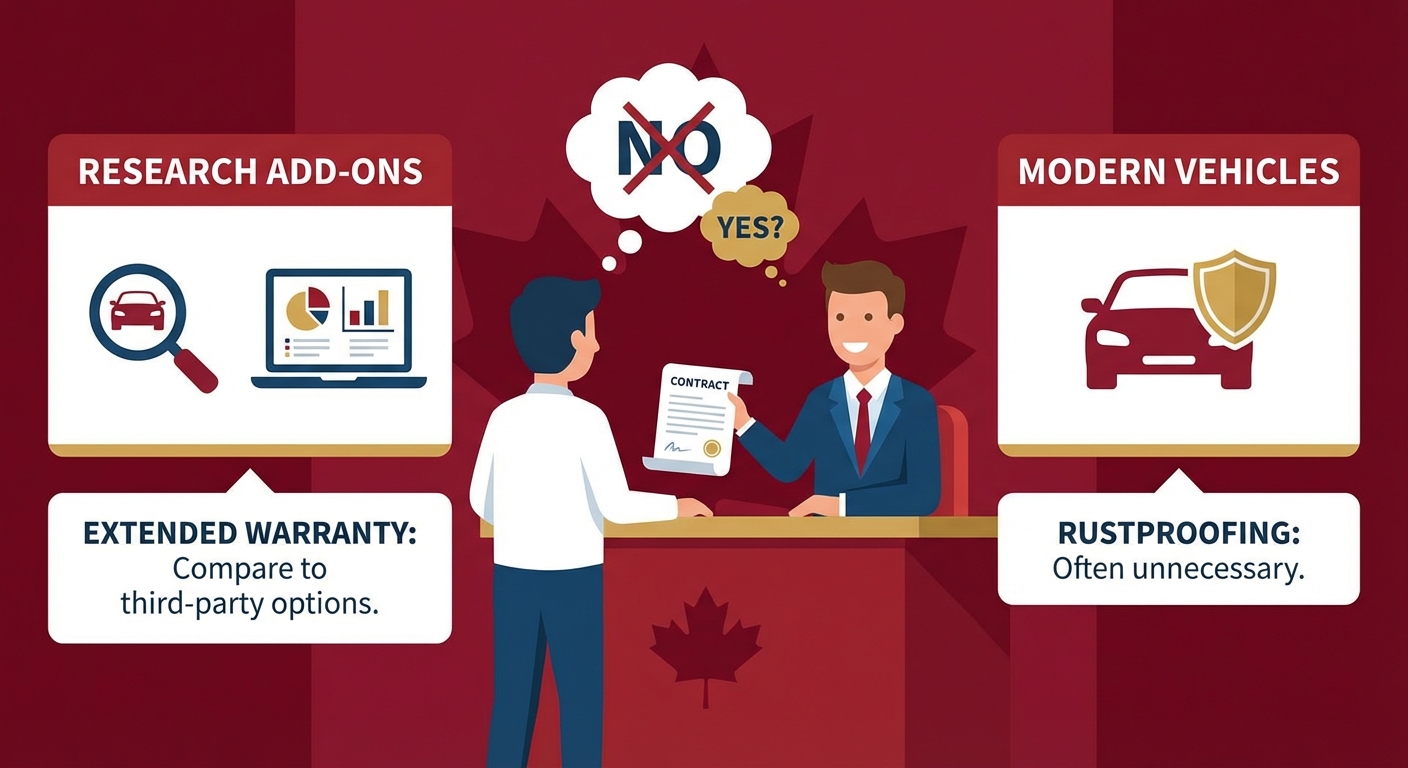
- Identifying Common Dealer Add-ons: Be aware of administration fees, PPSA (Personal Property Security Act) fees, extended warranties, rustproofing, paint protection, fabric protection, and VIN etching. While some might have marginal value, many are highly profitable for the dealer and unnecessary for you.
- Learning to Confidently Decline Unnecessary Extras: Don't be afraid to say "no." Research the value of these add-ons beforehand. An extended warranty, for example, might be worth considering for a used car, but always compare it to third-party options. Rustproofing might be unnecessary for a modern vehicle.
A diverse group of smiling students proudly standing next to a reliable, budget-friendly used car, symbolizing smart choices and newfound independence gained through a well-managed loan.
Beyond Approval: Managing Your Loan & Accelerating Your Financial Future
Getting approved for a car loan is a huge accomplishment, but the journey doesn't end there. Responsible loan management is crucial not only for avoiding financial stress but also for building a robust financial future.
8.1 Making Payments On Time, Every Time:
This is the golden rule of credit building. Every on-time payment is a positive mark on your credit report, demonstrating reliability to future lenders. Conversely, even a single late payment can significantly damage your credit score and incur penalties. Set up automatic payments to ensure you never miss a due date.
8.2 Understanding Your Loan Statements:
Don't just pay the bill; understand it. Your loan statements will show how much of your payment goes towards the principal (the actual amount borrowed) and how much goes towards interest. Tracking your outstanding balance helps you see your progress and stay motivated.
8.3 Early Repayment Strategies (If Possible):
If your budget allows, consider paying extra on your principal whenever you can. Even small additional payments can significantly reduce the total interest you pay over the life of the loan and shorten your repayment term. Check your loan agreement for any prepayment penalties, though these are less common with car loans in Canada.
8.4 Leveraging Your Car Loan to Build Excellent Credit:
A responsibly managed car loan is a powerful tool. By consistently making on-time payments, you're not just paying for a car; you're building a strong credit history. This excellent credit will open doors to future financial opportunities, such as securing a mortgage for a home, obtaining lower interest rates on other loans, or even starting a business. It demonstrates that you are a reliable borrower, a quality highly valued across the financial industry.
PRO TIP: Treat your car loan like a masterclass in financial responsibility. Every on-time payment is a top grade on your credit report, building a solid foundation for your future. This is more than just transportation; it's an investment in your financial literacy and future prosperity.
Your Next Steps to Approval: Driving Forward with Confidence
The journey from dreaming of personal transportation to actually driving your own car as a student with a part-time job is entirely achievable. We've walked through the common myths, demystified the lender's evaluation process, and outlined practical strategies to boost your chances of approval. Now, it's time to take action. Start by meticulously budgeting your income and expenses. Next, check your credit report to understand your current financial standing. Gather all your necessary documents – pay stubs, employment letters, bank statements. Finally, approach lenders with confidence, armed with preparation and a clear understanding of your financial situation and needs. Your independence is within reach.
FAQ: Burning Questions from Canadian Students with Part-Time Jobs
Q1: 'How much income do I *really* need from my part-time job to get approved?'
There isn't a single magic number, as it depends on the vehicle's price, your other debts, and your overall financial situation. Lenders primarily look at your debt-to-income (DTI) ratio. Generally, your total monthly debt payments (including the proposed car loan, insurance, and existing student loans or credit card minimums) should ideally not exceed 40-45% of your gross monthly income. Focus on demonstrating stable, consistent income, and a detailed budget showing you can comfortably afford the payments. Even a modest, reliable income is often preferable to a higher but inconsistent one.
Q2: 'Can I get a car loan with no credit history at all, or do I need to build it first?'
It's more challenging to get approved with absolutely no credit history, as lenders have no track record to assess your reliability. However, it's not impossible, especially if you have a significant down payment, a reliable part-time income, or a co-signer with good credit. It's always beneficial to start building credit, even modestly, before applying for a major loan. A secured credit card or a small student line of credit, used responsibly, can quickly establish a basic credit profile.
Q3: 'What's the absolute best type of car for a student on a tight budget?'
The "best" car is one that prioritizes reliability, fuel efficiency, and low maintenance costs over luxury or brand prestige. Look for compact or subcompact used cars (e.g., Honda Civic, Toyota Corolla, Mazda3, Hyundai Elantra) that are 3-7 years old with a solid maintenance history and reasonable kilometres. These vehicles tend to have lower purchase prices, excellent fuel economy, and affordable insurance premiums, making them ideal for a student budget.
Q4: 'Is it generally better to get a loan from my personal bank or directly through the dealership?'
Neither is universally "better" for all students; it depends on your individual circumstances. Your personal bank might offer better rates if you have an established banking relationship and good credit, but they can be stricter on approvals for those with limited credit. Dealerships often have more flexible options as they work with multiple lenders, including those specializing in various credit profiles. The best strategy is to apply for pre-approval from both your bank (if applicable) and a dealership or specialized online lender like SkipCarDealer.com. Comparing multiple offers gives you leverage to choose the best terms.
Q5: 'What happens if I lose my part-time job or my income significantly changes during the loan term?'
This is a serious situation that requires immediate action. The worst thing you can do is ignore it. Contact your lender as soon as possible to explain your situation. They may be able to offer options like deferring payments for a short period, modifying your payment schedule, or discussing other solutions. Proactive communication is key to avoiding missed payments, which can severely damage your credit score and potentially lead to vehicle repossession.
Q6: 'Are there any specific 'student car loan' programs or grants available in Canada that I should look for?'
Dedicated "student car loan" programs or grants are relatively rare in Canada compared to general student aid. However, some dealerships or manufacturers might occasionally offer student incentives (e.g., cash rebates or slightly reduced interest rates) for recent graduates or those currently enrolled in post-secondary education. It's worth asking about these when you're shopping for a car. Your best bet is usually to focus on strengthening your overall application through credit building, a down payment, and a stable income, rather than relying on specific student-only programs.
Q7: 'How does car insurance factor into the overall cost of owning a car as a student, and how can I minimize it?'
Car insurance is a significant and often underestimated cost for students, especially younger drivers, and can sometimes be more expensive than the car payment itself. Insurers assess risk based on age, driving history, location, and the type of vehicle. To minimize costs:
- Get multiple quotes from different insurance providers before buying a car.
- Choose a reliable, older, and less powerful used car (these are generally cheaper to insure).
- Consider taking a recognized defensive driving course.
- If possible, remain on your parents' insurance policy as an occasional driver, or have them co-sign your policy if you purchase your own.
- Maintain a clean driving record (no tickets or accidents).
- Look for student discounts or good grades discounts from insurance companies.
Always factor insurance into your budget *before* committing to a vehicle purchase.