Essential Worker, Ontario. Bankruptcy? Your Car Just Got Promoted.
Table of Contents
- The Unsung Heroes of Ontario: Why Your Car is More Than Just a Ride
- Key Takeaways
- Navigating the Aftermath: How Bankruptcy Reshapes Your Financial Roadmap in Ontario
- Your Essential Advantage: Leveraging Your Role in Ontario's Economy
- The Ontario Landscape: Finding Your Car Loan Compass After Bankruptcy
- The Real Numbers: Unmasking Interest Rates, Fees, and Hidden Costs in Ontario
- Your Blueprint for Approval: A Step-by-Step Guide for Essential Workers in Ontario
- Negotiating Your Best Deal: Strategies for Success in Ontario's Car Market
- Driving Towards Financial Recovery: Building Credit and Beyond
- When the Road Gets Bumpy: What to Do If Your Application is Denied
- Your Road Ahead: Driving Towards Financial Recovery and Reliable Transportation
- Frequently Asked Questions (FAQ) for Essential Workers in Ontario After Bankruptcy
The Unsung Heroes of Ontario: Why Your Car is More Than Just a Ride
Across Ontario, essential workers form the backbone of our communities. From nurses working double shifts in Toronto to logistics drivers navigating the highways connecting Windsor to Ottawa, and grocery store clerks ensuring shelves are stocked in Thunder Bay, these dedicated individuals keep our province running. But for many, this critical work comes with long commutes, irregular hours, and the non-negotiable demand for reliable transportation. A personal vehicle isn't just a convenience; it's a fundamental tool for maintaining employment, managing family life, accessing vital services, and often, simply getting to and from work, especially in vast regions like the Greater Toronto Area (GTA) or rural Ontario where public transit options are limited or non-existent.
Imagine being an essential healthcare worker in London, Ontario, needing to be at the hospital for a shift at 5 AM, or a skilled tradesperson in Sudbury, relying on your truck to carry tools to job sites scattered across the region. For these individuals, a car is as essential as their work uniform. Yet, a looming financial shadow can threaten this vital asset: bankruptcy. When financial hardship leads to a Consumer Proposal or a Full Bankruptcy, the ability to secure a reliable vehicle can seem like an insurmountable challenge, jeopardizing not only their livelihood but their very stability.
At SkipCarDealer.com, we understand this reality. This article isn't just about getting a car loan; it's about empowering Ontario's essential workforce to regain mobility, rebuild their financial future, and continue their invaluable contributions to our province. We believe your commitment to Ontario deserves a clear path forward, even after bankruptcy.
Key Takeaways
- Bankruptcy is a significant hurdle, but not a permanent roadblock to securing a car loan in Ontario.
- Your status as a consistently employed essential worker in Ontario can be a powerful asset in loan applications.
- Strategic planning, understanding your options, and smart negotiation are crucial for securing favourable terms.
- A responsible car loan can be a foundational step towards rebuilding your credit score and overall financial future.
- Specific lenders and dealerships in Ontario specialize in helping individuals secure car loans post-bankruptcy.
Navigating the Aftermath: How Bankruptcy Reshapes Your Financial Roadmap in Ontario
Experiencing a Consumer Proposal or a Full Bankruptcy in Canada is undoubtedly a challenging event, one that leaves a significant "scar" on your credit report. Major credit bureaus like Equifax and TransUnion will record this information, impacting your credit score and signalling to lenders that you've faced financial distress. For a full bankruptcy, this record can remain on your report for six to seven years after discharge, while a Consumer Proposal typically stays for three years after it's paid off.
Understanding these timelines is crucial when considering a car loan. While it's generally more favourable to apply for a loan after your bankruptcy has been officially discharged, some specialized lenders may consider applications even if you're actively in a Consumer Proposal. However, the 'best' time to apply often coincides with when you've started to rebuild your credit through other means, demonstrating a renewed commitment to financial responsibility. Lenders in Ontario, when assessing a post-bankruptcy applicant, are looking beyond the past. They want to see current stability, consistent income, and a clear indication that you've learned from previous challenges and are now on a path towards recovery. This often means having a few months or even a year of good financial behaviour post-discharge.
For more insights on navigating these specific situations, consider reading our article on Your Consumer Proposal? We're Handing You Keys.
Beyond the discharge date, the gradual rebuilding of your credit is paramount. This process involves establishing new positive credit habits, such as paying bills on time, keeping credit utilization low, and potentially securing a secured credit card. Every positive financial action taken after bankruptcy helps to slowly mend that credit "scar."
Pro Tip: Decoding Your Credit Report Post-Bankruptcy
Did you know you can obtain a free annual credit report from Equifax and TransUnion in Canada? It's an essential first step. Scrutinize every section. Look for any errors, outdated information, or public records (like your bankruptcy) that might be incorrectly listed. Understand your tradelines – these are your individual credit accounts. After bankruptcy, many will show as "discharged" or "included in bankruptcy." Your goal is to start new, positive tradelines. Understanding this report empowers you to discuss your situation knowledgeably with lenders and monitor your progress as you rebuild.
Your Essential Advantage: Leveraging Your Role in Ontario's Economy
As an essential worker in Ontario, you possess a significant advantage when applying for a car loan, even after bankruptcy: stability. Lenders value consistent employment, especially in sectors that are deemed critical to the economy. Whether you're in healthcare, logistics, retail, public service, or manufacturing, your role signifies reliability and a steady income stream, which are indicators of repayment capacity.
Consider a registered nurse in Hamilton working consistent shifts, a truck driver in Kingston making critical deliveries, or a manufacturing plant employee in Windsor. Their unwavering commitment to their roles, often requiring early mornings, late nights, or weekend shifts, underscores the absolute necessity of a dependable vehicle. You must effectively articulate and demonstrate this critical link between your essential work and the need for reliable transportation. For example, if you commute from a rural area outside Ottawa to an urban centre for work, or if your job as an electrician in Kitchener requires you to carry heavy equipment, clearly communicate how a car isn't a luxury, but a non-negotiable tool for your livelihood.
When it comes to income verification, be prepared to provide a comprehensive "arsenal" of documents. This typically includes your most recent pay stubs (at least three months' worth), an employment letter confirming your full-time status, tenure with the company, and annual salary, as well as your T4 slips from previous years. If you consistently work overtime, include records that demonstrate this additional, steady income. The more thoroughly you can prove your consistent and reliable income, the stronger your application will be.
Pro Tip: Crafting Your 'Essential Worker Narrative'
When speaking with lenders or dealership finance managers, don't shy away from your past, but frame it within your current reality. Present yourself as a reliable, committed, and stable borrower who, despite past financial challenges, has learned valuable lessons and is now firmly on a path of recovery. Emphasize your dedication to your essential role, how crucial a reliable vehicle is to maintain that role, and your unwavering commitment to making on-time payments. Your narrative should highlight stability, the practical necessity of the loan for your work, and your proactive steps towards rebuilding financial health.
The Ontario Landscape: Finding Your Car Loan Compass After Bankruptcy
After bankruptcy, the traditional path to a car loan through major Canadian banks like RBC, TD, or BMO might be a difficult first stop. These institutions typically have stricter lending criteria and are less inclined to approve loans for individuals with recent bankruptcy on their credit file. However, this doesn't mean the road ends there. Ontario's auto financing landscape offers several primary avenues for subprime auto loans specifically designed for individuals with challenging credit histories.
Specialized lenders and dealership finance networks are your key players. These entities understand the nuances of rebuilding credit and often have programs tailored for post-bankruptcy applicants. Many dealerships across Ontario, from the bustling streets of Toronto to the smaller communities in Northern Ontario, have dedicated finance departments that work with a network of non-prime lenders.
You might encounter "Buy Here, Pay Here" dealerships, which can be an option of last resort. These dealerships finance their own loans, often with minimal credit checks. While they offer high approval rates, their interest rates can be significantly higher, and their terms less flexible. It's crucial to understand their pros and cons within Ontario's regulatory framework and proceed with extreme caution, always scrutinizing the contract details.
Comparison: Traditional Banks vs. Specialized Lenders (Post-Bankruptcy)
| Feature | Traditional Banks (e.g., RBC, TD) | Specialized Non-Prime Lenders / Dealership Networks |
|---|---|---|
| Approval Likelihood (Post-Bankruptcy) | Very Low | Moderate to High |
| Credit Score Requirements | High (650+) | Flexible (often 400-600) |
| Interest Rates (APR) | Lower (prime rates) | Higher (subprime rates) |
| Loan Terms | Standard, often more flexible | Can be longer to lower monthly payments |
| Focus | Minimizing risk, established credit history | Rebuilding credit, current income stability |
| Vehicle Options | Broader, often new vehicles | Often used vehicles, specific inventory |
| Application Process | Stricter, more documentation | Streamlined, understanding of bad credit |
Identifying key non-prime auto lenders operating across Ontario, from Toronto to Sudbury, is essential. These lenders, often working behind the scenes with dealerships, specialize in assessing risk differently. They consider factors like your employment stability, essential worker status, and the size of your down payment more heavily than your past credit score alone. Many online platforms also act as digital brokers and aggregators, connecting Ontario borrowers with multiple specialized lenders quickly, streamlining the application process and allowing you to compare offers.
If you're in a situation where you have bad credit, even with a disability income, remember that solutions exist. For more information, you can refer to our article: Disability Income? Bad Credit? Your Car Loan Just Got Its Green Light, Toronto.
Pro Tip: Beware of 'Too Good to Be True' Offers
In the subprime market, it's easy to fall prey to predatory lending practices. If an offer seems unbelievably good given your credit history, it likely has hidden costs. Always ask for the full Annual Percentage Rate (APR), not just the monthly payment. Understand the total cost of borrowing over the entire loan term. Be wary of excessively long loan terms (e.g., 96+ months) that make monthly payments seem low but drastically increase the total interest paid. Read all contracts carefully before signing, and don't hesitate to walk away if you feel pressured or if the terms are unclear.
The Real Numbers: Unmasking Interest Rates, Fees, and Hidden Costs in Ontario
Let's talk frankly about the numbers. After bankruptcy, it's a realistic expectation that you will face higher Annual Percentage Rates (APR) on a car loan in Ontario compared to someone with excellent credit. While prime rates might be in the single digits, post-bankruptcy APRs can range from 10% to 29.99% or even higher, depending on several factors. Your credit score (even if recovering), the size of your down payment, the specific vehicle you choose, and the loan term will all influence this rate. A larger down payment, for instance, reduces the lender's risk and can lead to a more favourable rate.
Beyond the APR, it's vital to understand the full scope of your loan. Loan terms commonly range from 60 to 84 months, with some even extending to 96 months. While a longer amortization period will result in lower monthly payments, it significantly increases the total interest you pay over the life of the loan. Consider the impact of payment frequency too: bi-weekly payments (26 per year) can slightly reduce the total interest compared to monthly payments (12 per year) because you're paying down the principal more frequently.
Dealerships also have "extras" that can quickly inflate the final price. These commonly include administration fees, PPSA (Personal Property Security Act) registration fees (a lien on your vehicle), extended warranties, rust protection, paint protection, and other add-ons. While some might offer legitimate value, many are high-profit items for the dealership. Learn to scrutinize and negotiate these. Don't be afraid to decline add-ons you don't need or can obtain elsewhere for less.
The true cost of car ownership extends far beyond the loan itself. In Ontario's competitive insurance market, you can expect higher insurance premiums post-bankruptcy, as your credit history is a factor in insurance rates. Factor in maintenance costs (especially for a used vehicle), fuel efficiency for your typical commute (e.g., daily drive from Hamilton to Mississauga), and regular servicing. A reliable, fuel-efficient vehicle will save you money in the long run.
Pro Tip: The Power of a Down Payment
Even a modest down payment can work wonders for your car loan application after bankruptcy. It signals commitment and financial responsibility to lenders, reducing their perceived risk. A down payment directly reduces the amount you need to borrow, which in turn reduces the total interest paid over the life of the loan. Furthermore, it can sometimes help you qualify for a slightly lower interest rate or better loan terms. Aim for at least 10% of the vehicle's price if possible; even 5% is better than nothing.
Your Blueprint for Approval: A Step-by-Step Guide for Essential Workers in Ontario
Securing a car loan after bankruptcy requires a strategic approach, especially for essential workers who rely on their vehicle for their livelihood. Here’s a step-by-step blueprint to maximize your chances of approval:
Step 1: Financial Housekeeping & Budgeting
Before you even look at cars, create a realistic budget that accounts for all your monthly expenses – housing, utilities, groceries, existing debt payments, and personal care. Determine an affordable monthly car payment that won't strain your finances. Be honest with yourself about what you can comfortably afford. This also helps you understand your debt-to-income ratio, a key metric for lenders.
Step 2: Gathering Your Arsenal
Preparation is key. Compile a comprehensive checklist of all necessary documents. This typically includes:
- Proof of Income: Your three most recent pay stubs, a formal employment letter (confirming full-time status, tenure, and salary), and your T4 slips from the past two years.
- Proof of Residence: Utility bills (hydro, gas, internet) or a lease agreement showing your current address.
- Bankruptcy Discharge Papers: Official documents proving your bankruptcy or Consumer Proposal has been discharged.
- Valid Ontario Driver's License: Ensure it's current and in good standing.
- Proof of Insurance: While you'll need to get new insurance, having a quote or a plan in place shows readiness.
Step 3: The Pre-Approval Advantage
Seeking pre-approval from multiple specialized lenders before you step foot on a dealership lot is a game-changer. Pre-approval provides you with crucial negotiating power, as you'll know your maximum loan amount and interest rate upfront. This clarity empowers you to shop for a vehicle within your confirmed budget, rather than falling in love with a car you can't afford. It also limits the number of hard inquiries on your credit report, as multiple pre-approvals within a short window often count as a single inquiry.
Step 4: Choosing Your Ride Wisely
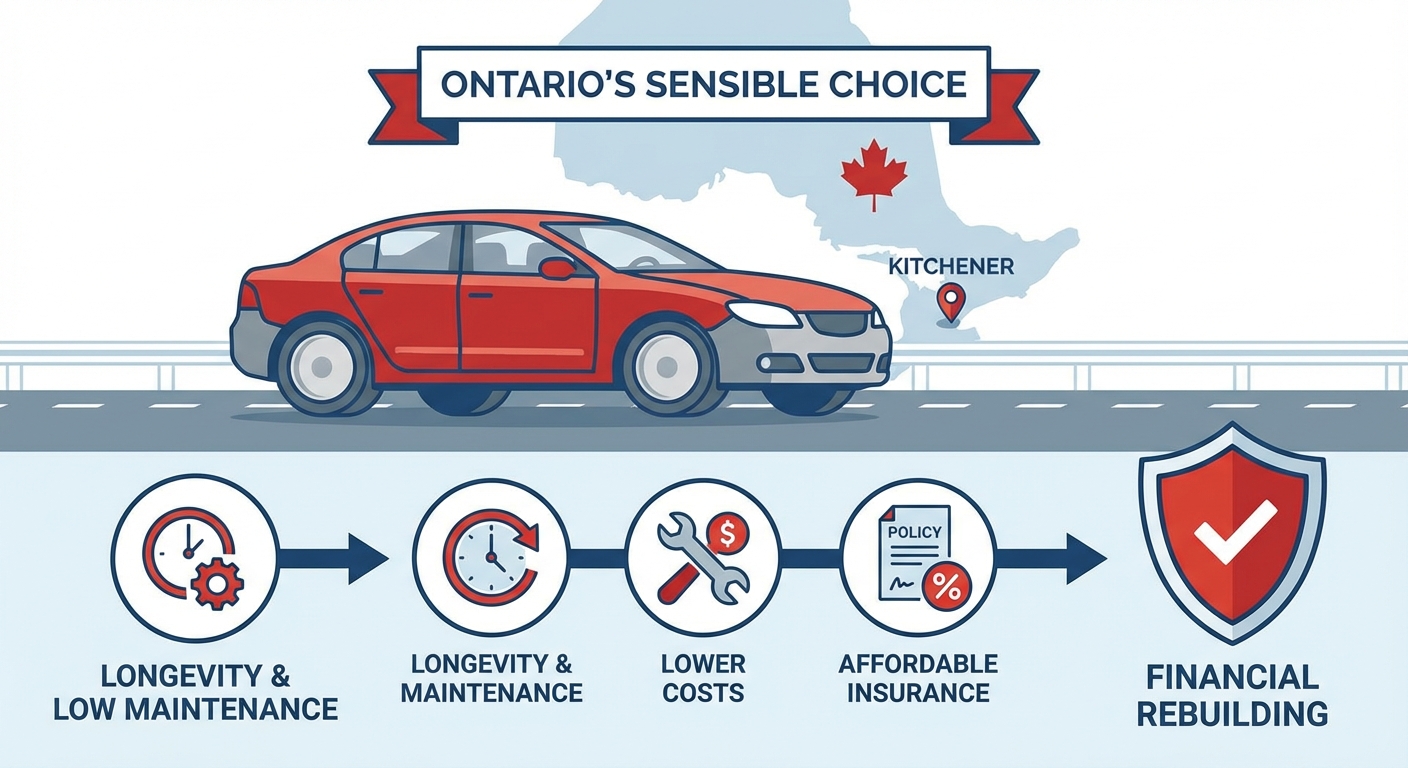
After bankruptcy, luxury should take a back seat to practicality. Focus on vehicle selection criteria such as reliability, fuel efficiency, and lower insurance groups. A used Honda Civic, Toyota Corolla, or Mazda3, for example, are excellent choices for an essential worker in Kitchener or anywhere in Ontario. These vehicles are known for their longevity, lower maintenance costs, and typically more affordable insurance premiums, making them a sensible and sustainable choice for rebuilding your financial standing.
Negotiating Your Best Deal: Strategies for Success in Ontario's Car Market
Negotiating a car deal can feel daunting, especially after bankruptcy, but it's a critical step in securing the best possible terms. Essential workers, armed with their pre-approval and strong employment history, can confidently discuss their financial situation with dealers and lenders. Remember, you are a valuable customer, and transparency about your past, coupled with evidence of your current stability, builds trust.
When you're at the dealership, always focus on the total price of the vehicle and the overall cost of the loan, not just the monthly payment. Dealers often try to distract with low monthly payment figures, which can be achieved by simply extending the loan term to 84 or even 96 months. While this makes payments seem more manageable, it dramatically increases the total interest paid over the loan's lifetime. Always ask for the total interest you'll pay and calculate the full cost yourself.
Deconstructing dealer offers is key. Be wary of promotions like "Factory Invoice Plus $25" – while seemingly attractive, compare these against the fair market value of the vehicle and, crucially, against the terms of your pre-approved loan. Your pre-approval gives you a baseline; use it to leverage a better deal. If the dealership can't match or beat your pre-approved rate or terms, you know where you stand.
If you have a current vehicle to trade in after bankruptcy, manage your expectations. Dealers might offer a lower trade-in value due to your credit situation, as they factor in potential difficulty in selling the trade-in or the need to quickly move inventory. Research your vehicle's value using online tools like Canadian Black Book or Kelley Blue Book. In some cases, it might be better to sell your vehicle privately in Ontario to maximize its value, then use that cash as a larger down payment on your new purchase.
Pro Tip: Don't Be Afraid to Walk Away
Patience is your most powerful negotiating tool. Never feel pressured into making a decision on the spot. Compare multiple offers from different dealerships and lenders. If a deal doesn't meet your needs, doesn't fit your budget, or feels uncomfortable, be prepared to walk away. There are always other vehicles and other dealerships. Your financial well-being is more important than a single sales transaction.
Driving Towards Financial Recovery: Building Credit and Beyond
Securing a car loan after bankruptcy isn't just about getting a new set of wheels; it's a powerful strategic move towards rebuilding your financial future. Your car loan can serve as a significant credit builder. Consistent, on-time payments on your auto loan will be reported to credit bureaus like Equifax and TransUnion, gradually repairing and strengthening your credit score in Ontario. Each successful payment demonstrates reliability and responsibility, slowly erasing the impact of past financial difficulties.
After 12 to 24 months of responsible payments, as your credit score improves, you might explore refinancing opportunities. This involves applying for a new loan to pay off your existing car loan, ideally at a lower interest rate, which can save you a significant amount of money over the remaining term. Keep an eye on your credit score and market rates; when the time is right, a lower rate can make a substantial difference to your monthly budget.
Beyond the loan itself, maintaining financial stability for the long haul is crucial. Continue with the budgeting practices you established, create an emergency fund to cover unexpected expenses (like car repairs or job loss), and actively work to avoid future credit pitfalls. This discipline will ensure your car loan remains a positive force in your financial recovery, not another burden.
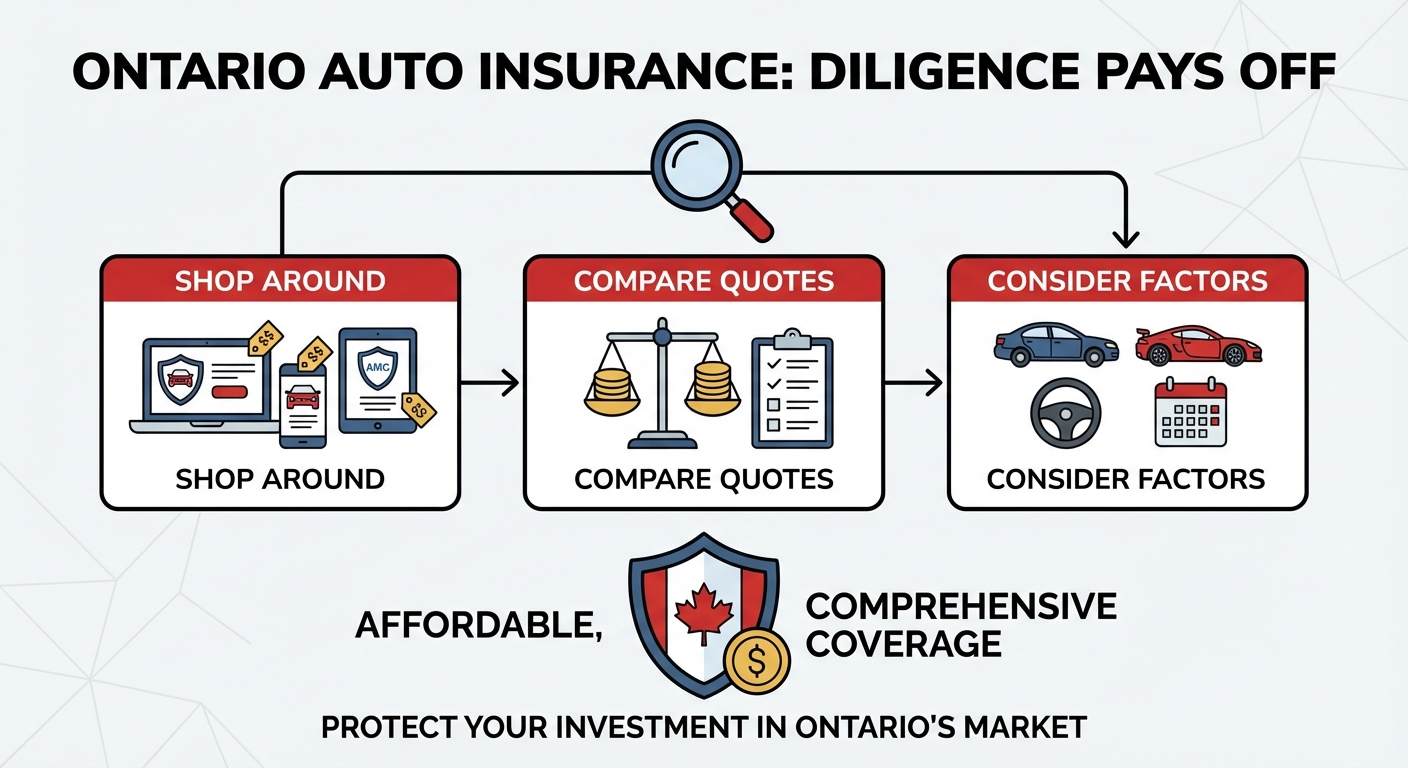
Finally, the importance of insurance cannot be overstated. As an essential worker, you need reliable coverage, but navigating potentially higher premiums post-bankruptcy requires diligence. Shop around, compare quotes from multiple providers in Ontario's competitive insurance market, and consider factors like vehicle type and driving habits to find affordable, comprehensive coverage that protects your investment.
When the Road Gets Bumpy: What to Do If Your Application is Denied
Despite your best efforts, sometimes a car loan application can be denied. It’s disheartening, but it’s not the end of the road. The first crucial step is to understand the 'why.' Lenders are legally required to provide specific reasons for denial. Requesting this information is vital, as it helps you identify underlying issues – perhaps your debt-to-income ratio is too high, your income verification was insufficient, or your credit history still needs more time to recover. Addressing these specific points will strengthen future applications.
If denied, explore alternative paths. A co-signer with good credit (if available) can significantly improve your chances of approval, as their creditworthiness acts as a guarantee for the loan. However, ensure your co-signer understands their full responsibility. Alternatively, focus on building credit through other means, such as a secured credit card or a credit-builder loan, over a period of 6-12 months before reapplying. This demonstrates your ability to manage credit responsibly.
For temporary mobility solutions, consider all your options. If you're in a city with robust public transportation, like using the Toronto Transit Commission (TTC), this might be a viable, albeit less convenient, stopgap. Carpooling with colleagues, utilizing ride-sharing services for critical shifts, or even exploring electric bike options for shorter commutes could help you maintain your essential work responsibilities while you work on improving your financial standing.
Revisit your budget and credit strategy. Are there more expenses you can cut? Can you increase your income? What specific actions can you take to further improve your credit score? Identifying areas for improvement and developing a solid plan will better prepare you for future applications.
Pro Tip: Don't Spam Applications
Resist the urge to apply to multiple lenders in rapid succession after a denial. Each "hard inquiry" on your credit report can slightly damage your score, especially if there are many in a short period. Be strategic. Understand the reason for denial, address the issue, and then target lenders who are more likely to approve your specific situation, perhaps those specializing in bad credit or post-bankruptcy loans.
Your Road Ahead: Driving Towards Financial Recovery and Reliable Transportation
The journey from bankruptcy to securing a reliable vehicle for your essential role in Ontario can seem long and challenging, but it is absolutely achievable. You've navigated the complexities of financial hardship, understood the impact on your credit, and now you have a clear blueprint for moving forward. Essential workers are the very backbone of Ontario's economy, and their mobility and financial security are not just personal matters, but crucial for the well-being of our entire province.
This car loan is more than just transportation; it's a strategic move towards a stronger, more stable financial future and renewed independence. By following the steps outlined, leveraging your essential worker status, and committing to responsible financial habits, you're not just getting approved for a car – you're driving towards recovery, stability, and continued contribution to the communities that depend on you. At SkipCarDealer.com, we are here to help you get the keys to your future.