Your Consumer Proposal? We're Handing You Keys.
Table of Contents
- Key Takeaways for Car Financing During (and After) Your Consumer Proposal
- The Road Ahead: Navigating Car Financing with Confidence
- Navigating the 'During' Phase: Getting Approved While Your Proposal is Active
- The R7 Reality Check: Understanding Your Credit Profile in an Active Proposal
- Who's Lending? Exploring Your Financing Avenues When Options Seem Limited
- Building Your Case: Strategies for Approval and Better Terms
- What to Expect: Interest Rates, Loan Terms, and Hidden Costs
- Car Selection: What Vehicle Can You Realistically Finance During a Proposal?
- Post-Proposal Freedom: Financing After Your Consumer Proposal is Complete
- The Credit Rebuilding Journey: From R7 to Renewed Trust
- Opening Doors: Accessing Mainstream Lenders with Confidence
- Leveraging Your Newfound Credit: Getting the Best Deal Possible
- The Smart Buyer's Playbook: Essential Steps for Any Stage of Your Consumer Proposal
- Step 1: Master Your Budget – Know What You Can Truly Afford
- Step 2: Get Your Documents in Order – Be Prepared for Lender Scrutiny
- Step 3: Research, Research, Research – The Vehicle and the Lender
- Step 4: The Art of Negotiation – Beyond the Sticker Price
- Step 5: Read the Fine Print – Before You Sign Anything
- Beyond the Loan: Maintaining Financial Health and Your New Vehicle
- Making Payments On Time, Every Time: Rebuilding Your Financial Foundation
- Budgeting for Maintenance and Unexpected Repairs: The True Cost of Ownership
- Refinancing Opportunities: When and Why to Consider Them
- Your Next Steps to Approval: Driving Towards a Brighter Financial Future
- Frequently Asked Questions (FAQ)
Key Takeaways for Car Financing During (and After) Your Consumer Proposal
- Yes, securing a car loan is possible, both while your consumer proposal is active and after it's completed. It's not a closed door, but a different path.
- Expect higher interest rates and potentially stricter terms when financing during an active proposal, often requiring alternative lenders who specialize in unique credit situations.
- Building a robust budget and a significant down payment are your most powerful tools for approval and better terms, significantly mitigating lender risk.
- Your credit score will improve significantly post-proposal, opening doors to more conventional lenders and competitive rates, making refinancing a viable strategy.
- Due diligence, negotiation, and avoiding predatory lenders are crucial at every stage of the process to ensure you get a fair deal and protect your financial recovery.
A consumer proposal in Canada is a powerful tool for debt relief, offering a structured path to financial recovery without the finality of bankruptcy. It's a commitment to repaying a portion of your debts over time, often at a reduced amount, under the supervision of a Licensed Insolvency Trustee (LIT). While it's a positive step towards regaining control of your finances, it does impact your credit profile, leading many Canadians to wonder: "Can I still get a car loan with a consumer proposal?"
The answer, emphatically, is yes. At SkipCarDealer.com, we understand that life doesn't stop because you're in a consumer proposal. You still need reliable transportation for work, family, and daily living. This comprehensive guide is designed to demystify the process, empower you with knowledge, and show you exactly how to navigate car financing with confidence, whether your consumer proposal is active or successfully completed. We're not just offering advice; we're handing you the keys to understanding your options.
The Road Ahead: Navigating Car Financing with Confidence
Your journey through a consumer proposal is a testament to your commitment to financial responsibility. While it presents unique challenges in securing credit, it's far from an insurmountable barrier to getting the vehicle you need. The key lies in understanding the landscape, knowing your options, and approaching the process strategically.
Navigating the 'During' Phase: Getting Approved While Your Proposal is Active
Securing a car loan while your consumer proposal is active requires a different approach than traditional financing. Your credit report tells a specific story to lenders, but it's not the only story they're interested in.
The R7 Reality Check: Understanding Your Credit Profile in an Active Proposal
When you enter a consumer proposal, your credit report typically reflects an R7 rating. What does an R7 credit rating truly signify to lenders? It indicates that you are currently making payments under a consolidated debt agreement or a credit counselling program. While it's not as severe as an R9 (bankruptcy), it signals to traditional banks and credit unions that you represent a higher lending risk than someone with a clean credit history. These institutions, bound by strict lending criteria, often view active consumer proposals as a red flag, making it challenging to qualify for their prime rates and standard loan products.
However, it's crucial to remember the temporary nature of this credit impact. A consumer proposal is a finite agreement. It's a structured plan for recovery, not a permanent scarlet letter. This temporary status is precisely why it shouldn't deter you from seeking essential financing. Specialized lenders understand the distinction and are more willing to look beyond the R7 rating to your current financial stability and your commitment to your proposal.
For more on how credit scores impact vehicle financing in Canada, check out our guide on The Truth About the Minimum Credit Score for Ontario Car Loans.
Who's Lending? Exploring Your Financing Avenues When Options Seem Limited
When traditional banks close their doors, other avenues open up. Knowing where to look is half the battle.
- Alternative Lenders & Subprime Specialists: These are your primary partners during an active consumer proposal. Unlike conventional banks, alternative lenders specialize in providing financing to individuals with challenging credit histories, including those in consumer proposals. They assess risk differently, placing more emphasis on your current income, employment stability, and ability to make a down payment rather than solely on your past credit score. When looking for these lenders, prioritize those with transparent terms, positive customer reviews, and a clear commitment to helping you rebuild credit. Avoid any lender that pressures you, demands upfront fees, or refuses to provide a clear, written contract.
- Dealership Financing: Many dealerships, especially larger ones, have robust finance departments with access to a network of specialized lenders, including those who work with subprime credit. They can often streamline the application process and present you with various options. Be clear about your consumer proposal status upfront; a reputable finance manager will know which lenders to approach on your behalf.
-
The 'Buy Here, Pay Here' Trap: These dealerships offer in-house financing, often without credit checks. While seemingly convenient, they come with significant risks.
Pros of 'Buy Here, Pay Here' Cons of 'Buy Here, Pay Here' Easy approval, often no credit check required. Exorbitant interest rates (often 30% or higher). Quick access to a vehicle. Poor quality, older vehicles with limited warranties. Predatory lending practices (e.g., GPS trackers, remote shut-off devices). Payments may not be reported to credit bureaus, hindering credit rebuilding. While they might seem like a last resort, the significant risks and long-term financial burden often outweigh the immediate convenience. Exercise extreme caution and consider all other options first.
Building Your Case: Strategies for Approval and Better Terms
Even with a challenging credit profile, you can significantly improve your chances of approval and secure more favourable terms by presenting a strong financial case.
- The Power of the Down Payment: A substantial upfront payment is your most compelling argument. It directly reduces the amount you need to borrow, thereby lowering the lender's risk. Lenders see a significant down payment as a sign of your commitment and financial stability. It can also lead to lower monthly payments, reduced overall interest paid, and potentially a better interest rate. Aim for as much as you can realistically afford, ideally 10-20% or more of the vehicle's purchase price.
- The Co-Signer Advantage: A co-signer with good credit can dramatically boost your eligibility. They essentially guarantee the loan, meaning if you default, they are legally responsible for repayment. This significantly reduces the lender's risk. A co-signer should be someone with excellent credit, stable income, and a clear understanding of their responsibilities. This is a big ask, so ensure they are fully informed and comfortable with the commitment.
- Demonstrating Stability: Lenders want to see evidence that you are a reliable borrower today, regardless of past issues. Provide essential documents like proof of consistent income (recent pay stubs, employment letters, tax assessments), long-term employment history (job stability is a huge plus), and stable residency (utility bills, lease agreements). The longer you've been at your job and in your home, the better.
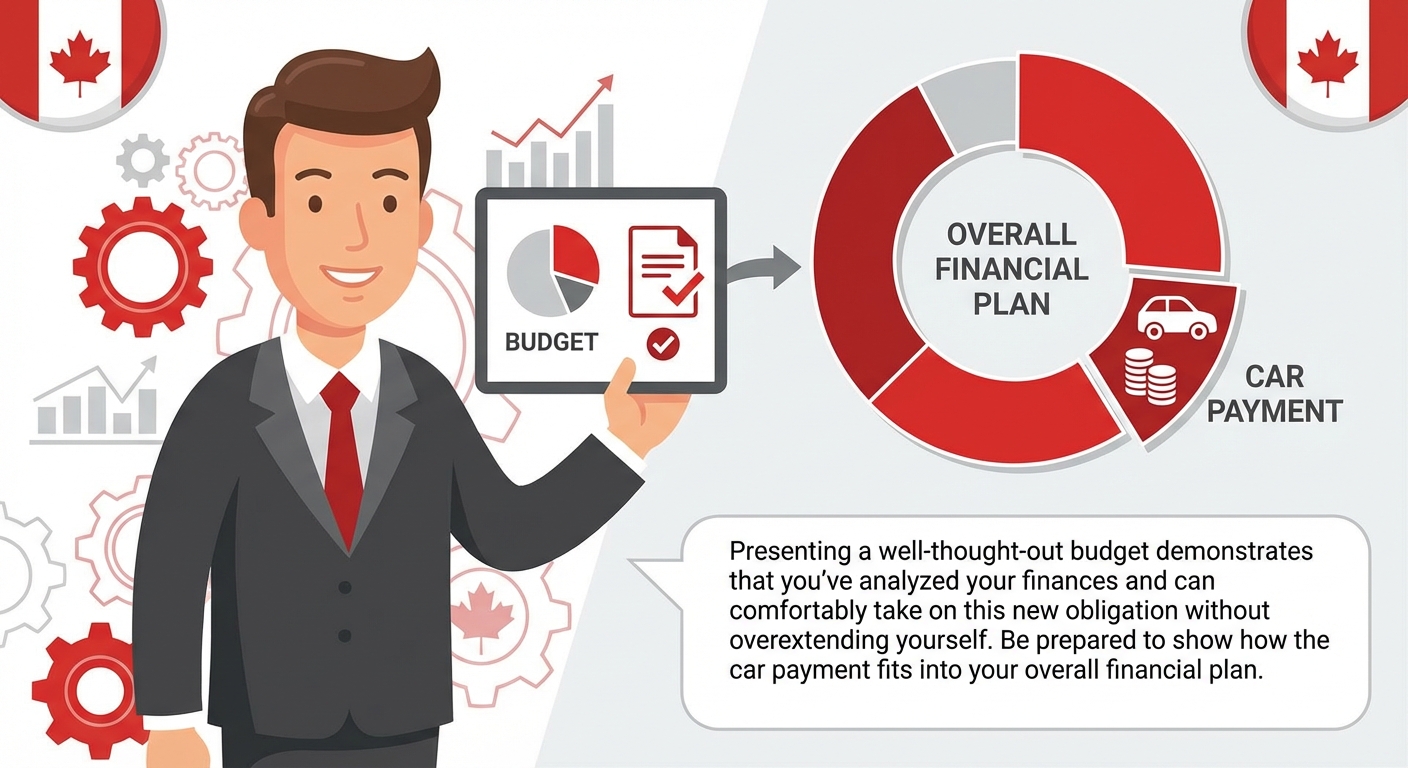
- Budgeting for Success: Why a clear, sustainable personal budget is your most compelling argument for responsible lending. Lenders will scrutinize your ability to afford the monthly car payment along with all your other expenses, including your consumer proposal payments. Presenting a well-thought-out budget demonstrates that you've analyzed your finances and can comfortably take on this new obligation without overextending yourself. Be prepared to show how the car payment fits into your overall financial plan.
 (Context: An infographic illustrating the positive impact of a down payment and/or a co-signer on loan approval chances and interest rates for someone with a challenging credit history. Visually represents 'building your case'.)
What to Expect: Interest Rates, Loan Terms, and Hidden Costs
Transparency is key. Understanding what to expect will help you make informed decisions and avoid surprises.
- The High-Interest Truth: Why rates are elevated during a CP. Lenders are taking on a higher risk, and higher interest rates compensate them for that risk. While prime rates might be 5-10%, during an active consumer proposal, you could see rates anywhere from 15% to 29.9%. What's considered a 'fair' rate for your situation will depend on your specific circumstances, the lender, the vehicle, and the strength of your application (e.g., down payment, co-signer). Always compare offers.
- Shorter Terms, Higher Payments: Lenders might offer shorter loan terms (e.g., 36-60 months instead of 72-84 months) to reduce their exposure to risk. While this means higher monthly payments, it also means you pay less interest over the life of the loan and get out of debt faster. Balancing affordability with the overall cost of borrowing and avoiding prolonged debt is crucial for your financial recovery.
- Watch for Sneaky Fees: Administration fees, loan origination fees, PPSA (Personal Property Security Act) fees, and other charges can inflate the total cost of your loan. Always ask for a full breakdown of all fees. Some fees are legitimate and unavoidable (like PPSA in some provinces), but others might be negotiable or simply excessive.
- The Insurance Factor: How your credit profile might influence your car insurance premiums and what to budget for. In some provinces, your credit history can affect your car insurance rates. Expect that your premiums might be higher due to your credit situation. Always get insurance quotes before finalizing a car purchase to ensure you've budgeted for this significant ongoing expense.
Car Selection: What Vehicle Can You Realistically Finance During a Proposal?
Practicality should guide your vehicle choice when you're in a consumer proposal.
- Used vs. New: The practicalities and significant financial implications for each option. Financing a new car is generally much harder and more expensive with an active consumer proposal due to rapid depreciation and higher loan amounts. Used vehicles, especially those a few years old, are typically more accessible and offer better value. They have already taken the biggest depreciation hit, making them a less risky asset for lenders.
- Reliability Over Luxury: Prioritizing dependable, affordable transportation that won't add unexpected repair costs. Focus on vehicles known for their reliability and low maintenance costs (e.g., Honda Civic, Toyota Corolla, Hyundai Elantra). A breakdown can be a major financial setback, so choose a car that is less likely to surprise you with expensive repairs.
- Avoiding Over-Financing: The dangers of taking on too much debt relative to the vehicle's value and your income. Do not let a lender or salesperson push you into a vehicle that is beyond your means. Over-financing leads to negative equity (where you owe more than the car is worth) and can derail your financial recovery. Stick to a budget that comfortably accommodates your consumer proposal payments, car loan, and all other living expenses.
Post-Proposal Freedom: Financing After Your Consumer Proposal is Complete
Once you've successfully completed your consumer proposal, a new chapter opens for your financial future. This is where your diligent payments truly start to pay off.
The Credit Rebuilding Journey: From R7 to Renewed Trust
How the completion of your proposal significantly impacts your credit report and score. Upon completion, your credit report will be updated to reflect that your consumer proposal is paid in full. This is a monumental step. While the proposal itself will remain on your report for a period (typically three years after completion or six years from filing, whichever comes first), the "paid in full" status signals to lenders that you have met your obligations and are on the path to full financial recovery.
Proactive strategies for actively boosting your credit score post-CP are vital. Consider applying for a secured credit card, where you provide a deposit that acts as your credit limit. Use it responsibly for small purchases and pay the balance in full every month. A credit builder loan, specifically designed to help you establish positive payment history, is another excellent tool. The undeniable importance of consistent, on-time payments on all accounts cannot be overstated; every on-time payment builds a positive history and steadily improves your score.
For a deeper dive into improving your credit, especially if you've faced financial challenges, read our guide on Approval Secrets: How to Refinance Your Canadian Car Loan with Bad Credit, as many of the principles for refinancing apply to general credit rebuilding.
Opening Doors: Accessing Mainstream Lenders with Confidence
With your consumer proposal behind you, the lending landscape shifts considerably in your favour.
- Banks and Credit Unions: What they look for in post-CP applicants and how to meet their criteria. While they may still exercise caution, mainstream lenders are much more receptive to applicants who have successfully completed a consumer proposal. They will look for a period of consistent, positive credit activity since your proposal was completed. Demonstrating stability (employment, residency) and a low debt-to-income ratio will be key.
- Traditional Dealership Financing: Leveraging their wider network of prime lenders. Dealerships can now submit your application to a broader range of banks and financial institutions, not just subprime lenders. This significantly increases your chances of approval for more conventional loans.
- Improved Rates and Terms: The tangible financial benefits of a healthier credit profile and how to capitalize on them. This is where your hard work pays off. You can expect to qualify for significantly lower interest rates and more flexible loan terms, saving you thousands of dollars over the life of the loan compared to what you would have paid during an active proposal.
Leveraging Your Newfound Credit: Getting the Best Deal Possible
Don't just take the first offer. Your improved credit gives you power.
- The strategic advantage of shopping around for pre-approval from multiple lenders. Once your credit is stronger, apply for pre-approval from several banks, credit unions, and online lenders. This allows you to compare offers without committing to a specific vehicle or dealership. Pre-approval gives you a clear budget and negotiating power.
- Negotiating with confidence, armed with your improved credit and comparative offers. When you walk into a dealership with a pre-approval in hand, you're a cash buyer in their eyes. You can focus solely on negotiating the vehicle's price, knowing you already have financing secured. This separates the vehicle negotiation from the financing negotiation, which is a powerful strategy.
- Understanding the impact of multiple credit inquiries during your shopping process. While multiple inquiries can temporarily lower your score, credit bureaus typically treat multiple inquiries for the same type of loan (e.g., car loans) within a short window (14-45 days, depending on the bureau) as a single inquiry. So, shop for your loan within a focused timeframe to minimize the impact.
The Smart Buyer's Playbook: Essential Steps for Any Stage of Your Consumer Proposal
Whether you're actively in a proposal or have just completed it, a strategic approach is vital for successful car financing.
Step 1: Master Your Budget – Know What You Can Truly Afford
This is the foundation of responsible car ownership, especially during financial recovery.
- Accurately calculating your debt-to-income ratio (DTI) and its significance. Your DTI is the percentage of your gross monthly income that goes towards debt payments. Lenders use it to assess your ability to take on new debt. A lower DTI indicates less risk. Factor in your consumer proposal payments, existing debts, and the potential new car loan payment.
- Factoring in all car-related expenses: insurance, fuel, maintenance, registration, and potential repairs. The monthly loan payment is just one piece of the puzzle. Overlook these other costs, and you risk financial strain. Get insurance quotes, estimate fuel costs for your commute, and research typical maintenance costs for the vehicle you're considering.
- Setting a realistic monthly payment target that doesn't strain your finances. Be honest with yourself about what you can comfortably afford, even if a lender pre-approves you for more. Your priority should be maintaining your consumer proposal payments and building a stable financial future.
Step 2: Get Your Documents in Order – Be Prepared for Lender Scrutiny
Being organized demonstrates responsibility and speeds up the approval process.
- Comprehensive proof of income: Recent pay stubs (3-6 months), employment letters detailing your position and salary, and past tax assessments (Notice of Assessment). If self-employed, prepare your business financial statements and tax returns.
- Proof of residency: Current utility bills, a signed lease agreement, or property tax statements.
- Valid identification: Your Canadian driver's license and another piece of government-issued ID (e.g., passport).
- Your consumer proposal filing documents and completion certificate (if applicable): Having these ready demonstrates transparency and allows lenders to verify your status quickly.
Step 3: Research, Research, Research – The Vehicle and the Lender
Knowledge is power in the car buying process.
- Comparing vehicle reliability, fuel efficiency, and resale value. Look at consumer reports, reliability ratings (e.g., JD Power, Consumer Reports), and online reviews. A reliable, fuel-efficient car will save you money in the long run.
- Thoroughly researching lender reviews, checking their Better Business Bureau (BBB) rating, and understanding their lending practices. Look for lenders with positive reputations, clear communication, and fair terms. Avoid those with numerous complaints or a history of aggressive collection tactics.
- Differentiating between various loan products: fixed vs. variable rates, open vs. closed loans. Most car loans are fixed-rate, closed loans. Understand what these terms mean for your ability to repay early or if interest rates fluctuate.
Step 4: The Art of Negotiation – Beyond the Sticker Price
Every dollar saved is a dollar towards your financial recovery.
- Strategically negotiating the vehicle's purchase price separately from the financing terms. This is a critical tactic. Get the best possible price on the car first, then discuss financing. Don't let a salesperson combine these discussions, as it can obscure the true cost.
- Critically questioning and potentially declining costly add-ons (extended warranties, rust proofing, credit insurance). Many add-ons have significant markups and may not offer good value. Research them thoroughly and only accept what you truly need and understand.
- Comparing and leveraging multiple loan offers to secure the best possible deal. If you have multiple pre-approvals, use them as leverage. A dealership's finance department might be able to beat an outside offer to secure your business.
Step 5: Read the Fine Print – Before You Sign Anything
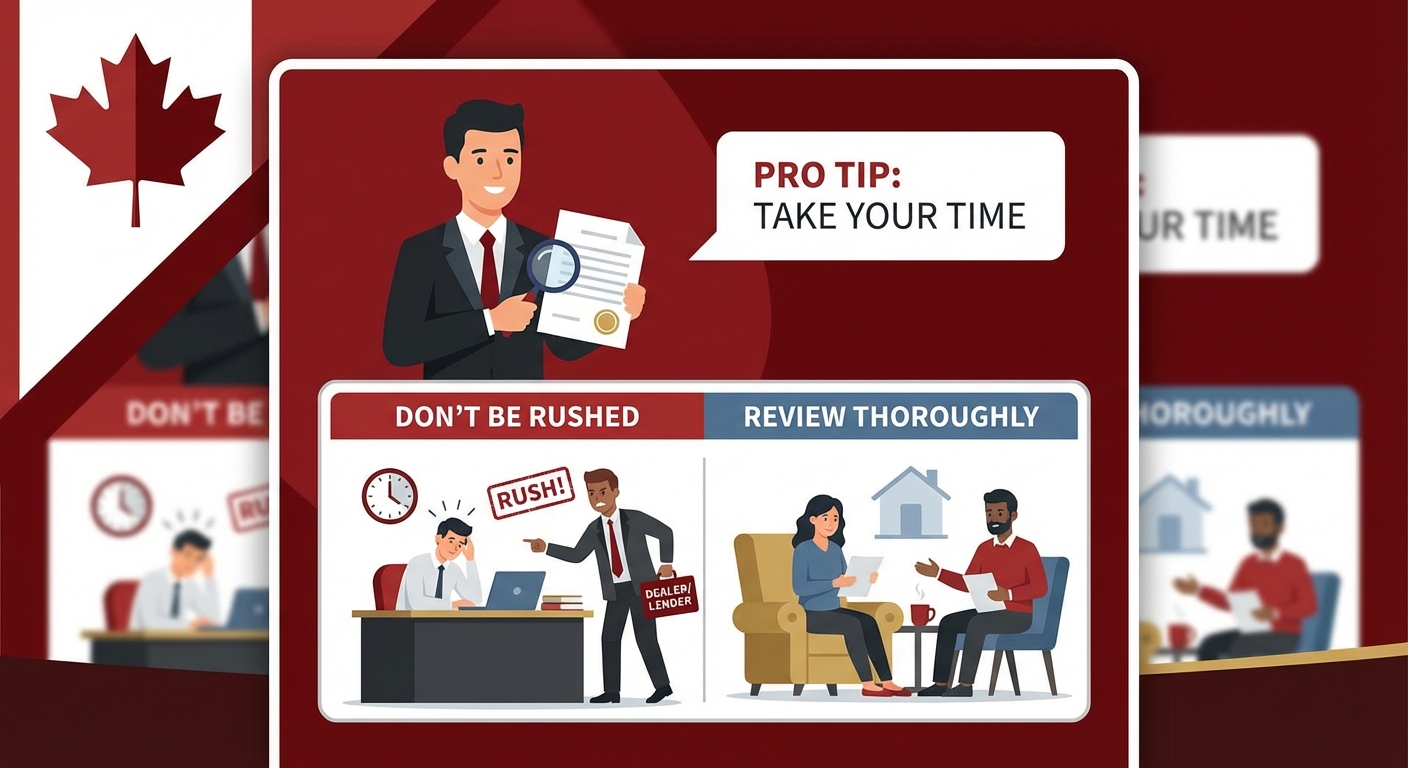
Never rush this final, crucial step.
- A meticulous review of the full loan agreement: interest rate (APR), loan term, total cost of borrowing, and any fees. Ensure every detail matches what was discussed and agreed upon. The Annual Percentage Rate (APR) is the most important number, as it includes the interest rate plus certain fees, giving you the true annual cost of the loan.
- Understanding penalty clauses for early repayment or default. Some loans have penalties for paying them off ahead of schedule (prepayment penalties), while others are "open" and allow early repayment without penalty. Know what you're signing up for.
- Clarifying all terms and conditions before committing. If you have any questions, ask them. Do not sign until you fully understand every aspect of the agreement.
 (Context: A comparative chart or diagram clearly showing the difference in average interest rates, loan terms, and total cost of borrowing between financing during an active consumer proposal vs. after its completion, highlighting the financial benefits of improved credit.)
Beyond the Loan: Maintaining Financial Health and Your New Vehicle
Getting the loan is a significant achievement, but maintaining your financial health and your vehicle is an ongoing commitment.
Making Payments On Time, Every Time: Rebuilding Your Financial Foundation
The direct and profound impact of consistent, on-time payments on your credit score and financial reputation cannot be overstated. Each on-time payment on your car loan, and indeed on your consumer proposal, actively rebuilds your credit profile, demonstrating reliability and responsibility to future lenders. Strategies for ensuring timely payments include setting up automatic transfers from your bank account to the lender on your paycheque date, or scheduling reminders well in advance of the due date. Missing payments will not only incur fees but also damage the credit you are working so hard to rebuild.
Budgeting for Maintenance and Unexpected Repairs: The True Cost of Ownership
Understanding the ongoing, often hidden, costs of car ownership beyond the monthly payment is crucial. These include routine maintenance (oil changes, tire rotations), unexpected repairs (which can happen even with reliable vehicles), and wear-and-tear items like new tires, brakes, or battery replacements. The importance of building an emergency fund specifically for vehicle maintenance and unexpected repairs cannot be stressed enough. Aim to set aside a small amount each month into a dedicated savings account. This fund acts as a buffer, preventing minor car issues from becoming major financial crises that could jeopardize your car loan payments or your consumer proposal.
Refinancing Opportunities: When and Why to Consider Them
Leveraging your improved credit score post-proposal to secure a lower interest rate on your existing loan is a smart financial move. Once your consumer proposal is completed and you've established a year or two of consistent, positive payment history on your car loan and other credit accounts, your credit score will have improved significantly. This makes you a more attractive borrower to mainstream lenders. Key indicators that refinancing makes financial sense include a substantial drop in interest rates since you took out your original loan, a significant improvement in your credit score, or if you can reduce your monthly payment without extending the loan term excessively. Shop around for refinance offers, comparing the new interest rate, fees, and total cost of borrowing to ensure it truly benefits your financial situation.
Your Next Steps to Approval: Driving Towards a Brighter Financial Future
Securing a car loan during or after a consumer proposal is not just possible; it's a tangible step towards rebuilding your financial life and achieving greater independence. While the path may require more strategic planning and careful consideration than conventional financing, the rewards of reliable transportation and a strengthened credit profile are well worth the effort. At SkipCarDealer.com, we believe in empowering Canadians to make informed decisions and overcome financial hurdles. Take the first step with confidence, armed with the knowledge and strategic approach outlined in this guide. Your brighter financial future, complete with keys in hand, is within reach.