Disability Income? Bad Credit? Your Car Loan Just Got Its Green Light, Toronto.
Table of Contents
- Beyond the 'No': Your Path to a Car Loan in Toronto with Disability Income and Bad Credit
- Key Takeaways
- Debunking the Myths: Why Disability Income & Bad Credit Aren't Deal-Breakers
- Decoding Disability Income: What Lenders Really See (ODSP, CPPD, AISH, and More)
- Understanding Your Income Stability: From Ontario Disability Support Program to Federal Programs
- Beyond the Benefit Cheque: Leveraging All Your Income Streams
- Conquering Bad Credit: Strategies for Approval Despite Your Score
- The Truth About Your Credit Score: What Numbers Matter Most to Car Lenders
- Pro Tip: Your Free Credit Report & Score – The First Step to Empowerment
- Immediate Credit Boosters: Small Changes, Big Impact Before You Apply
- Unlocking Approval: Your Step-by-Step Blueprint for a Car Loan
- Pre-Approval Power: Why It's Your Secret Weapon (and How to Get It)
- The Document Checklist: What Lenders Need to See (and How to Prepare It)
- Navigating Lender Types: Finding Your Best Match in Toronto and Beyond
- The Co-Signer & Down Payment Advantage: Boosting Your Odds
- Beyond Approval: Understanding Your Car Loan's True Cost
- Interest Rates & Loan Terms: What to Expect and How to Negotiate
- The Hidden Costs: What Else to Budget For (Insurance, Maintenance, Fees)
- Pro Tip: The Power of a Spreadsheet – Budgeting for Your New Wheels
- Choosing Your Ride: Smart Vehicle Selection for Your Budget & Needs
- Reliability Over Luxury: Prioritizing Practicality
- Accessibility Needs: Finding a Vehicle That Works For You
- Your Green Light Moment: Driving Forward with Confidence
- Building Better Credit: Your Path to Future Financial Freedom
- Consumer Rights & Protections in Ontario: Know Your Power
- Your Next Steps to Approval: A Final Call to Action
- Frequently Asked Questions (FAQ): Quick Answers to Your Top Concerns
Beyond the 'No': Your Path to a Car Loan in Toronto with Disability Income and Bad Credit
Living in a vibrant, bustling city like Toronto offers incredible opportunities, but it also presents unique challenges. For many, reliable transportation isn't just a convenience; it's a necessity for accessing appointments, employment, education, and maintaining social connections. If you're receiving disability income and have been told "no" by traditional lenders due to a less-than-perfect credit history, you know this frustration intimately. You might feel overlooked, your financial stability questioned, and your independence limited.
At SkipCarDealer.com, we understand that your situation is unique, not a barrier. We firmly believe that receiving disability income, whether it's from the Ontario Disability Support Program (ODSP), Canada Pension Plan Disability (CPPD), or other provincial programs like Assured Income for the Severely Handicapped (AISH) in Alberta, combined with a challenging credit score, does not automatically disqualify you from getting a car loan. In fact, for specialized lenders, your stable, government-backed income can be a significant asset.
This comprehensive guide is designed to empower you. We'll dismantle the myths, illuminate the path to approval, and provide actionable strategies to help you secure the car loan you need to navigate Toronto and beyond with confidence. Your green light moment is closer than you think.
Key Takeaways
- Disability Income is Valued: Lenders recognize the stability of government-issued disability benefits (ODSP, CPPD, AISH) as reliable income for car loan approval, often preferred over fluctuating employment income.
- Bad Credit Isn't a Dead End: While a low credit score presents challenges, specialized lenders and strategic preparation can lead to approval, even in major cities like Toronto or Calgary.
- Know Your Financial Picture: Understanding your credit report and all your income streams (not just disability benefits) is crucial for a successful application.
- Pre-Approval is Power: Getting pre-approved helps you understand your budget, negotiate better, and streamline the entire car-buying process without impacting your credit score multiple times.
- Budget Beyond Payments: Account for all car-related expenses – insurance, maintenance, fuel – to ensure your new vehicle remains affordable long-term.
- Strategic Vehicle Choice: Prioritize reliable, fuel-efficient used vehicles that fit your budget and accessibility needs.
- Rebuild Your Credit: A well-managed car loan can be a powerful tool for improving your credit score over time, opening doors to future financial opportunities.
Debunking the Myths: Why Disability Income & Bad Credit Aren't Deal-Breakers
The conventional wisdom often suggests that if you're on disability income and have bad credit, securing a car loan is an insurmountable challenge. This perception, unfortunately, discourages many deserving individuals from even exploring their options. But it's time to directly confront and debunk these pervasive myths.
The biggest myth is that disability income is not considered "real" or "sufficient" income by lenders. This couldn't be further from the truth, especially for specialized auto finance providers. Programs like the Ontario Disability Support Program (ODSP), Canada Pension Plan Disability (CPPD), and provincial equivalents such as Alberta's Assured Income for the Severely Handicapped (AISH) provide a stable, predictable income stream. Unlike some forms of employment income that can fluctuate due to hours, commissions, or job changes, disability benefits are consistent, making them highly attractive to lenders who prioritize stability.
Another common misconception is that a bad credit score automatically leads to an outright rejection. While it's true that traditional banks and credit unions might be more stringent, a whole ecosystem of specialized lenders exists precisely to serve individuals with less-than-perfect credit histories. These lenders understand that life happens – unexpected medical expenses, job loss, or past financial setbacks can impact credit scores without reflecting a person's current ability or willingness to pay. They look beyond just the score, evaluating your overall financial stability, including your consistent disability income, as a primary factor.
The key isn't to pretend these factors don't exist, but to understand *how* to present your financial situation in the most favourable light and to approach the *right* lenders. Your disability income, far from being a disqualifier, is often seen as a reliable foundation. Your bad credit, while requiring a different approach, is a hurdle that can be overcome with the right strategies and partners.
Decoding Disability Income: What Lenders Really See (ODSP, CPPD, AISH, and More)
Understanding Your Income Stability: From Ontario Disability Support Program to Federal Programs
When you apply for a car loan, lenders are primarily concerned with one thing: your ability to consistently make your monthly payments. This is where disability income often shines. While many people assume that because it's "not employment income," it's viewed negatively, the opposite is often true for understanding lenders.
Consider the Ontario Disability Support Program (ODSP). This provincial program provides financial assistance to eligible Ontarians with disabilities. Similarly, Canada Pension Plan Disability (CPPD) is a federal program that offers income replacement to individuals unable to work due to a severe and prolonged disability. Other provinces have their own equivalents, such as the Assured Income for the Severely Handicapped (AISH) in Alberta, or disability assistance programs in British Columbia.
What do these programs have in common from a lender's perspective? Stability and predictability. Unlike a fluctuating hourly wage or commission-based income, disability benefits are typically fixed and disbursed regularly. This consistency is a major positive factor. Lenders appreciate that they can confidently project your income month after month, reducing their perceived risk. They see a reliable payment source, which is often more reassuring than a high but volatile employment income.
To present these incomes effectively, gather your official statements. ODSP recipients can provide their monthly statements. CPPD recipients will have official letters or statements from Service Canada. Bank statements showing consistent direct deposits of these benefits over several months (typically 3-6 months) are also excellent proof. The clearer and more organized your documentation, the smoother the application process will be.
Beyond the Benefit Cheque: Leveraging All Your Income Streams
While your primary disability income is a strong foundation, it's crucial not to overlook any other income sources, no matter how small they might seem. Lenders are interested in your total financial picture, and every additional dollar contributes to your overall debt-servicing capacity.
Do you engage in part-time, casual, or seasonal work that supplements your disability benefits? Even a few hundred dollars a month can make a difference. Perhaps you receive Canada Child Benefit payments, rental income from a spare room, or spousal support? All these streams, when combined, can significantly bolster your application, making you a more attractive borrower. For more on maximizing your income presentation, check out our guide on Your Income's a Playlist, Not a Single. Get Your Car, Edmonton.
The key is documentation. For part-time work, provide recent pay stubs or letters from employers. For child tax benefits, show bank statements clearly indicating the deposits. Rental income can be proven with a lease agreement and bank statements. Even if an income source isn't large enough on its own to qualify for a loan, its cumulative effect with your disability benefits can push you over the threshold, especially in a city like Toronto where living costs are higher.
Conquering Bad Credit: Strategies for Approval Despite Your Score
The Truth About Your Credit Score: What Numbers Matter Most to Car Lenders
Let's be frank: a "bad credit" score does create hurdles. However, it's not the end of the road. Understanding what your credit score actually represents, and what car lenders specifically look at, is your first step towards overcoming these challenges. In Canada, your credit score is primarily generated by two credit bureaus: Equifax and TransUnion. They use different scoring models, such as FICO Score and VantageScore, which can result in slightly different numbers, though they generally reflect the same underlying financial behaviour.
For car lenders, a "bad credit" score typically falls below 600, and sometimes even below 650, depending on the lender. But the raw number isn't the only factor. Lenders scrutinize the details of your credit report, focusing on:
- Payment History: This is paramount. A history of missed or late payments (especially recent ones) is a red flag. Conversely, even with a low score, showing consistent on-time payments, even for small debts, is a positive.
- Credit Utilization: How much of your available credit are you using? High utilization (e.g., maxed-out credit cards) suggests financial strain. Keeping balances low relative to your limits is favourable.
- Length of Credit History: A longer history with positive accounts is generally better, as it provides more data for lenders to assess.
- Types of Credit: A mix of credit (e.g., a credit card and a small installment loan) can be seen as positive, showing you can manage different types of debt.
- Public Records: Bankruptcies, consumer proposals, or collections accounts significantly impact your score and will be closely examined. However, many specialized lenders are adept at working with applicants post-bankruptcy or consumer proposal. For more insights into how your credit score is evaluated beyond the number, read our article on Your Credit Score is NOT Your Rate. Get a Fair Loan, Toronto.
The good news is that specialized car loan lenders in Toronto and across Canada often have more flexible criteria. They understand that a credit score is a snapshot of the past, and they are often more willing to look at your current income stability (like ODSP or CPPD) and your desire to rebuild your credit.
Pro Tip: Your Free Credit Report & Score – The First Step to Empowerment
Before you even think about applying for a car loan, obtain your free credit report and score from both Equifax and TransUnion. You are entitled to one free report from each bureau annually. This isn't just about knowing your score; it's about understanding the detailed history that contributes to it. Scrutinize your report for any errors – incorrect addresses, accounts that aren't yours, or payments wrongly reported as late. Disputing and correcting these errors can sometimes provide an immediate, albeit small, boost to your score. Knowing your starting point is crucial for developing a realistic strategy for approval and will help you discuss your situation confidently with lenders.
Immediate Credit Boosters: Small Changes, Big Impact Before You Apply
While a complete credit overhaul takes time, there are immediate, actionable steps you can take to make your credit profile more appealing to lenders, even with bad credit. These small changes can have a surprisingly big impact on a lender's perception of your financial responsibility.
- Pay Down Small Debts: If you have any outstanding small debts, such as a minor credit card balance or a forgotten utility bill in collections, prioritize paying them off. Even reducing a high credit card balance to below 30% of its limit can positively impact your credit utilization ratio.
- Dispute Errors: As mentioned, review your credit report meticulously. If you find any inaccuracies, dispute them immediately with the credit bureau. Correcting a single error can sometimes improve your score.
- Become an Authorized User: If you have a trusted family member or friend with excellent credit, they might be willing to add you as an authorized user on one of their credit cards. You don't even need to use the card; simply being associated with a well-managed account can positively influence your credit file. Discuss this carefully, as their responsible usage will reflect on your report.
- Avoid New Debt: In the months leading up to your car loan application, refrain from opening any new credit accounts. This includes new credit cards, store cards, or personal loans. Too many recent credit inquiries can temporarily lower your score and make lenders wary.
- Ensure All Payments are On-Time: This cannot be stressed enough. Even if it's just your phone bill, internet bill, or a small existing loan, make sure all payments are made on or before their due dates. Consistent, on-time payments are the bedrock of good credit. For more advice on navigating credit challenges, refer to our article on Flat Tire, Flat Credit? Toronto, We've Got Your Fix.
These steps demonstrate to lenders that you are actively working to manage your finances responsibly, which can significantly improve your chances of approval, especially when combined with your stable disability income.
Unlocking Approval: Your Step-by-Step Blueprint for a Car Loan
Pre-Approval Power: Why It's Your Secret Weapon (and How to Get It)
Imagine walking into a dealership in Toronto already knowing exactly how much you can spend, what your interest rate will likely be, and what your monthly payments will look like. That's the power of pre-approval, and it's your secret weapon, especially when dealing with disability income and bad credit.
Benefits of Pre-Approval:
- Clear Budget: You'll know your exact spending limit, preventing you from falling in love with a car outside your financial reach.
- Negotiating Power: You become a cash buyer in the eyes of the dealership. This means you can focus on negotiating the best price for the vehicle, rather than getting caught up in loan terms.
- Reduced Stress: The financial uncertainty is removed, allowing you to enjoy the car shopping experience.
- Avoid Multiple Hard Inquiries: Many pre-approval processes involve a soft credit check, which doesn't harm your score. Once you're pre-approved, you can shop around with confidence, minimizing the number of hard inquiries on your report.
How to Get Pre-Approved:
The process for getting pre-approved with specialized lenders like SkipCarDealer.com is straightforward. You'll typically complete an online application that asks for basic personal information, details about your income (including ODSP, CPPD, or other benefits), and your residency. Our team works with a network of lenders who understand and value stable, non-employment income and are experienced in approving loans for individuals with various credit situations across Canada, from Toronto to Vancouver and Calgary. They will assess your application based on your overall financial health, not just your credit score.
Once submitted, you'll usually receive a decision quickly, often within hours. This pre-approval comes with a loan amount and an estimated interest rate, giving you a tangible figure to work with when you start looking for your new vehicle.

The Document Checklist: What Lenders Need to See (and How to Prepare It)
Being prepared with the right documentation is key to a smooth and efficient car loan application process. Lenders need verifiable proof of your identity, income, and residency to approve your loan. Having everything organized beforehand can significantly speed up your approval, especially when applying with disability income.
Here’s a comprehensive list of what you’ll likely need:
- Proof of Income:
- Official statements from the Ontario Disability Support Program (ODSP), Canada Pension Plan Disability (CPPD), or other provincial disability programs (e.g., AISH in Alberta).
- Bank statements (typically 3-6 months) showing consistent direct deposits of your disability benefits.
- If you have additional income (part-time work, child tax benefits, rental income), provide recent pay stubs, official letters, or bank statements for these as well.
- Proof of Residency:
- Recent utility bills (hydro, gas, internet) in your name, showing your current Toronto address.
- Lease agreement or mortgage statement.
- Driver’s license or other government-issued ID with your address.
- Identification:
- Valid Canadian Driver’s License (essential for driving, but also serves as primary ID).
- Secondary ID such as a Canadian passport, provincial ID card, or major credit card.
- Insurance Details:
- Proof of valid car insurance (you'll need to arrange this before driving the car off the lot). Lenders require you to have full coverage to protect their investment.
- Banking Information:
- Void cheque or direct deposit form for setting up automatic loan payments.
Tips for Organizing Your Documents:
- Create a dedicated folder (physical or digital) for your car loan application.
- Ensure all documents are current and legible.
- If providing bank statements, highlight or clearly mark the disability income deposits to make it easier for the lender to identify.
Navigating Lender Types: Finding Your Best Match in Toronto and Beyond
Not all lenders are created equal, especially when you're seeking a car loan with disability income and bad credit. Understanding the landscape of financing options is crucial for finding the best match for your unique situation in cities like Toronto, Ottawa, or even across the country in Calgary.
| Lender Type | Pros | Cons | Best For |
|---|---|---|---|
| Traditional Banks/Credit Unions | Typically offer the lowest interest rates for prime borrowers. | Very strict credit score requirements; less flexible with disability income alone; often require a significant down payment. | Individuals with excellent credit and stable employment history. Unlikely for bad credit/disability income. |
| Dealership Financing (Captive Lenders) | Convenient, one-stop shopping; can sometimes offer incentives for specific models; may have in-house financing programs. | May prioritize their own profit over your best interest; less transparency in rates; limited options if their specific lenders decline you. | Buyers with decent credit or those who can negotiate effectively. Some in-house financing might be an option for bad credit, but often with higher rates. |
| Specialized Bad Credit/Disability Income Lenders | High approval rates for bad credit and disability income (like ODSP/CPPD); focus on income stability over credit score; flexible terms. | Interest rates may be higher than prime rates (due to higher perceived risk). | YOU! Individuals on disability income, with bad credit, or those who have faced bankruptcy or consumer proposals. Highly recommended for applicants in Toronto, Ottawa, Calgary, and other major Canadian cities. |
For individuals on disability income with bad credit, specialized lenders are overwhelmingly the most promising avenue. These financial institutions, often working through platforms like SkipCarDealer.com, have extensive experience in evaluating applications based on stable, non-employment income sources. They understand the nuances of ODSP, CPPD, and other provincial programs like AISH in Alberta, viewing them as reliable. They also have flexible underwriting criteria for past credit challenges, focusing more on your current ability to pay and your future financial commitment.
When looking for these specialized lenders, seek out companies that explicitly advertise their willingness to work with bad credit and disability income. They are designed to help you get approved, even if you've been turned down elsewhere. Many operate online, making the application process accessible from anywhere in Ontario, Alberta, or British Columbia.
The Co-Signer & Down Payment Advantage: Boosting Your Odds
Even with specialized lenders, every little bit helps to strengthen your application. Two powerful tools that can significantly boost your approval odds and potentially secure better loan terms are a co-signer and a down payment.
The Co-Signer Advantage:
A co-signer is someone with good credit who agrees to take on legal responsibility for your car loan if you're unable to make payments. From a lender's perspective, this reduces their risk substantially because they have a second, financially strong individual to pursue if you default. If you can find a trusted family member or friend in Toronto (or anywhere in Canada) with a strong credit history who is willing to co-sign, it can:
- Significantly increase your chances of approval.
- Potentially lead to a lower interest rate, saving you money over the life of the loan.
- Help you build your own credit history if you make all payments on time.
It's important to have an open and honest conversation with a potential co-signer about the responsibilities involved, as their credit will also be impacted if you miss payments.
The Down Payment Impact:
A down payment is the initial amount of money you pay upfront towards the purchase price of the vehicle. Even a small down payment can make a big difference. Lenders view a down payment as a sign of your commitment and financial stability. It reduces the amount you need to borrow, which in turn reduces the lender's risk. For more on how even a small down payment can help, read our article on Your Down Payment Just Called In Sick. Get Your Car.
Benefits of a Down Payment:
- Increased Approval Chances: Shows lenders you have "skin in the game."
- Lower Monthly Payments: Less money borrowed means lower payments.
- Less Interest Paid Overall: You're financing a smaller amount, so you'll pay less interest over the loan term.
- Reduced Negative Equity Risk: Helps prevent you from owing more on the car than it's worth, especially in the early years of the loan.
While a large down payment isn't always feasible, even $500 or $1,000 can make a positive impression and improve your loan terms. Consider saving diligently or looking for unexpected windfalls to contribute to a down payment.
Beyond Approval: Understanding Your Car Loan's True Cost
Interest Rates & Loan Terms: What to Expect and How to Negotiate
With bad credit and disability income, it's realistic to expect a higher interest rate than someone with excellent credit. This is because lenders perceive a higher risk. However, "higher" doesn't mean "unaffordable" or "unfair." Specialized lenders work within a range that makes loans accessible while still managing their risk. Interest rates can vary significantly, so understanding what to expect and how to negotiate is vital.
What to Expect: For bad credit car loans in Toronto, rates can range from the high single digits to the mid-twenties or even higher, depending on your specific credit profile, income stability, and the vehicle you choose. Don't be discouraged by these numbers initially; focus on the total cost and monthly payment that fits your budget.
Loan Terms: The loan term refers to the length of time you have to repay the loan, typically expressed in months (e.g., 60, 72, or 84 months). A longer loan term means lower monthly payments, which can be appealing for managing your budget, especially on a fixed income. However, a longer term also means you'll pay more in interest over the life of the loan. For example, a 72-month loan will have lower monthly payments than a 60-month loan for the same amount, but your total interest paid will be higher.
How to Negotiate:
- Get Pre-Approved: This is your strongest negotiation tool. Knowing your approved rate and amount gives you leverage.
- Shop Around: Don't settle for the first offer. Compare offers from different specialized lenders.
- Focus on the Total Cost: Instead of just the monthly payment, consider the total amount you'll pay over the loan term.
- Be Prepared to Walk Away: If a deal doesn't feel right or exceeds your budget, be willing to explore other options.
- Ask About Early Repayment Penalties: Understand if you can pay off your loan early without penalty, which could save you interest.
The Hidden Costs: What Else to Budget For (Insurance, Maintenance, Fees)
Securing a car loan and driving off the lot in Toronto is an exciting moment, but the monthly loan payment is just one piece of the financial puzzle. Many first-time car owners, or those returning to vehicle ownership, overlook the "hidden" costs that can quickly add up. To ensure your new vehicle remains an asset, not a burden, it's crucial to budget for these additional expenses from day one.
- Mandatory Car Insurance: In Ontario, car insurance is not optional. Rates in major urban centres like Toronto are notoriously high. Factors like your driving record, age, vehicle type, and even where you live within the city will impact your premiums. Get insurance quotes *before* finalizing your car purchase to ensure you can afford the monthly cost.
- Registration Fees: You'll need to pay to register your vehicle with the provincial government (Service Ontario). This includes license plates and an annual renewal fee.
- Maintenance and Repairs: All vehicles require regular maintenance – oil changes, tire rotations, brake checks, and tune-ups. Used cars, while often more affordable upfront, may require more frequent or significant repairs. Set aside a monthly amount for these inevitable costs.
- Fuel: Gas prices fluctuate, but they are a constant expense. Consider the fuel efficiency of the vehicle you choose, especially if you'll be driving frequently in and around Toronto.
- Parking: If you live in an apartment or condo, or if you need to park frequently in downtown Toronto, parking fees can be substantial. Factor in daily, weekly, or monthly parking costs.
- Extended Warranties: While optional, an extended warranty can provide peace of mind for unexpected repairs, especially for older used vehicles. However, evaluate the cost versus the potential benefit carefully.
Ignoring these costs can quickly lead to financial strain, making it difficult to keep up with your loan payments. A realistic budget that encompasses all these expenses is your best defence against unexpected financial stress.
Pro Tip: The Power of a Spreadsheet – Budgeting for Your New Wheels
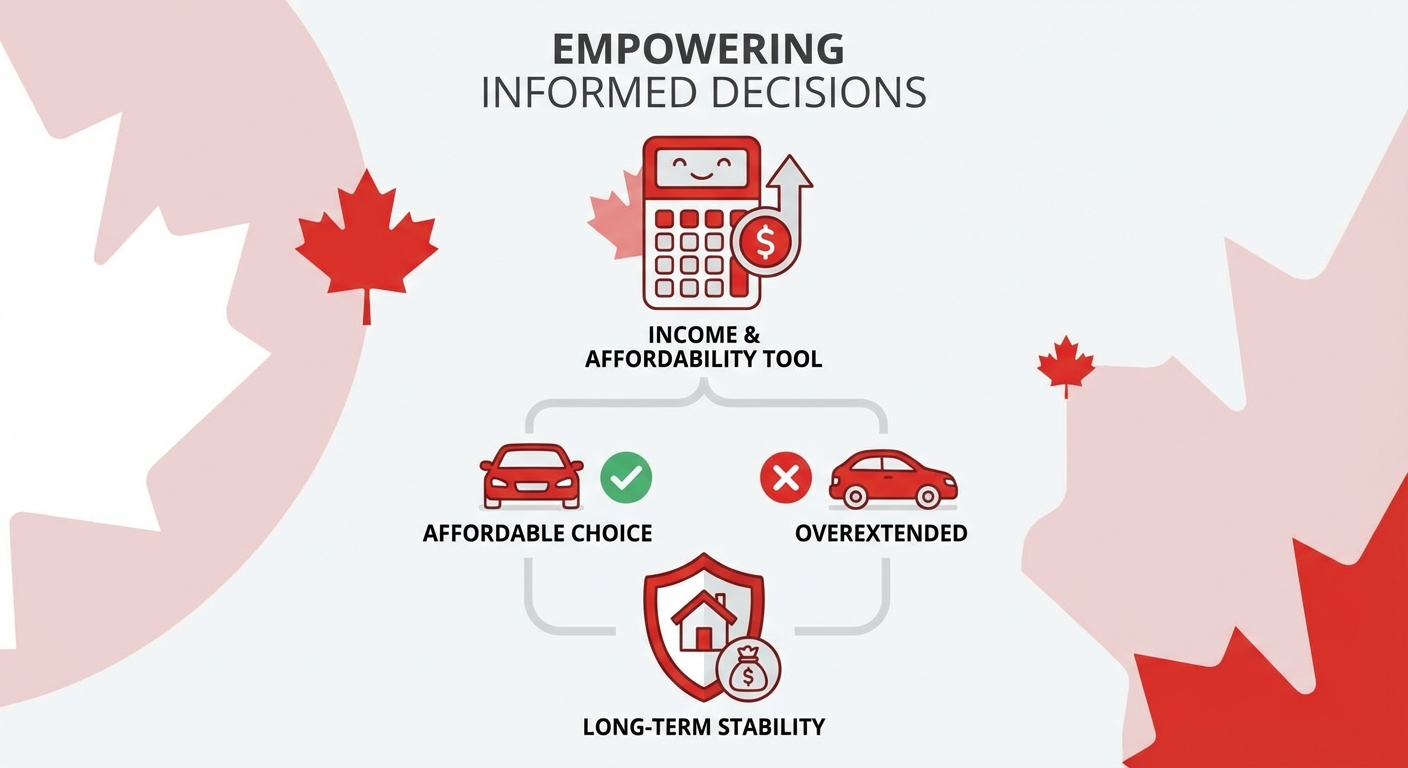
To truly understand your car's total cost, create a simple budget spreadsheet. List all your income sources (disability benefits, other earnings) and then every single car-related expense: loan payment, insurance, fuel, estimated maintenance, parking, and a small contingency fund. Compare this total against your available income. This visual tool will help you identify if a particular vehicle or loan term is truly affordable, ensuring you don't overextend yourself. It's about empowering you to make informed decisions that support your long-term financial stability.
Choosing Your Ride: Smart Vehicle Selection for Your Budget & Needs
Reliability Over Luxury: Prioritizing Practicality
When you're on a fixed income, even one as stable as disability benefits, and working with bad credit, your car choice should prioritize reliability and affordability over luxury or brand prestige. A reliable, fuel-efficient used vehicle will save you money in the long run through lower maintenance costs and reduced fuel consumption.
Look for models known for their durability and low cost of ownership. Brands like Toyota (Corolla, Camry), Honda (Civic, CR-V), and certain Mazda models are often excellent choices for used vehicles in the Canadian market, including Toronto. They tend to hold their value well, parts are readily available, and mechanics are familiar with them. Prioritize a vehicle with a good service history, if available, and consider a pre-purchase inspection by an independent mechanic.
Focus on a vehicle that meets your core transportation needs without unnecessary bells and whistles. A practical sedan, hatchback, or a compact SUV can offer great value, fuel economy, and ease of parking in a busy city like Toronto.
Accessibility Needs: Finding a Vehicle That Works For You
For individuals with specific accessibility requirements, choosing the right vehicle is even more critical. While our primary focus is on car loans, it's important to briefly consider how your vehicle choice aligns with your physical needs.
Some individuals may require vehicles that can be modified for wheelchair access, hand controls, or other adaptive equipment. When browsing for vehicles, consider models that are known to be easily adaptable or that already come with features that assist with entry/exit, seat adjustments, or cargo space for mobility aids.
In Ontario, there are sometimes grants or programs available through government or charitable organizations to assist with the cost of vehicle modifications. Researching these options simultaneously with your loan application can help you find a vehicle that not only fits your budget but also significantly enhances your independence and quality of life. Some dealerships in larger cities like Toronto and Ottawa specialize in accessible vehicles and can offer valuable guidance.
Your Green Light Moment: Driving Forward with Confidence
Building Better Credit: Your Path to Future Financial Freedom
Securing a car loan with disability income and bad credit isn't just about getting a vehicle; it's a powerful opportunity to rebuild your financial standing. A successfully managed car loan is one of the most effective ways to improve your credit score over time, paving the way for future financial freedom.
Every single on-time payment you make is reported to the credit bureaus (Equifax and TransUnion). This consistent positive payment history will gradually chip away at your past credit challenges, demonstrating to future lenders that you are a reliable borrower. As your credit score improves, you'll gain access to better interest rates on future loans (for a home, another car, or even credit cards) and potentially more favorable financial products.
To maximize this credit-building opportunity:
- Make Payments On Time, Every Time: This is the absolute most important factor. Set up automatic payments to avoid missing due dates.
- Avoid New Debt: While rebuilding, resist the temptation to take on unnecessary new credit. Focus on managing your car loan responsibly.
- Monitor Your Credit: Continue to check your credit report annually to ensure accuracy and track your progress.
Think of your car loan not just as a means of transportation, but as a strategic investment in your financial future.
Consumer Rights & Protections in Ontario: Know Your Power
As a consumer in Ontario, you have rights and protections when purchasing a vehicle and taking out a loan. Being aware of these rights empowers you and ensures you're treated fairly throughout the process.
The Consumer Protection Act, 2002 (Ontario) and the Motor Vehicle Dealers Act, 2002 (MVDA) govern vehicle sales and financing in the province. Key protections include:
- Full Disclosure: Dealers and lenders must provide you with clear and detailed information about the vehicle, the loan terms, interest rates, and any additional fees.
- No Undisclosed Fees: All-in pricing rules mean that the advertised price of a vehicle must include all fees and charges the dealer intends to collect, with the exception of HST and licensing costs.
- Cooling-Off Period (Limited): While not a general right to cancel, there are specific circumstances where you might be able to cancel a contract (e.g., if financing falls through or if certain conditions aren't met). Read your contract carefully.
- Complaints: If you feel your rights have been violated, you can file a complaint with the Ontario Motor Vehicle Industry Council (OMVIC), which regulates vehicle sales in Ontario, or the Financial Services Regulatory Authority of Ontario (FSRA) for financial services.
Always read your contract thoroughly before signing, ask questions if anything is unclear, and never feel pressured into making a decision. Your power lies in your knowledge and your right to fair treatment.
Your Next Steps to Approval: A Final Call to Action
You now have a comprehensive understanding of how to navigate the car loan process in Toronto with disability income and bad credit. The path is clear, and the tools are at your disposal. Don't let past rejections or common misconceptions deter you from achieving the independence and mobility a reliable vehicle provides.
Your next steps are simple, yet powerful:
- Gather Your Documents: Organize your ODSP/CPPD statements, bank records, and identification.
- Review Your Credit Report: Get your free reports from Equifax and TransUnion, dispute any errors.
- Think About Your Budget: Factor in all car-related expenses beyond the loan payment.
- Take Action: Apply for pre-approval with a specialized lender like SkipCarDealer.com.
We connect Canadians in Toronto, Ottawa, Calgary, and across the country with lenders who understand your situation and are ready to say "yes." Your car loan just got its green light.