Self-Employed, Car Stuck? Skip the Pay Stub. Get Repair Cash.
Table of Contents
- Key Takeaways: Your Car Repair Lifeline for Self-Employed Canadians
- The Self-Employed Car Crisis: When Your Ride Stops, But Your Income Can't
- The Unique Predicament of Self-Employed Drivers
- Why Traditional Lenders Hit the Brakes
- The Urgency Factor
- Beyond the Pay Stub: What Counts as 'Proof' for Self-Employed Canadians?
- Demystifying 'No Proof of Income'
- Your Financial Storytellers:
- Building a Comprehensive Application Package
- Navigating the Canadian Lending Landscape: Who Offers These Lifelines?
- Traditional Banks: The Uphill Battle (and When to Try Anyway)
- Alternative Lenders & Online Platforms: Your Most Promising Path
- Dealership Financing: Convenience vs. Cost
- Deciphering the Deal: Rates, Fees, and the True Cost of Your Car Repair Loan
- APR vs. Interest Rate: Unmasking the Real Cost
- Hidden Fees to Hunt Down:
- Understanding Repayment Structures
- The Credit Score Conundrum
- Boosting Your Approval Odds: Strategies for the Self-Employed Borrower
- The Power of a Strong Credit Score
- Leveraging Collateral (with Caution)
- The Co-Signer Advantage
- Demonstrating Financial Prudence
- The 'Why' Matters
- Beyond Loans: Alternative Avenues to Get Your Car Back on the Road (Quickly)
- Credit Cards: A Double-Edged Sword
- Personal Lines of Credit (LOC)
- Negotiating with Your Mechanic
- Community & Government Programs (Niche Cases)
- Your Next Steps to Approval: From Broken Down to Back on the Road
- Step 1: Get a Detailed Repair Estimate
- Step 2: Consolidate Your 'Alternative Proof'
- Step 3: Research & Target Self-Employed Friendly Lenders
- Step 4: Compare Offers Diligently
- Step 5: Read Every Line of the Agreement
- Step 6: Plan Your Repayment Strategy
- Frequently Asked Questions (FAQ)
- Q: Can I get a car repair loan if I've only been self-employed for a few months?
- Q: What if I have bad credit *and* no traditional proof of income as self-employed?
- Q: How quickly can I expect to receive the funds for car repairs in Canada?
- Q: Are these 'no proof of income' car repair loans secured or unsecured?
- Q: Will applying for multiple loans hurt my credit score?
- Q: What's the typical maximum loan amount I can expect for car repairs without traditional proof of income?
- Q: Is it better to get a general personal loan or a specific 'car repair loan' if I'm self-employed?
- Q: What happens if I can't make a payment on my car repair loan?
For many Canadians, a reliable vehicle isn't just a convenience; it's a cornerstone of daily life. For the self-employed, however, it's often the engine of their livelihood. When your car grinds to a halt, so too can your income, creating a unique and urgent financial challenge. The traditional lending landscape, with its rigid demands for pay stubs and T4s, often seems oblivious to the dynamic reality of self-employment. But what if we told you that skipping the pay stub doesn't mean skipping the much-needed repair cash?
At SkipCarDealer.com, we understand that your entrepreneurial spirit shouldn't be a roadblock to getting your vehicle back on the road. This comprehensive guide is designed to demystify the process of securing car repair loans for self-employed Canadians, even when traditional proof of income seems out of reach. We'll explore alternative documentation, introduce you to flexible lenders, and equip you with strategies to boost your approval odds. Your car might be stuck, but your financial options aren't.
Key Takeaways: Your Car Repair Lifeline for Self-Employed Canadians
- Self-employed in Canada can secure car repair loans without traditional pay stubs. The key is understanding alternative documentation and targeting the right lenders.
- 'No proof of income' rarely means zero proof. Instead, lenders look for consistent financial activity through bank statements, tax assessments (NOA), and strong credit history.
- Don't limit yourself to traditional banks. Online lenders, fintech platforms, and credit unions are often more flexible and offer tailored solutions.
- Transparency is crucial. Always compare APRs, scrutinize hidden fees, and understand the full repayment schedule before committing.
- Proactive steps boost approval odds. A solid credit score, a clear repayment plan, and even a co-signer can significantly improve your chances.
The Self-Employed Car Crisis: When Your Ride Stops, But Your Income Can't
The Unique Predicament of Self-Employed Drivers
Imagine this: you're a freelance graphic designer, a rideshare driver, a contractor, or a small business owner relying on your vehicle for client meetings, deliveries, or daily operations. Suddenly, your car breaks down. For an employee with a steady paycheque, this might mean an inconvenience, a temporary rental, or dipping into savings. For you, the self-employed Canadian, it’s an immediate and direct threat to your income stream. Every hour your vehicle is off the road translates directly into lost opportunities, missed deadlines, and a gaping hole in your revenue. Your car isn't just transportation; it's an essential business asset.
Why Traditional Lenders Hit the Brakes
Traditional banks thrive on predictability. They love the neat, consistent boxes of fixed pay stubs and annual T4s. These documents offer a clear, verifiable snapshot of income that fits perfectly into their risk assessment algorithms. The reality of self-employment, however, is often a dynamic ebb and flow of income – some months are feast, others famine. This fluctuating income doesn't fit their rigid criteria, leading many traditional lenders to hit the brakes on loan applications from self-employed individuals, even if their overall financial picture is strong. They struggle to quantify the risk without those familiar, consistent numbers.
The Urgency Factor
The ripple effect of a disabled vehicle on personal and professional life for the self-employed is profound. Lost contracts can mean damaged client relationships and future revenue loss. Missed deliveries could result in penalties or loss of business. Cancelled appointments impact your professional reputation and immediate cash flow. The longer your car sits in the garage, the deeper the financial hole becomes. This isn't just about getting to the grocery store; it's about sustaining your livelihood and maintaining your professional commitments. The need for quick, accessible funds for repairs isn't just a want; it's an urgent necessity.
Pro Tip: The 'Pre-Breakdown' Buffer
Why establishing a dedicated emergency fund, even a small one, specifically for vehicle repairs can save immense stress and higher interest payments later. Even $500 set aside in a separate account can cover minor repairs or diagnostics, buying you crucial time to secure a larger loan if needed. Think of it as preventative maintenance for your finances.
Beyond the Pay Stub: What Counts as 'Proof' for Self-Employed Canadians?
Demystifying 'No Proof of Income'
When lenders talk about 'no proof of income,' what they usually mean is 'no *traditional* proof of income' like pay stubs or T4s. It's a common misconception that being self-employed means you have no way to demonstrate your financial capability. In reality, lenders who cater to the self-employed are adept at looking beyond the standard documents, seeking alternative ways to verify your ability to repay a loan. They want to see a consistent financial narrative, even if it's told through different chapters.
Your Financial Storytellers:
- Bank Statements: These are arguably your most powerful tool. Lenders scrutinize several months (typically 3-6) of bank statements to identify consistent deposits, even if variable. They look for patterns of income, responsible spending, and a healthy average balance. This demonstrates your cash flow and financial stability over time. For more on how your banking activity can unlock financing, read our guide on Self-Employed? Your Bank Account *Is* Your Proof. Get Approved.
- Notice of Assessment (NOA): The Canada Revenue Agency's Notice of Assessment is a government-verified snapshot of your taxable income. For self-employed individuals, it's an official and highly credible document that proves your earnings from previous tax years. Lenders often request one or two years of NOAs to get a comprehensive view of your income history.
- Invoices & Client Contracts: For project-based work or ongoing services, copies of your invoices and client contracts can demonstrate current and future income streams. This is particularly useful if you've recently secured new, significant contracts that haven't yet fully reflected in your bank statements. It shows a pipeline of revenue.
- Business Registration & Licensing: Providing proof of your business registration or professional licenses (if applicable) lends legitimacy to your self-employment. It shows that your business is official and operational, not just a casual pursuit.
- Accountant-Prepared Financial Statements: For more established self-employed individuals or small business owners, audited or reviewed financial statements prepared by a professional accountant offer a detailed overview of your business's profitability, assets, and liabilities. These are gold standard documents for demonstrating financial health.
Building a Comprehensive Application Package
The key to success is to anticipate what a lender needs and present your financial story clearly and cohesively. Don't just send a pile of documents; organize them. Create a brief cover letter explaining your situation, the purpose of the loan, and how your provided documents illustrate your repayment capacity. Highlight consistency, growth, or significant contracts. By doing so, you're not just providing 'proof'; you're painting a clear, positive financial picture that makes the lender's job easier and boosts your approval odds.
Pro Tip: Consistency is King
Even if your income fluctuates, demonstrating a consistent pattern of deposits and responsible spending on your bank statements significantly strengthens your application. Avoid frequent overdrafts or large, unexplained withdrawals. Lenders prioritize stability over sheer volume, even if that stability is an average over several months.
Navigating the Canadian Lending Landscape: Who Offers These Lifelines?
The Canadian lending landscape is diverse, and knowing where to look is half the battle for self-employed individuals needing car repair loans. Not all lenders are created equal when it comes to understanding the unique financial rhythm of freelancers and entrepreneurs.
Traditional Banks: The Uphill Battle (and When to Try Anyway)
Major Canadian banks, while pillars of the financial system, are often the least flexible for 'no traditional proof' scenarios. Their automated systems are designed for the predictability of T4 income. However, if you have a long-standing, strong relationship with your bank, significant assets held with them, or a substantial amount of savings, you might find a slightly more open door. They might be willing to consider an unsecured personal loan based on your overall financial history with them. It's always worth a conversation, but temper your expectations.
Alternative Lenders & Online Platforms: Your Most Promising Path
This is where the self-employed borrower often finds the most understanding and flexibility.
- Fintech Innovators: Digital lenders and financial technology (fintech) platforms are disrupting traditional banking. They leverage advanced algorithms, credit scores, and alternative data points (like your bank transaction history) to assess risk beyond simple pay stubs. Many are specifically designed to cater to underserved markets, including the self-employed. They often boast quick application processes and rapid funding, which is crucial when your car is out of commission.
- Private Lenders & Broker Networks: These specialized services act as intermediaries, connecting borrowers with a wider range of funding sources. Brokers, in particular, have relationships with numerous private lenders, credit unions, and even smaller financial institutions that might have more flexible criteria for self-employed applicants. They can often find solutions tailored to your specific situation, even if your credit isn't perfect.
- Credit Unions: Often operating with a community-focused approach, credit unions can offer a more personalized assessment compared to large banks. Because they are member-owned, they sometimes have more discretion to consider individual circumstances and may be more willing to look at your overall financial picture rather than just specific income documents.
Dealership Financing: Convenience vs. Cost
Some car repair shops or dealerships offer in-house financing for repairs. The pros are clear: it's convenient, often quick, and you're dealing with the repair and financing in one place. However, the cons can be significant. These options often come with higher interest rates, more limited repayment terms, and you're typically tied to that specific repair shop or dealership, which might not always offer the most competitive repair costs. Always compare these offers diligently against other personal loan options.
Pro Tip: Specialized vs. General
Prioritize lenders who explicitly cater to self-employed individuals or offer 'no income verification' personal loans, as they understand your unique situation better. Their application processes are streamlined for your documentation, increasing your chances of approval and potentially securing better terms.
Deciphering the Deal: Rates, Fees, and the True Cost of Your Car Repair Loan
Securing a loan is only half the battle; understanding its true cost is paramount. For self-employed individuals, who may face slightly higher interest rates due to perceived risk, this step is even more critical. Don't let the urgency of your repair blind you to the details of the loan agreement.
APR vs. Interest Rate: Unmasking the Real Cost
Many borrowers confuse the interest rate with the Annual Percentage Rate (APR). The interest rate is the percentage charged on the principal amount of the loan. The APR, however, is your most important metric for comparison. It represents the total annual cost of borrowing, including the interest rate and any additional fees (like origination fees or administration charges). Always compare APRs when looking at different loan offers to get an accurate picture of the real cost.
Hidden Fees to Hunt Down:
Lenders can sometimes bury fees in the fine print. Be vigilant and ask direct questions about all potential charges.
- Origination Fees: This is a fee charged by the lender for processing your loan application. It's often a percentage of the total loan amount and can be deducted from the principal before you even receive the funds, or added to the loan amount.
- Administration/Processing Fees: These are miscellaneous charges for setting up and managing your loan. While often smaller, they can add up.
- Early Repayment Penalties: Some lenders charge a penalty if you pay off your loan sooner than the agreed-upon term. If you anticipate having extra funds to clear your debt quickly, ensure your loan agreement doesn't penalize you for financial prudence.
- Late Payment Charges: Missing a payment will almost certainly incur a late fee, and it can also negatively impact your credit score. Understand these charges and aim to avoid them at all costs.
Understanding Repayment Structures
Your repayment schedule significantly impacts the total interest you'll pay and your monthly budget. Bi-weekly payments, for example, can sometimes lead to paying off your loan faster and incurring less overall interest than monthly payments, as you make an extra payment equivalent to one month's payment each year. Loan terms (short vs. long) also play a crucial role. A shorter term means higher individual payments but less interest paid over the life of the loan. A longer term means lower individual payments but more interest overall. Choose a structure that aligns with your self-employment income fluctuations.
The Credit Score Conundrum
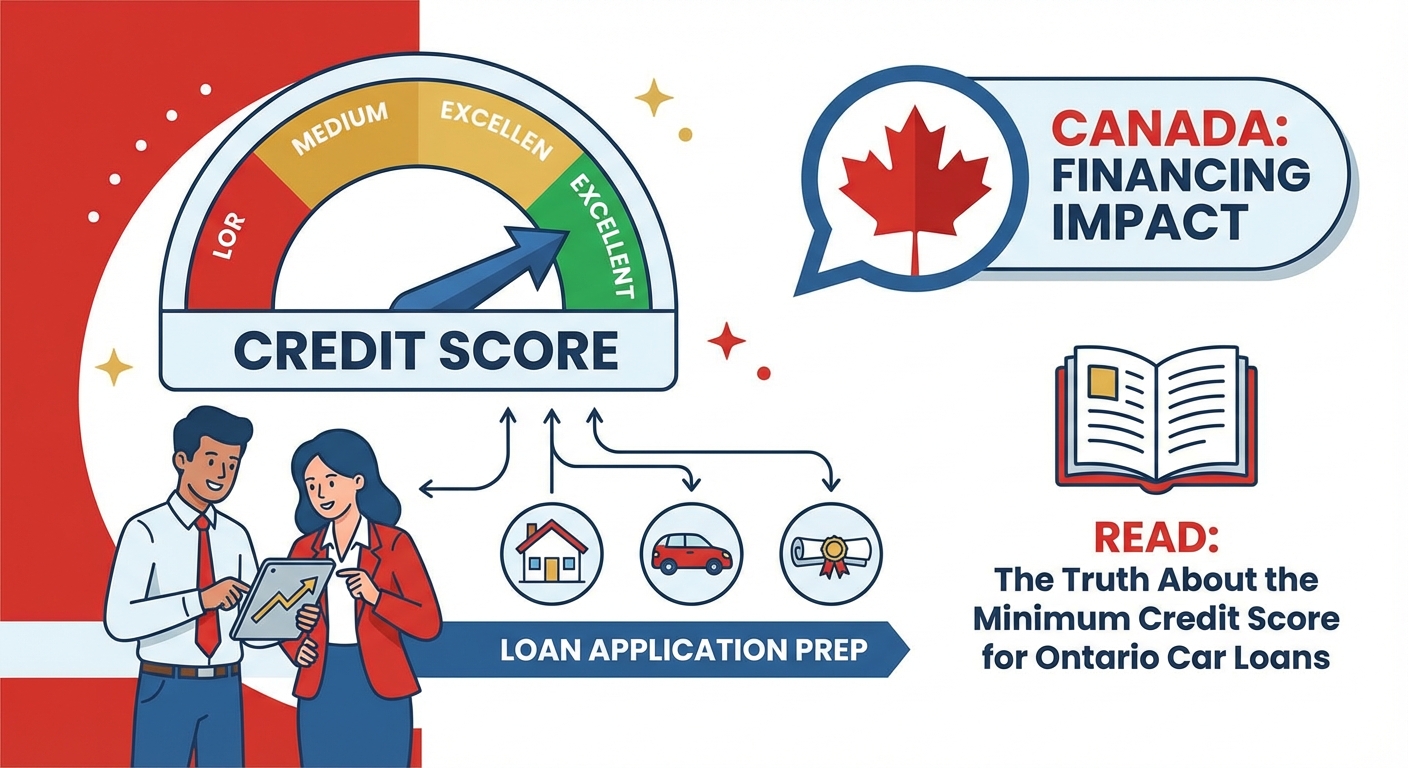
Even without a traditional pay stub, your credit history significantly influences the interest rates you'll be offered. A strong credit score signals reliability and lower risk to lenders, often unlocking more favourable rates. Conversely, a lower score might lead to higher APRs. Therefore, understanding and working on your credit score is a vital part of preparing for any loan application. You can learn more about how your credit score impacts financing in Canada by reading The Truth About the Minimum Credit Score for Ontario Car Loans.
Pro Tip: Get It in Writing
Always insist on a clear, written breakdown of all costs, including interest, fees, and the total repayment amount, before signing any agreement. This document is your safeguard and ensures you fully understand your financial commitment.
Boosting Your Approval Odds: Strategies for the Self-Employed Borrower
While the path to a car repair loan might seem more complex for the self-employed, there are concrete steps you can take to significantly improve your chances of approval and secure better terms. It’s about presenting yourself as a reliable borrower, even without a conventional pay stub.
The Power of a Strong Credit Score
Your credit score is a numerical representation of your creditworthiness. Even without traditional income proof, a high credit score (generally 660 and above in Canada) signals to lenders that you have a history of managing debt responsibly. It's a critical indicator of reliability. Regularly check your credit score and report (free through services like Equifax or TransUnion Canada) for errors. Pay all your bills on time, keep credit utilization low, and avoid opening too many new credit accounts simultaneously to maintain or improve your score.
Leveraging Collateral (with Caution)
A secured loan is backed by an asset, known as collateral. For a car repair loan, this could potentially be the car itself (if it has sufficient value after repairs) or another valuable item like a property or other vehicle. Offering collateral reduces the lender's risk, which can lead to easier approval and potentially lower interest rates. However, this comes with an inherent risk: if you default on the loan, the lender can seize the collateral. Consider this option carefully and understand the implications fully.
The Co-Signer Advantage
Having a financially stable co-signer with good credit can be a game-changer. A co-signer agrees to take on the responsibility for the loan if you fail to make payments. This significantly reduces the lender's risk, often leading to approval when you might not qualify alone, and can also help you secure more favourable interest rates. Choose a co-signer who understands their commitment and trust them implicitly, as their credit will also be impacted if you miss payments.
Demonstrating Financial Prudence
Lenders want to see a history of responsible financial management. This includes demonstrating consistent savings, having minimal existing debt relative to your income, and maintaining a clear budget. Provide evidence of these habits through your bank statements and a personal financial statement if requested. Show them you have a handle on your money, even if your income fluctuates. For further insights into self-employed financing, especially for vehicle purchases, you might find our article on Approval Secrets: Navigating the Best Used Car Finance Options for Ontario’s Self-Employed helpful.
The 'Why' Matters
Don't underestimate the power of a clear, compelling narrative. Clearly articulating the necessity of the repair – how it directly impacts your ability to generate income – and presenting a realistic, well-thought-out plan for repayment can sway a lender. Show them you've done your homework, understand the costs, and have a viable strategy to manage the debt.
Pro Tip: Start Small, Build Trust
If you need a smaller amount for an urgent repair, applying for a more modest loan can sometimes be easier to secure. Successfully repaying a smaller loan on time can help you build a positive repayment history, making it easier to qualify for larger loans or better terms in the future.
Beyond Loans: Alternative Avenues to Get Your Car Back on the Road (Quickly)
While loans are a primary solution, they aren't the only option. Exploring alternatives can sometimes offer quicker relief or more flexible terms, especially if your credit is challenged or you need funds immediately. Sometimes, even with a flat tire and flat credit, there are still ways to get your vehicle fixed, as we discuss in Flat Tire, Flat Credit? Toronto, We've Got Your Fix.
Credit Cards: A Double-Edged Sword
If you have an existing credit card with available credit, this can be a very quick solution. Using a low-interest or 0% introductory APR credit card for repairs can be smart, especially if you're confident you can pay off the balance before the promotional period ends. However, if you carry a balance beyond the intro period, credit card interest rates can be significantly higher than personal loan rates, leading to deeper debt. Use with caution and a clear repayment plan.
Personal Lines of Credit (LOC)
A personal line of credit offers flexibility that a traditional loan doesn't. You're approved for a maximum amount, but you only draw what you need, and you only pay interest on the amount you've used. It's a revolving credit facility, meaning as you repay, that credit becomes available again. This can be excellent for ongoing or unexpected car maintenance needs, offering a financial safety net without the need to reapply for each new expense.
Negotiating with Your Mechanic
Don't be afraid to talk to your repair shop. Many reputable mechanics are willing to discuss payment plans, especially for significant repairs. They want your business and understand financial constraints. You can also ask about using certified used parts instead of new ones to save money, or prioritize essential repairs immediately while deferring less critical work. Getting a clear, written estimate is always your first step to understanding the total cost.
Community & Government Programs (Niche Cases)
While rare and often highly localized, some community organizations or provincial government programs in Canada offer assistance for low-income individuals or specific vehicle types (e.g., vehicles converted for accessibility) for essential repairs. These are niche cases and often have strict eligibility criteria, but it's worth checking local resources if your financial situation is particularly dire.
Pro Tip: Don't Delay Diagnosis
Getting a clear, written estimate from a trusted mechanic is the first and most crucial step. It allows you to accurately assess your financial need, compare repair costs, and ensures you're not overpaying. This estimate forms the basis of your loan application.
Your Next Steps to Approval: From Broken Down to Back on the Road
Your car is an extension of your self-employed identity, and getting it back in working order is paramount. The journey from a broken-down vehicle to restored mobility doesn't have to be fraught with despair. By following a structured approach, you can navigate the lending landscape effectively.
Step 1: Get a Detailed Repair Estimate
Before approaching any lender, you need to know precisely what you need and how much it will cost. Obtain a detailed, written estimate from a trusted mechanic. This document will be essential for your loan application, proving the purpose and amount of funds required.
Step 2: Consolidate Your 'Alternative Proof'
Gather all your financial storytellers. This includes 3-6 months of bank statements, your latest Notice of Assessment (NOA), any relevant invoices or client contracts, and proof of business registration. Organize these documents clearly to present a compelling financial picture.
Step 3: Research & Target Self-Employed Friendly Lenders
Focus your efforts on online platforms, brokers, and credit unions known for their flexibility with self-employed applicants. These lenders are more likely to understand your unique income structure and be equipped to assess your application fairly.
Step 4: Compare Offers Diligently
Don't jump at the first offer. Apply to a few different lenders and compare their loan offers side-by-side. Pay close attention to the Annual Percentage Rate (APR), any hidden fees, and the overall repayment terms. Use comparison tools to make an informed decision.
Step 5: Read Every Line of the Agreement
Before signing anything, thoroughly read the entire loan agreement. Understand all conditions, especially regarding interest rates, fees, penalties for late payments, and whether there are any charges for early repayment. If anything is unclear, ask for clarification.
Step 6: Plan Your Repayment Strategy
Ensure your chosen loan fits comfortably within your self-employment income fluctuations. Create a realistic budget that accounts for your loan payments, even during leaner months. Having a clear repayment strategy demonstrates your commitment and financial acumen.

Getting your car repaired as a self-employed Canadian without a traditional pay stub is not just possible; it's a reality for many. With the right preparation, the right documentation, and targeting the right lenders, you can secure the funds you need to get back on the road, keep your business moving, and continue driving your success. Don't let a broken-down vehicle break down your entrepreneurial spirit. Solutions are available, and your mobility is within reach.
Frequently Asked Questions (FAQ)
Q: Can I get a car repair loan if I've only been self-employed for a few months?
A: It can be more challenging, but not impossible. Most lenders prefer to see at least 6-12 months of consistent self-employment income history through bank statements and potentially a Notice of Assessment (NOA) from a previous tax year. If you've only been self-employed for a short period, having a strong credit score, a co-signer, or collateral can significantly improve your chances.
Q: What if I have bad credit *and* no traditional proof of income as self-employed?
A: This is a tougher situation, but options still exist. You'll likely need to focus on specialized lenders who work with bad credit, consider secured loans (using an asset as collateral), or apply with a co-signer who has good credit. Interest rates will likely be higher in these scenarios. Remember that some lenders are more focused on your ability to repay now, rather than just your past credit history.
Q: How quickly can I expect to receive the funds for car repairs in Canada?
A: The timeline varies depending on the lender. Online lenders and fintech platforms are often the quickest, with some offering approval and funding within 24-48 hours. Traditional banks or credit unions may take several business days. Always ask about the typical funding timeline during your application process, especially given the urgency of car repairs.
Q: Are these 'no proof of income' car repair loans secured or unsecured?
A: They can be either. Many personal loans for self-employed individuals are unsecured, meaning they don't require collateral, but may have higher interest rates. If you have assets (like the car itself, or another vehicle) that you're willing to use as collateral, you might qualify for a secured loan, which typically offers lower interest rates due to reduced risk for the lender.
Q: Will applying for multiple loans hurt my credit score?
A: Applying for multiple loans within a short period (usually 14-30 days) can result in multiple 'hard inquiries' on your credit report, which can temporarily lower your credit score. However, credit scoring models often treat multiple inquiries for the same type of loan within a short window as a single inquiry, recognizing that you're shopping for the best rate. It's best to research thoroughly and apply to 2-3 targeted lenders rather than many indiscriminately.
Q: What's the typical maximum loan amount I can expect for car repairs without traditional proof of income?
A: This largely depends on your overall financial health, credit score, and the lender. For car repairs, amounts typically range from $1,000 to $10,000. Lenders will assess your demonstrated income (via bank statements/NOA) and debt-to-income ratio to determine an affordable amount. Larger amounts may require a stronger financial profile or collateral.
Q: Is it better to get a general personal loan or a specific 'car repair loan' if I'm self-employed?
A: For self-employed individuals, a general personal loan is often the most accessible option, as specific 'car repair loans' with flexible income verification are less common. Many online lenders and credit unions offer personal loans that you can use for any purpose, including car repairs. The key is to find a personal loan that accommodates your self-employment income documentation.
Q: What happens if I can't make a payment on my car repair loan?
A: Missing a payment can lead to late fees, a negative impact on your credit score, and increased interest charges. If you anticipate difficulty making a payment, contact your lender immediately. Many lenders are willing to work with you to find a solution, such as a temporary payment deferral or a modified payment plan, especially if you communicate proactively. Ignoring the issue will only exacerbate the problem.