Posts tagged with: Car Financing Canada

Auto Loan With Active Collections: The Approval Me...
Getting an auto loan with active collections is a process, not a problem. We map out the mechanics f...

2026 Student Car Loan: No Credit, No Co-Signer Opt...
Stop getting rejected. Our 2026 guide shows students with no credit and no co-signer the exact car l...

2026 Student Loan as Income for a Car Loan: The Gu...
Yes, you can use student loans as income for a car loan in Canada. Our 2026 guide shows students how...

Trade Car After Consumer Proposal Discharge: The 2...
Your consumer proposal is discharged. It's time for the final step. Our 2026 guide is your exit plan...

Splitting Assets? Car Loan Options After Marriage...
Financially uncoupling? Don't let it stall your life. We specialize in car loan options after marria...

Crypto Car Loan: Your Key to a Non-Dealership Purc...
Your crypto portfolio is your new credit score. Skip the banks and get a car loan backed by cryptocu...

Car Loan After Bankruptcy Discharge? The 2026 Appr...
Think you can't get a car loan immediately after bankruptcy discharge in Canada? We've built the 202...

Car Financing for Entrepreneurs Without T4 | SkipC...
You're a Canadian entrepreneur, not a T4 slip. Get car financing that understands your real income....

2026 Lease Buyout Hidden Costs: The Alberta 'Gotch...
Don't get blindsided. We expose the hidden costs of a car lease buyout in Alberta-from surprise fees...

2026 Car Loan During Bankruptcy Ontario | Yes, It'...
Navigating an active bankruptcy in Ontario? Securing a car loan is possible. Discover our proven 202...

Vehicle Financing After Debt Settlement: Non-Deale...
Finished debt settlement but still denied for a non-dealer car? Our 2026 guide shows you how to get...
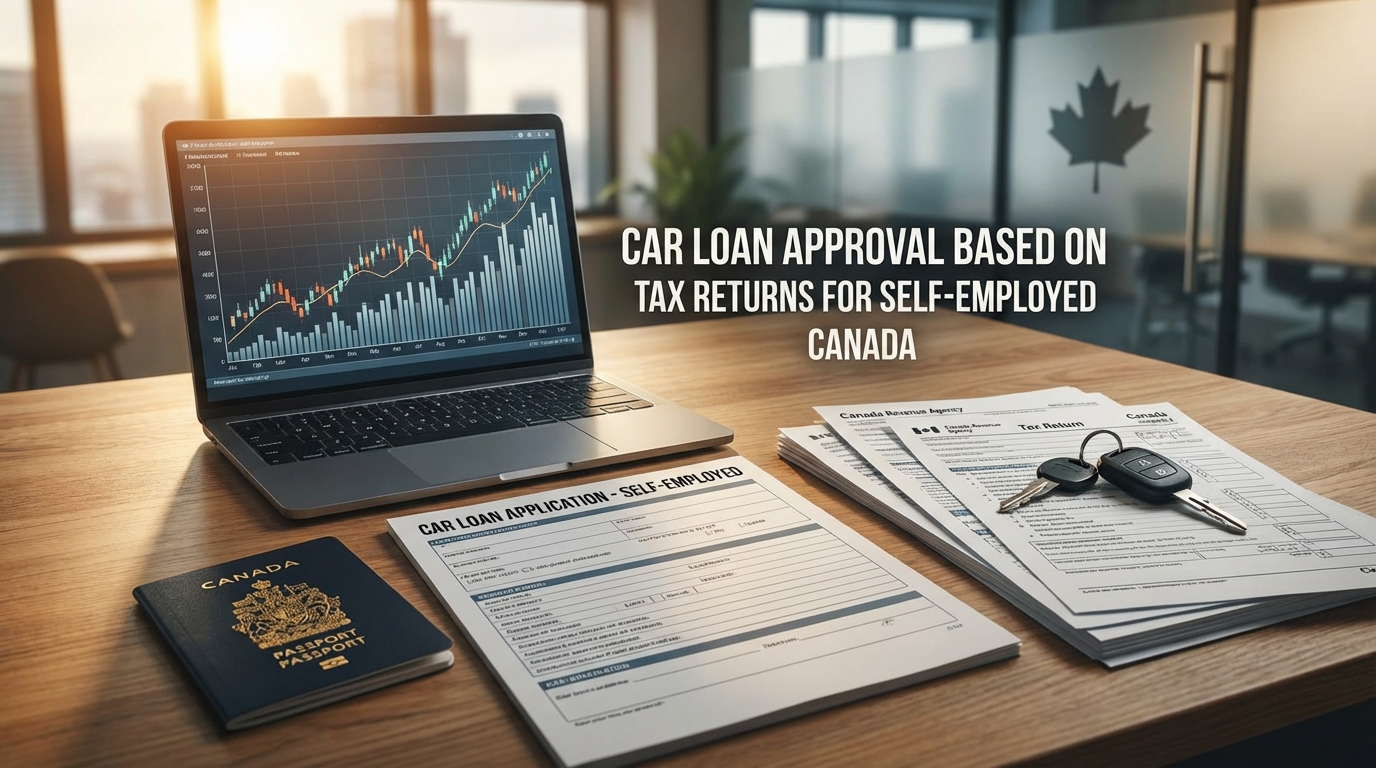
Tax Return Car Loan: Self-Employed Approval Canada...
Self-employed in Canada? Stop proving your income with pay stubs. Our car loan approval is based on...
Cracking Car Loans: Your Guide to Auto Financing in Canada
So, you're dreaming of a new (or new-to-you) set of wheels, but the price tag is a bit daunting. That's where car financing comes in - it's how most Canadians get behind the wheel. Simply put, car financing means borrowing money from a lender (like a bank, credit union, or the dealership itself) to pay for your vehicle. You then pay back that loan, plus interest, over a set period.
It sounds straightforward, but there are a few moving parts unique to Canada that are good to understand before you dive in. Let's break down how it all works, from your credit score to those all-important interest rates.
How Car Loans Work in Canada
When you finance a car, the lender essentially buys the car for you, and you agree to make regular payments until the loan is paid off. While you get to drive the car, the lender usually holds a lien on the vehicle until the full amount, including interest, is repaid. This means they have a legal claim to the car if you stop making payments.
- Principal: This is the actual amount of money you borrow to buy the car.
- Interest: This is the cost of borrowing money, expressed as a percentage of the principal.
- Loan Term: This is the length of time you have to pay back the loan, usually expressed in months (e.g., 60 months, 72 months).
Your Credit Score: The Unsung Hero
Your credit score is probably the single most important factor lenders look at when you apply for a car loan. In Canada, scores typically range from 300 to 900, with higher scores indicating lower risk to lenders. A good credit score can open doors to better interest rates and more flexible loan terms, saving you a significant amount over the life of the loan.
Canada has two main credit bureaus: Equifax and TransUnion. They collect information about your borrowing and repayment history to generate your score. It's always a good idea to check your credit score and report before applying for financing so you know where you stand and can correct any errors.
The Different Flavours of Car Loans
Not all car loans are created equal. Here are the main types you'll encounter:
- Dealership Financing: This is often the most convenient option. Dealerships work with various lenders (banks, captive finance companies like Ford Credit or GM Financial) to offer you financing directly. They can sometimes offer competitive rates, especially on new vehicles.
- Bank or Credit Union Loans: You can apply for a car loan directly through your bank or credit union. Sometimes, getting pre-approved this way gives you more negotiating power at the dealership, as you know exactly how much you can borrow and at what rate.
- New vs. Used Car Loans: Generally, new car loans might have slightly lower interest rates due to the car's higher value and lower risk of mechanical issues. Used car loans can sometimes have higher rates, but the overall loan amount is usually smaller.
Key Factors That Shape Your Loan
Understanding these elements will help you make informed decisions:
Down Payment
A down payment is the initial amount of money you pay upfront towards the car's purchase price. While not always mandatory, making a larger down payment can:
- Reduce the amount you need to borrow.
- Lower your monthly payments.
- Decrease the total interest you'll pay over the loan term.
- Make it easier to get approved, especially if your credit isn't perfect.
Interest Rate (APR)
The Annual Percentage Rate (APR) is the true cost of borrowing, including interest and any other fees. Your APR is heavily influenced by your credit score, the loan term, the type of vehicle, and the current market interest rates. A difference of even a couple of percentage points can save you hundreds, if not thousands, of dollars over the life of your loan.
Loan Term
The loan term determines how long you have to pay back the loan. Shorter terms (e.g., 48 or 60 months) mean higher monthly payments but less interest paid overall. Longer terms (e.g., 72 or 84 months) result in lower monthly payments, making the car more 'affordable' month-to-month, but you'll pay more in interest over time and the car will depreciate faster than you pay it off, leading to 'negative equity'.
Building Your Credit with a Car Loan
A car loan can be an excellent tool for building or rebuilding your credit history. By making consistent, on-time payments, you demonstrate responsible borrowing behaviour to credit bureaus. This positive history can help improve your credit score, making it easier to qualify for other loans or credit cards in the future at better rates.
Getting Approved: Tips from Your Canadian Friend
Want to boost your chances of getting approved for a great car loan? Here are some friendly Canadian tips:
- Know Your Budget: Figure out what you can realistically afford for a monthly payment, insurance, and fuel before you start shopping.
- Check Your Credit: Get your credit report and score from Equifax and TransUnion. Dispute any errors.
- Save for a Down Payment: The more you can put down, the better your chances and the lower your payments.
- Gather Your Documents: Have proof of income (pay stubs, employment letter), identification, and residency ready.
- Don't Apply Everywhere: Each application can cause a small temporary dip in your credit score. Focus on a few reputable lenders or work with a dealership that can shop around for you.
- Consider a Co-Signer: If your credit isn't strong, a co-signer with good credit can improve your chances of approval and secure a better rate.
Before You Sign on the Dotted Line
Taking on a car loan is a big commitment. Make sure you:
- Read the Fine Print: Understand all terms, conditions, and any hidden fees.
- Understand the Total Cost: Don't just look at the monthly payment. Calculate the total amount you'll pay over the life of the loan.
- Factor in Insurance: Car insurance in Canada can be a significant monthly cost, varying widely by province, vehicle, and driver.
- Think Long-Term: Does this car and loan fit into your financial plans for the next few years?
Car financing in Canada doesn't have to be a mystery. By understanding these key elements, you'll be well-equipped to make a smart decision and drive away with confidence.
