Your New Job's First Act: Getting You a Car. Zero Down, Vancouver.
Table of Contents
- Key Takeaways
- Your New Beginning on Wheels: Key Takeaways for Securing a Zero-Down Car in Vancouver
- The Zero-Down Dream: Not a Myth for New Hires in British Columbia
- Your Offer Letter is Gold: Leveraging New Employment for Approval
- Beyond the Monthly Payment: Understanding the Total Cost of Ownership in Metro Vancouver
- Lender Logic: What They *Really* Care About (Beyond a Down Payment)
- Chapter 1: The New Job Advantage – Turning Your Offer Letter into Car Keys
- From Interview to Income: Why Lenders Value Your New Employment
- The 'Probation Period' Paradox: Navigating Initial Employment Terms
- Building Your Financial Story: What if Your Credit History is as New as Your Job?
- Financial Housekeeping: Preparing Your Documents for the Lender's Scrutiny
- Chapter 2: The Zero-Down Reality – Unpacking 'No Deposit' Car Loans in Metropolitan Areas
- What 'Zero Down' Truly Means: A Practical Guide for Vancouver Buyers
- Why Zero Down Saves You Money (and Stress) in the Short Term
- The Hidden Costs of Convenience: What to Watch Out For with No Down Payment
- Navigating Lender Incentives: Are 'No Money Down' Deals Always the Best Option?
- Chapter 3: Vancouver's Car Market – Specifics, Costs, and Commutes
- The Vancouver Commute: Why a Car Isn't Just a Luxury, It's a Necessity for Many
- Insurance in British Columbia: Understanding ICBC and Its Impact on Your Budget
- Fuel Costs and Parking Realities: Budgeting for Life with a Car in Vancouver
- New vs. Used: Finding the Right Vehicle for Your Vancouver Lifestyle and Budget
- Chapter 4: The Lender's Lens – How Banks and Dealerships Evaluate New Job Applicants
- Beyond the Score: What Lenders See in Your Application
- Bank vs. Dealership Financing: Which Path is Best for a New Hire in British Columbia?
- Understanding Your Approval Odds: Factors That Tip the Scales in Your Favor
- The Power of a Co-Signer: When and How to Leverage Support
- Chapter 5: Your Application Blueprint – From Offer Letter to Keys in Hand
- Step 1: Budgeting Beyond the Monthly Payment – The True Cost of Car Ownership
- Step 2: Identifying Your Ideal Vehicle (and What Lenders Will Approve)
- Step 3: Gathering Your Arsenal – The Documents Lenders Demand
- Step 4: The Application Journey – Online, In-Person, or Through a Broker?
- Step 5: Deciphering the Fine Print – Interest Rates, Terms, and Hidden Fees
- Chapter 6: Future-Proofing Your Finances – Beyond the First Purchase
- Building a Stronger Credit Profile with Your New Loan
- The Refinancing Advantage: When a Better Rate Becomes Possible
- Debt-to-Income Ratio: Keeping It Healthy for Future Financial Goals
- Your Next Steps to Approval: A Practical Action Plan for Vancouver's Newest Drivers
- Consolidate Your Documents: Your Lender-Ready Portfolio
- Shop Smart, Not Just Fast: Researching Vehicles and Lenders
- Negotiate with Confidence: Knowing Your Worth as a New Employee
- Drive Onward: Your Journey in Vancouver Begins
- Frequently Asked Questions About Getting a Car with a New Job and No Deposit
Key Takeaways
- Zero Down is Achievable in Vancouver: Even with a new job, securing a car loan without an upfront payment is a realistic goal in British Columbia, provided you understand how to leverage your new employment.
- Your Offer Letter is Your Leverage: A verifiable job offer or recent employment history is your most potent asset, signaling consistent income potential to lenders, especially if your credit history is limited.
- Beyond the Payment: Total Cost Matters: A zero-down loan means a larger principal. Always budget for interest, higher British Columbia insurance premiums (ICBC), fuel costs, and maintenance in Vancouver.
- Lenders Prioritize Stability: While a down payment helps, lenders primarily assess your job stability, debt-to-income ratio, and overall financial responsibility. A new job, if stable, can be a strong indicator.
- Local Nuances are Critical: Vancouver's unique market, including ICBC's insurance structure, higher fuel prices, and specific commuting needs, significantly impacts your car ownership experience and budget.
Your New Beginning on Wheels: Key Takeaways for Securing a Zero-Down Car in Vancouver
Starting a new job in Vancouver is an exciting milestone. New opportunities, a fresh environment, and perhaps a new commute. For many, that commute necessitates a reliable vehicle, but the thought of securing a car, especially with a new job and limited savings for a down payment, can feel daunting. Is the dream of driving off the lot with zero down just that—a dream? Not at all. At SkipCarDealer.com, we understand the unique position of new employees in British Columbia and we're here to show you how that dream can become your reality.
This article isn't just about getting a car; it's about empowering you to make an informed financial decision as you embark on this new chapter. We'll demystify the process, from leveraging your new employment to navigating Vancouver's specific car market, ensuring you're confident and prepared to get those keys in hand.
The Zero-Down Dream: Not a Myth for New Hires in British Columbia
Let's cut straight to the chase: securing a car loan with no down payment, even when you've just started a new position, is absolutely achievable in British Columbia. While conventional wisdom often suggests a down payment is essential, many lenders recognize that life transitions, like starting a new career, can temporarily limit upfront cash. They are more interested in your ability to repay the loan consistently, and a steady new income stream is a powerful indicator of that capability. This is particularly true in a vibrant economic hub like Vancouver, where new talent is constantly arriving and contributing to the local workforce. We see countless individuals successfully obtain financing this way, proving that a zero-down car loan is a tangible reality, not just wishful thinking, for Vancouver's newest professionals.
Your Offer Letter is Gold: Leveraging New Employment for Approval
Think of your official job offer letter and subsequent pay stubs as your primary currency in the car loan application process. Even if your credit history is still developing, the assurance of a regular, verifiable income stream from a new, stable job is incredibly persuasive to lenders. It demonstrates future repayment capacity. For those with limited credit history, this document becomes even more critical, often outweighing the lack of a lengthy credit report. Lenders view new employment, especially in a professional field or with a reputable company, as a strong indicator of financial responsibility and future stability. It tells them you have the means to make those monthly payments, turning your new employment into a powerful asset for car loan approval.
Beyond the Monthly Payment: Understanding the Total Cost of Ownership in Metro Vancouver
While the allure of a zero-down payment is strong, it’s crucial to understand that "zero down" doesn't mean "zero cost" overall. In fact, foregoing a down payment typically means a larger principal loan amount, which can lead to higher monthly payments and, critically, more interest paid over the life of the loan. This financial reality is particularly important in Metro Vancouver, where the cost of living, including gasoline prices, parking fees, and the unique structure of ICBC insurance, can significantly impact your overall budget. A smart buyer will always factor in these long-term expenses, ensuring the total cost of ownership aligns comfortably with their new income, preventing financial strain down the road. For a deeper dive into managing your finances with a new vehicle, consider our article on Your Income's a Playlist, Not a Single. Get Your Car, Edmonton., which offers broader perspectives on income and vehicle financing.
Lender Logic: What They *Really* Care About (Beyond a Down Payment)
Lenders are in the business of assessing risk. While a down payment reduces their risk, it's just one piece of a larger puzzle. What they truly care about is your ability and willingness to repay the loan. This involves a comprehensive evaluation of several key factors: your debt-to-income (DTI) ratio (how much of your monthly income goes towards debt), the stability of your employment (even if new, a solid offer letter helps), and your credit score. Even if your credit history is thin, demonstrating consistent income and minimal existing debt can make you an attractive borrower. They also look at the vehicle you intend to purchase – its value and reliability – as collateral. Understanding these core criteria allows you to present yourself as a low-risk, responsible borrower, maximizing your chances of approval, even with zero down.
Chapter 1: The New Job Advantage – Turning Your Offer Letter into Car Keys
Securing a new job is a significant achievement, and it carries substantial weight when you're looking to finance a car. For many, a new role means a fresh start, often accompanied by improved income and career stability. Lenders, while cautious, are attuned to these positive life changes. This chapter delves into how your recent employment can be your most powerful asset in obtaining a car loan, even if your credit history is still in its infancy or you lack a substantial down payment.
From Interview to Income: Why Lenders Value Your New Employment
Lenders operate on the principle of predictable income. Your new employment, even if you haven't received many pay stubs yet, signals a stable and consistent future income stream. This is the primary indicator of your ability to make regular loan payments. From a lender's perspective, a person with a confirmed job offer or a few weeks into a new, well-paying position is often a better risk than someone with a long work history but an unstable income. They understand that a new job in a city like Vancouver often means upward mobility and a commitment to establishing roots, which translates to a higher likelihood of long-term financial responsibility. They're looking for signs of a reliable income, and your new job provides exactly that. This is particularly relevant for those who might be new to Canada or British Columbia, as a new job provides immediate financial footing.
The 'Probation Period' Paradox: Navigating Initial Employment Terms
Many new jobs in British Columbia, especially in larger corporations or professional roles, come with an initial probationary period, typically 3 to 6 months. While this is standard practice for employers, it can sometimes be a point of concern for lenders. They might view it as a period of less job security. However, this isn't an insurmountable hurdle. Strategies to mitigate lender concerns include demonstrating a longer employment history in a similar field elsewhere (even if out of province or country), having a higher income that significantly exceeds your proposed car payment, or showing strong educational credentials that support your new role's stability. Some specialized lenders, understanding the realities of the job market in major cities like Vancouver, are more flexible and willing to approve loans during a probationary period, especially if the offer letter clearly states the terms and potential for permanent employment.
Building Your Financial Story: What if Your Credit History is as New as Your Job?
For many new employees, especially recent graduates or newcomers to Canada, a limited or non-existent credit file can be a significant challenge. However, it's not a deal-breaker. Your new job is the cornerstone of your financial story. Beyond that, there are several strategies to help build or make your case to lenders. A co-signer, someone with an established, strong credit history, can dramatically improve your approval chances. Alternatively, demonstrating a history of responsible bill payments (even if not reported to credit bureaus, like rent or utility payments) can sometimes sway a lender. Secured credit cards, where you put down a deposit, are an excellent way to start building a credit history responsibly. For those in Vancouver with little to no credit, remember that your current income and stability are powerful assets. For more guidance on this, check out our article on Zero Credit Score. Zero Problem. Your Car Loan Starts Now, Vancouver.
Financial Housekeeping: Preparing Your Documents for the Lender's Scrutiny
Preparation is key. Before you even apply, gather a comprehensive portfolio of documents. This typically includes:
- Identification: Valid Canadian government-issued photo ID (e.g., driver's license, passport).
- Proof of Residence: Utility bills, rental agreement, or mortgage statements with your Vancouver address. This is particularly important for new arrivals to the city.
- Income Verification: Your official offer letter, employment contract, and recent pay stubs (as many as you have). A letter from your HR department confirming employment details can also be beneficial.
- Bank Statements: Recent statements (3-6 months) to show financial activity and stability.
- Existing Debt Documentation: Statements for any other loans, credit cards, or lines of credit you may have.
Having these documents organized and readily available will streamline the application process and present you as a serious, prepared applicant, significantly improving your chances of securing a zero-down car loan in British Columbia.
Chapter 2: The Zero-Down Reality – Unpacking 'No Deposit' Car Loans in Metropolitan Areas
The phrase "zero down" can sound almost too good to be true, especially for someone starting a new job with immediate transportation needs and limited savings. However, zero-down car loans are a legitimate and often necessary financial tool in metropolitan areas like Vancouver. This chapter will demystify what these loans entail, highlight their immediate benefits, and, crucially, shed light on the financial considerations that extend beyond the initial lack of a down payment.
What 'Zero Down' Truly Means: A Practical Guide for Vancouver Buyers
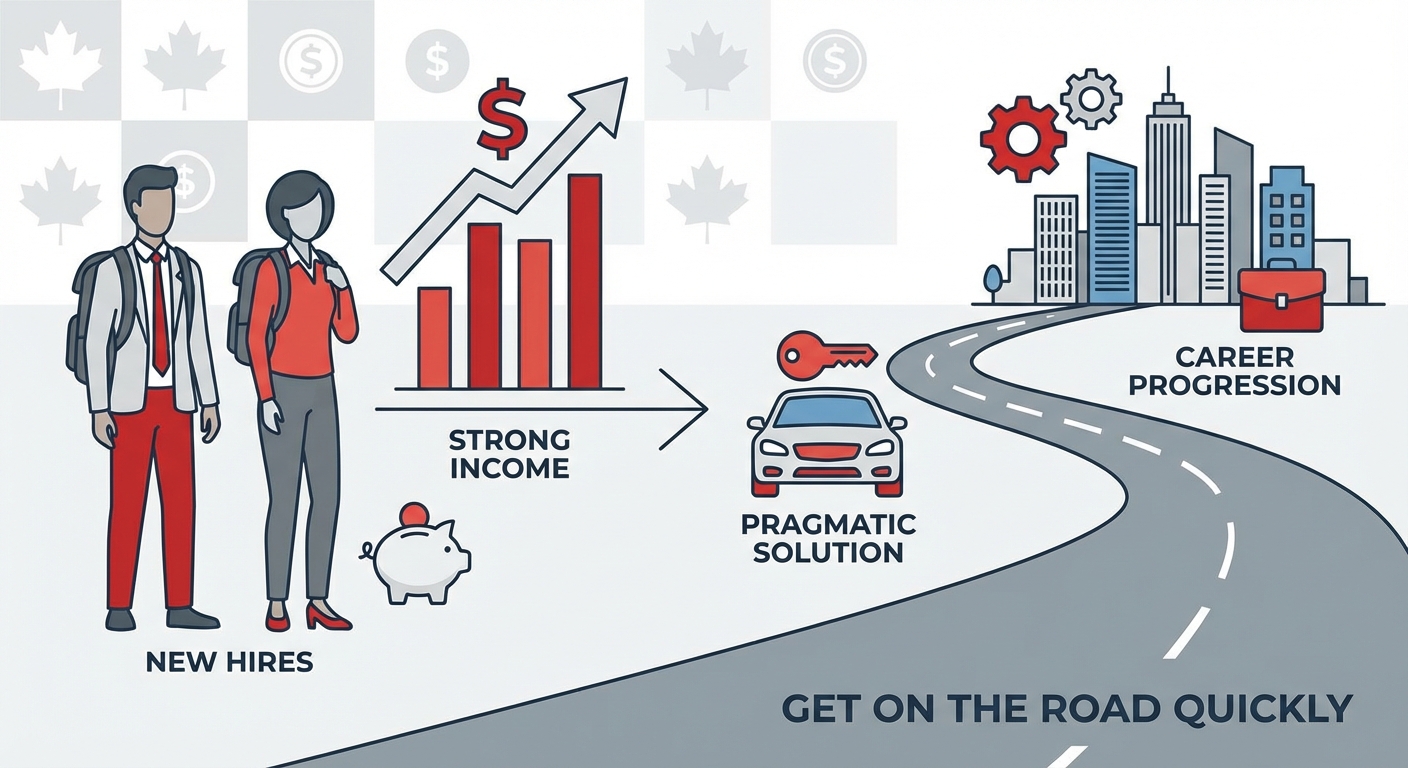
In the context of car financing, 'zero down' means you are not required to provide any upfront cash payment at the time of purchase. Instead, the entire purchase price of the vehicle, along with any applicable taxes and fees, is rolled into the total loan amount. This increases the principal of your loan from day one. While this offers immediate financial relief by preserving your savings, it has direct implications for your monthly payments and the total interest you will pay over the loan's term. Essentially, the lender is financing 100% of the vehicle's value. This can be a game-changer for new employees who haven't had time to build up a substantial savings buffer but have a strong, new income. It's a pragmatic solution for getting on the road quickly in a city where reliable transportation is often essential for career progression.
Why Zero Down Saves You Money (and Stress) in the Short Term
For someone with a new job, especially if they've just relocated to Vancouver or are in a transitional phase, a zero-down car loan offers several compelling advantages:
- Preserves Emergency Funds: You retain your cash savings, which can be critical for unforeseen expenses, establishing your new life in British Columbia, or building a financial cushion.
- Immediate Transportation: You get access to a vehicle without delay, which can be vital for commuting to your new job, exploring your new city, or fulfilling family responsibilities.
- Avoids Scramble for a Lump Sum: You don't have to stress about accumulating thousands of dollars for a down payment, allowing you to focus on your new career and settling into Vancouver.
- Flexibility: The saved cash can be used for other immediate needs, such as housing deposits, furnishing a new apartment, or covering initial living expenses in a high-cost city like Vancouver.
These short-term benefits can significantly reduce financial stress and provide immediate practical advantages for new hires.
The Hidden Costs of Convenience: What to Watch Out For with No Down Payment
While immediately beneficial, zero-down loans come with important financial implications that require careful consideration, particularly in British Columbia's unique market:
- Higher Monthly Payments: Since you're financing the full purchase price, your monthly payments will be higher compared to a loan with a down payment, all else being equal.
- Increased Total Interest Paid: A larger principal loan amount means you'll accrue and pay more interest over the loan's term. Over five or six years, this can add up significantly.
- Greater Risk of Negative Equity: Cars depreciate quickly. Without a down payment, you might owe more on the car than it's worth, especially in the first few years. This is known as being "underwater" or having negative equity. If your car is totaled or stolen, insurance might not cover the full loan amount.
- Impact on Insurance Premiums: While the down payment itself doesn't directly affect ICBC premiums, having a larger loan often necessitates comprehensive coverage to protect the lender's interest. This type of coverage will add to your premium, which is already a significant cost in British Columbia.
Understanding these potential downsides is crucial for making an informed decision and budgeting effectively for your new vehicle in Vancouver.
Navigating Lender Incentives: Are 'No Money Down' Deals Always the Best Option?
Dealerships and banks frequently offer "no money down" promotions, which can be very appealing. However, it's essential to scrutinize these offers carefully. Sometimes, a zero-down deal might come with a slightly higher interest rate (APR) or a longer loan term, which increases the total cost over time. Always compare the APR, not just the monthly payment, across different offers. Read the fine print for any hidden fees that might be rolled into the loan, such as administrative charges or extended warranty costs that are added without clear explanation. While these deals can be excellent opportunities, they require due diligence. Don't be swayed by the convenience alone; ensure the overall terms are competitive and align with your long-term financial goals. Getting pre-approved from a bank or credit union before visiting a dealership can provide a benchmark for comparison.
Chapter 3: Vancouver's Car Market – Specifics, Costs, and Commutes
Vancouver is not just a city; it's a lifestyle, and that lifestyle has unique implications for car ownership. From the stunning geography that influences commutes to the distinct provincial regulations for insurance, understanding the local context is paramount for any new car buyer in British Columbia. This chapter grounds our advice in the specific realities of Vancouver, ensuring your car choice and budget are well-suited to your new urban environment.
The Vancouver Commute: Why a Car Isn't Just a Luxury, It's a Necessity for Many
While Vancouver boasts a robust public transit system (TransLink), its effectiveness can vary greatly depending on your residence, workplace, and shift schedule. For many, especially those working outside the downtown core, in industries requiring early morning or late-night shifts, or in roles that involve travel across the Lower Mainland, a personal vehicle transitions from a luxury to a near necessity. The city's geography, with its bridges, waterways, and sprawling suburbs, means that certain routes or quick trips can be significantly more efficient by car. Having a reliable vehicle also offers unparalleled flexibility for exploring British Columbia's natural beauty on weekends, a common pastime for Vancouver residents. For career progression, particularly in sales, trades, or field services, a car often isn't just a convenience, but a fundamental tool.
Insurance in British Columbia: Understanding ICBC and Its Impact on Your Budget
One of the most significant and unique aspects of car ownership in British Columbia is the Insurance Corporation of British Columbia (ICBC). Unlike other provinces with competitive private insurance markets, ICBC operates as a provincial Crown corporation, holding a monopoly on basic auto insurance. This means every driver in British Columbia must obtain their basic coverage from ICBC. Premiums are influenced by several factors:
- Driving History: Your past driving record, including any at-fault accidents or infractions.
- Vehicle Type: The make, model, year, and value of your vehicle. More expensive or higher-risk vehicles incur higher premiums.
- Location within Vancouver: Your residential address can impact premiums, as certain areas may have higher rates of accidents or theft.
- Years of Driving Experience: Generally, more experienced drivers pay less.
- Coverage Choices: While basic coverage is mandatory, you can opt for additional extended coverage (e.g., collision, comprehensive) directly from ICBC or through private insurers (for specific add-ons).
It's crucial to get an ICBC quote early in your car-buying process, as it can be a substantial monthly expense.
Fuel Costs and Parking Realities: Budgeting for Life with a Car in Vancouver
Living with a car in Vancouver means budgeting for some of the highest fuel prices in Canada. Historically, gasoline costs in Metro Vancouver are consistently higher than in cities like Calgary or Ottawa due to various taxes and levies. Beyond fuel, parking is another major consideration. Downtown Vancouver, and many commercial districts, have expensive hourly parking rates, and monthly parking passes can run into the hundreds of dollars. Even in residential areas, street parking can be challenging to find, and permit parking zones are common. Factor in routine maintenance expenses, unforeseen repairs, and seasonal tire changes (especially if you plan to visit higher elevations in British Columbia), and the true cost of car ownership quickly adds up. A comprehensive budget is non-negotiable.
New vs. Used: Finding the Right Vehicle for Your Vancouver Lifestyle and Budget
The choice between a new and used car is particularly relevant for someone with a new job and a zero-down loan.
| Factor | New Car | Used Car |
|---|---|---|
| Initial Cost & Depreciation | Higher purchase price; significant depreciation in first 1-3 years. | Lower purchase price; much slower depreciation. |
| Loan Approval | May be slightly harder for new hires/thin credit due to higher loan amount. | Often easier to approve for new hires due to lower loan amount and perceived lower risk. |
| Reliability & Warranty | Full factory warranty, latest safety features, predictable maintenance. | May have remaining factory warranty (CPO), but generally more potential for unexpected repairs. |
| Insurance (ICBC) | Typically higher premiums due to higher value/replacement cost. | Generally lower premiums due to lower value. |
| Vancouver Lifestyle Match | Good for those needing specific features (e.g., EV incentives, latest tech) and prioritizing peace of mind. | Excellent for budget-conscious buyers, practical for city driving, less worry about minor dings. |
For a new employee in Vancouver, a reliable, fuel-efficient used car often strikes the best balance between affordability, lender approval odds, and practicality for navigating the city's unique driving environment. Consider models known for their longevity and lower running costs.
Chapter 4: The Lender's Lens – How Banks and Dealerships Evaluate New Job Applicants
Understanding how lenders view your application is crucial for maximizing your approval odds. When you're a new employee seeking a zero-down car loan, lenders will apply a specific set of criteria to assess your risk profile. This chapter dissects their evaluation process, distinguishing between different financing avenues and offering insights into how you can present the strongest possible case for approval, even without a lengthy financial history.
Beyond the Score: What Lenders See in Your Application
While your credit score is undeniably important, lenders, especially those accustomed to dealing with diverse financial situations, take a holistic view. They analyze your entire financial narrative. This includes:
- Employment Stability: How long you've been employed, the nature of your job (permanent vs. contract), and the industry's stability. Even a new job can be seen as stable if it's in a growing sector with good prospects.
- Debt-to-Income Ratio (DTI): This is a critical metric. Lenders look at your gross monthly income versus your total monthly debt payments (including the proposed car loan). A lower DTI indicates you have more disposable income to cover the car payments.
- Credit History: Even a thin credit file, if it shows responsible use of credit (e.g., a secured credit card, student loan payments), is better than no history or a history of missed payments.
- Vehicle's Value: The car itself serves as collateral. Lenders prefer financing vehicles that hold their value well and are within a reasonable price range for your income.
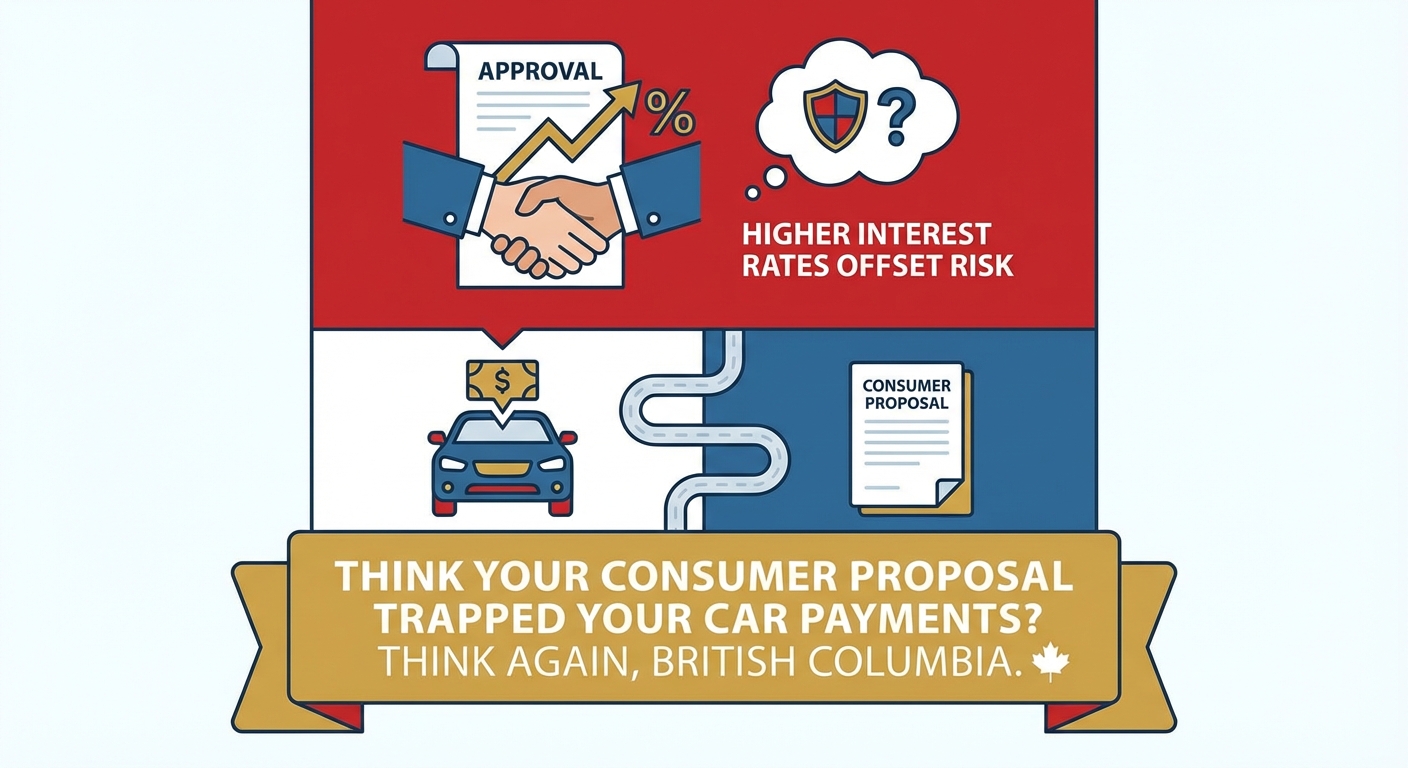
Understanding this comprehensive evaluation helps you anticipate potential concerns and proactively address them in your application. Lenders also differentiate between prime and subprime lending. Prime lenders cater to those with excellent credit and low risk, offering the best rates. Subprime lenders specialize in higher-risk borrowers (like those with new jobs, limited credit, or past financial challenges) and, while offering approval, typically do so with higher interest rates to offset the increased risk. For insights on navigating challenging financial situations, refer to our article Think Your Consumer Proposal Trapped Your Car Payments? Think Again, British Columbia.
Bank vs. Dealership Financing: Which Path is Best for a New Hire in British Columbia?
When seeking a car loan, you generally have two main avenues: direct financing from banks or credit unions, or in-house financing arranged through the dealership. Both have pros and cons, particularly for new hires in British Columbia:
| Feature | Direct Bank/Credit Union Financing | Dealership Financing |
|---|---|---|
| Application Process | Apply directly; receive pre-approval before shopping. | Apply at the dealership; they submit to multiple lenders. |
| Interest Rates | Often lower for well-qualified borrowers; more transparent. | Can be competitive, especially with manufacturer incentives, but may have markups. |
| Approval Flexibility | Generally stricter criteria; may be harder for thin credit/new jobs. | More flexibility, especially with subprime lenders or manufacturer programs; may approve higher-risk applicants. |
| Negotiating Power | Stronger position at dealership with pre-approval in hand. | Can negotiate car price and financing simultaneously, but may lose focus. |
| Relationship | Established relationship with your financial institution. | Primarily transactional; relationship with dealership, not necessarily the lender. |
For a new hire, applying for pre-approval with your existing bank or a local credit union in British Columbia is often a smart first step. It gives you a clear understanding of what you can afford and a benchmark interest rate. If direct approval is challenging, dealership financing can be a viable alternative, as they often have relationships with a wider range of lenders, including those specializing in subprime loans.
Understanding Your Approval Odds: Factors That Tip the Scales in Your Favor
While a new job and no down payment present challenges, several factors can significantly boost your approval odds:
- Demonstrating Stability: Even if your job is new, if it's in a stable industry, offers a good salary, and you have a consistent work history (even if with previous employers), emphasize this.
- Minimal Existing Debt: A low debt-to-income ratio is a huge plus. If you have minimal credit card balances or other loan obligations, you're a less risky borrower.
- Reasonable Car Choice: Opting for a practical, reliable, and affordably priced vehicle that aligns with your income makes you a more attractive applicant than choosing a luxury model.
- Co-Signer: A co-signer with excellent credit and stable income can dramatically improve your chances and potentially secure a lower interest rate.
- Strong Bank Statements: Showing consistent savings, responsible spending habits, and no bounced payments on your bank statements reinforces your financial reliability.
By focusing on these elements, you can present yourself as a responsible and capable borrower, even in your new employment phase.
The Power of a Co-Signer: When and How to Leverage Support
A co-signer is an individual who agrees to be equally responsible for your loan if you default on payments. They effectively lend their good credit and financial stability to your application. For new hires with limited credit history or a new job, a co-signer can be a game-changer, opening doors to approval and often securing significantly better interest rates.
- When it's Appropriate: A co-signer is ideal if you have a new job, limited credit, or are struggling to get approved on your own. It's a way to leverage an established credit profile.
- Responsibilities: Both you and the co-signer are legally obligated to repay the loan. A default affects both your credit scores. This is a significant commitment for the co-signer.
- How to Approach: Choose someone you trust implicitly, like a parent, close relative, or long-term friend. Have an open and honest conversation about the responsibilities involved, the loan terms, and your commitment to making on-time payments. Be prepared to provide them with all the necessary loan details.
While a co-signer can be a powerful tool, it should be considered carefully due to the shared financial responsibility.
Chapter 5: Your Application Blueprint – From Offer Letter to Keys in Hand
You’ve got the new job, you understand zero-down loans, and you’re familiar with Vancouver's unique market. Now, it’s time to put that knowledge into action. This chapter provides a practical, step-by-step guide to navigating the car loan application process, tailored specifically for someone with a new job and the goal of securing a zero-down option. Follow these steps to transform your offer letter into the keys to your new car.
Step 1: Budgeting Beyond the Monthly Payment – The True Cost of Car Ownership
Before you even look at cars, create a comprehensive budget that goes far beyond the estimated monthly loan payment. In Vancouver, this is particularly critical due to higher living costs. Your budget should include:
- Loan Payment: The principal and interest.
- Insurance (ICBC): Get a detailed quote for your chosen vehicle type and your driving history. This can be one of the largest ongoing expenses.
- Fuel: Account for Vancouver's premium gas prices and your estimated weekly or monthly kilometres driven.
- Parking: If you commute to a paid lot or require street permits, factor these costs in.
- Maintenance and Repairs: Set aside a monthly amount for oil changes, tire rotations, and unexpected repairs.
- Tires: Consider the cost of winter tires if you plan on driving in snowy conditions outside the city, or just all-season replacements.
- Registration and Licensing: Annual fees.
A realistic budget ensures you can comfortably afford your car without straining your finances, giving you peace of mind as you settle into your new Vancouver life.
Step 2: Identifying Your Ideal Vehicle (and What Lenders Will Approve)
Your ideal vehicle should be a blend of your needs, your budget, and what lenders are comfortable financing for a new employee with a zero-down loan.
- Practicality: Consider your commute, lifestyle, and potential passenger needs. A compact, fuel-efficient sedan or a small SUV might be more suitable for Vancouver city driving and parking than a large truck.
- Reliability: Research models known for their dependability and lower maintenance costs.
- Affordability: Stick to a price point that is well within your means. Lenders are more likely to approve a loan for a reasonably priced vehicle that aligns with your income. They may be hesitant to finance a high-end luxury vehicle with zero down to someone with a new job and limited credit.
- Depreciation: Consider vehicles that hold their value reasonably well, mitigating the risk of negative equity.
Choosing a sensible vehicle demonstrates financial prudence to lenders and increases your chances of approval.
Step 3: Gathering Your Arsenal – The Documents Lenders Demand
As discussed in Chapter 1, meticulous preparation of your documents is vital. Reconfirm you have:
- Valid government-issued photo ID (driver's license, passport, PR card).
- Proof of residence (utility bill, rental agreement, property tax statement).
- Proof of income (official offer letter, employment contract, recent pay stubs, letter from employer).
- Bank statements (3-6 months).
- Any existing credit documentation (e.g., statements for secured credit cards, student loans).
A well-organized file makes the application process smoother and faster.
Step 4: The Application Journey – Online, In-Person, or Through a Broker?
You have several channels to pursue your car loan:
- Online Applications: Many banks, credit unions, and dealerships offer online application portals. This is convenient and allows you to submit information quickly from home.
- In-Person at a Bank/Credit Union: For new hires, especially those with thin credit, an in-person visit can be beneficial. You can speak directly with a loan officer, explain your situation (new job, offer letter), and build a personal rapport. Credit unions in British Columbia are often more flexible and community-focused than larger banks.
- Dealership Financing: As discussed, dealerships can submit your application to multiple lenders, including those specializing in subprime loans. This can be a good option if you face challenges with direct bank applications.
- Loan Brokers: A broker acts as an intermediary, connecting you with lenders that match your profile. They can be particularly helpful for complex situations, but ensure they are reputable and transparent about fees.
Consider starting with online pre-approvals, then follow up with an in-person visit to your preferred financial institution if needed.
Step 5: Deciphering the Fine Print – Interest Rates, Terms, and Hidden Fees
Once you receive a loan offer, do not rush to sign. Take the time to thoroughly understand every aspect of the agreement:
- APR vs. Interest Rate: The Annual Percentage Rate (APR) is the true cost of borrowing, including interest and certain fees. Always compare APRs, not just the stated interest rate.
- Loan Term Length: A longer term (e.g., 72 or 84 months) means lower monthly payments but significantly more interest paid over time. A shorter term is generally better if you can afford the higher payments.
- Prepayment Penalties: Check if there are any penalties for paying off your loan early. Ideally, you want a loan that allows for penalty-free early repayment.
- Administrative Fees: Scrutinize any "documentation fees," "processing fees," or other administrative charges rolled into the loan. Ask for a clear breakdown.
- Additional Products: Be wary of being pressured into purchasing additional products like extended warranties or credit insurance that you don't need or haven't budgeted for.
Ask your lender to explain anything you don't understand. A reputable lender will be transparent and patient. This is your financial commitment, so ensure you are completely comfortable with all terms before signing.
Chapter 6: Future-Proofing Your Finances – Beyond the First Purchase
Getting your first car loan with a new job and zero down is a significant achievement. However, your financial journey doesn't end when you drive off the lot. This chapter focuses on long-term strategies to manage your loan, build a robust credit profile, and set yourself up for future financial success in British Columbia.
Building a Stronger Credit Profile with Your New Loan
Your new car loan is an excellent opportunity to establish or significantly improve your credit score. Lenders report your payment history to credit bureaus, and consistent, on-time payments are the most powerful factor in building a positive credit profile.
- Pay on Time, Every Time: This is non-negotiable. Even a single late payment can negatively impact your score.
- Automate Payments: Set up automatic deductions from your bank account to ensure you never miss a payment.
- Avoid New Debt: While establishing your car loan, try to avoid taking on significant new debt. This demonstrates responsible financial management.
- Monitor Your Credit: Regularly check your credit report for errors and track your progress. In Canada, you can get free copies of your credit report from Equifax and TransUnion annually.
By diligently managing your car loan, you're not just paying for a car; you're investing in your financial future, opening doors to better rates on future loans, credit cards, and even mortgages.
The Refinancing Advantage: When a Better Rate Becomes Possible
Once your employment is more established (e.g., after 6-12 months) and your credit score has improved, refinancing your car loan can save you a substantial amount of money.
- What is Refinancing? It involves taking out a new loan, typically with a lower interest rate, to pay off your existing car loan.
- When to Consider It: If your credit score has improved, interest rates have dropped, or you secured a higher-interest loan initially due to your new job and limited credit.
- Benefits: A lower interest rate means lower monthly payments or a shorter loan term, and less total interest paid over the life of the loan.
Keep an eye on interest rates and your credit score. Many financial institutions in British Columbia offer refinancing options, and it’s a smart move to review your loan terms after a year or so of consistent payments.
Debt-to-Income Ratio: Keeping It Healthy for Future Financial Goals
Your debt-to-income (DTI) ratio is a crucial indicator of your financial health. It's the percentage of your gross monthly income that goes towards paying your monthly debt obligations. Lenders use DTI to assess your ability to manage monthly payments and incur additional debt.
- Why it Matters: A healthy DTI (generally below 36-43%) is essential for securing future loans, such as a mortgage for a home in Vancouver, lines of credit, or even business loans.
- How to Keep it Healthy: Beyond timely payments on your car loan, focus on keeping credit card balances low, avoiding unnecessary new debt, and increasing your income where possible.
By proactively managing your DTI, you’re not just ensuring comfort with your current car payments, but you’re also laying the groundwork for achieving larger financial milestones in your new life in British Columbia.
Your Next Steps to Approval: A Practical Action Plan for Vancouver's Newest Drivers
Embarking on a new job in Vancouver is an exciting journey, and securing reliable transportation should be a seamless part of that transition. You now have the knowledge and strategies to confidently pursue a zero-down car loan, leveraging your new employment to your advantage. Remember, preparation and informed decision-making are your strongest allies.
Consolidate Your Documents: Your Lender-Ready Portfolio
Before you approach any lender, take the time to meticulously gather and organize all your essential documents. Your official offer letter, employment contract, recent pay stubs, proof of Vancouver residence, and bank statements should be readily accessible. A well-prepared portfolio signals responsibility and seriousness, streamlining the application process and making a strong first impression on any financial institution.
Shop Smart, Not Just Fast: Researching Vehicles and Lenders
Resist the urge to rush into the first deal you find. Take the time to research vehicles that genuinely meet your needs, budget, and Vancouver driving conditions. Simultaneously, compare loan offers from various banks, credit unions, and dealerships. Understand the nuances of each offer – not just the monthly payment, but the APR, loan term, and any associated fees. This diligent research ensures you secure the best possible terms for your specific situation.
Negotiate with Confidence: Knowing Your Worth as a New Employee
Armed with your pre-approval (if applicable), your comprehensive budget, and a clear understanding of your new income's strength, approach the negotiation process with confidence. You are a valuable customer with verifiable income. Don't hesitate to negotiate on the vehicle price, trade-in value (if applicable), and even the financing terms. Your new job is a powerful asset; leverage it to secure a deal that truly benefits you.
Drive Onward: Your Journey in Vancouver Begins
With careful planning and the right approach, your new job's first act can indeed be getting you a car with zero down in Vancouver. This isn't just about a vehicle; it's about enabling your professional growth, enhancing your personal freedom, and fully embracing your new life in beautiful British Columbia. Drive onward with confidence, knowing you've made a smart, informed decision for your future.