Alberta's WCB Benefits: Your Car Loan's Secret Income. Drive Now.
Table of Contents
- The Starting Line: Your Alberta WCB Benefits as a Financial Asset for a Car Loan
- Key Takeaways
- Demystifying WCB-Alberta: What Lenders See in Your Compensation Cheque
- Unpacking the WCB Procedures Manual: Lenders' Hidden Clues
- The Nuances of Income: Ongoing Payments vs. Lump Sums in Alberta
- The Approval Blueprint: What Alberta Lenders REALLY Look For Beyond Your WCB Cheque
- Beyond WCB: The Trio of Truth – Credit Score, Debt-to-Income, and Down Payment
- Verifying Your WCB Income: The Documentation Dance in Calgary and Edmonton
- Navigating the Lender Labyrinth: Banks, Dealerships, and Specialty Financiers in Alberta
- Traditional Banks & Credit Unions: Your First Stop in Alberta (e.g., ATB Financial, Servus Credit Union)
- The Dealership Advantage: Convenience vs. Cost at Alberta Car Lots (e.g., Go Auto, Don Wheaton)
- Specialty Lenders: When They Become an Option (and the Associated Risks)
- Beyond the Sticker Price: Unmasking the True Cost of Your Car Loan in Alberta
- APR Explained: The Real Cost of Borrowing on WCB Income
- Hidden Fees and Charges: Unmasking the Extra Costs in Alberta's Auto Market
- Insurance Implications: How Your Car Loan and WCB Status Intersect
- Boosting Your Approval Odds: Tailored Strategies for WCB Recipients in Alberta
- The Power of a Down Payment: Why It Matters More Than You Think
- Co-Signers and Guarantors: When They Can Help (and the Risks Involved)
- Credit Score Rehabilitation: Steps to Improve Your Score While on WCB Benefits
- Choosing the Right Vehicle: Practical Budgeting for Your WCB Income in Alberta
- Real Stories, Real Roads: Navigating Car Loans with WCB in Alberta
- Sarah from Edmonton: Securing a Family SUV with Ongoing WCB Payments
- Mark from Lethbridge: Leveraging a Lump-Sum WCB Payment for a Truck Purchase
- Emily from Grande Prairie: Improving Credit While on WCB for a Better Rate
- Your High-Octane Action Plan: From WCB Recipient to Car Owner in Alberta
- The Pre-Application Checklist: Your WCB Car Loan Readiness Guide
- Key Questions to Ask Every Lender in Alberta: Don't Leave Without Answers
- Post-Purchase Power-Up: Maintenance, Budgeting, and Future Financial Planning
- Frequently Asked Questions: Your Alberta WCB Car Loan Queries Answered
The Starting Line: Your Alberta WCB Benefits as a Financial Asset for a Car Loan
For many Albertans, the Workers' Compensation Board (WCB) is a vital lifeline after a workplace injury. It provides crucial support when you need it most, covering medical expenses and replacing lost income. However, a common misconception often shadows WCB benefits: that they are a barrier to securing significant credit, especially for a car loan. It's time to challenge that outdated notion.
At SkipCarDealer.com, we understand that life doesn't stop because of an injury. You still need reliable transportation for appointments, family, and simply maintaining your independence. What if we told you that your WCB payments, far from being a hindrance, can actually be a stable, verifiable, and often underestimated form of income that lenders in Alberta are ready and willing to consider for your next car loan? This isn't about finding loopholes; it's about understanding how the financial system truly works and how to effectively leverage your WCB income to drive away in the vehicle you need. We're here to set the stage for how to transform your WCB benefits into keys to a new ride.
Key Takeaways
- WCB benefits in Alberta are recognized as legitimate income by many lenders, paving the way for car loan approval.
- The stability and type of your WCB payments (e.g., temporary vs. permanent disability, ongoing vs. lump sum) significantly influence lender decisions.
- Your credit score, debt-to-income ratio, and down payment remain crucial factors alongside your WCB income.
- Strategic preparation, including understanding your WCB documentation and exploring different lender types (banks, credit unions, dealerships, specialty financiers), is key to securing favorable terms.
- Don't settle for the first offer; negotiation and pre-approval can save you thousands over the life of your loan.
Demystifying WCB-Alberta: What Lenders See in Your Compensation Cheque
When you apply for a car loan, lenders perform a thorough assessment of your financial stability. For those receiving WCB benefits in Alberta, this process involves understanding the nature and reliability of your compensation. It's not just about the amount; it's about the consistency and legal framework behind it.
Unpacking the WCB Procedures Manual: Lenders' Hidden Clues
Think about it from a lender's perspective. They want assurance that you can consistently meet your monthly car loan payments. The Workers' Compensation Board – Alberta's own procedures manual offers valuable insights into how different types of payments are structured, providing clues that astute lenders use to assess income reliability. For instance, ongoing temporary disability benefits, while not permanent, demonstrate a regular income stream that can be verified over a period. This consistency is often viewed more favourably than a one-off payment, as it mirrors the predictable nature of employment income.
Lenders will typically look at documentation related to "Claim entitlement decisions" to understand the basis of your benefits and their expected duration. They'll also scrutinize "Compensation rate setting and disbursements" to confirm the exact amounts and frequency of payments. A clear, official record of these details is paramount. Permanent impairment awards, while often paid as a lump sum, can also signify a long-term recognition of income impact, which, when properly explained, might contribute to a lender's confidence, especially if a portion is used as a significant down payment. Understanding these nuances helps you present your WCB income in the most favourable light.
The Nuances of Income: Ongoing Payments vs. Lump Sums in Alberta
This distinction is crucial. Consistent, scheduled WCB payments – whether weekly, bi-weekly, or monthly – are generally viewed more favourably by lenders. Why? Because they directly align with the ongoing obligation of a car loan repayment. These predictable payments demonstrate a steady capacity to manage debt over time. If your WCB benefits are structured this way, you're in a strong position to prove regular income.
Lump-sum payments, on the other hand, present a different scenario. While they can be substantial, a lender might hesitate to consider a single, finite sum as reliable income for an ongoing loan term that could span five to seven years. However, a lump sum isn't a dead end. It can be a powerful asset if used strategically as a significant down payment. By reducing the overall loan amount, you lower your monthly payments, decrease the total interest paid, and signal strong financial responsibility to the lender. This approach makes your application much more appealing, even if your remaining WCB income is temporary or lower. For more on how various government cheques can serve as income, you might find our article on Your Government Cheque Just Rewrote Your Car Loan. Seriously, Vancouver helpful.
The Approval Blueprint: What Alberta Lenders REALLY Look For Beyond Your WCB Cheque
While your WCB benefits provide a legitimate income stream, they are just one piece of the puzzle lenders examine. Securing a car loan in Alberta, especially in bustling centres like Calgary or Edmonton, involves a holistic review of your financial health. Understanding these other critical factors can significantly boost your approval odds and help you secure better terms.
Beyond WCB: The Trio of Truth – Credit Score, Debt-to-Income, and Down Payment
These three elements form the bedrock of almost any loan application. Let's break them down:
- Credit Score: This three-digit number is a snapshot of your past financial behaviour. In Alberta, as across Canada, a score above 650 is generally considered 'good' and will open doors to more favourable interest rates. Scores between 580-649 are often deemed 'fair,' while anything below 580 might require a specialty lender or a stronger down payment. Lenders want to see a history of timely payments and responsible credit use.
- Debt-to-Income (DTI) Ratio: This critical metric compares your total monthly debt payments (including your proposed car loan, existing credit cards, lines of credit, and any other loans) to your gross monthly income. Lenders typically prefer a DTI ratio below 40-45%. For example, if your WCB benefits provide $2,500 per month, and your existing debts (rent, credit card minimums) total $700, a lender would be cautious if your new car payment pushed your total debt payments over $1,000, as this would make your DTI 68% (1700/2500), which is too high. A lower DTI indicates you have sufficient disposable income to handle new debt.
- Down Payment: A substantial down payment is a powerful signal of financial commitment and stability. It reduces the amount you need to borrow, thereby lowering your monthly payments and total interest paid. For WCB recipients, using a portion of a lump-sum payment or accumulated savings as a down payment can significantly improve your loan terms, even if other aspects of your application are not perfect.
These factors intertwine. A strong down payment can sometimes compensate for a less-than-perfect credit score, while a low DTI shows you're not overextending yourself. For a deeper dive into how your income, even if it's a "playlist" of sources, can secure a car, explore our article Your Income's a Playlist, Not a Single. Get Your Car, Edmonton.
Verifying Your WCB Income: The Documentation Dance in Calgary and Edmonton
Preparation is key. When applying for a car loan, you'll need to present clear, verifiable documentation of your WCB income. Here's what lenders typically look for:
- WCB Statements: Official letters or statements from WCB-Alberta detailing your benefit amounts, payment schedule, and the duration of your benefits.
- Bank Statements: Recent bank statements (typically 3-6 months) showing direct deposits of your WCB payments. This provides tangible proof of regular income flow into your account. As we always say, Bank Statements: The Only Resume Your Car Loan Needs. Drive, Alberta!
- Tax Returns: If your WCB income is taxable (certain types of benefits can be), your latest tax returns can serve as further proof of income.
- Letters from Healthcare Providers: In some cases, a letter from your doctor or WCB case manager corroborating your injury status, the expected duration of benefits, or your ability to return to work (if applicable) can strengthen your application, especially for temporary benefits.
Lenders, particularly those in major Alberta cities like Calgary and Edmonton, are highly experienced with diverse income sources, including WCB. They may also perform their own verification by contacting WCB-Alberta directly (with your consent, of course) or cross-referencing information. The more organized and complete your documentation, the smoother and faster the approval process will be.
Navigating the Lender Labyrinth: Banks, Dealerships, and Specialty Financiers in Alberta
Once you've got your WCB documentation in order and a good grasp of your financial standing, the next step is to find the right lender. Alberta offers a diverse financial landscape, and understanding the differences between banks, credit unions, dealerships, and specialty financiers is crucial for WCB recipients.
Traditional Banks & Credit Unions: Your First Stop in Alberta (e.g., ATB Financial, Servus Credit Union)
For many, traditional banks and credit unions are the preferred choice. Institutions like ATB Financial, Servus Credit Union, or connectFirst Credit Union are pillars of Alberta's financial community. They typically offer the most competitive interest rates and transparent terms, which can save you a significant amount over the life of your loan. Their lending criteria are often more stringent, however. They look for strong credit scores, stable income (which WCB can be, if ongoing and verifiable), and a healthy debt-to-income ratio.
Advantages: Lower interest rates, flexible repayment options, established reputation, potential for pre-approval. Considerations: Stricter credit requirements, potentially longer approval process compared to dealerships.
If your WCB benefits are long-term or permanent, and you have a reasonable credit history, approaching a bank or credit union first is highly recommended. They are adept at assessing various income streams, and presenting your WCB Statement of Benefits clearly can make a strong case.
The Dealership Advantage: Convenience vs. Cost at Alberta Car Lots (e.g., Go Auto, Don Wheaton)
Dealerships, especially large groups like Go Auto or Don Wheaton in Edmonton, or the numerous auto malls in Calgary, offer immense convenience. You can often choose your vehicle, arrange financing, and drive away on the same day. Dealership finance managers work with multiple lenders (both traditional and specialty) and can often find an approval, even for those with less-than-perfect credit or non-traditional income like WCB. This "one-stop shop" approach is very appealing.
Advantages: Convenience, wide range of lending options, potential for immediate approval, negotiation on vehicle price and financing in one place. Considerations: Often higher interest rates than direct bank loans, less transparency on lender options, potential for added fees or pressure to buy add-ons.
When using dealership financing with WCB income, be prepared to negotiate. Your pre-approval from a bank (if you have one) gives you significant leverage. Always compare the dealership's offer with any pre-approved rates you've received.
Specialty Lenders: When They Become an Option (and the Associated Risks)
For individuals with lower credit scores, a history of missed payments, or WCB income that is perceived as less stable (e.g., short-term temporary benefits without a clear end date), specialty or subprime lenders might be the only viable option. These lenders specialize in higher-risk loans and are more flexible with their criteria.
Advantages: Higher approval rates for challenging credit situations, more understanding of non-traditional income sources. Considerations: Significantly higher interest rates (APR), potentially more fees, less flexible terms, and a higher overall cost of borrowing. It's crucial to understand the full terms and conditions before committing.
While specialty lenders can provide access to a vehicle when others can't, proceed with caution. Ensure you can comfortably afford the payments and understand the total cost. Avoid predatory terms that could lead to further financial strain. For those navigating disability income, our article on Approval Secrets: Financing a Vehicle on AISH or Disability in Alberta offers additional perspectives on securing financing with government support.
Beyond the Sticker Price: Unmasking the True Cost of Your Car Loan in Alberta
When you're excited about a new vehicle, it's easy to focus solely on the sticker price or the monthly payment. However, the true cost of your car loan, especially when financing with WCB income in Alberta, involves several components that can significantly impact your wallet. Understanding these elements is key to making an informed financial decision.
APR Explained: The Real Cost of Borrowing on WCB Income
The Annual Percentage Rate (APR) is more than just the interest rate; it's the total cost of borrowing expressed as a yearly percentage. It includes the interest rate plus certain fees and charges associated with the loan. A 0.5% difference in APR might seem small, but over a 5-7 year loan term, it can translate into thousands of dollars.
For WCB recipients, your income stability, credit score, and down payment directly influence the APR offered. Lenders assess risk, and if your WCB income is perceived as less stable (e.g., temporary with an uncertain end date), or your credit score is lower, you might be offered a higher APR to offset that perceived risk. Conversely, a stable, ongoing WCB benefit, coupled with a good credit score and a substantial down payment, can help you qualify for the lowest possible rates.
Here's a simplified example to illustrate the impact of APR over a 60-month (5-year) loan term for a $25,000 car loan:
| APR | Monthly Payment (approx.) | Total Interest Paid (approx.) | Total Cost of Loan (approx.) |
|---|---|---|---|
| 4.99% | $471 | $3,260 | $28,260 |
| 8.99% | $518 | $6,080 | $31,080 |
| 14.99% | $595 | $10,700 | $35,700 |
As you can see, a higher APR drastically increases your total cost. Always focus on the APR when comparing loan offers, not just the interest rate or monthly payment.
Hidden Fees and Charges: Unmasking the Extra Costs in Alberta's Auto Market
Beyond the APR, be vigilant about other fees that can inflate the total cost of your car loan in Alberta. Some are statutory, while others are negotiable or entirely optional:
- Administration Fees: Often charged by dealerships for processing paperwork. These can range from a few hundred to over a thousand dollars. Always ask if this is negotiable.
- PPSA Registration Fees: Personal Property Security Act (PPSA) fees register the lender's interest in your vehicle. These are typically statutory and non-negotiable but usually a small amount ($10-$50).
- Documentation Fees: Similar to admin fees, for preparing sales documents. Again, ask if it's negotiable.
- Optional Add-ons: Extended warranties, rust proofing, paint protection, fabric protection, and GAP insurance are common add-ons. While some might offer value, they significantly increase your loan amount and monthly payments. Critically assess if you truly need them, especially when budgeting on WCB benefits.
Always request a full breakdown of all costs and fees before signing any agreement. Know what you're paying for and challenge anything that seems unnecessary or excessive.
Insurance Implications: How Your Car Loan and WCB Status Intersect
Securing a car loan means you'll need comprehensive insurance coverage, as the vehicle is typically used as collateral. This isn't just a legal requirement; it's a financial necessity. Your WCB status doesn't directly impact your insurance rates for your vehicle (those are based on factors like your driving record, vehicle type, location, and age), but it absolutely affects your financial capacity to afford comprehensive coverage.
Budgeting for insurance alongside your loan payments, fuel, and maintenance is crucial. If you were to be involved in another accident while on WCB, having adequate vehicle insurance protects your investment. Furthermore, understanding how your WCB claim might interact with any new accident claim (especially for lost wages or further injury) is complex and best discussed with legal counsel, but it underscores the importance of sound financial planning for all your obligations in Alberta.

Boosting Your Approval Odds: Tailored Strategies for WCB Recipients in Alberta
Navigating the car loan process with WCB benefits requires a strategic approach. While your WCB income is a strong asset, combining it with other smart financial moves can significantly improve your chances of approval and help you secure the best possible terms.
The Power of a Down Payment: Why It Matters More Than You Think
A significant down payment is perhaps the most impactful strategy for WCB recipients. It immediately signals financial responsibility to lenders and reduces the amount you need to borrow. This, in turn, lowers your monthly payments, decreases the total interest you'll pay over the loan term, and reduces the lender's risk. For those receiving a WCB lump sum, strategically allocating a portion of it towards a down payment is an excellent move. Even if your ongoing WCB benefits are modest, a substantial down payment can make your application highly appealing. In Alberta's diverse economic landscape, where income streams can vary, a strong down payment demonstrates tangible financial commitment, making you a more attractive borrower.
Co-Signers and Guarantors: When They Can Help (and the Risks Involved)
If your credit score is lower, or your WCB income is temporary and causes lenders concern, a co-signer or guarantor can be a game-changer. A co-signer legally shares responsibility for the loan, meaning their credit history and income are also considered. A guarantor guarantees the loan if the primary borrower defaults. Both options can significantly improve your approval odds and potentially secure a lower interest rate.
However, this comes with serious responsibilities for both parties. The co-signer/guarantor is equally liable for the debt. If you miss payments, their credit score will be negatively affected, and they could be pursued for the outstanding amount. Both you and your co-signer/guarantor must have a clear, honest discussion about the financial and legal implications before proceeding.
Credit Score Rehabilitation: Steps to Improve Your Score While on WCB Benefits
Building or rebuilding a good credit score is a long-term strategy, but it's invaluable for all future financial endeavours, including car loans in cities like Red Deer or Lethbridge. While on WCB benefits, you can take proactive steps:
- Pay Bills On Time: This is the single most important factor in your credit score. Set up automatic payments for all your bills.
- Keep Credit Utilization Low: Aim to use less than 30% of your available credit on credit cards. For example, if you have a $1,000 limit, try to keep your balance below $300.
- Address Outstanding Debts: If you have any collections or overdue accounts, work to resolve them.
- Consider a Secured Credit Card: If you have poor or no credit, a secured credit card (where you provide a deposit that becomes your credit limit) can be an excellent tool to build a positive payment history.
Consistent, responsible financial behaviour will gradually improve your credit score, opening doors to better loan terms in the future.
Choosing the Right Vehicle: Practical Budgeting for Your WCB Income in Alberta
Finally, choose a vehicle that realistically aligns with your WCB income and overall budget. It's not just about the monthly payment; consider fuel efficiency, insurance costs, and potential maintenance. In Alberta, with our varied climate and driving conditions, reliable vehicles are key. SUVs, AWD sedans, and pickup trucks are popular choices for their utility and ability to handle winter roads.
- New vs. Used: Used cars often represent better value, as they've already taken the steepest depreciation hit. They can also have lower insurance costs.
- Fuel Efficiency: With fluctuating fuel prices, a more fuel-efficient vehicle can save you hundreds, if not thousands, annually.
- Maintenance Costs: Research the typical maintenance costs for potential vehicles. Some brands are more expensive to repair than others.
Relate this back to realistic loan amounts based on your WCB benefit levels. Don't overextend yourself. A reliable, affordable vehicle that fits your budget is always a better choice than a dream car that becomes a financial burden.
Real Stories, Real Roads: Navigating Car Loans with WCB in Alberta
To truly understand how WCB benefits can unlock car loan approval, sometimes it helps to look at real-world examples. These hypothetical scenarios illustrate common pathways and highlight the strategies that lead to success for Albertans.
Sarah from Edmonton: Securing a Family SUV with Ongoing WCB Payments
Sarah, a 38-year-old mother of two in Edmonton, sustained a back injury at her administrative job. She was receiving ongoing WCB temporary total disability benefits of $2,800 per month. Her credit score was a respectable 680, and she had a small existing credit card balance. Sarah needed a reliable SUV to transport her children and attend regular physiotherapy appointments. She understood that her WCB income was stable and verifiable, so she proactively secured a 'Statement of Benefits' from WCB-Alberta. She also gathered three months of bank statements showing the direct deposits. Approaching Servus Credit Union, Sarah presented her documentation, explained her ongoing WCB status, and highlighted her diligent payment history. With a modest down payment of $2,000 from savings, she was pre-approved for a $28,000 loan at a competitive 6.5% APR. This proactive approach and clear documentation allowed her to confidently shop for a family-friendly SUV, ultimately purchasing a used Honda CR-V that fit her budget and needs.
Mark from Lethbridge: Leveraging a Lump-Sum WCB Payment for a Truck Purchase
Mark, a 45-year-old construction worker from Lethbridge, received a lump-sum WCB payment of $35,000 for a permanent impairment to his hand. He still needed a reliable work truck, as he planned to return to modified duties. Mark's credit score was moderate at 620 due to some past late payments, which made him concerned about loan approval. Recognizing the power of his lump sum, he strategically decided to use $15,000 of it as a down payment for a $40,000 truck. This significantly reduced his loan amount to $25,000. He visited a local dealership in Lethbridge and, rather than relying solely on their in-house financing, came prepared with proof of his lump sum and a clear plan. By putting down such a substantial amount, he mitigated the risk associated with his moderate credit score. The dealership's finance manager, working with a regional lender, approved him for a 60-month loan at 9.9% APR – a rate much better than he would have received without the large down payment. Mark drove away in a dependable Ford F-150, ready to get back to work.
Emily from Grande Prairie: Improving Credit While on WCB for a Better Rate
Emily, a 29-year-old retail worker in Grande Prairie, was on WCB benefits after a slip and fall. Her monthly benefit was $2,200. While her income was stable, her credit score was a low 550 due to some financial struggles in her early twenties. She needed a compact car for her daily errands and future commute. Emily realized her credit score was a hurdle, so she began a credit rehabilitation journey. She opened a secured credit card with a $500 limit, consistently paid the small balance in full each month, and ensured all her other bills were paid on time. After six months, her credit score slowly climbed to 595. With her WCB Statement of Benefits and a slightly improved credit score, she approached a specialty lender introduced by a local Grande Prairie dealership. While the APR was higher than a bank would offer (17.9%), it was significantly better than the initial offers she had received before improving her credit. She secured a loan for a reliable used Kia Forte, understanding that her diligent payments on this loan would continue to build her credit for even better rates in the future.
Your High-Octane Action Plan: From WCB Recipient to Car Owner in Alberta
You've got the knowledge, now it's time for action. Navigating the car loan process with WCB benefits in Alberta is entirely achievable with careful preparation and a clear strategy. Here's your step-by-step guide to driving away in your new vehicle.
The Pre-Application Checklist: Your WCB Car Loan Readiness Guide
Before you even step foot in a dealership or bank, make sure you're fully prepared. This comprehensive checklist will empower individuals across Alberta to approach lenders with confidence:
- Obtain WCB Statement of Benefits: Get an official document detailing your payment schedule, amounts, and duration.
- Gather Bank Statements: Collect 3-6 months of statements showing direct deposits of your WCB payments.
- Check Your Credit Score: Pull your credit report from Equifax and TransUnion. Review it for accuracy and dispute any errors.
- Calculate Your Debt-to-Income (DTI) Ratio: Sum up all your monthly debt payments (credit cards, existing loans, rent/mortgage) and divide by your gross monthly WCB income. Ensure it's within a reasonable range (ideally below 45%).
- Determine Your Down Payment: Decide how much you can comfortably put down. The more, the better.
- Set a Realistic Budget: Factor in not just the car payment, but also insurance, fuel, maintenance, and registration fees.
Key Questions to Ask Every Lender in Alberta: Don't Leave Without Answers
Empower yourself by asking the right questions. This list will help you make informed decisions and compare offers effectively:
- What is the exact Annual Percentage Rate (APR) for this loan?
- Are there any hidden fees or charges, such as administration fees or early payment penalties?
- What are the full repayment terms (loan duration in months, total amount to be repaid)?
- How is my WCB income specifically factored into your lending decision?
- Can I make extra payments without penalty to pay off the loan faster?
- What are the insurance requirements for this vehicle and loan?
- What happens if my WCB benefits change or end during the loan term?
Don't be afraid to walk away if you don't feel comfortable with the answers or the terms. Your financial well-being is paramount.
Post-Purchase Power-Up: Maintenance, Budgeting, and Future Financial Planning
Congratulations, you've secured your car loan and are driving in Alberta! But the journey doesn't end there. Responsible post-purchase management is crucial for long-term financial stability:
- Stick to Your Budget: Continue to monitor your income and expenses closely. Ensure your car loan payments, insurance, fuel, and maintenance costs remain manageable within your WCB benefits.
- Regular Vehicle Maintenance: Don't skip oil changes or scheduled service. Preventative maintenance saves money in the long run and keeps your vehicle reliable, especially important for Alberta's demanding driving conditions.
- Build an Emergency Fund: Unexpected car repairs can happen. Having a small emergency fund can prevent these issues from derailing your finances.
- Continue Credit Building: Keep paying all your bills on time. As your WCB benefits stabilize or if you transition back to work, a strong credit score will open doors to even better financial opportunities in the future.
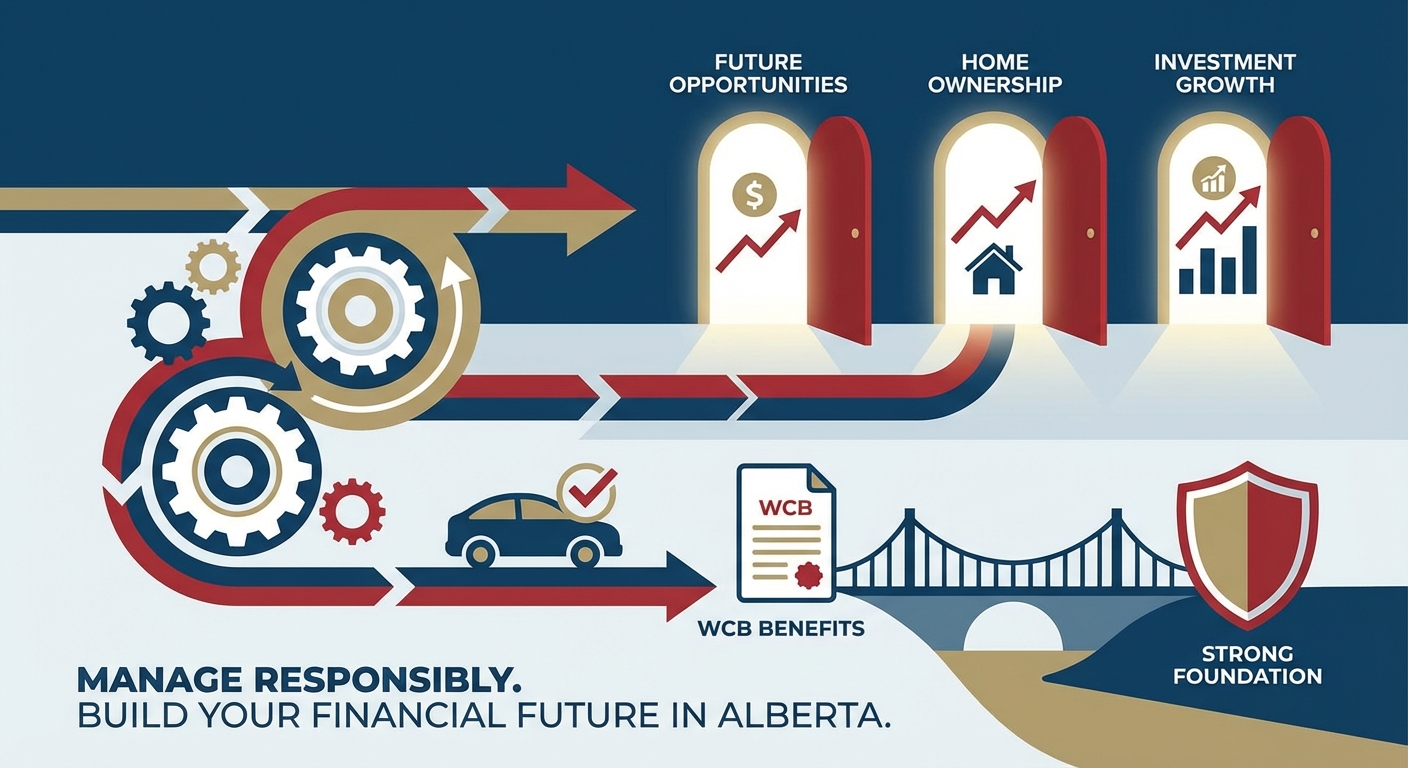
By managing your car loan responsibly alongside your WCB benefits, you ensure not only reliable transportation but also a strong foundation for your ongoing financial health in Alberta.