Your Neighbour's Car. Your Poor Credit. Still a Match, Vancouver.
Table of Contents
- Your Neighbour's Car. Your Poor Credit. Still a Match, Vancouver.
- Key Takeaways
- I. The Vancouver Dream, The Credit Nightmare: Can Your Neighbour's Ride Still Be Yours?
- The Allure of the 'For Sale' Sign: Why Private Sales Captivate Vancouver Drivers
- The Double Whammy: High Costs & Credit Woes in British Columbia's Automotive Market
- II. Decoding 'Poor Credit': What It Really Means for Your Canadian Car Loan Application
- Beyond the Number: Understanding Your Credit Score in Canada
- Private Sale vs. Dealership: How Poor Credit Changes the Game
- III. The Private Sale Advantage (Even with Credit Woes): Why Your Neighbour's Car Might Be a Smarter Bet
- Unlocking Value: The Price Disparity Between Private & Dealership Sales
- The Collateral Play: Turning Your Desired Vehicle into Your Strongest Asset
- Beyond the Showroom Floor: Control and Transparency in Private Negotiations
- IV. Navigating the Loan Labyrinth: Who Will Lend to You for a Private Sale with Poor Credit?
- Traditional Banks: Unpacking Offerings from Institutions like TD Canada
- Credit Unions: Community Focus, Flexible Terms?
- Online Lenders & Specialized Bad Credit Auto Financiers: Speed vs. Cost
- V. The Real Cost of Borrowing: Interest Rates, Fees, and the 'Poor Credit Premium'
- Setting Realistic Expectations: Interest Rates for Poor Credit Private Sale Loans
- Beyond the APR: Unmasking Hidden Fees and Charges
- The Power of Your Down Payment: How It Slashes Total Costs
- VI. Crafting Your Application: Maximizing Your Approval Odds in Vancouver and Beyond
- The 'Must-Haves': Essential Documents for Poor Credit Applicants
- The 'Nice-to-Haves': Strategies to Sweeten Your Application
- Vehicle Specifics: The Role of the Car Itself in Your Approval
- VII. Beyond Vancouver: Regional Nuances in Private Sale Car Loans for Poor Credit
- Calgary, Alberta: A Different Economic Landscape for Vehicle Financing
- Ottawa, Ontario: Urban Challenges and Provincial Regulations
- How Local Market Conditions Impact Your Loan Terms
- VIII. The Due Diligence Checklist for Your Private Sale Purchase (Crucial for Poor Credit Buyers)
- The Non-Negotiable: Pre-Purchase Inspection (PPI)
- Protecting Your Investment: Lien Checks and Vehicle History Reports
- Insurance Implications: How Poor Credit Can Affect Your Premiums in British Columbia
- Navigating Provincial Sales Tax (PST) and Ownership Transfer in British Columbia
- IX. Your Loan as a Ladder: Rebuilding Credit Through Responsible Vehicle Financing
- The Power of Punctuality: How On-Time Payments Transform Your Credit
- Beyond the Car: The Long-Term Benefits of Improved Credit
- Strategies for Success: Staying on Track with Your Payments
- X. When the Loan Isn't a Match: Alternative Paths to Car Ownership
- The Power of Patience: Saving Up for a Cheaper Vehicle
- Exploring Lease-to-Own or Rent-to-Own Options (with Caution)
- The Co-Signer Revisited: A Bridge to Better Terms
- Vancouver's Alternatives: Public Transit and Ridesharing as Temporary Solutions
Your Neighbour's Car. Your Poor Credit. Still a Match, Vancouver.
Picture this: you’re driving down a tree-lined street in Kitsilano or perhaps cruising through East Vancouver, and there it is – that perfect used car with a "For Sale" sign in the window. Maybe it's a reliable Honda Civic, ideal for navigating city traffic, or a Subaru Outback, ready for weekend escapes to Whistler. It’s exactly what you need, it's local, and it looks like a fantastic deal. But then, a familiar anxiety creeps in: your credit score. In a competitive market like Vancouver, British Columbia, where the cost of living is notoriously high, the thought of securing a car loan with less-than-perfect credit can feel like an impossible dream. Can your neighbour's car truly be yours, even with a credit score that’s seen better days?
At SkipCarDealer.com, we understand this challenge. We know that life happens, and a poor credit score doesn't define your reliability or your need for a vehicle. This comprehensive guide will navigate the often-complex world of private sale car loans for poor credit in Canada, with a special focus on the unique landscape of Vancouver and British Columbia. We’ll show you how to turn that "For Sale" sign into your next set of keys, even when traditional lenders seem out of reach.
Key Takeaways
- Private sale car loans for poor credit are challenging but achievable, especially when the vehicle acts as collateral.
- Lenders like TD Canada offer specific 'Private Sale Vehicle Loans' that can be more accessible than unsecured options.
- A strong down payment, a reliable co-signer, and demonstrating income stability significantly boost approval odds.
- Beyond interest rates, factor in pre-purchase inspections, lien checks, provincial sales tax, and insurance costs, particularly in high-cost areas like Vancouver, British Columbia.
- Responsible repayment of a private sale car loan can be a powerful tool for rebuilding your credit score.
I. The Vancouver Dream, The Credit Nightmare: Can Your Neighbour's Ride Still Be Yours?
The Allure of the 'For Sale' Sign: Why Private Sales Captivate Vancouver Drivers
There's an undeniable charm to the private car sale, especially in a vibrant, diverse city like Vancouver. You spot a pristine vehicle parked down the street, an older model with character on Craigslist, or a unique find on Kijiji. The appeal is immediate: the potential for a better deal, direct negotiation with the owner, and access to a wider variety of vehicles that might never grace a dealership lot. You can ask detailed questions about its history, get a feel for the seller, and often walk away with a vehicle at a price that feels more aligned with your budget. This direct approach can feel far less intimidating than the high-pressure environment of a showroom, particularly when you're already concerned about your credit history.
The Double Whammy: High Costs & Credit Woes in British Columbia's Automotive Market
Vancouver, British Columbia, however, isn't just any city. It presents a distinctive set of hurdles for car buyers. The city's exorbitant cost of living often means residents have less disposable income, which can make saving for a down payment difficult and, in some cases, contribute to credit challenges. The demand for specific vehicle types is also pronounced here – think fuel-efficient compacts for navigating dense urban areas, or all-wheel-drive SUVs for weekend trips up to Grouse Mountain or out to the Fraser Valley. This high demand and specific preference can drive up prices in the local private market, making every dollar count, especially when you're seeking a 'private sale car loan for poor credit'. The central challenge then becomes clear: how do you bridge the gap between a desirable private sale vehicle and the financing required, when your credit score isn't playing ball?
II. Decoding 'Poor Credit': What It Really Means for Your Canadian Car Loan Application
Beyond the Number: Understanding Your Credit Score in Canada
When lenders in Canada talk about 'poor credit,' they're not just looking at a single number. They're assessing a complex financial history reflected in your Equifax and TransUnion credit reports. Generally, a FICO score below 600 is considered poor, with scores in the 500-550 range indicating significant risk, while those closer to 600-620 might still face challenges but have slightly more options. Factors contributing to poor credit can include missed payments, high credit utilization (using too much of your available credit), collections, bankruptcies, or consumer proposals. Each of these tells a story about your past financial behaviour, and lenders use this narrative to gauge the likelihood of you repaying a new loan. Understanding these historical factors is crucial, as it allows you to anticipate lender concerns and prepare thoughtful explanations. For more on navigating these situations, consider reading Post-Proposal Car Loan: Your Credit Score Just Got a Mulligan.
Private Sale vs. Dealership: How Poor Credit Changes the Game
The financing landscape shifts significantly for poor credit borrowers depending on whether you're buying privately or from a dealership. Dealerships often have established relationships with multiple lenders, including those specializing in 'subprime' or bad credit auto loans. They have dedicated finance departments that can package your application and leverage these relationships. Private sales, however, typically mean you, the buyer, are responsible for securing the financing directly. This can be perceived as harder because there's no intermediary to smooth the process, and some lenders are simply less familiar or comfortable with private sale vehicle loans, especially for poor credit. However, there's a potential silver lining: the vehicle's collateral value can play a much more direct role in a private sale loan, sometimes making it more accessible than an unsecured personal loan.
Pro Tip #1: Your Credit Report is Your First Negotiation Tool
Before you even think about applying for a loan, pull your full credit report from both Equifax and TransUnion. Review it meticulously for any errors or inaccuracies. Understand every derogatory mark and be prepared to explain the circumstances surrounding past financial missteps. Knowing your credit standing empowers you to address potential lender concerns proactively and negotiate from a position of knowledge, rather than surprise.
III. The Private Sale Advantage (Even with Credit Woes): Why Your Neighbour's Car Might Be a Smarter Bet
Unlocking Value: The Price Disparity Between Private & Dealership Sales
One of the most compelling reasons to pursue a private sale, especially when financing with poor credit, is the potential for significant cost savings. Dealerships have overheads – showrooms, sales staff, advertising, reconditioning costs – which are all factored into their vehicle pricing. Private sellers, on the other hand, typically just want to sell their car quickly and fairly, often leading to a lower asking price. This absence of dealer markups means you could pay hundreds, if not thousands, less for the same vehicle compared to a dealership. For a poor credit buyer, this lower initial cost is a huge advantage, as it reduces the total loan amount needed, potentially leading to lower monthly payments and making the loan more manageable.
The Collateral Play: Turning Your Desired Vehicle into Your Strongest Asset
This is where the private sale truly shines for poor credit borrowers. Many lenders, including major institutions like TD Canada, offer specific 'Private Sale Vehicle Loans.' These are typically secured loans, meaning the vehicle you're buying serves as collateral. If you default on the loan, the lender has the right to repossess the vehicle to recover their losses. This significantly reduces the risk for the lender, making them more willing to approve loans for individuals with poor credit who might otherwise be denied an unsecured personal loan. What makes a vehicle 'good collateral'? Generally, a newer model (typically under 7-8 years old), with lower mileage, in good condition, and with a clear title, from a popular make and model. The stronger the collateral, the better your chances of approval and potentially more favourable terms. For detailed insights into the power of your vehicle's title, refer to Your Car Title: The Only Paperwork That Matters in Vancouver.
Beyond the Showroom Floor: Control and Transparency in Private Negotiations
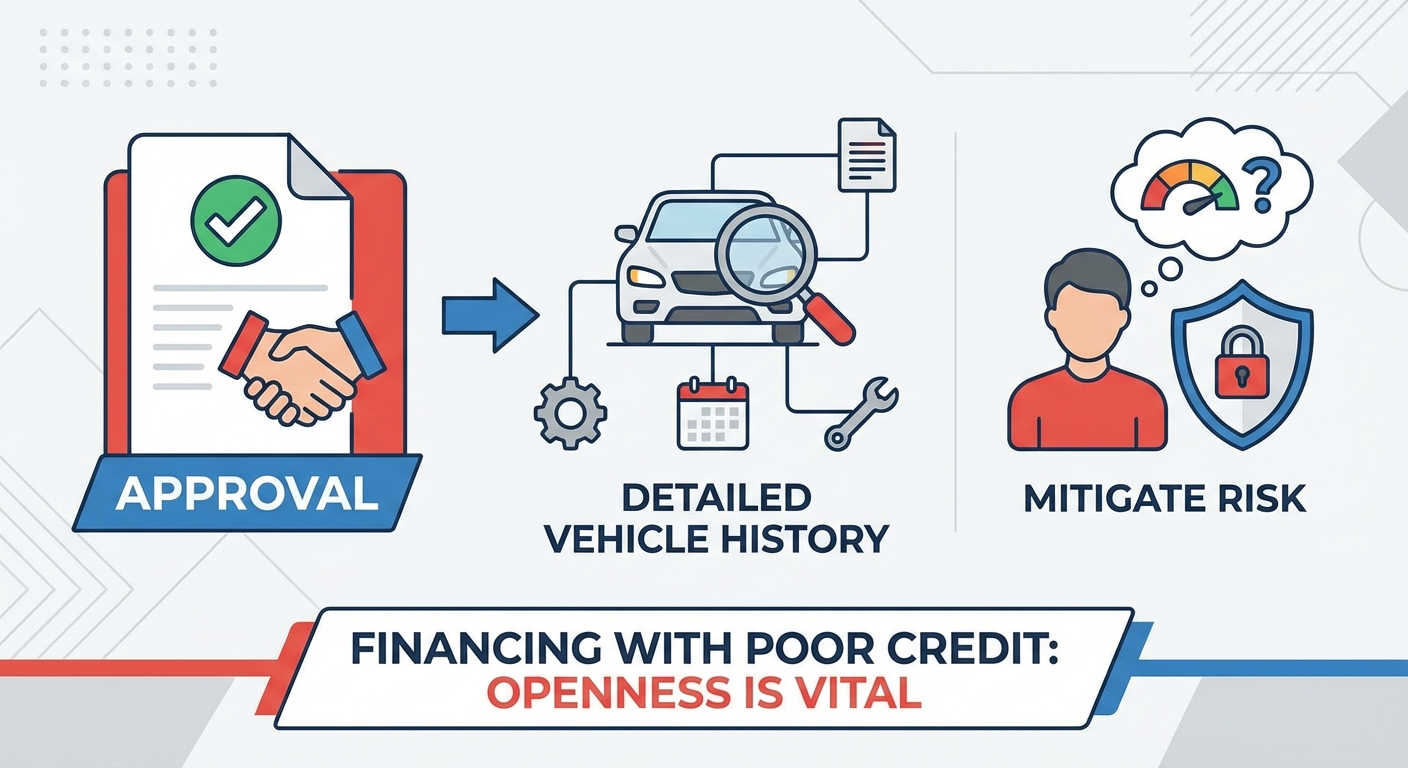
Direct negotiation with a private seller offers a level of control and transparency rarely found in a dealership setting. You can take your time, inspect the vehicle thoroughly without sales pressure, and engage in a genuine conversation about its history and maintenance. This direct interaction can sometimes lead to more flexible terms, such as the seller being willing to wait a few extra days for financing approval, or providing a more detailed account of the vehicle's past. This openness is particularly vital when financing with poor credit, as every piece of information about the vehicle's reliability and condition helps mitigate your personal risk.
IV. Navigating the Loan Labyrinth: Who Will Lend to You for a Private Sale with Poor Credit?
Traditional Banks: Unpacking Offerings from Institutions like TD Canada
Many poor credit borrowers assume traditional banks are out of reach. However, this isn't always the case, especially when it comes to specialized products. Major Canadian banks like TD Canada offer 'Private Sale Vehicle Loans' that are explicitly designed for this scenario. These loans are typically secured by the vehicle itself, making them more accessible than a general unsecured personal loan. TD's offering, for example, might feature fixed or variable rates and tailored repayment schedules. Eligibility criteria will still be stringent – they'll look for stable income, a reasonable debt-to-income ratio, and perhaps a decent down payment. While approval might be harder than for someone with excellent credit, if approved, the rates from a major bank are often more competitive than those from specialized bad credit lenders. Don't dismiss them outright; understanding their specific programs is key.
Credit Unions: Community Focus, Flexible Terms?
Credit unions operate with a member-centric philosophy, which can sometimes translate into more flexible lending decisions for individuals with poor credit, particularly if you're already a member with an established relationship. Institutions like Vancity or Coast Capital Savings in British Columbia often assess applications on a more holistic basis, considering your overall financial picture and commitment to the community, rather than solely relying on a credit score. Their offerings might include competitive rates and personalized service. It's always worth exploring your local credit union options, especially if you have a history with them, as they might be more willing to work with you on a private sale car loan.
Online Lenders & Specialized Bad Credit Auto Financiers: Speed vs. Cost
The digital age has brought a surge in online lenders and companies specializing in 'bad credit car loans.' These lenders often boast streamlined application processes, quick pre-approvals (sometimes in minutes), and a willingness to work with a wider range of credit scores. Their accessibility is a major draw, especially for those who've been turned down by traditional institutions. However, this convenience often comes at a cost: potentially higher interest rates and fees, reflecting the increased risk they undertake. It's crucial to exercise caution and thoroughly research any online lender. Look for transparent terms, clear contact information, and positive customer reviews to identify reputable options and avoid predatory lenders. While they can be a lifeline, ensure you understand the full financial commitment. For more on identifying trustworthy lenders, especially when dealing with poor credit, consider reading Unmasking 'Bad Credit' Car Lenders: Red Flags You Miss, Quebec.
Pro Tip #2: Don't Dismiss Traditional Banks; Understand Their Specific 'Private Sale' Products
Many assume banks won't touch poor credit. However, some traditional banks, like TD Canada, have specific 'Private Sale Vehicle Loans' designed to address this very need by using the vehicle as collateral. These aren't generic personal loans; they're tailored for car purchases. Always inquire specifically about these programs, as their rates can often be more favourable than those from specialized bad credit lenders if you qualify.
V. The Real Cost of Borrowing: Interest Rates, Fees, and the 'Poor Credit Premium'
Setting Realistic Expectations: Interest Rates for Poor Credit Private Sale Loans
Let's address the elephant in the room: interest rates. With poor credit, you must set realistic expectations. While someone with excellent credit might secure an auto loan at 3-6% APR, a poor credit borrower in Canada could expect rates anywhere from 10% to 29.99% or even higher, depending on the lender, your specific credit profile, the vehicle's collateral value, and other factors. This significant difference is known as the 'poor credit premium' – lenders charge more because the perceived risk of default is higher. Fixed rates offer predictability in your monthly payments, while variable rates can fluctuate with market changes, potentially offering lower initial payments but introducing uncertainty.
Here's a general comparison of potential interest rates:
| Credit Score Range | Typical APR Range (Excellent Credit) | Typical APR Range (Good Credit) | Typical APR Range (Fair Credit) | Typical APR Range (Poor Credit) |
|---|---|---|---|---|
| 800+ | 2.99% - 5.99% | N/A | N/A | N/A |
| 680-799 | N/A | 5.00% - 9.99% | N/A | N/A |
| 600-679 | N/A | N/A | 9.00% - 15.99% | N/A |
| Under 600 | N/A | N/A | N/A | 15.00% - 29.99%+ |
Note: These are general ranges and can vary significantly based on lender, loan term, vehicle, and current market conditions.
Beyond the APR: Unmasking Hidden Fees and Charges
Interest rates are just one piece of the puzzle. It's crucial to understand all potential additional costs that can inflate the total price of your loan. These can include: loan origination fees (a charge for processing the loan), administrative charges, documentation fees, and sometimes even penalties for early repayment (if you decide to pay off the loan faster). Each of these fees can add hundreds, or even thousands, of dollars to your total borrowing cost. A thorough review of the loan agreement is not just recommended, it's absolutely critical to ensure you're not caught off guard by hidden charges.
The Power of Your Down Payment: How It Slashes Total Costs
A down payment is your secret weapon when seeking a private sale car loan with poor credit. Not only does it significantly improve your approval odds by reducing the lender's risk, but it also directly slashes the total amount you need to borrow. This, in turn, means you pay less interest over the life of the loan. Even a modest down payment of 10-20% can save you thousands of dollars in interest and lower your monthly payments, making the loan more affordable and sustainable. It also demonstrates your commitment to the purchase, further appealing to lenders.
Pro Tip #3: Always Get a Full Breakdown of All Costs and Fees Before Signing
Never sign a loan agreement until you have received and thoroughly reviewed a complete amortization schedule and a detailed list of every single fee. Ask questions about anything unclear. Understand the total cost of the loan, not just the monthly payment. Full transparency is essential to avoid unpleasant surprises down the road.
VI. Crafting Your Application: Maximizing Your Approval Odds in Vancouver and Beyond
The 'Must-Haves': Essential Documents for Poor Credit Applicants
When your credit score is shaky, proving your current financial stability becomes paramount. Lenders will require a robust set of documents to assess your ability to repay the loan. These typically include:
- Proof of Stable Income: Recent pay stubs (at least three months), T4s, tax returns, or bank statements demonstrating consistent deposits. For self-employed individuals, this can be more complex, but a clear financial record is still essential. For more details on proving income when self-employed, see Self-Employed? Your Income Verification Just Got Fired.
- Employment Verification: A letter from your employer or contact information for your HR department.
- Proof of Residency: Utility bills (hydro, gas, internet) or a lease agreement showing your current address in Vancouver, British Columbia, or wherever you reside.
- Valid Identification: Government-issued photo ID (e.g., driver's license).
Having these documents prepared and organized before you apply demonstrates reliability and professionalism, making a positive first impression.
The 'Nice-to-Haves': Strategies to Sweeten Your Application
Beyond the essentials, several factors can significantly strengthen a poor credit application:
- A Substantial Down Payment: As discussed, this reduces the loan amount and the lender's risk.
- A Creditworthy Co-Signer: If you can find a family member or close friend with excellent credit willing to co-sign, their credit history and income will be considered alongside yours, dramatically improving your approval odds and potentially securing a much better interest rate. Remember, the co-signer is equally responsible for the debt if you default.
- Demonstrating Stable Banking History: Even if not reported to credit bureaus, consistent payments for rent, utilities, or phone bills can show financial responsibility. Provide bank statements that clearly reflect these on-time payments.
Vehicle Specifics: The Role of the Car Itself in Your Approval
Remember, for a secured private sale loan, the vehicle is the collateral. Its characteristics heavily influence your approval odds and interest rate. Lenders prefer newer vehicles (typically under 7-8 years old) with lower mileage (under 120,000 kilometres is often ideal), in good condition, and from a popular make and model. These vehicles retain their value better, making them stronger collateral. An independent professional appraisal of the vehicle can also bolster your application by providing an unbiased assessment of its market value.
Pro Tip #4: Present a Clear, Stable Financial Picture, Even If Your Credit Score Isn't Perfect
Don't hide from your credit history. Be prepared to proactively address any past credit issues with lenders, providing context and demonstrating how your current financial situation is stable. Highlight consistent income, a clear budget, and any efforts you've made to improve your financial habits. A compelling story of present stability can sometimes outweigh a less-than-perfect credit score, especially with a secured loan.
VII. Beyond Vancouver: Regional Nuances in Private Sale Car Loans for Poor Credit
Calgary, Alberta: A Different Economic Landscape for Vehicle Financing
While Vancouver has its unique challenges, other Canadian cities present different lending environments. In Calgary, Alberta, for example, the automotive market is heavily influenced by the oil and gas industry. This can lead to different economic cycles, sometimes more volatile than British Columbia's diversified economy. There's often a higher prevalence of trucks and SUVs due to the regional demand. Local lenders in Alberta might assess risk differently, considering these specific economic factors and consumer spending habits unique to the province. What works for a private sale loan in Vancouver might have slightly different nuances in Calgary, requiring a tailored approach to your application.
Ottawa, Ontario: Urban Challenges and Provincial Regulations
Moving east to Ottawa, Ontario, you encounter another distinct market. A robust public transit system often means car ownership needs can differ, potentially influencing vehicle choices towards smaller, more affordable cars or even electric vehicles. Ontario also has specific provincial regulations that affect private vehicle sales and financing, such as mandatory safety standards checks (Drive Clean was phased out, but safety certificates are still required for ownership transfer) and specific tax structures that might differ from British Columbia's PST. Understanding these local regulations is key to a smooth private purchase and financing process.
How Local Market Conditions Impact Your Loan Terms
Across Canada, local market conditions subtly influence the terms and accessibility of private sale car loans for poor credit. Factors like average vehicle prices in a specific region, the availability of certain car types (e.g., more luxury vehicles in Toronto, more trucks in Edmonton), the overall health of the local economy, and even provincial insurance regulations can all play a role. A strong economy might mean more lenders are willing to take on risk, while a downturn could lead to stricter lending criteria. Always remember that while national lenders have general policies, local branches and smaller regional lenders often have more flexibility or specific programs tailored to their community's needs.
Pro Tip #5: Research Local Lenders and Regulations Specific to Your Province
Don't solely rely on national information. Actively seek out local credit unions, community banks, and specialized lenders within your specific province. Verify provincial sales tax rates, vehicle registration processes (like at ICBC in British Columbia), and any unique consumer protection laws relevant to car purchases in your area. This local knowledge can save you time, money, and headaches.
VIII. The Due Diligence Checklist for Your Private Sale Purchase (Crucial for Poor Credit Buyers)
The Non-Negotiable: Pre-Purchase Inspection (PPI)
When buying privately, especially with poor credit, a professional Pre-Purchase Inspection (PPI) by an independent, certified mechanic is not just recommended, it's absolutely critical. Unlike a dealership sale where some warranties might exist, private sales are typically 'as is.' Any unexpected repairs can quickly drain your budget, add financial stress, and derail your credit recovery efforts. A PPI typically covers the engine, transmission, brakes, suspension, electrical systems, and overall structural integrity. It can uncover hidden issues that might cost thousands to fix, giving you leverage to negotiate the price or walk away from a problematic vehicle. Always arrange for the inspection at a mechanic of your choosing, not the seller's.
Protecting Your Investment: Lien Checks and Vehicle History Reports
Before you finalize any purchase, you must perform two essential checks:
- PPSA Lien Check: In British Columbia and other provinces, a Personal Property Security Act (PPSA) lien check ensures that the vehicle has no outstanding debts against it. If there's a lien, you could become responsible for the seller's debt, or the vehicle could be repossessed. This is non-negotiable for any private sale.
- Vehicle History Report: Obtain a comprehensive report from services like CarFax (or CarProof in Canada). This report will reveal past accidents, collision repairs, salvage titles, odometer rollbacks, and any other red flags that could devalue the collateral or indicate a troublesome history. This protects both you and your lender.
Insurance Implications: How Poor Credit Can Affect Your Premiums in British Columbia
While British Columbia's public insurance system (ICBC) has a less direct link between credit score and auto insurance premiums compared to some provinces, your overall financial health can still indirectly play a role. For instance, if your poor credit limits your choices to older, less secure vehicles, or impacts your ability to pay premiums on time, it could affect your options. It's always wise to get insurance quotes *before* finalizing your purchase to understand the full cost of ownership, as insurance can be a significant expense, especially in a high-cost region like Metro Vancouver.
Navigating Provincial Sales Tax (PST) and Ownership Transfer in British Columbia
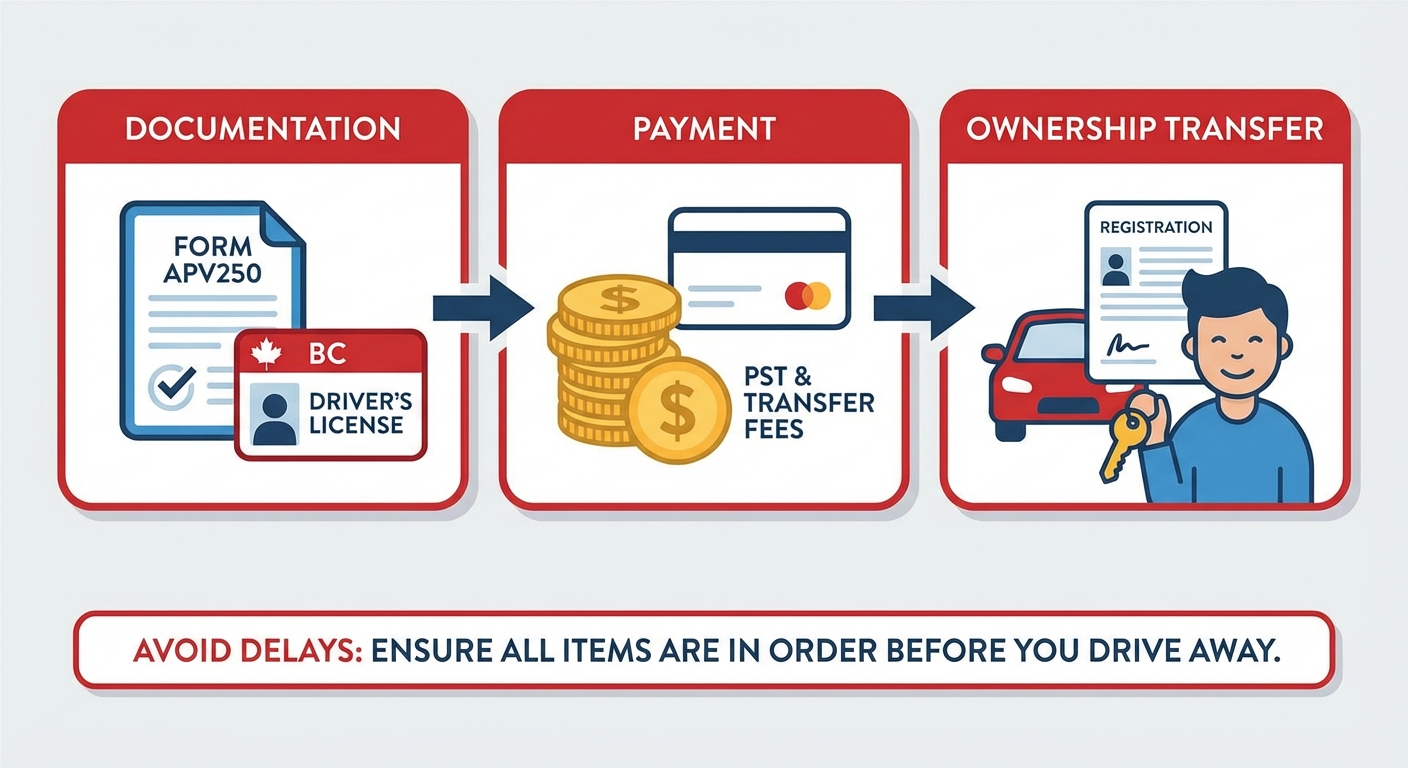
In British Columbia, you'll be responsible for paying Provincial Sales Tax (PST) on the purchase price of the vehicle, or its average wholesale value, whichever is greater, when you transfer ownership. The current PST rate on vehicles in British Columbia is 7%, but can be higher for luxury vehicles. The process of transferring vehicle ownership is handled through ICBC. You'll need the seller's original vehicle registration, a completed Transfer/Tax Form (APV250), your valid BC driver's license, and payment for the PST and any associated transfer fees. Missing or incorrect documentation can delay your ownership transfer and registration, so ensure everything is in order before you drive away.
IX. Your Loan as a Ladder: Rebuilding Credit Through Responsible Vehicle Financing
The Power of Punctuality: How On-Time Payments Transform Your Credit
Securing a private sale car loan with poor credit isn't just about getting a vehicle; it's an opportunity for financial redemption. Consistently making on-time payments, especially on a secured loan, is one of the most effective ways to rebuild your credit score. Lenders report your payment history to credit bureaus (Equifax and TransUnion). Each on-time payment demonstrates reliability and responsibility, positively impacting your payment history – the single most important factor in your credit score. Over time, this consistent positive behaviour can significantly improve your credit utilization and overall credit profile.
Beyond the Car: The Long-Term Benefits of Improved Credit
The advantages of a higher credit score extend far beyond just vehicle financing. An improved score acts as a ladder to better financial opportunities:
- Lower Interest Rates: For future mortgages, personal loans, and credit cards.
- Easier Approvals: For apartments, cell phone contracts, and other services.
- Reduced Insurance Premiums: In some cases, a better credit score can indirectly lead to lower insurance costs.
View your private sale car loan as an investment in your financial future, paving the way for greater financial freedom and more favourable terms on future borrowing. For more on how a car loan can help after financial difficulties, read Post-Proposal Car Loan: Your Credit Score Just Got a Mulligan.
Strategies for Success: Staying on Track with Your Payments
To ensure you leverage your car loan for credit rebuilding, adopt these strategies:
- Set Up Automatic Payments: This minimizes the risk of missed payments due to oversight.
- Create a Detailed Budget: Understand your income and expenses to ensure your loan payment is comfortably affordable.
- Build an Emergency Fund: A small buffer can cover unexpected expenses without jeopardizing your loan payments.
- Communicate with Your Lender: If you anticipate financial difficulties, contact your lender immediately. They may offer temporary solutions, which is always better than defaulting.
Proactive financial management is your best ally in turning a poor credit car loan into a powerful credit-building tool.
X. When the Loan Isn't a Match: Alternative Paths to Car Ownership
The Power of Patience: Saving Up for a Cheaper Vehicle
Sometimes, despite your best efforts, a loan simply isn't feasible or the terms are too expensive. In such cases, patience can be your most powerful asset. Delaying your purchase to save a larger down payment, or even the full purchase price for a more affordable, older vehicle, can be incredibly liberating. Avoiding interest costs entirely or significantly reducing your loan amount means less financial stress and more money in your pocket over the long term. This approach allows you to build your credit naturally while saving.
Exploring Lease-to-Own or Rent-to-Own Options (with Caution)
Alternative financing models like lease-to-own or rent-to-own can sometimes appear attractive for poor credit borrowers. These typically involve paying a weekly or monthly fee, with a portion going towards eventual ownership. However, these options often come with significantly higher overall costs, complex contracts, and less favourable terms than traditional loans. They can be a last resort, but we advise extreme caution. Thoroughly review every clause, understand all fees, and compare the total cost to a traditional loan before committing.
The Co-Signer Revisited: A Bridge to Better Terms
We've mentioned co-signers, but it's worth reiterating their potential impact. A co-signer isn't just for approval; they can be the bridge to significantly better interest rates and loan terms that might otherwise be out of reach. If you have a trusted individual with good credit willing to take on this responsibility, it can make a high-cost loan much more feasible, allowing you to establish a positive payment history and eventually qualify for loans on your own.
Vancouver's Alternatives: Public Transit and Ridesharing as Temporary Solutions
In a city with a robust public transit system like Vancouver, immediate car ownership isn't always essential. Utilizing TransLink (bus, SkyTrain, SeaBus), cycling, or ridesharing services like Uber and Lyft can be highly cost-effective temporary solutions. These alternatives can save you money on car payments, insurance, fuel, and maintenance, allowing you to focus on improving your credit score and saving for a larger down payment. For many Vancouverites, these options represent smart financial planning while working towards car ownership on more favourable terms.