Your Negative Equity? Consider It Your Fast Pass to a New Car.
Table of Contents
- Key Takeaways: Your Blueprint for a New Ride, Despite Negative Equity
- The 'Fast Pass' Paradox: Re-framing Negative Equity as Your Next Move
- Beyond the Buzzkill: Why Negative Equity Isn't the End of Your Car Dreams
- The Hidden Truth: How Dealers View Negative Equity (and How You Can Leverage It)
- Dispelling the Myths: What Negative Equity Truly Means for Your Approval Odds
- Deconstructing the Debt: Understanding Your Negative Equity Scorecard
- More Than Just a Number: Precisely Calculating Your True Negative Equity Burden
- The Culprits: Why You Owe More Than It's Worth (Depreciation, Loan Term, Mileage, etc.)
- The Domino Effect: How Rolling Over Debt Impacts Your New Loan's Principal and Interest
- Your Credit Score: The Master Key to Unlocking Approval with Negative Equity
- The Credit Score Spectrum: From 'Prime' to 'Subprime' and What It Means for Your Rates
- Boosting Your Numbers: Actionable Steps to Improve Your Credit Before You Apply (Debt-to-Income, Payment History, etc.)
- The 'Co-Signer' Conundrum: When a Second Signature Helps (and When It Creates More Risk)
- Strategic Pre-Game: Preparing for Your Next Car Loan with Negative Equity
- The Power of Pre-Approval: Why It's Non-Negotiable When Carrying Debt (Knowing Your Rate & Negotiating Leverage)
- The 'Down Payment Difference': How Even a Small Contribution Can Transform Your Deal and Reduce Rolled-Over Debt
- Selling Smart: The Art of Selling Your Current Car Privately (and Why It Might Be Your Best Bet to Erase Negative Equity)
- Budgeting Beyond the Payment: Factoring in Insurance, Maintenance, Fuel, and Unexpected Costs for Your New Vehicle
- The Arena of Approval: Navigating Lenders with Negative Equity
- Dealership Financing: Convenience vs. Cost – Understanding the Dealer's Playbook and Incentives
- Bank & Credit Union Loans: Unlocking Potentially Better Rates and Terms Through Direct Lending
- Online Lenders: Speed, Specialization, and the Subprime Market for Challenging Scenarios
- 'Bad Credit, Bad Equity?': Specific Lenders & Programs Designed for High-Risk Borrowers
- The Art of the Deal: Negotiating Your Negative Equity Trade-In Like a Pro
- Separating the Transactions: Why You Should Negotiate the New Car Price *First*, Independent of Your Trade-In
- The 'Upside Down' Trap: Avoiding the Pitfalls of Rolling Over Too Much Debt into Your New Loan
- Sweetening the Pot: Leveraging Manufacturer Incentives, Rebates, and Creative Financing Solutions
- Reading the Fine Print: What to Watch Out For in Your Loan Agreement (Interest Rates, Term Length, Fees, Prepayment Penalties)
- The 'Walk Away' Power: Knowing When to Hold Your Ground or Seek Another Option
The thought of negative equity can feel like a heavy anchor, dragging down your dreams of a new vehicle. You know the feeling: you owe more on your current car than it's worth, and the idea of getting approved for a new loan seems like a distant fantasy. But what if we told you that this common financial challenge isn't a roadblock, but rather a unique opportunity? At SkipCarDealer.com, we believe negative equity doesn't have to be a dead end; it can actually be your 'fast pass' to a new car, provided you approach it with the right strategy and knowledge.
In Canada, many drivers find themselves in this "upside-down" situation. Maybe your car depreciated faster than you expected, or perhaps you bought it with little to no down payment, or rolled over previous debt. Whatever the reason, it's a reality for a significant portion of the car-buying public. But here's the crucial insight: dealers and lenders are accustomed to negative equity. They have systems and solutions in place, and with the right approach, you can leverage these to your advantage, secure a new vehicle, and even set yourself on a path to better financial health. This comprehensive guide will equip you with the insights, strategies, and confidence to turn your negative equity into a positive outcome.
Key Takeaways: Your Blueprint for a New Ride, Despite Negative Equity
- Negative equity is a financial challenge, not a dead end. Strategic planning is your 'fast pass.'
- Your credit score is the primary gatekeeper. Know it, improve it, leverage it.
- Pre-approval and a clear understanding of your current car's worth are non-negotiable first steps.
- Don't just chase the lowest monthly payment; focus on the total cost of the loan and avoiding deeper debt.
- Negotiation is an art form. Separate the car price from your trade-in value for maximum impact.
The 'Fast Pass' Paradox: Re-framing Negative Equity as Your Next Move
Beyond the Buzzkill: Why Negative Equity Isn't the End of Your Car Dreams
For many Canadians, the phrase "negative equity" conjures images of financial distress and insurmountable obstacles. It’s the moment you realize your vehicle's market value has dipped below the outstanding balance of your loan. This can feel like a personal failing or a permanent trap. However, this perspective often overlooks the bigger picture. Negative equity is a common occurrence, especially in a market where vehicle depreciation can be swift and loan terms are often extended to lower monthly payments. It doesn't mean you're a bad borrower, nor does it automatically disqualify you from getting a new car loan.
Instead, consider negative equity as a known variable in your car-buying equation. It's a challenge, yes, but one that can be overcome with a calculated approach. Think of it as a hurdle that many have cleared before you. Your car dreams are not over; they just require a more informed and strategic pathway.
The Hidden Truth: How Dealers View Negative Equity (and How You Can Leverage It)
Here's an insider secret: car dealerships are well-versed in dealing with negative equity. It's a daily part of their business. They understand that many customers come in with an "upside-down" trade-in. For a dealer, negative equity isn't necessarily a deal-breaker; it's another number to factor into the overall transaction. Their goal is to sell you a new vehicle, and if absorbing your negative equity is what it takes to close the deal, they often have the tools and financing partners to make it happen.
However, this doesn't mean they'll do it purely out of goodwill. Dealers typically try to "bury" the negative equity into your new loan, often by offering a higher price for the new vehicle or by extending the loan term. Your leverage comes from understanding this dynamic. By doing your homework, knowing your car's true value, and having your financing pre-arranged, you can negotiate from a position of strength, ensuring your negative equity isn't simply rolled over at an exorbitant cost.
Dispelling the Myths: What Negative Equity Truly Means for Your Approval Odds
There are many misconceptions circulating about negative equity and car loan approval. Many believe it's an instant rejection. This is largely false. While negative equity does add a layer of complexity to your application – effectively increasing the total amount you need to borrow – it doesn't automatically sink your chances. Lenders assess your overall financial profile, including your credit score, income, debt-to-income ratio, and stability. If these other factors are strong, many lenders are willing to approve a loan that includes rolled-over negative equity.
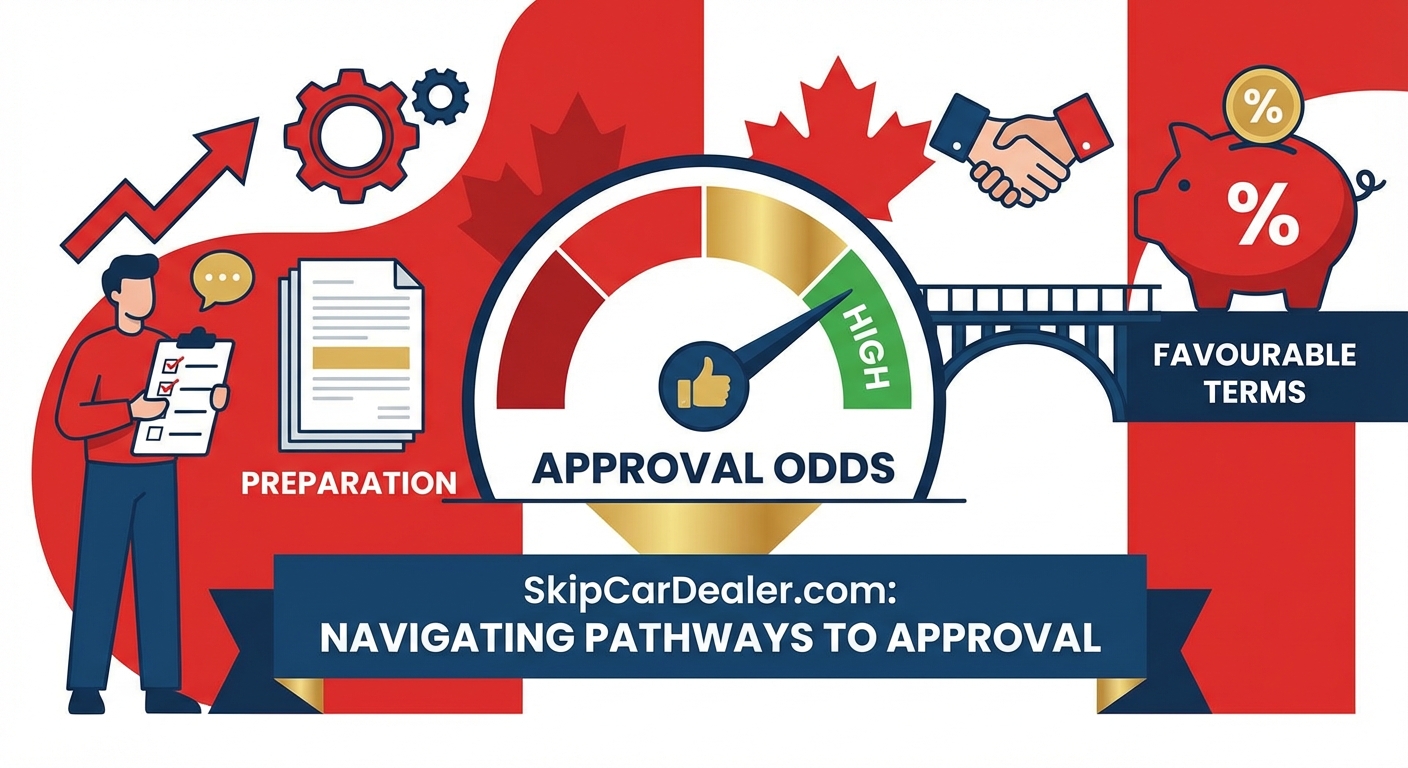
The key is transparency and preparation. Don't hide your negative equity; address it head-on. Understand how much it is, and be ready to discuss solutions. The more prepared you are, the better your approval odds, and the more favourable terms you can secure. At SkipCarDealer.com, we specialize in helping Canadians navigate these exact scenarios, turning perceived obstacles into pathways to approval.
Context: An engaging infographic visually depicting the lifecycle of a car loan, showing how depreciation outpaces equity building in early years, leading to negative equity. It should illustrate the 'break-even' point and highlight the 'upside-down' period. This sets the stage by clearly explaining the phenomenon.
Deconstructing the Debt: Understanding Your Negative Equity Scorecard
More Than Just a Number: Precisely Calculating Your True Negative Equity Burden
Before you even think about stepping onto a dealership lot, you need to know your numbers. Your negative equity is not an abstract concept; it's a precise calculation. It's the difference between what you currently owe on your car loan and its actual market value. Knowing this exact figure is your first and most critical step. Without it, you're negotiating blind.
To calculate it, first, get your current loan payoff amount from your lender. This is usually higher than the principal balance shown on your last statement because it includes per-diem interest. Then, determine your car's market value. This requires a bit of research, which we'll cover next. Once you have both figures, subtract the market value from your payoff amount. If the payoff is higher, that's your negative equity.
The Culprits: Why You Owe More Than It's Worth (Depreciation, Loan Term, Mileage, etc.)
Understanding *why* you're in a negative equity position can help you avoid it in the future and better explain your situation to lenders. Several factors contribute to this "upside-down" scenario:
- Rapid Depreciation: New cars lose a significant portion of their value the moment they're driven off the lot. Some models depreciate faster than others.
- Longer Loan Terms: While a 72 or 84-month loan can offer lower monthly payments, it stretches out the period over which you're paying primarily interest, slowing down equity accumulation.
- Minimal or No Down Payment: Starting a loan with little to no upfront payment means you're financing almost the entire purchase price, making it harder to catch up with depreciation.
- High Mileage or Wear and Tear: Driving significantly more than average, or having a car in poor condition, will drastically reduce its market value.
- Previous Rolled-Over Debt: If you rolled negative equity from a prior vehicle into your current loan, you started upside-down, making it almost inevitable you'd stay that way.
- Market Conditions: Economic shifts, rising interest rates, or a glut of used vehicles in the market can also impact resale values.
The Domino Effect: How Rolling Over Debt Impacts Your New Loan's Principal and Interest
Rolling over negative equity means adding the outstanding balance of your old loan to the principal of your new loan. This has a significant domino effect:
- Increased Principal: Your new loan starts at a much higher amount than the value of the car you're buying. This immediately puts you in a deeper negative equity position on the new vehicle.
- Higher Interest Costs: You're now paying interest on the new car's price PLUS the old car's debt. This can dramatically increase the total cost of your new loan over its term.
- Larger Monthly Payments: To compensate for the higher principal, your monthly payments will be larger, or the loan term will need to be extended even further, deepening the cycle.
- Slower Equity Building: Because the principal is so high, it will take even longer to build equity in your new car, increasing the likelihood of being upside-down again in the future.
Understanding this impact is crucial. While rolling over debt might seem like the easiest path, it's vital to explore all options to minimize its long-term financial consequences.
Pro Tip: Get Your Current Car's Value
Don't guess. Use multiple reputable sources like Kelley Blue Book (KBB.ca), Canadian Black Book, and local dealer appraisals for the most accurate trade-in or private sale estimate. Knowing this number is your first step in negotiation. Be honest about your car's condition, mileage (in kilometres!), and features.
Your Credit Score: The Master Key to Unlocking Approval with Negative Equity
The Credit Score Spectrum: From 'Prime' to 'Subprime' and What It Means for Your Rates
Your credit score is arguably the single most important factor when seeking a car loan, especially when you have negative equity. It's a numerical representation of your creditworthiness, telling lenders how likely you are to repay your debts. In Canada, scores typically range from 300 to 900.
- Prime (660-900): Borrowers with excellent credit scores are considered low risk. They qualify for the best interest rates, which can significantly reduce the total cost of a loan, even one that includes rolled-over negative equity.
- Near-Prime (560-659): These scores indicate a moderate risk. You might get approved, but often at slightly higher interest rates.
- Subprime (300-559): Borrowers in this category are considered high risk. Approval is still possible, but typically comes with much higher interest rates, shorter loan terms, or requires a larger down payment. Lenders offering subprime loans specialize in these situations, like SkipCarDealer.com.
The higher your score, the lower your interest rate, which directly translates to lower monthly payments and less money paid over the life of the loan. When you're already carrying negative equity, a good credit score can literally save you thousands of dollars.
Boosting Your Numbers: Actionable Steps to Improve Your Credit Before You Apply (Debt-to-Income, Payment History, etc.)
If your credit score isn't where you want it to be, don't despair. There are concrete steps you can take to improve it, even in a relatively short period, which can dramatically impact your loan approval and terms. For more on improving your score for car loans, check out our guide on The Truth About the Minimum Credit Score for Ontario Car Loans.
- Review Your Credit Report: Get a free copy of your credit report from Equifax and TransUnion. Check for errors and dispute any inaccuracies immediately.
- Pay Bills on Time: Payment history is the most significant factor in your credit score. Make sure all your bills – credit cards, utilities, existing loans – are paid by their due dates.
- Reduce Debt: Lowering your overall debt, especially on credit cards, improves your credit utilization ratio (the amount of credit you're using versus the amount available). Aim to keep this below 30%.
- Avoid New Credit: Don't open new credit accounts right before applying for a car loan. This can temporarily lower your score.
- Keep Old Accounts Open: The length of your credit history matters. Don't close old, paid-off credit card accounts, as this can shorten your credit history.
- Increase Income (if possible): While not directly a credit score factor, a higher income can improve your debt-to-income (DTI) ratio, which lenders consider. Your DTI should ideally be below 40% for optimal approval chances.
The 'Co-Signer' Conundrum: When a Second Signature Helps (and When It Creates More Risk)
If your credit score is struggling, a co-signer might seem like an easy solution. A co-signer, typically someone with excellent credit, essentially guarantees the loan alongside you. This can significantly improve your chances of approval and potentially secure a lower interest rate, as the lender views the loan as less risky.
However, the co-signer relationship carries substantial risks for both parties. For the co-signer, their credit score will be impacted by the loan, and they are legally just as responsible for the debt as you are. If you miss payments, it negatively affects their credit, and they will be on the hook to repay the loan. For you, it means another person's financial well-being is tied to your ability to make payments. While it can be a valuable tool, it should be approached with extreme caution and clear communication.
Pro Tip: Before Bringing in a Co-Signer
Exhaust all other options. Understand that their credit will also be impacted, and they're equally responsible for the debt. Ensure both parties fully understand the implications, including potential strain on relationships if payments are missed. Only consider this if you are absolutely confident in your ability to make every payment on time.
Strategic Pre-Game: Preparing for Your Next Car Loan with Negative Equity
The Power of Pre-Approval: Why It's Non-Negotiable When Carrying Debt (Knowing Your Rate & Negotiating Leverage)
One of the most powerful tools in your arsenal, especially when dealing with negative equity, is loan pre-approval. This isn't just a suggestion; it's a non-negotiable step for savvy car buyers. Pre-approval means a lender has already reviewed your financial situation, including your credit history and income, and has provisionally agreed to lend you a certain amount at a specific interest rate. This comes with several immense advantages:
- Clear Budget: You know exactly how much you can afford before you start shopping, preventing you from falling in love with a car outside your budget.
- Known Interest Rate: You walk into the dealership knowing the interest rate you qualify for. This prevents dealers from inflating the rate and helps you compare financing offers objectively.
- Negotiating Leverage: With pre-approval in hand, you become a cash buyer in the eyes of the dealer. They know you're serious and have financing secured, giving you significant leverage to negotiate the price of the new car and your trade-in value separately. It removes the mystery of your creditworthiness from the negotiation table.
- Focus on the Car: You can focus purely on finding the right vehicle at the right price, rather than scrambling to figure out financing.
Securing pre-approval from a bank, credit union, or online lender before visiting a dealership empowers you immensely.
The 'Down Payment Difference': How Even a Small Contribution Can Transform Your Deal and Reduce Rolled-Over Debt
When you have negative equity, making a down payment on your new vehicle becomes even more critical. A down payment directly reduces the amount of negative equity you have to roll over, or ideally, eliminates it entirely. Even a small contribution can make a significant difference:
- Reduces Principal: A down payment immediately lowers the principal of your new loan, meaning you're borrowing less money.
- Less Interest Paid: A smaller principal means less interest accrues over the life of the loan, saving you money.
- Faster Equity Building: By reducing the initial loan amount, you start building equity in your new car much faster, lessening the chance of being upside-down again.
- Improved Lender Confidence: Lenders view a down payment as a sign of financial commitment and responsibility, potentially leading to better loan terms, even for those with less-than-perfect credit.
If you can save up even a few hundred or a thousand dollars, it will pay dividends in the long run. Every dollar you put down is a dollar you don't pay interest on.
Selling Smart: The Art of Selling Your Current Car Privately (and Why It Might Be Your Best Bet to Erase Negative Equity)
While trading in your car at a dealership is convenient, it's almost never the most financially advantageous option, especially when you have negative equity. Dealers need to make a profit on reselling your trade-in, so their offer will always be less than the car's private sale value. If you're looking to minimize or even erase your negative equity, selling your current car privately is often your best bet.
Private sales typically yield a higher price, closer to the retail value of the vehicle. This extra cash can directly go towards covering your negative equity. However, it requires more effort: advertising, showing the car, dealing with potential buyers, and handling paperwork. If your negative equity is substantial, and you have the time and patience, a private sale could be the key to a much healthier financial start with your new vehicle.
Remember, if you sell privately, you'll need to pay off your existing loan immediately. You can often arrange for the buyer to pay the lender directly, with any remaining funds going to you (or you paying the difference if you're still upside down). This requires careful coordination with your current lender.
Budgeting Beyond the Payment: Factoring in Insurance, Maintenance, Fuel, and Unexpected Costs for Your New Vehicle
When planning for a new car, it's easy to get fixated solely on the monthly loan payment. However, a responsible budget goes far beyond that. Your total cost of ownership includes several other significant expenses:
- Insurance: Premiums can vary dramatically based on the vehicle's make, model, age, your driving record, and where you live in Canada. Get quotes for your desired new car before committing.
- Fuel: Consider the fuel efficiency of your new vehicle and current gas prices. A larger SUV or truck will consume significantly more fuel than a compact car.
- Maintenance and Repairs: Newer cars often come with warranties, but regular maintenance (oil changes, tire rotations) is still required. Older used cars might incur higher repair costs. Research typical maintenance costs for the models you're considering.
- Registration and Licensing: Annual fees vary by province.
- Tires: Factor in the cost of winter tires if you live in a region where they are necessary, and their eventual replacement.
- Unexpected Costs: Always have an emergency fund for unforeseen repairs or expenses.
A holistic view of your budget ensures that your new car is not only affordable monthly but sustainable in the long run, preventing future financial strain.
The Arena of Approval: Navigating Lenders with Negative Equity
Dealership Financing: Convenience vs. Cost – Understanding the Dealer's Playbook and Incentives
Dealership financing is often the most convenient option. You pick your car, and they handle the loan application process, working with a network of banks and captive lenders (financing arms of car manufacturers). This can be appealing, especially if you're managing negative equity, as dealers are adept at structuring deals that roll over debt.
However, convenience can come at a cost. While dealers can sometimes offer competitive rates through manufacturer incentives, they also mark up interest rates to earn a profit. Without pre-approval, you're negotiating on their terms. They might focus on the monthly payment to distract from a higher interest rate or a longer loan term, which can exacerbate your negative equity situation. Be aware of their incentives to close a deal, and always compare their offer to your pre-approved rate.
Bank & Credit Union Loans: Unlocking Potentially Better Rates and Terms Through Direct Lending
Direct lending from banks and credit unions is often your best bet for securing the most favourable rates and terms, especially if you have good to excellent credit. These institutions typically offer lower interest rates than dealership financing because they don't have the same overhead or profit motives on the car sale itself.
Applying directly to a bank or credit union gives you the power of pre-approval, which, as discussed, is invaluable. Credit unions, in particular, often have a more community-focused approach and may be more flexible with their lending criteria for members, potentially offering better terms even with some negative equity. Always check with your current bank or credit union first, as they already have a relationship with you.
Online Lenders: Speed, Specialization, and the Subprime Market for Challenging Scenarios
The rise of online lenders has revolutionized the car loan market, offering speed, convenience, and often, specialized solutions. Many online platforms, including SkipCarDealer.com, connect you with a vast network of lenders, including those who specialize in subprime loans or challenging credit situations, such as those involving significant negative equity or past credit issues like a consumer proposal. For those facing a consumer proposal, we have specific guides like Your Consumer Proposal? We're Handing You Keys.
Online lenders can quickly process applications and provide multiple offers, allowing you to compare options from the comfort of your home. They often use advanced algorithms to assess risk, sometimes looking beyond just a credit score to consider income stability and other factors. This can be a huge advantage if traditional banks have turned you down due to negative equity or a lower credit score.
'Bad Credit, Bad Equity?': Specific Lenders & Programs Designed for High-Risk Borrowers
Even if you have both bad credit and significant negative equity, hope is not lost. There are specialized lenders and programs designed precisely for high-risk borrowers. These lenders understand that life happens and that financial setbacks don't define a person's future potential. They look for solutions, not just problems.
These programs might involve slightly higher interest rates or require a larger down payment, but they offer a pathway to getting approved and rebuilding your credit. They often focus on your current income stability, employment history, and ability to afford the new payment, rather than solely on past credit mistakes. SkipCarDealer.com works with many such lenders across Canada, helping individuals in challenging situations find the right financing.
Pro Tip: Don't Apply to Every Lender at Once
Use pre-qualification tools that don't impact your credit score (soft inquiries), then apply to 2-3 of the most promising options within a short window (typically 14-45 days) to minimize the impact on your credit score from multiple hard inquiries. Multiple hard inquiries for the same type of loan within a short period are usually grouped as one by credit bureaus.
| Lender Type | Pros | Cons | Best For |
|---|---|---|---|
| Dealership Financing | Convenience, manufacturer incentives, good for rolling over small negative equity. | Potentially higher rates, less transparency, focus on monthly payment over total cost. | Buyers prioritizing ease, those with excellent credit and small negative equity. |
| Banks & Credit Unions | Often best rates, transparent terms, pre-approval power, relationship banking. | Stricter credit requirements, may be less flexible with significant negative equity. | Buyers with good credit, those seeking lowest rates and pre-approval. |
| Online Lenders (e.g., SkipCarDealer.com) | Speed, convenience, specialized in subprime/challenging situations (including negative equity), wide lender network. | Rates can vary widely, some less reputable platforms exist (choose trusted ones). | Buyers with fair to bad credit, significant negative equity, those needing quick approval. |
The Art of the Deal: Negotiating Your Negative Equity Trade-In Like a Pro
Separating the Transactions: Why You Should Negotiate the New Car Price *First*, Independent of Your Trade-In
This is perhaps the most crucial negotiation tactic when you have negative equity: always separate the new car price negotiation from your trade-in value. Dealers love to combine these, offering a seemingly great deal on one to make up for a poor offer on the other. For example, they might give you a higher trade-in value for your upside-down car but inflate the price of the new vehicle, or vice-versa.
By negotiating the new car's price first, you ensure you're getting the best possible deal on the vehicle itself. Once that price is agreed upon, then introduce your trade-in. This strategy prevents the dealer from using your negative equity as a bargaining chip to inflate the new car's price. You want to know the true cost of the new vehicle before any other factors muddy the waters.
The 'Upside Down' Trap: Avoiding the Pitfalls of Rolling Over Too Much Debt into Your New Loan
While rolling over some negative equity might be unavoidable, the "upside down" trap occurs when you roll over *too much* debt. This can lead to a new loan that is significantly higher than the value of your new car, perpetuating a cycle of negative equity. Lenders will have limits on how much negative equity they are willing to finance, often expressed as a loan-to-value (LTV) ratio (e.g., they might not finance more than 120-130% of the new car's value).
To avoid this trap, be prepared to make a down payment to reduce the amount of negative equity rolled over. If the amount is too high, it might be better to wait, save more, or consider a less expensive new vehicle. Don't be pressured into a deal that puts you in an even worse financial position long-term.
Sweetening the Pot: Leveraging Manufacturer Incentives, Rebates, and Creative Financing Solutions
Dealers often have access to various incentives and rebates from manufacturers that can help sweeten the deal and effectively reduce the amount of negative equity you need to roll over. These can include:
- Cash Back Rebates: Direct money off the purchase price.
- Low-Interest Financing Offers: Special rates for well-qualified buyers.
- Loyalty Programs: Discounts for returning customers or owners of the same brand.
- Clearance Sales: End-of-model-year deals.
Additionally, some lenders offer creative financing solutions for challenging situations. This might involve slightly longer terms (though be cautious of this), or specific programs designed for rebuilding credit. Ask about all available incentives and how they can be applied to your situation. Sometimes, a larger manufacturer rebate can effectively cover a portion of your negative equity, making the deal more palatable.
Reading the Fine Print: What to Watch Out For in Your Loan Agreement (Interest Rates, Term Length, Fees, Prepayment Penalties)
Before you sign anything, read every word of your loan agreement. Don't rush, and don't be afraid to ask questions. Key elements to scrutinize include:
- Interest Rate (APR): This is the true annual cost of borrowing. Ensure it matches what you were quoted and is competitive.
- Loan Term: A longer term means lower monthly payments but significantly more interest paid over time, and a greater chance of staying in negative equity.
- Total Amount Financed: This should clearly show the new car's price plus any rolled-over negative equity, minus your down payment.
- Fees: Watch out for excessive documentation fees, administration fees, or other hidden charges.
- Prepayment Penalties: Confirm if there are any penalties for paying off your loan early. Ideally, you want a loan with no prepayment penalties so you can pay it down faster if your financial situation improves.
- Additional Products: Be wary of add-ons like extended warranties, gap insurance (which can be useful with negative equity but should be purchased at a fair price), or rust proofing that you didn't ask for or don't need. These inflate your loan amount.
The 'Walk Away' Power: Knowing When to Hold Your Ground or Seek Another Option
The most powerful tool in any negotiation is the ability to walk away. If a deal doesn't feel right, if the numbers don't add up, or if you feel pressured, be prepared to leave. There are always other dealerships, other cars, and other lenders. Don't let the urgency of needing a new car or the frustration of negative equity push you into a bad deal.
Knowing your pre-approved rate, your car's value, and your budget gives you this power. If