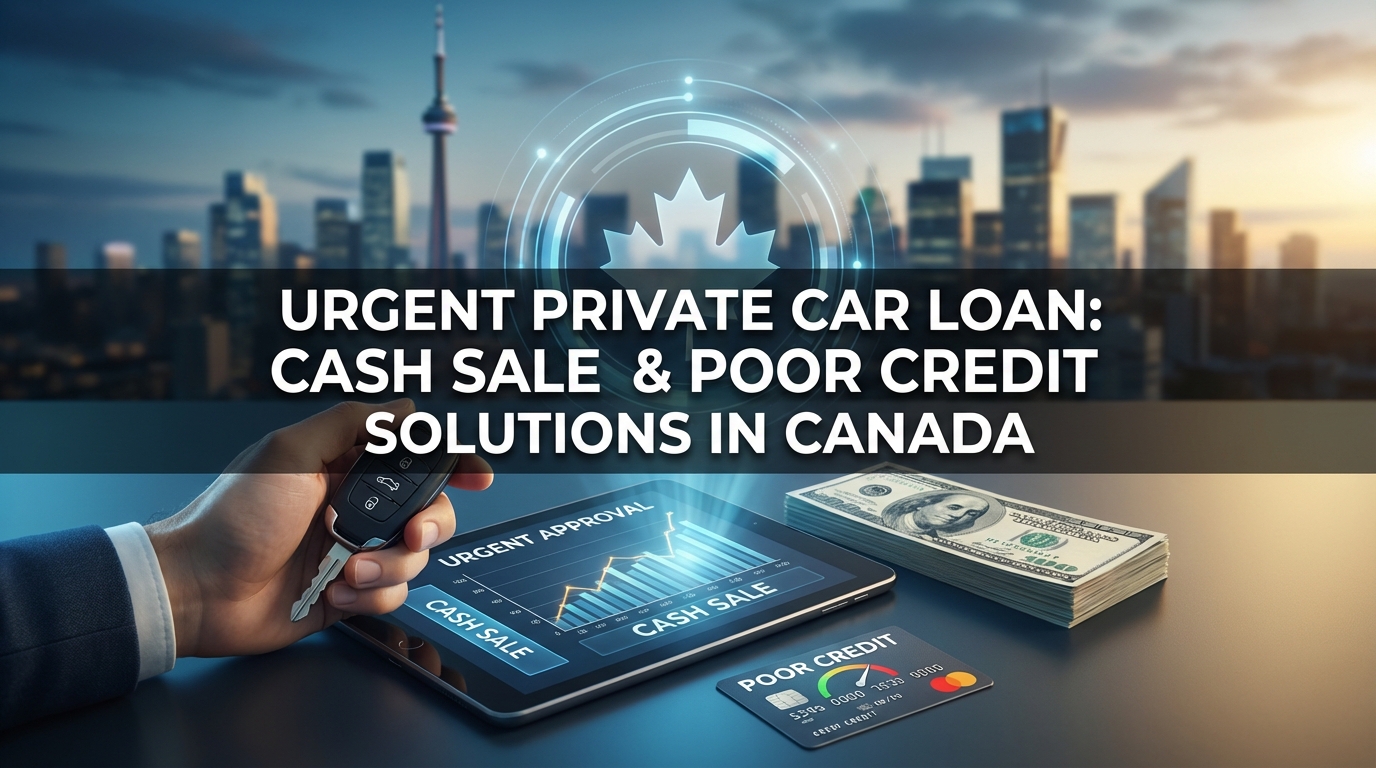
Cash-Only Private Sale? Your Poor Credit *Just Bought The Car*, Edmonton.
Table of Contents
- Key Takeaways: Your Fast-Track to a Private Sale Car Loan, Even with Imperfect Credit in Canada
- The Edmonton Driver's Dilemma: When a 'Cash-Only' Private Sale Meets a Less-Than-Perfect Credit Score
- The Unspoken Urgency: Why Edmontonians Need Wheels, Fast
- Beyond the Bank Vault: Why Traditional Lenders Often Shut the Door on 'Poor Credit, Urgent Loan' Requests
- Understanding the Gatekeepers: How Major Banks in Vancouver and Montreal Assess Risk
- Cracking the Code: The Alternative Lender Ecosystem for Private Car Sales in Canada
- Subprime Auto Loans: Your Primary Path to a Private Purchase, Explained
- Pro Tip: Navigating the Subprime Jungle: Red Flags and Green Lights in Lender Selection
- The 'Title Loan' Trap: Why It's NOT Your Solution for Buying a Car (and its true purpose)
- Dealer-Facilitated Private Sales: A Hybrid Option with Hidden Curves
- The Approval Algorithm: What Lenders *Really* Scrutinize Beyond Your Credit Score
- Income Stability: Your Most Powerful Negotiating Chip in Ontario and Across the Provinces
- Debt-to-Income Ratio: The Unsung Hero of Loan Eligibility
- The Car Itself: How Your Chosen Vehicle Influences Loan Approval
- Decoding the Dollars: Unmasking the True Cost of an Urgent Private Car Loan in Canada
- Interest Rates for Poor Credit: Expecting the Inevitable (and Strategies to Mitigate It)
- Fees, Fees, and More Fees: Application, Origination, and Early Repayment Penalties You Must Know
- The Long-Term Picture: Calculating Your Total Repayment in Alberta Dollars and Beyond
- Pro Tip: Demand a Full Amortization Schedule – Your Right to Clarity
- Your Application Toolkit: Preparing for a Seamless (and Swift) Approval Process
- Essential Documents: Beyond Your Driver's License – What Every Lender Needs
- Proof of Income: Your Pay Stubs and Bank Statements as Evidence of Reliability
- The Vehicle Information: What Your Lender Needs to Know About the Car You're Eyeing
- Navigating the Private Sale: From Loan Approval to Keys in Hand
- Structuring Your Offer: The 'Conditional on Financing' Clause Explained
- The Payout Process: Direct to Seller, or Through a Secured Escrow?
- Protecting Your Investment: Why Pre-Purchase Inspections and Lien Checks are Non-Negotiable in British Columbia and Across Canada
- Provincial Power Plays: Understanding Car Loan Regulations Across Canada
- Alberta's Consumer Protection Act: What Edmonton Borrowers Must Know
- Ontario's Rules: How They Might Differ for Borrowers in Toronto or Ottawa
- The Lack of Federal Oversight: Why Due Diligence is Your Ultimate Shield
- Pro Tip: Your Provincial Consumer Affairs Office is Your Ally – How to Find and Use It
- Beyond the Purchase: Your Roadmap to Financial Recovery and Future Savings
- Strategic Repayment: Accelerating Your Loan and Saving Thousands in Interest
- Building Better Credit: The Long Game After Your Urgent Loan
- Refinancing Opportunities: When to Revisit Your Loan Terms for a Better Deal
- Your Next Steps to Driving Away: A Final Checklist for Edmonton Buyers and Beyond
- Frequently Asked Questions: Urgent Private Car Loans & Poor Credit in Canada
The hunt for a new set of wheels in Edmonton can be exhilarating, but for many, the excitement quickly fades when they stumble upon those dreaded words: "cash-only private sale." If you've been navigating the private car market with a less-than-perfect credit score, you know this feeling well. It’s a frustrating roadblock, especially when that dream car is just out of reach because traditional lenders view your credit history as a red flag. But what if we told you that your poor credit isn't a dead end? What if it could, in fact, open doors to a different kind of financing that gets you behind the wheel of that private sale vehicle?
At SkipCarDealer.com, we understand the unique challenges faced by Canadians from Edmonton to Halifax. Life happens, and sometimes, our credit scores take a hit. That doesn't mean your need for reliable transportation disappears. In fact, for many, it becomes even more urgent. This comprehensive guide will peel back the layers of private sale car financing, revealing how alternative lenders in Canada are stepping up to bridge the gap between "cash-only" signs and your driving dreams, even with a credit score that’s seen better days. Get ready to discover how your poor credit *just bought the car*.
Key Takeaways: Your Fast-Track to a Private Sale Car Loan, Even with Imperfect Credit in Canada
- Alternative Lenders Are Your Ally: Traditional banks often shy away from poor credit for private sales. Seek out subprime auto lenders who specialize in these scenarios.
- Income & Stability Trump Score: Lenders prioritize consistent income and a manageable debt-to-income ratio over a perfect credit score for approval.
- Understand the True Cost: Expect higher interest rates and be diligent about understanding all fees. Demand a full amortization schedule.
- Documentation is Key: Prepare all income, residency, and vehicle details beforehand to streamline the application process.
- Protect Your Purchase: Always include a 'conditional on financing' clause in your offer and invest in a pre-purchase inspection and lien check.
- Know Your Rights: Familiarize yourself with provincial consumer protection laws, especially in Alberta, Ontario, and British Columbia.
- Plan for the Future: Use this loan as an opportunity to rebuild your credit and explore refinancing options down the line.
The Edmonton Driver's Dilemma: When a 'Cash-Only' Private Sale Meets a Less-Than-Perfect Credit Score
Edmonton, Alberta. A vibrant city with sprawling suburbs, distinct seasons, and a reliance on personal transportation that often feels non-negotiable. Whether you're commuting from Spruce Grove, navigating the Yellowhead Trail, or simply need to get the kids to hockey practice in Sherwood Park, a reliable vehicle isn't a luxury; it's a necessity. Yet, for many Edmontonians, the path to vehicle ownership is paved with obstacles, particularly when eyeing a private sale with a credit score that's taken a few bumps and bruises.
The allure of private sales is clear: often lower prices, more negotiation room, and a wider variety of unique vehicles not found on dealership lots. However, this flexibility comes with a significant catch for those without a pristine financial history. Private sellers typically want cash, and they want it fast. They're not set up to process financing, and they certainly aren't equipped to take on the risk associated with a buyer who needs a loan, especially one with poor credit. This creates a challenging dilemma: how do you secure a loan for a private sale when your credit limits your options, and the seller isn't waiting around?
The Unspoken Urgency: Why Edmontonians Need Wheels, Fast
Life in Edmonton, much like Calgary, Vancouver, or Toronto, often dictates the need for personal transport. Public transit, while effective in certain corridors, might not cover every route or schedule requirement for individuals working shifts, living outside the core, or managing family responsibilities. The cold Alberta winters make walking or cycling less feasible for significant portions of the year, amplifying the urgency for a vehicle. An unexpected job opportunity, a change in living situation, or the sudden breakdown of an old car can all trigger an immediate, pressing need for a new vehicle. When this urgency collides with a less-than-perfect credit score, the search for financing shifts from a leisurely pursuit to a frantic race against time. The question isn't just "Can I get a loan?" but "Can I get a loan *quickly* for a private sale?"
Beyond the Bank Vault: Why Traditional Lenders Often Shut the Door on 'Poor Credit, Urgent Loan' Requests
When you walk into a major bank in Canada – be it in Montreal, Winnipeg, or Halifax – and present a scenario involving poor credit and an urgent private car loan, you're likely to be met with polite but firm resistance. Traditional financial institutions operate under stringent risk assessment models. Their business is built on lending to borrowers with a proven track record of repayment, typically reflected in a strong credit score. For them, a low credit score for an urgent private sale represents a double whammy of perceived risk.
Firstly, poor credit signals a higher likelihood of default. Secondly, private sales lack the structured environment and guarantees often associated with dealership financing. There's no dealership to vouch for the car's condition or to act as an intermediary in the loan process. This added layer of uncertainty makes traditional banks incredibly hesitant, pushing them to either deny the application outright or offer terms that are simply unfeasible for the borrower.
Understanding the Gatekeepers: How Major Banks in Vancouver and Montreal Assess Risk
Major banks across Canada, from the bustling financial districts of Toronto to the scenic waterfronts of Vancouver, primarily engage in what's known as "prime lending." This means they target borrowers with excellent to good credit scores (typically FICO scores above 660-680). Their criteria are often rigid, focusing on:
- Credit Score: A high score indicates a history of responsible borrowing and repayment.
- Credit History Length: A longer history provides more data for risk assessment.
- Payment History: Consistent, on-time payments are crucial.
- Credit Utilization: Low usage of available credit is preferred.
- Debt-to-Income Ratio: A low ratio signals the ability to take on more debt.
For a traditional bank, a low credit score immediately flags an applicant as "subprime" or "high risk." While they might offer personal loans to subprime borrowers for other purposes, a dedicated subprime auto loan for a private sale is often outside their standard product offerings. They prefer the security and lower risk profile of financing new or certified pre-owned vehicles through established dealerships, where the collateral (the car) is often newer and easier to repossess and resell if necessary. This fundamental difference in risk appetite is why seeking out alternative lenders becomes not just an option, but often the *only* viable path for urgent private car loans with poor credit.
Cracking the Code: The Alternative Lender Ecosystem for Private Car Sales in Canada
When traditional banks close their doors, a dynamic ecosystem of alternative lenders opens theirs. These financial institutions specialize in scenarios that major banks deem too risky, catering specifically to individuals with less-than-perfect credit, non-traditional income, or urgent financing needs. They understand that a credit score doesn't tell the whole story, and they've developed sophisticated models to assess risk differently, often focusing more on an applicant's current ability to pay rather than solely on past credit mishaps.
This market is particularly robust for vehicle financing because a car serves as collateral for the loan, mitigating some of the risk for the lender. For those seeking to buy a car in a private sale, these alternative lenders are your primary path forward in Canada, whether you're in Edmonton, Regina, or St. John's.
Subprime Auto Loans: Your Primary Path to a Private Purchase, Explained
Subprime auto lenders are the backbone of financing for individuals with poor credit. Unlike prime lenders, their business model is built around assessing and managing the higher risk associated with lower credit scores. Here’s how they generally operate and what they look for:
- Risk-Based Pricing: They compensate for higher risk by charging higher interest rates. This is not punitive; it's a fundamental part of their business model that allows them to lend to a wider range of borrowers.
- Focus on Current Income and Stability: While your credit score is considered, your stable employment, consistent income, and ability to manage current debts become paramount. They want to see that you have the cash flow to make payments.
- Collateral Value: The car itself plays a crucial role. Lenders will assess the vehicle's market value, age, and condition to ensure it's suitable collateral. This is especially important for private sales where the vehicle's condition might vary widely.
- Direct-to-Consumer or Broker Networks: Many alternative lenders work directly with consumers online, while others operate through a network of brokers who specialize in matching borrowers with the right subprime lender.
- Flexibility: They are often more flexible regarding down payments, co-signers, and other loan terms, understanding that their clientele may not fit traditional molds.
These lenders are specifically designed to facilitate vehicle purchases, including private sales, by focusing on a more holistic view of your financial situation. For more insights on how your credit score impacts your rate, you might find our article Your Credit Score is NOT Your Rate. Get a Fair Loan, Toronto. particularly helpful.
Pro Tip: Navigating the Subprime Jungle: Red Flags and Green Lights in Lender Selection
When seeking a subprime auto loan for a private sale, it's crucial to distinguish reputable lenders from predatory ones. Green Lights include transparent terms, clear disclosure of all fees, reasonable (though higher) interest rates, and positive customer reviews. Look for lenders licensed in your province (e.g., Alberta or Ontario). Red Flags include guaranteed approval without any credit check, pressure to sign immediately, excessively high fees that seem to pile up, or refusal to provide a detailed loan agreement before you commit. Always read the fine print and never feel rushed.
The 'Title Loan' Trap: Why It's NOT Your Solution for Buying a Car (and its true purpose)
It's easy to get confused between different types of loans, especially when you're in a bind. A "title loan" might pop up in your search for urgent cash, but it's fundamentally different from what you need to *purchase* a car. A title loan, sometimes called a "car equity loan," is a short-term, high-interest loan where you use the clear title of a vehicle you ALREADY OWN as collateral. You receive a lump sum, and the lender places a lien on your existing vehicle's title. If you default, the lender can repossess your car.
The critical distinction here is that you must already own the vehicle outright (or have significant equity in it) to qualify for a title loan. Therefore, it cannot be used to *buy* a car in a private sale, as you don't yet own the car whose title you'd be using as collateral. Title loans are typically for emergency cash needs for those who have assets but limited access to traditional credit. They come with extremely high-interest rates and significant risks, making them a last resort for emergency funds, not a car purchase solution. For clarity on what a title loan *is* used for, you can explore articles like Your Car Title Just Got a Job. You Still Get to Drive, Toronto.
Dealer-Facilitated Private Sales: A Hybrid Option with Hidden Curves
In some unique scenarios, a dealership might act as a broker or facilitator for a private sale, especially if they see an opportunity to move a vehicle they don't own but can still profit from. This "hybrid" approach can sometimes bridge the gap for buyers with poor credit. Here's how it might work:
- The dealership takes possession of the private sale vehicle, conducts an inspection, and lists it for sale on their lot.
- They then use their network of lenders (including subprime ones) to secure financing for you, treating it essentially as a used car from their inventory.
- The private seller receives their agreed-upon price from the dealership, and you finance the car through the dealership.
While this can make financing easier, be aware of the "hidden curves." The dealership will likely add their own markup, fees for inspections, reconditioning, and administrative costs, potentially increasing the overall price of the vehicle beyond what the private seller initially asked. Always compare the total cost of this option versus going directly to an alternative lender for a private sale loan. It offers convenience but often at a premium.
The Approval Algorithm: What Lenders *Really* Scrutinize Beyond Your Credit Score
When you're applying for an urgent private car loan with poor credit, it’s easy to feel like your credit score is the only thing that matters. While it’s certainly a factor, alternative lenders employ a more nuanced "approval algorithm." They understand that a credit score is a snapshot of your financial past, not necessarily a predictor of your present ability or future commitment. So, what else do they scrutinize? A lot more than you might think, and understanding these factors can significantly boost your approval odds, whether you're in Winnipeg, Quebec City, or Victoria.
Income Stability: Your Most Powerful Negotiating Chip in Ontario and Across the Provinces
Hands down, your most powerful asset when seeking a poor credit car loan for a private sale is a stable, verifiable income. Lenders need assurance that you can consistently make your monthly payments. This isn't just about the *amount* of income, but its *reliability* and *source*. Whether you're employed full-time, part-time, self-employed, or receiving government benefits, consistent income signals reliability. This is particularly true in provinces like Ontario, where diverse employment types are common. Lenders in Toronto and Ottawa are accustomed to evaluating various income streams.
- Steady Employment: A consistent work history, even if your income isn't sky-high, shows stability.
- Verifiable Income: Pay stubs, bank statements, and tax returns are crucial. For self-employed individuals, demonstrating consistent business income is key. For more on navigating loans as self-employed, check out Self-Employed? Your Bank Doesn't Need a Resume.
- Source of Income: Lenders are increasingly open to various income sources beyond traditional employment, including pension, disability benefits, or even certain gig economy earnings (like Uber drivers).
Think of your income as your current financial "worthiness." If you can demonstrate a steady flow of funds into your account, lenders are more likely to overlook past credit missteps, as they see a clear path to repayment.
Debt-to-Income Ratio: The Unsung Hero of Loan Eligibility
Your Debt-to-Income (DTI) ratio is a critical metric that lenders use to assess your ability to take on new debt. It’s the percentage of your gross monthly income that goes towards paying your monthly debt obligations (rent/mortgage, credit card minimums, existing loan payments, etc.). Even with poor credit, a low DTI ratio can be a game-changer. Why?
A low DTI tells the lender that you have sufficient disposable income left after covering your existing financial commitments. This suggests you have the capacity to comfortably afford a new car payment without becoming overextended. Lenders typically prefer a DTI ratio below 40-50%, though this can vary for subprime loans. To improve your DTI, consider paying down existing small debts or delaying other major purchases before applying for a car loan. This ratio is often a stronger indicator of current financial health than a credit score alone.
The Car Itself: How Your Chosen Vehicle Influences Loan Approval
When it comes to a private sale, the car you're looking to buy isn't just a mode of transport; it's also the collateral for your loan. As such, the vehicle itself plays a significant role in the lender's approval decision and the terms they offer. Lenders need to ensure that the car represents a reasonable asset that could be liquidated if you default on the loan.

Context: A person looking frustrated at a 'cash only' sign on a car for sale, symbolizing the initial problem and the challenge of finding financing.
Details: Specifics: Age cut-offs, mileage limits, and brand considerations (e.g., luxury vs. economy models and their perceived risk).
- Age Cut-Offs: Most alternative lenders have an age limit for vehicles they will finance, often around 8-10 years old. An older vehicle is seen as higher risk due to potential mechanical issues and depreciation.
- Mileage Limits: High mileage (e.g., over 150,000 to 200,000 kilometres) can also be a red flag. Lenders perceive higher mileage as indicating a shorter remaining lifespan for the vehicle and thus a less valuable asset.
- Make and Model: While less common, some lenders might be wary of certain luxury or niche brands due to higher repair costs and a smaller resale market, which makes repossession and resale more challenging. Economy or mid-range vehicles from popular brands (Honda, Toyota, Ford, Hyundai, Chevrolet, etc.) are generally preferred.
- Vehicle Value: The loan amount will be tied to the vehicle's appraised market value (e.g., using Canadian Black Book or Red Book). Lenders will not typically finance a car for more than its fair market value.
Choosing a vehicle that falls within these parameters can significantly improve your chances of approval. A newer, lower-mileage, popular-brand vehicle, even if slightly more expensive upfront, might be easier to finance than an older, high-mileage, or niche model, especially when your credit is already a concern.
Decoding the Dollars: Unmasking the True Cost of an Urgent Private Car Loan in Canada
Securing an urgent private car loan with poor credit in Canada is absolutely possible, but it comes with a financial reality you must confront: it will likely cost you more than a loan secured with excellent credit. This isn't about unfairness; it's about risk. Alternative lenders take on a higher risk, and that risk is reflected in the interest rates and fees they charge. Understanding these costs upfront is crucial for making an informed decision and avoiding financial surprises.
Interest Rates for Poor Credit: Expecting the Inevitable (and Strategies to Mitigate It)
When your credit score is low, you should realistically expect higher interest rates. While prime rates for borrowers with excellent credit might be in the single digits, subprime auto loans typically range from 15% to 29.9% APR (Annual Percentage Rate) or even higher, depending on the province and your specific credit profile. This is the inevitable trade-off for accessing financing when traditional options are closed.
Strategies to Mitigate It:
- Increase Your Down Payment: A larger down payment reduces the loan amount, thereby reducing the total interest paid over the life of the loan. It also signals commitment to the lender.
- Shorter Loan Term: While it means higher monthly payments, a shorter loan term (e.g., 36 or 48 months instead of 60 or 72) significantly reduces the total interest paid.
- Improve Your Credit (Even Slightly): Even small improvements to your credit score before applying can sometimes nudge you into a slightly better interest rate tier. Paying off small debts or disputing errors on your credit report can help.
- Shop Around: Don't take the first offer. Apply to a few different alternative lenders to compare rates and terms.
Fees, Fees, and More Fees: Application, Origination, and Early Repayment Penalties You Must Know
Beyond interest rates, alternative loans for poor credit can come with various fees. These must be clearly disclosed by the lender, but it's your responsibility to understand them:
| Fee Type | Description | Impact |
|---|---|---|
| Application Fee | A charge for processing your loan application. Not all lenders charge this. | Adds to upfront cost, regardless of approval. |
| Origination Fee | A fee charged by the lender for processing and disbursing the loan. Often a percentage of the loan amount. | Reduces the net amount you receive or increases the total amount to repay. |
| Administrative/Documentation Fee | Covers the cost of preparing loan documents and other paperwork. | Often a flat fee, adds to the overall cost. |
| Lien Registration Fee | Cost associated with registering the lender's lien on the vehicle title. | Standard fee, usually passed on to the borrower. |
| Early Repayment Penalty | A charge if you pay off your loan before the scheduled term ends. Designed to recoup lost interest for the lender. | Can negate some savings from early repayment. Crucial to check, especially if you plan to refinance. |
| Late Payment Fees | Charges incurred if a payment is missed or delayed. | Can quickly escalate the cost of the loan and further damage credit. |
Always ask for a complete breakdown of all fees. In some provinces, there are regulations around what fees can be charged and how they must be disclosed. For example, in British Columbia, consumer protection laws require clear disclosure of the cost of borrowing.
The Long-Term Picture: Calculating Your Total Repayment in Alberta Dollars and Beyond
It's easy to focus on the monthly payment, but the true cost of an urgent private car loan lies in the total repayment amount over the entire loan term. This includes the principal borrowed, plus all interest and fees. Use online loan calculators or ask your lender for a detailed breakdown. For example, a $15,000 loan at 25% APR over 60 months will result in significantly more than $15,000 in total payments. Understanding this figure, whether you're in Alberta, Saskatchewan, or Prince Edward Island, helps you budget realistically and prevents future financial strain.
Pro Tip: Demand a Full Amortization Schedule – Your Right to Clarity
Before you sign any loan agreement, demand a full amortization schedule. This document clearly outlines every single payment you will make over the life of the loan, showing how much goes towards principal and how much goes towards interest for each payment. It's your right as a borrower and an indispensable tool for understanding the true cost of your loan and planning for potential early repayment or refinancing. If a lender is hesitant to provide this, consider it a significant red flag.
Your Application Toolkit: Preparing for a Seamless (and Swift) Approval Process
When you're in a hurry to secure a private car loan, preparation is your secret weapon. A disorganized application can lead to delays, frustration, and even rejection. By having all your ducks in a row before you even approach a lender, you demonstrate reliability and seriousness, which can expedite the approval process, especially for those with poor credit. Think of it as assembling your "loan approval toolkit" before you embark on the journey.
Essential Documents: Beyond Your Driver's License – What Every Lender Needs
While your driver's license is a given, lenders require a comprehensive set of documents to verify your identity, residency, and financial standing. Having these ready will save you valuable time:
- Valid Government-Issued ID: Driver's license, provincial ID card, or passport.
- Proof of Residency: Utility bill (electricity, gas, internet), rental agreement, or mortgage statement showing your current address (less than 90 days old).
- Social Insurance Number (SIN): For credit checks and tax purposes.
- Banking Information: Void cheque or pre-authorized debit form for setting up loan payments. Recent bank statements (last 90 days) can also verify income and spending habits.
- References: Some lenders may ask for personal or professional references, though this is less common for auto loans.
Proof of Income: Your Pay Stubs and Bank Statements as Evidence of Reliability
As discussed, income stability is paramount for poor credit loans. Lenders need irrefutable proof that you have a consistent and sufficient income to service the loan. Be prepared to provide:
- Pay Stubs: Typically, the most recent two or three pay stubs (within the last 30-60 days) showing gross and net pay.
- Bank Statements: Recent bank statements (often 3-6 months) showing regular deposits of your income. This is especially crucial for self-employed individuals, gig workers, or those with non-traditional income sources.
- Letter of Employment: A formal letter from your employer confirming your position, salary, and employment start date.
- Tax Documents: T4s, T1 Generals, or Notice of Assessment (NOA) for the past year or two, particularly for self-employed individuals or those with multiple income streams.
- Proof of Other Income: Documentation for pension, disability, EI, or child tax benefits, if applicable. This verifies alternative income sources. For those on EI, our article Think EI Means No Car? Ontario, Your Down Payment Just Vanished. might be useful.
The Vehicle Information: What Your Lender Needs to Know About the Car You're Eyeing
Since the car is the collateral, the lender will need specific details about it to assess its value and suitability for financing a private sale. Have the following information ready:
- Vehicle Identification Number (VIN): This unique 17-character code identifies the specific vehicle.
- Make, Model, Year, and Trim: Exact details of the car.
- Mileage: Current odometer reading in kilometres.
- Condition Report: Any available information on the car's mechanical and cosmetic condition (e.g., recent repair records, inspection reports from the seller).
- Photos: High-quality photos of the vehicle (exterior, interior, odometer) can be helpful.
- Seller's Information: Name, contact details, and asking price.

Context: A digital interface showing different loan offers or a document with loan terms, representing the solution and the application process.
Having this complete toolkit at your fingertips will demonstrate your readiness and streamline the entire process, potentially leading to a swifter approval and getting you into that private sale vehicle sooner.
Navigating the Private Sale: From Loan Approval to Keys in Hand
You've done the hard work: researched lenders, gathered your documents, and secured a conditional approval for your private sale car loan, despite your poor credit. Congratulations! But the journey isn't over yet. The private sale transaction itself requires careful navigation to ensure your investment is protected and the transfer of ownership is smooth. This stage involves strategic communication with the seller and diligent due diligence on the vehicle.
Structuring Your Offer: The 'Conditional on Financing' Clause Explained
Never, under any circumstances, commit to buying a private sale vehicle without a solid financing plan. Even with a pre-approval, things can sometimes go awry. This is where the "conditional on financing" clause becomes your best friend. When you make an offer to the seller, ensure it clearly states that the purchase is contingent upon you securing final loan approval for the specific vehicle within a specified timeframe (e.g., 3-5 business days). This clause protects you:
- If your financing falls through for any reason, you're not legally obligated to buy the car and can walk away without penalty.
- It gives you time to finalize the loan details with your chosen lender.
- It also allows your lender to perform their final checks on the vehicle before releasing funds.
Always put your offer and its conditions in writing, and ensure both you and the seller sign it. This creates a legally binding agreement that protects both parties.
The Payout Process: Direct to Seller, or Through a Secured Escrow?
Once your loan is finalized, the funds need to be transferred to the seller. How this happens can vary:
- Direct to Seller: In many cases, your lender will issue a cheque or direct deposit the funds directly to the private seller's account. This is common and generally safe, as the lender will ensure all paperwork (like the bill of sale) is in order before releasing funds.
- Through an Escrow Service (Less Common for Cars): For larger, more complex transactions, an escrow service might be used. The funds are held by a neutral third party until all conditions of the sale (e.g., transfer of title, delivery of the vehicle) are met. While secure, this adds cost and complexity, and is rarely used for typical private car sales.
Ensure you understand the lender's payout process and communicate it clearly to the seller. They will likely want assurance that the funds are legitimate and will be transferred promptly.
Protecting Your Investment: Why Pre-Purchase Inspections and Lien Checks are Non-Negotiable in British Columbia and Across Canada
Even with urgent financing and poor credit, you must not skip crucial due diligence on the vehicle itself. This is your investment, and you need to protect it, whether you're buying in British Columbia, Quebec, or Nova Scotia. These steps are non-negotiable:
- Pre-Purchase Inspection (PPI): Before finalizing the purchase, arrange for an independent, certified mechanic to perform a thorough inspection of the vehicle. This can uncover hidden mechanical issues, past accident damage, or potential problems that aren't immediately visible. A PPI can save you thousands in future repairs and give you leverage to negotiate the price or walk away if major issues are found.
- Lien Check: In Canada, you must perform a lien check (also known as a Personal Property Security Act or PPSA search) to ensure the seller doesn't owe money on the car. If there's an outstanding loan or lien on the vehicle, that debt transfers with the car to the new owner! You could unknowingly become responsible for the previous owner's debt. These checks are available through provincial registries (e.g., Service Alberta, ServiceOntario, ICBC in British Columbia) for a small fee. This is absolutely critical to avoid legal and financial headaches.
- CarFax/CarProof Report: Obtain a vehicle history report. This report will provide information on past accidents, service records, odometer discrepancies, and other vital details about the car's history.
These protective measures are essential. Do not let the urgency of your loan or the desire for a specific car override common sense. They are the best way to safeguard your financial well-being after securing your poor credit loan.
Provincial Power Plays: Understanding Car Loan Regulations Across Canada
Canada is a vast country, and while some financial regulations are federal, many consumer protection laws, especially concerning high-cost credit and lending practices, fall under provincial jurisdiction. This means that your rights and the rules governing alternative lenders can vary significantly depending on whether you're applying for a loan in Alberta, Ontario, or Newfoundland and Labrador. Understanding these provincial "power plays" empowers you with local knowledge, allowing you to navigate the lending landscape more confidently.
Alberta's Consumer Protection Act: What Edmonton Borrowers Must Know
For Edmonton borrowers, Alberta's Consumer Protection Act (CPA) is a key piece of legislation. It provides significant protections for consumers, particularly regarding high-cost credit agreements. Under the CPA:
- Disclosure Requirements: Lenders must clearly disclose all terms of the loan, including the annual interest rate, the total cost of borrowing, and all fees, before you sign an agreement. This transparency is crucial for high-interest loans.
- Cooling-Off Period: Some high-cost credit agreements may have a short cooling-off period, allowing you to cancel the agreement without penalty. While less common for car loans, it's worth inquiring about.
- Repayment Rules: There are rules regarding how payments must be applied and how early repayment penalties (if any) are calculated.
- Collection Practices: The CPA also regulates collection practices, preventing harassment and ensuring fair treatment if you fall behind on payments.
Edmontonians should always ensure their chosen lender is licensed to operate in Alberta and adheres to the CPA. If you encounter issues, Service Alberta is your primary resource for consumer complaints and information.
Ontario's Rules: How They Might Differ for Borrowers in Toronto or Ottawa
Ontario has its own set of regulations under the Consumer Protection Act, 2002, which also covers high-cost credit and lending practices. For borrowers in Toronto, Ottawa, or anywhere in the province, key differences and similarities include:
- Licensing: Lenders operating in Ontario must be licensed. This provides an additional layer of oversight and accountability.
- Disclosure: Similar to Alberta, clear and comprehensive disclosure of all loan terms, interest rates, and fees is mandated.
- Interest Rate Caps: While there isn't a hard cap on auto loan interest rates for non-payday loans, the federal Criminal Code sets a maximum effective annual interest rate of 60% (APR) for most loans. Any rate above this is considered criminal usury.
- Prepayment Rights: Ontario's CPA generally allows consumers to prepay loans without penalty, though there can be exceptions for certain types of loans or specific contractual clauses. Always check your loan agreement carefully for early repayment penalty clauses.
For specific guidance in Ontario, the Financial Services Regulatory Authority of Ontario (FSRA) is a key body for consumer protection and financial education. It's always wise to contact them if you have questions about a lender's practices.
The Lack of Federal Oversight: Why Due Diligence is Your Ultimate Shield
While provinces regulate many aspects of consumer lending, there's a relative lack of comprehensive federal oversight specifically for alternative auto loans, beyond the Criminal Code's 60% APR cap. This means that the onus is often on the borrower to perform thorough due diligence. The absence of a single federal regulator for all aspects of consumer credit underscores why:
- You must verify a lender's provincial licensing.
- You need to meticulously read and understand every clause in your loan agreement.
- You should be wary of any lender that seems unwilling to provide clear answers or detailed documentation.
Your ultimate shield against predatory practices is your informed decision-making and willingness to ask tough questions.
Pro Tip: Your Provincial Consumer Affairs Office is Your Ally – How to Find and Use It
Every Canadian province has an office or department dedicated to consumer protection (e.g., Service Alberta, Consumer Protection BC, Ontario's Ministry of Public and Business Service Delivery). These offices are invaluable resources. They can provide information on your rights, help you verify a lender's license, and guide you through the process of filing a complaint if you believe you've been treated unfairly. Don't hesitate to reach out to them if you have questions or concerns about a loan offer or a lender's practices. A quick online search for "[Your Province] Consumer Protection" will lead you to their contact information.
Beyond the Purchase: Your Roadmap to Financial Recovery and Future Savings
Securing an urgent private car loan with poor credit is a significant achievement, but it's also a stepping stone. This isn't just about getting a car; it's an opportunity to rebuild your financial health, improve your credit score, and set yourself up for better financial opportunities in the future. Think of this loan as a strategic tool in your long-term financial recovery plan.
Strategic Repayment: Accelerating Your Loan and Saving Thousands in Interest
Given the higher interest rates associated with poor credit loans, strategic repayment is crucial for minimizing the total cost of borrowing. Every extra dollar you put towards the principal reduces the amount of interest you'll pay over the life of the loan. Here’s how to do it:
- Make Extra Payments: Whenever possible, pay more than your minimum monthly payment. Even an extra $25 or $50 per payment can make a significant difference.
- Bi-Weekly Payments: Switching from monthly to bi-weekly payments effectively adds one extra monthly payment per year (26 bi-weekly payments vs. 12 monthly payments). This can shave months off your loan term and save interest.
- Lump Sum Payments: If you receive a bonus, tax refund, or unexpected windfall, consider applying it directly to your loan principal.
- Understand Prepayment Penalties: Before making extra payments, confirm with your lender if there are any early repayment penalties. As mentioned, some provinces have rules, but it’s always best to be sure.
By being proactive with your repayment, you can save thousands of dollars in interest over the loan's term.
Building Better Credit: The Long Game After Your Urgent Loan
One of the most valuable benefits of successfully managing a poor credit car loan is the opportunity to rebuild your credit score. This loan can become a positive entry on your credit report, demonstrating responsible borrowing behaviour. Here’s how to leverage it:
- Consistent On-Time Payments: This is the single most important factor. Make every payment on time, every single time. Set up automatic payments to avoid missing due dates.
- Monitor Your Credit Report: Regularly check your credit report (you're entitled to a free copy annually from Equifax and TransUnion in Canada) for errors. Dispute any inaccuracies immediately, as they can negatively impact your score.
- Manage Other Debts Responsibly: Continue to pay all other bills and debts on time. Keep credit card balances low.
- Patience: Building credit takes time. Don't expect your score to jump overnight, but consistent positive behaviour will yield results.
This loan isn't just about the car; it's about proving your creditworthiness and opening doors to better financial products in the future.
Refinancing Opportunities: When to Revisit Your Loan Terms for a Better Deal
Once you've made consistent, on-time payments for 12-24 months and your credit score has improved, you might be in a position to refinance your car loan. Refinancing involves taking out a new loan, usually at a lower interest rate, to pay off your existing loan. This can significantly reduce your monthly payments and/or the total interest paid.
When to consider refinancing:
- Your credit score has noticeably improved.
- Interest rates in the market have dropped.
- You've been making consistent payments for at least a year.
- You want to reduce your monthly payment or shorten your loan term.
Shop around for refinancing options just as you did for your initial loan. A better credit score means you'll have access to more competitive offers from a wider range of lenders, potentially even traditional banks.
Your Next Steps to Driving Away: A Final Checklist for Edmonton Buyers and Beyond
Navigating the world of urgent private car loans with poor credit can feel daunting, but it's entirely achievable with the right knowledge and preparation. You now understand the unique challenges, the alternative solutions, and the critical steps to protect your investment and improve your financial future. Whether you're in Edmonton, Vancouver, or anywhere else in Canada, taking control of your vehicle financing is within reach.
Here's your final, actionable checklist:
- Assess Your Needs: Clearly define your budget and vehicle requirements.
- Gather Your Toolkit: Collect all necessary personal, income, and vehicle documents.
- Research Alternative Lenders: Focus on subprime auto lenders specializing in private sales. Compare rates and terms.
- Understand the Costs: Be fully aware of interest rates, all fees, and the total repayment amount. Demand an amortization schedule.
- Protect Your Offer: Always include a 'conditional on financing' clause in your private sale offer.
- Inspect the Vehicle: Insist on a pre-purchase inspection by an independent mechanic.
- Perform a Lien Check: Confirm there are no outstanding debts or liens on the vehicle.
- Know Your Rights: Familiarize yourself with provincial consumer protection laws.
- Plan for Repayment: Develop a strategy for consistent, on-time payments to build credit and save interest.
- Consider Refinancing: Look for opportunities to refinance your loan once your credit improves.
Don't let a "cash-only" sign or a less-than-perfect credit score deter you. With SkipCarDealer.com, your poor credit isn't a barrier; it's simply a different route to getting the car you need. Take these steps, and you'll soon be driving away, empowered and ready for the road ahead.