Vehicle Loan for Car Without Safety Inspection: Get Approved
Table of Contents
- Key Takeaways: Your Snapshot Guide to No-Inspection Vehicle Loans
- The Uninspected Car Conundrum: Why Buyers Face This Challenge
- Beyond the Dealership Lot: Exploring the common scenarios where a vehicle might lack a safety inspection.
- The Private Sale Predicament: Why individuals selling their cars 'as-is' often don't provide a safety certificate, and the implications for financing.
- Project Cars and Vintage Treasures: When passion projects or classic vehicles bypass standard inspection protocols and their unique financing hurdles.
- Provincial Variations: A Patchwork of Regulations: How different Canadian provinces (e.g., Quebec's unique system, Alberta's lack of annual inspections, Ontario's transfer requirements) create a complex landscape for buyers and lenders.
- Decoding Lender Hesitation: What Banks See in an Uninspected Vehicle
- Risk Assessment 101: The Lender's Perspective: Why an uninspected car is a red flag for traditional financial institutions.
- Collateral Concerns: The vehicle's value as collateral is diminished without proof of its mechanical integrity, impacting the loan-to-value ratio.
- The 'Lemon' Factor: Lenders fear financing a vehicle that quickly becomes a costly burden for the borrower, leading to default.
- Legal and Liability Implications: Understanding how provincial consumer protection laws and lender responsibilities play into their decision-making.
- Navigating the Loan Landscape: Who Will Finance an Uninspected Car?
- Traditional Banks and Credit Unions: The Uphill Battle:
- Specialty Auto Lenders: Your Best Bet?
- Dealership Financing (for 'As-Is' Sales): A Niche Option:
- Private Lenders and Peer-to-Peer Platforms:
- Beyond the Inspection: What Lenders Do Look At
- Your Financial Health: The Ultimate Collateral:
- Down Payment Power: Reducing Lender Exposure:
- Co-Signers: Sharing the Risk:
- Strategies for Success: Increasing Your Approval Odds
- Pre-Approval Power: Knowing Your Budget Before You Buy:
- Secured vs. Unsecured Loans: Understanding Your Options:
- The Power of Transparency: Be Honest About the Vehicle:
- The Buyer's Due Diligence: Protecting Yourself When Buying 'As-Is'
- Beyond the Loan: Your Responsibility as a Buyer:
- Essential Pre-Purchase Checks (Even Without a Safety):
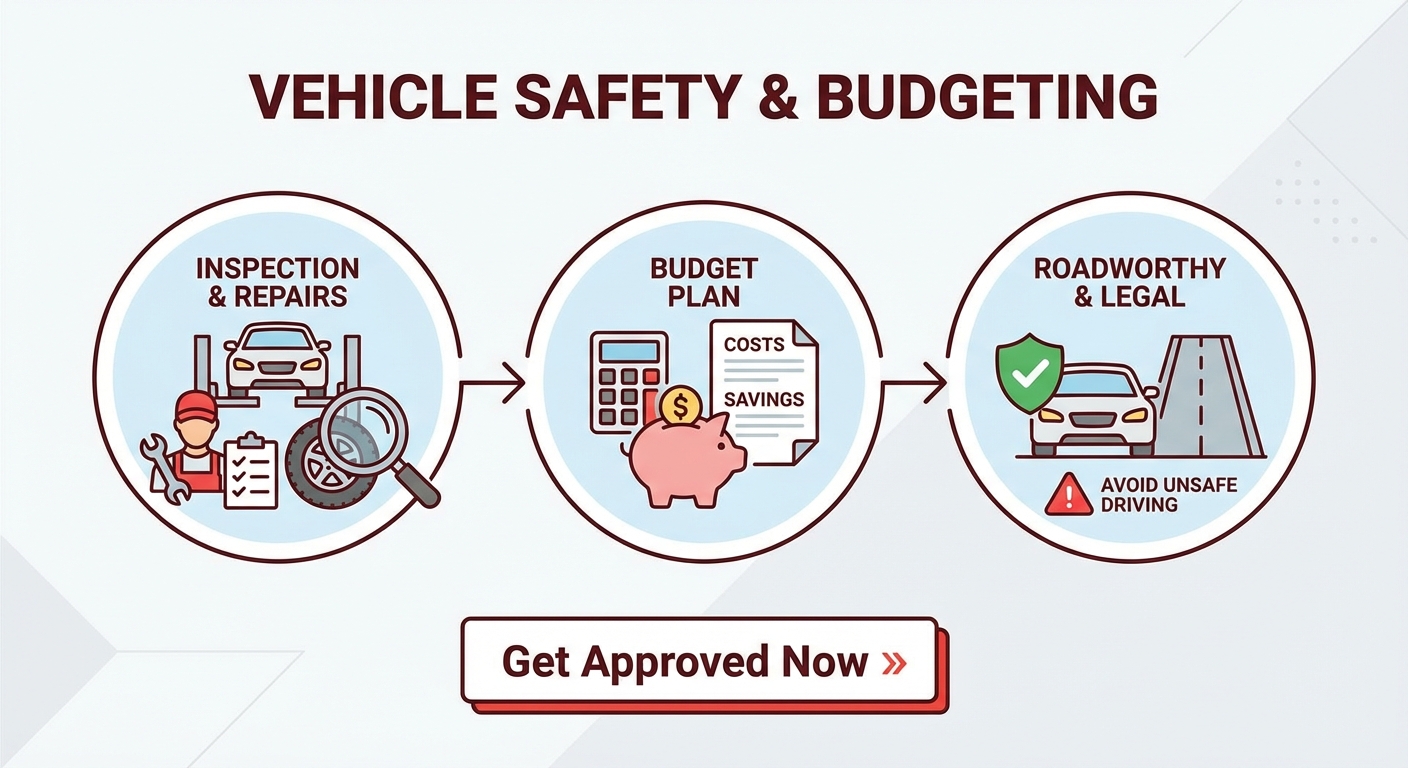
- Budgeting for the Unknown: Factoring in potential repair costs and the actual safety inspection fee into your overall budget.
- Your Road Ahead: Securing Your No-Inspection Vehicle Loan
- Step 1: Assess Your Financial Readiness:
- Step 2: Understand Your Provincial Context:
- Step 3: Target the Right Lenders:
- Step 4: Prepare Your Documentation:
- Step 5: Be Realistic About Rates and Terms:
- Step 6: Plan for Post-Purchase Inspection and Repairs:
- FAQ: Your Questions About No-Inspection Vehicle Loans Answered
The dream of owning a car often comes with a checklist: find the right model, negotiate the price, and secure financing. But what happens when that checklist hits a snag – specifically, a car without a current safety inspection? Many buyers, especially those looking at private sales, vintage models, or vehicles in certain provinces, find themselves asking: 'Can I really get a vehicle loan for a car without a safety inspection?' This deep-dive article cuts through the confusion, revealing the realities, challenges, and surprisingly viable pathways to securing financing for a vehicle that hasn't yet passed its safety check. For many Canadians, particularly in bustling cities like Toronto, Vancouver, or Montreal, finding the perfect car often involves navigating a complex market where 'as-is' sales are common, especially when sourcing unique vehicles or securing a budget-friendly option. Understanding the nuances of financing such a purchase is crucial to avoid costly mistakes and get you on the road legally and safely.
Key Takeaways: Your Snapshot Guide to No-Inspection Vehicle Loans
- Yes, It's Possible, But Challenging: Securing a loan for a car without a safety inspection isn't impossible, but it significantly narrows your lender options and often requires a stronger financial profile or alternative collateral. Do not assume it's a non-starter; instead, prepare for a more specialized application process.
- Lenders Prioritize Risk: Without a safety inspection, lenders perceive a substantially higher risk due to potential undisclosed mechanical issues, the vehicle's uncertain roadworthiness, and its diminished value as collateral. This heightened risk translates directly into stricter lending criteria and often less favourable terms.
- Private Sellers vs. Dealerships: Obtaining a loan for a private sale vehicle without an inspection is significantly harder from traditional lenders. Registered dealerships, even when selling 'as-is,' may have established lending partners more amenable to financing such vehicles, though they are often specialty lenders.
- Alternative Lenders are Key: Major banks and credit unions are typically very hesitant to finance uninspected vehicles. Your best bet will often be specialty auto lenders, private lenders, or specific dealership financing arms that cater to higher-risk profiles or 'as-is' sales.
- Your Credit Score Matters More: When the vehicle's condition is uncertain, your personal financial health becomes the primary mitigating factor. A strong credit history (e.g., 700+ in Toronto or Vancouver) and stable income are critical leverage points, often outweighing the vehicle's immediate inspection status. For more insights on leveraging your financial standing, even with challenges, check out Consumer Proposal? Good. Your Car Loan Just Got Easier.
- Understand Provincial Rules: Safety inspection requirements vary significantly across Canada (e.g., Ontario's stringent transfer requirements vs. Alberta's lack of annual inspections vs. BC's out-of-province rules), directly impacting loan eligibility, vehicle registration, and your ability to drive the car legally.
- The True Cost: Expect potentially higher interest rates (often several percentage points above prime), shorter repayment terms, or the need for a larger down payment (20% or more) to offset the increased lender risk. Factor these into your total budget, not just the purchase price.
The Uninspected Car Conundrum: Why Buyers Face This Challenge
Yes, it is possible to get a vehicle loan for a car without a safety inspection in Canada, though it presents unique challenges. Lenders often view uninspected vehicles as higher risk due to potential mechanical issues and uncertain roadworthiness, making traditional bank financing difficult. However, specialty lenders, some dealerships, and personal loans can provide viable pathways, especially when supported by a strong financial profile and a clear plan for post-purchase inspection.
The scenario of buying a car without a current safety inspection is more common than you might think, particularly outside the traditional dealership model. While most new and certified pre-owned vehicles from reputable dealerships come with a valid safety certificate, the landscape shifts dramatically when you venture into other markets.
Beyond the Dealership Lot: Exploring the common scenarios where a vehicle might lack a safety inspection.
Many attractive vehicles don't come with an inspection report. This often occurs when buying from private sellers, at auctions, or when dealing with specialty vehicles. The reasons range from the seller not wanting to incur the cost of an inspection to the vehicle genuinely being purchased as a project.
The Private Sale Predicament: Why individuals selling their cars 'as-is' often don't provide a safety certificate, and the implications for financing.
Private sellers typically want to offload their vehicle with minimal fuss and expense. Providing a safety certificate involves taking the car to a licensed mechanic, potentially paying for repairs to meet safety standards, and then obtaining the certificate. Many sellers opt to sell "as-is" to avoid these costs and responsibilities, especially if they suspect the car might need significant work. For buyers, this means a lower purchase price but also increased risk and a significant hurdle for traditional financing.
Project Cars and Vintage Treasures: When passion projects or classic vehicles bypass standard inspection protocols and their unique financing hurdles.
Enthusiasts often seek out project cars or vintage models that are not currently roadworthy. These vehicles are bought for restoration, customization, or simply as collector's items. They are explicitly sold without a safety certificate because they are not intended for immediate road use. Financing these unique vehicles requires a different approach, often involving specialized lenders who understand the appraisal process for classics or a personal loan based on the buyer's creditworthiness rather than the car's immediate condition.
Provincial Variations: A Patchwork of Regulations: How different Canadian provinces (e.g., Quebec's unique system, Alberta's lack of annual inspections, Ontario's transfer requirements) create a complex landscape for buyers and lenders.
Canada's provincial autonomy means vehicle inspection rules are far from uniform. This significantly impacts how easily an uninspected car can be financed and registered.
- Ontario: A safety standards certificate is mandatory to transfer ownership of a used vehicle to a new owner, unless it's a gift to a spouse. Without this certificate, you cannot legally register the vehicle in your name and get licence plates, making financing extremely difficult for traditional lenders.
- Alberta: Alberta does not require annual safety inspections for light vehicles, nor is an inspection typically required for transferring ownership of an Alberta-registered vehicle. This flexibility means many vehicles are sold without a recent inspection. However, if you're bringing a vehicle into Alberta from another province, an out-of-province inspection is required for registration.
- British Columbia: Similar to Alberta, BC does not require regular safety inspections for light vehicles. However, a vehicle being imported into BC from another jurisdiction (including another Canadian province) requires a provincial safety inspection before it can be registered and insured.
- Quebec: Quebec has a unique system. While there isn't a mandatory safety inspection for light vehicles on transfer, the Société de l'assurance automobile du Québec (SAAQ) can require an inspection for certain vehicles, such as those that have been rebuilt, imported, or are of a certain age or type. This can add an element of uncertainty for lenders.
- Other Provinces: Provinces like Manitoba, Saskatchewan, and the Maritimes also have their own specific rules regarding inspections for transfer of ownership or out-of-province vehicles. It's imperative to check the specific regulations for your province.
PRO TIP: Don't Confuse Registration with Inspection
Clarify that a vehicle can be registered in some provinces (like Alberta, for local transfers) without a recent safety inspection, but this doesn't guarantee loan eligibility or immediate roadworthiness. Lenders are concerned with the latter, regardless of provincial registration rules. Always assume a lender will prefer an inspected vehicle for collateral purposes, even if your provincial government allows registration without one.
Decoding Lender Hesitation: What Banks See in an Uninspected Vehicle
When you approach a financial institution for a vehicle loan, they are primarily evaluating risk. An uninspected vehicle presents a multitude of red flags that significantly elevate this perceived risk, making traditional financing an uphill battle.
Risk Assessment 101: The Lender's Perspective: Why an uninspected car is a red flag for traditional financial institutions.
Lenders, particularly large banks and credit unions, operate on a principle of minimizing risk. An uninspected vehicle carries inherent uncertainties: Is it safe to drive? Does it have hidden mechanical issues that will cost thousands to repair? Is its actual market value accurately reflected without a professional assessment? These unknowns translate directly into a higher probability of loan default, either because the borrower faces unexpected repair costs they can't afford, or because the vehicle breaks down, making it impossible for the borrower to use it or pay for it.
Collateral Concerns: The vehicle's value as collateral is diminished without proof of its mechanical integrity, impacting the loan-to-value ratio.
For most auto loans, the vehicle itself serves as collateral. If the borrower defaults, the lender repossesses and sells the car to recoup their losses. Without a safety inspection, the true market value of the vehicle is speculative. A car that appears fine on the surface could have significant structural damage, rust, or mechanical failures that severely reduce its resale value. This uncertainty means the lender can't accurately assess its loan-to-value (LTV) ratio, which is a critical metric for determining loan amounts and terms. A high LTV on an uninspected car is a major deterrent.
The 'Lemon' Factor: Lenders fear financing a vehicle that quickly becomes a costly burden for the borrower, leading to default.
No lender wants to finance a 'lemon.' If a borrower purchases an uninspected vehicle that subsequently requires extensive, costly repairs to pass inspection or simply to be driven reliably, they are far more likely to experience financial distress. This distress directly increases the risk of them defaulting on the loan. Lenders prefer to finance vehicles that are likely to be reliable, reducing the chances of the borrower facing unexpected financial strain.
Legal and Liability Implications: Understanding how provincial consumer protection laws and lender responsibilities play into their decision-making.
Lenders also consider their potential legal and reputational exposure. While they aren't directly responsible for the vehicle's condition, financing a demonstrably unsafe vehicle could create negative publicity or indirect legal headaches if something goes wrong. Provincial consumer protection laws, especially those surrounding 'as-is' sales, can be complex, and lenders prefer to avoid any situation that could drag them into disputes over vehicle quality.
PRO TIP: Think Like a Lender
Anticipate their concerns and prepare to address them head-on. If you're buying an uninspected car, a strong personal financial profile (excellent credit, stable income), alternative collateral, or a clear, budgeted plan for inspection and any necessary repairs post-purchase can help mitigate their perceived risk. Being transparent and proactive demonstrates responsibility.
Navigating the Loan Landscape: Who Will Finance an Uninspected Car?
Given the high-risk profile of uninspected vehicles, your journey to secure financing will likely steer you away from the mainstream and towards more specialized options. Understanding who these lenders are and what they offer is crucial.
Traditional Banks and Credit Unions: The Uphill Battle:
Why major institutions like RBC, TD, or Scotiabank are typically risk-averse.
Major banks and credit unions thrive on predictability and low risk. Their lending models are designed for vehicles that come with clear title, a recent safety inspection, and a well-established market value. An uninspected vehicle introduces too many variables and too much risk for their typical portfolio. They prioritize secured loans where the collateral (the car) has a clear, verifiable value. Without an inspection, that value is questionable, making it very difficult for them to approve a standard auto loan.
When exceptions might be made (e.g., high-value classic cars with appraisal, existing strong client relationships).
Exceptions are rare but do exist. If you have an exceptionally strong, long-standing relationship with your bank, a pristine credit history, and substantial assets, they might consider an unsecured personal loan. For high-value classic cars, an independent appraisal confirming its value (even in its current uninspected state) and a clear restoration plan might sway a lender, but this is highly specialized and not typical for everyday vehicles. Even then, the loan might be structured as a personal loan rather than a traditional auto loan.
Specialty Auto Lenders: Your Best Bet?
Exploring non-prime lenders and their willingness to take on higher risk.
This is where your search will likely yield the most success. Specialty auto lenders, also known as subprime or non-prime lenders, are in the business of lending to individuals who may not qualify for prime rates due to credit challenges or higher-risk vehicle scenarios. They have more flexible underwriting criteria and are more accustomed to evaluating applications where the vehicle's condition might be a factor. While they take on more risk, they price that risk into their loans.
Understanding the trade-offs: higher interest rates, shorter terms, stricter conditions.
The trade-off for this flexibility is typically higher interest rates. Where a prime borrower might get 6.99% to 8.99% on an inspected car, a borrower financing an uninspected vehicle through a specialty lender might face rates ranging from 12% to 29.99% or even higher, depending on their credit score, the vehicle's age, and the loan term. Loan terms might also be shorter (e.g., 36-60 months instead of 72-84 months) to reduce the lender's exposure. They may also require a larger down payment or more stringent income verification.
Identifying reputable specialty lenders operating across Canada (e.g., those serving subprime markets).
Many reputable specialty lenders operate across Canada, often working through dealership networks or online brokers like SkipCarDealer.com. These lenders include major finance companies with subprime divisions, as well as smaller, independent finance companies. Examples might include certain divisions of large banks that handle non-prime lending, or independent finance companies that specialize in higher-risk auto loans. When dealing with these lenders, ensure they are transparent about all fees and terms. For individuals in Toronto or Vancouver seeking financing despite credit challenges, understanding what these lenders look for is key. You might also find this article helpful: 450 Credit? Good. Your Keys Are Ready, Toronto.
Dealership Financing (for 'As-Is' Sales): A Niche Option:
How some dealerships might offer financing for uninspected 'as-is' vehicles, often through their own finance departments or third-party partners.
Some dealerships, particularly those specializing in older or budget-friendly used cars, might sell vehicles "as-is" without a safety certificate. They may have established relationships with specialty lenders or even offer in-house financing for these vehicles. This is more common in markets like Calgary or Edmonton where demand for affordable used cars is high. The advantage here is that the dealership handles the loan application process, potentially streamlining it. However, the terms may still reflect the higher risk.
The importance of scrutinizing these offers for hidden costs or exorbitant rates.
Always exercise extreme caution with dealership financing for 'as-is' vehicles. Scrutinize the interest rates, administration fees, and any other charges. Some "buy here, pay here" lots, while providing access to financing, might charge significantly higher rates and fees than other specialty lenders. Always compare offers and read the fine print carefully.
Private Lenders and Peer-to-Peer Platforms:
A less common but sometimes viable path, particularly for unique situations.
For truly unique or high-value project cars, or if traditional and specialty lenders are out of reach, private lenders (individuals or small investment groups) or peer-to-peer lending platforms could be an option. These avenues are less regulated and often involve more direct negotiation between borrower and lender. They can be more flexible but also carry higher risks.
The risks and rewards of borrowing from individuals or online platforms.
While potentially offering flexibility, private and peer-to-peer lending often comes with very high interest rates and less consumer protection. Ensure all agreements are legally binding, clearly documented, and reviewed by an independent party if possible. This path is generally recommended only after exhausting other options.
PRO TIP: Don't Limit Your Search
While traditional banks might be a long shot, casting a wide net to specialty lenders and exploring all options can significantly improve your chances. Online brokers, like SkipCarDealer.com, can connect you with a network of lenders, increasing your odds of finding one willing to finance an uninspected vehicle based on your overall financial profile.
Here's a comparison of typical lending scenarios for a $15,000 vehicle without a safety inspection:
| Lender Type | Typical Interest Rate Range | Down Payment Expectation | Loan Term (Months) | Example Monthly Payment (on $15,000, 60 months) | Approval Likelihood |
|---|---|---|---|---|---|
| Traditional Bank (Prime) | Not Applicable (Very Low) | Not Applicable | Not Applicable | Not Applicable | Extremely Low (unless unsecured personal loan) |
| Specialty Auto Lender (Subprime) | 12% - 29.99% | 10% - 25% + | 36 - 60 | $333 - $499 (at 12-20%) | Moderate to High (with good credit profile) |
| Dealership Financing (As-Is) | 15% - 35% + | 15% - 30% + | 36 - 60 | $350 - $550 (at 15-25%) | Moderate (variable by dealership) |
| Unsecured Personal Loan (Bank) | 8% - 15% | 0% (not vehicle specific) | 24 - 60 | $304 - $363 (at 8-15%) | Moderate (requires excellent credit) |
Note: All rates and payments are estimates and depend heavily on individual credit scores, income, debt-to-income ratio, and current market conditions. The "Example Monthly Payment" is calculated on a $15,000 principal over 60 months, assuming the listed interest rate. A higher down payment would reduce the principal and thus the monthly payment.
Beyond the Inspection: What Lenders Do Look At
While an uninspected vehicle presents a significant hurdle, it's not the only factor in a lender's decision. Your personal financial health often becomes the ultimate collateral, demonstrating your ability to repay the loan despite the uncertainties of the vehicle itself.
Your Financial Health: The Ultimate Collateral:
Credit Score and History: The paramount importance of a strong credit profile (e.g., 700+ in Toronto or Vancouver) in mitigating vehicle-related risk.
This is arguably the most critical factor. A high credit score (generally 680+ for good, 760+ for excellent) signals to lenders that you are a responsible borrower with a proven track record of repaying debts. When the vehicle itself is a risk, a strong credit profile acts as a counterbalance. Lenders will look for a history of on-time payments, low credit utilization, and a diverse credit mix. In competitive markets like Toronto or Vancouver, a score of 700 or higher can significantly open doors to better rates and terms, even for a challenging vehicle purchase. Conversely, a low credit score for a car without a safety certificate makes approval extremely difficult, almost to the point of impossibility from traditional lenders.
Income Stability and Employment History: Demonstrating your ability to repay the loan consistently, regardless of the car's condition.
Lenders need assurance that you can consistently make your monthly payments. This comes from stable income and a solid employment history. They want to see consistent pay stubs, T4s, or business income records, ideally showing at least 2-3 years at the same employer or in the same industry. Freelancers or self-employed individuals may need to provide more extensive financial documentation. The higher your income relative to your existing debts and the proposed car payment, the more confident a lender will be.
Debt-to-Income Ratio (DTI): How your existing debt load impacts a lender's confidence.
Your DTI is a crucial metric that shows how much of your monthly gross income goes towards debt payments. Lenders typically prefer a DTI below 40-45%. If you're already burdened with significant credit card debt, mortgage payments, or other loan obligations, adding another car loan, especially for a higher-risk vehicle, might push your DTI too high. This signals potential financial strain and a higher risk of default.
Down Payment Power: Reducing Lender Exposure:
Why a substantial down payment (e.g., 20% or more) can significantly improve your approval odds and reduce interest rates.
A substantial down payment is one of the most effective ways to mitigate lender risk for an uninspected car. By putting down 20%, 30%, or even 50% of the purchase price, you reduce the principal loan amount. This means the lender has less money at risk and the loan-to-value ratio becomes much more favourable, even if the vehicle's true value is uncertain. A lower principal also means lower monthly payments, which improves your DTI and overall affordability. For instance, putting down $5,000 on a $15,000 car means you're only financing $10,000, a much less risky proposition for the lender. For more on the importance of down payments, particularly in Vancouver, you might find Your Bursary's 'Roller Coaster'? That's Your Car Loan Down Payment, Vancouver. insightful.
The psychological impact of a strong down payment on a lender.
Beyond the numbers, a significant down payment sends a strong message to the lender: you are serious about this purchase, you have financial discipline, and you have a vested interest in keeping the vehicle and repaying the loan. This psychological factor can make a difference in close approval decisions.
Co-Signers: Sharing the Risk:
When a co-signer with excellent credit can be a game-changer for approval.
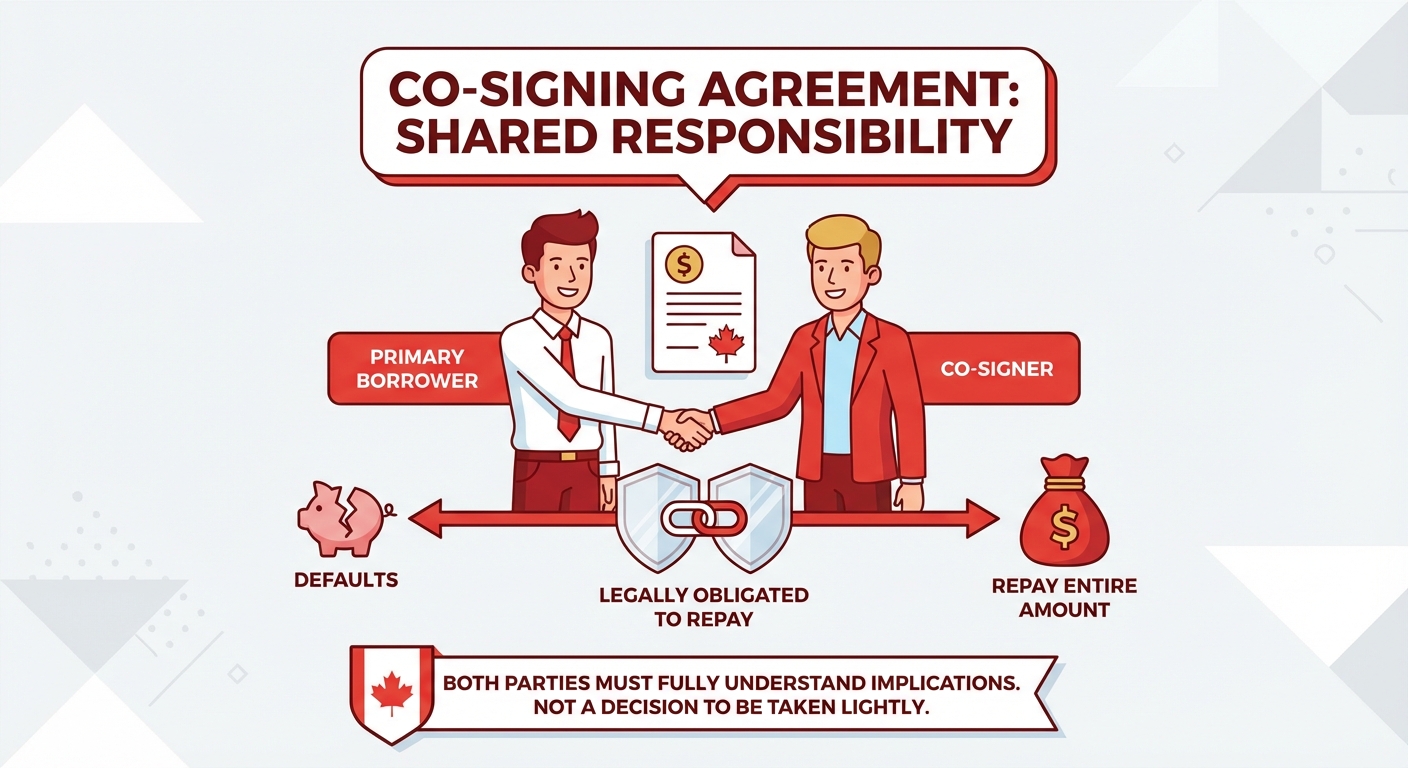
If your credit profile isn't strong enough on its own, a co-signer with excellent credit and stable income can dramatically improve your chances of approval. A co-signer essentially guarantees the loan, promising to make payments if you default. This significantly reduces the lender's risk, as they now have two parties responsible for the debt. This can be particularly useful in situations where the vehicle itself is a higher risk.
The responsibilities and implications for both the borrower and co-signer.
While beneficial for approval, co-signing carries significant responsibility. The co-signer's credit score will be impacted by the loan, and they are legally obligated to repay the entire amount if the primary borrower defaults. Both parties must fully understand these implications before entering into a co-signing agreement. It's not a decision to be taken lightly.
Here's how your financial profile directly impacts potential loan terms for an uninspected vehicle:
| Financial Profile Category | Credit Score Range | Income Stability | Typical Interest Rate for Uninspected Vehicle | Down Payment Recommendation |
|---|---|---|---|---|
| Excellent (Prime) | 760+ | Highly stable, high income | 8.99% - 14.99% (likely unsecured personal loan) | 0% - 10% (for personal loan, otherwise 20%+) |
| Good (Near Prime) | 680-759 | Stable, consistent income | 12.99% - 19.99% (specialty auto loan) | 15% - 25% |
| Fair (Subprime) | 600-679 | Moderate stability, sufficient income | 18.99% - 29.99% (specialty auto loan) | 20% - 35% + |
| Challenged (Deep Subprime) | Under 600 | Variable, lower income | 29.99% - 39.99% (very high risk specialty or private) | 30% - 50% + (often with co-signer) |
Note: These rates are illustrative for an uninspected vehicle and are significantly higher than for an inspected, prime-eligible vehicle. They assume approval is even possible within each category. For detailed requirements, especially for Alberta car financing, it's always best to consult Approval Secrets: Exactly What Paperwork You Need for Alberta Car Financing.
Strategies for Success: Increasing Your Approval Odds
Securing a loan for an uninspected car requires a strategic approach. It's about presenting yourself as the lowest possible risk to a lender, even when the vehicle itself is a higher risk.
Pre-Approval Power: Knowing Your Budget Before You Buy:
Why seeking pre-approval, even for an uninspected car, gives you negotiating power and clarity.
Getting pre-approved for a loan before you even start seriously shopping for an uninspected car is a powerful move. It tells you exactly how much you can afford, what your interest rate and terms will likely be, and which lenders are willing to work with your specific situation. With a pre-approval in hand, you approach sellers as a cash buyer, giving you significant negotiating leverage. It also saves you the heartache of finding the perfect car only to discover you can't finance it.
What information lenders will require for pre-approval.
For pre-approval, lenders will typically ask for comprehensive financial information: your full name, address, date of birth, Social Insurance Number (for a credit check), employment history, income verification (pay stubs, T4s, bank statements), and details about your existing debts and assets. They may also ask about the type of vehicle you're looking for, even if it's general, to understand the scope of the loan.
Secured vs. Unsecured Loans: Understanding Your Options:
Secured Loans: Using the car itself as collateral (most common for auto loans).
Most traditional auto loans are secured loans, meaning the car you're buying acts as collateral. If you default, the lender can repossess the vehicle. For uninspected cars, this is precisely why secured loans are difficult to obtain from traditional banks, as the collateral's value is uncertain. Specialty lenders, however, may still offer secured loans but at higher rates to compensate for the collateral risk.
Unsecured Personal Loans: When a personal loan might be a better fit if the vehicle itself can't secure the financing (often higher rates, but no collateral risk for the lender).
An unsecured personal loan is not tied to any collateral. Your approval is based solely on your creditworthiness and ability to repay. This can be an excellent option for buying an uninspected car, as the lender doesn't care about the car's condition. The downside is that unsecured personal loans typically come with higher interest rates than secured auto loans, as the lender has no asset to seize if you default. However, for those with excellent credit, the rates can still be competitive, and it offers maximum flexibility regarding the vehicle's state.
The Power of Transparency: Be Honest About the Vehicle:
Providing any available maintenance records, even if not a full inspection.
If you're buying a car without a current safety inspection, provide any and all existing documentation about its history. This could include past maintenance records, repair invoices, or even a recent oil change receipt. While not a safety certificate, these documents demonstrate that the vehicle has received some care and can offer clues about its mechanical condition. This transparency builds trust with potential lenders.
Being upfront about known issues or the reason for the lack of inspection.
Don't try to hide facts about the vehicle. If you know it needs specific repairs, or if it's a project car, communicate this clearly. Lenders appreciate honesty. Frame the situation as a calculated purchase with a plan for getting the car roadworthy, rather than an impulsive, risky buy. This approach can make a difference in how your application is perceived.
PRO TIP: Get a Pre-Purchase Mechanical Assessment (If Possible)
While not a formal safety inspection, having your trusted mechanic review the car *before* purchase can provide valuable insights for you and potentially for the lender, even if it's not an official 'safety certificate'. This is especially helpful in provinces like Alberta where inspections are less standardized for transfers. A mechanic's report detailing any issues and estimated repair costs, even if informal, can serve as a powerful tool to show lenders you've done your due diligence and have a clear understanding of what you're buying. It transforms "uninspected" into "assessed with known conditions."
The Buyer's Due Diligence: Protecting Yourself When Buying 'As-Is'
Securing a loan for an uninspected car is only half the battle. The other, equally critical half is protecting yourself as a buyer, especially when purchasing a vehicle "as-is." This means understanding your rights, your risks, and taking proactive steps to minimize potential financial headaches down the road.
Beyond the Loan: Your Responsibility as a Buyer:
Understanding the legal implications of buying a car 'as-is' in your province (e.g., Ontario's 'as-is' disclosure rules).
The term 'as-is' has significant legal weight. In most Canadian provinces, buying a vehicle 'as-is' means you are accepting it in its current condition, with all its faults, whether apparent or not. The seller is typically absolved of responsibility for any issues that arise after the sale. In Ontario, for example, the seller must explicitly state in the contract that the vehicle is being sold 'as-is' and that it has not been safety inspected. They must also disclose certain material facts. Understand these rules for your specific province before signing anything.
The financial risks of purchasing a vehicle that may require significant repairs to pass inspection.
This is the biggest financial risk. An uninspected car could pass with flying colours, or it could require thousands of dollars in repairs for brakes, tires, suspension, or even structural integrity. These costs come directly out of your pocket, on top of your loan payments. Without proper due diligence, you could end up with a car that costs more to fix than it's worth, essentially turning your purchase into a money pit.
Essential Pre-Purchase Checks (Even Without a Safety):
VIN Check and Vehicle History Reports (CarFax, CarProof): Uncovering accident history, liens, and odometer discrepancies.
Before you even consider financing, always obtain a comprehensive vehicle history report using the Vehicle Identification Number (VIN). Services like CarFax or CarProof (now part of CarFax Canada) can reveal crucial information such as accident history, previous registrations, reported odometer discrepancies, and most importantly, any outstanding liens. Never buy a vehicle with a lien against it, as it legally belongs to the lienholder until the debt is cleared. This is a non-negotiable step, no matter where you are buying in Canada, from Vancouver to Halifax.
Personal Mechanic Inspection: Arranging for your trusted mechanic to review the car *before* purchase, even if it's not a formal safety certificate. This is critical for cities like Edmonton or Calgary where private sales are common.
This is perhaps the most vital step. Before you finalize any purchase, especially for an uninspected car, insist on having your own trusted mechanic perform a pre-purchase inspection (PPI). This is different from a provincial safety inspection, but it will give you a detailed report on the vehicle's mechanical condition, potential issues, and estimated repair costs. A seller who refuses a PPI is a major red flag. In cities like Edmonton or Calgary, where private sales thrive and safety inspections for transfers aren't always mandatory, a PPI is your best defence against buying a costly problem.
Thorough Test Drive: Listening for unusual noises, checking all functions, and assessing handling.
A comprehensive test drive is essential. Drive the car at various speeds, on different road types. Listen for unusual noises (clunks, squeals, grinding), check all lights, wipers, horn, air conditioning, heating, power windows, and locks. Pay attention to how the car handles, brakes, and accelerates. Does it pull to one side? Is the steering loose? Do the brakes feel spongy? Any red flags here should be noted for your mechanic to investigate further.
Documentation Review: Confirming ownership, registration, and any lien releases.
Verify all documentation. Ensure the seller's name on their ID matches the name on the vehicle's registration. Confirm that the VIN on the documents matches the VIN on the vehicle itself. If there was a previous lien, ensure you see a lien release document. Never transfer money without verifying these critical documents.
Budgeting for the Unknown: Factoring in potential repair costs and the actual safety inspection fee into your overall budget.
When you budget for an uninspected car, you must factor in more than just the purchase price and loan payments. You need a contingency fund for potential repairs identified by your mechanic or during the official safety inspection. Research typical safety inspection fees in your province (e.g., $100-$200 in Ontario) and then add a significant buffer for repairs. It's often recommended to budget an additional 10-20% of the vehicle's purchase price for immediate post-purchase work.
PRO TIP: Insist on a Bill of Sale
Ensure the bill of sale clearly states the vehicle is sold 'as-is,' includes the VIN, odometer reading, purchase price, date, and signatures of both buyer and seller. This protects both parties and clarifies the terms of the transaction. A robust bill of sale is your primary legal record.
Your Road Ahead: Securing Your No-Inspection Vehicle Loan
Navigating the path to financing a car without a safety inspection can seem daunting, but by following a structured approach, you can significantly increase your chances of success. It requires diligence, transparency, and a clear understanding of the process.
Step 1: Assess Your Financial Readiness:
Before you even look at cars, take a critical look at your own finances. Check your credit score (you can often do this for free through credit bureaus or your bank). Review your income stability and calculate your current debt-to-income ratio. Determine how much of a down payment you can realistically afford. The stronger your financial foundation, the better your prospects. If you're struggling with understanding your credit, resources like 450 Credit? Good. Your Keys Are Ready, Toronto. can provide valuable context.
Step 2: Understand Your Provincial Context:
Research the specific safety inspection and registration rules for your province (e.g., British Columbia's requirements for out-of-province vehicles, or Quebec's unique SAAQ process). This knowledge will inform your purchase decisions and help you anticipate any provincial hurdles you might face after acquiring the vehicle. Knowing the rules in advance can save you significant time and frustration.
Step 3: Target the Right Lenders:
Don't waste time with traditional banks for a secured auto loan if the vehicle is uninspected. Instead, focus your efforts on specialty auto lenders, credit unions (which can sometimes be more flexible than large banks for their members), or specific dealership finance options that might be more accommodating to 'as-is' sales. Consider an unsecured personal loan if your credit is strong enough.
Step 4: Prepare Your Documentation:
Have all your financial records organized and ready. This includes proof of income (pay stubs, tax returns), bank statements, identification, and any available vehicle history reports (CarFax) or maintenance records for the car itself. Being prepared streamlines the application process and demonstrates your seriousness as a borrower.
Step 5: Be Realistic About Rates and Terms:
Understand that the convenience of financing an uninspected vehicle will likely come with a higher cost. Expect interest rates to be higher than for a prime-eligible, inspected vehicle, and terms might be shorter. Prioritize getting the vehicle on the road safely and legally over securing the absolute lowest rate. Focus on what is affordable and sustainable for your budget.
Step 6: Plan for Post-Purchase Inspection and Repairs:
Once you secure your loan and purchase the vehicle, your immediate next step is to get it to a licensed mechanic for a full safety inspection and any necessary repairs to make it roadworthy. Factor these costs into your overall budget and have a plan for how you will manage them. Driving an uninspected or unsafe vehicle is illegal and dangerous.