EI Income? Your Car Loan Just Said 'Welcome Aboard!
Table of Contents
- Key Takeaways: Your EI Car Loan Roadmap at a Glance
- 'Welcome Aboard!' – But Is It Smooth Sailing? Unpacking the EI Car Loan Reality
- The Elephant in the Room: Why Lenders Hesitate with EI Income
- Beyond the 'No': The Nuance of Temporary Income for Car Financing
- Setting Realistic Expectations: What 'Possible' Truly Means
- Deconstructing EI as Income: What Lenders *Really* Look For Beyond the Benefits
- The 'Stability' Illusion: Reframing Your EI Situation
- Your Financial Story: Credit Score's Starring Role and Debt-to-Income Ratio
- The Power of Proactivity: How Your Financial Habits Speak Volumes
- Crafting Your 'Yes!' Application: Strategies to Boost Your Approval Odds
- The Art of Budgeting: Proving You Can Afford It (Beyond Just EI)
- Documentation Deep Dive: What Paperwork You *Must* Have Ready
- The 'Why Now?' Narrative: Justifying Your Need for a Vehicle and Demonstrating Responsibility
- The Game Changers: Down Payments, Trade-Ins, and Co-Signers
- The Lender Labyrinth: Where to Find Your EI-Friendly Car Loan
- Tier 1: Traditional Banks & Credit Unions – The High Bar (and Best Rates)
- Tier 2: Dealership Financing & Captive Lenders – The Flexible Middle Ground
- Tier 3: Subprime & Specialty Lenders – Navigating the High-Interest Environment
- The Pre-Approval Advantage: Shop for the Loan *Before* the Car
- The Vehicle Equation: Choosing a Car That Works With Your EI Budget (and Lenders' Comfort)
- New vs. Used: Why a Pre-Owned Vehicle Is Often the Smarter Play
- The 'Affordable' Sweet Spot: What Kind of Car Signals Financial Responsibility
- Depreciation & Resale Value: Thinking Beyond the Initial Purchase
- Insurance Implications: An Often-Overlooked Cost Lenders Consider
- Decoding the Fine Print: Interest Rates, Fees, and the True Cost of Your EI Loan
- APR vs. Interest Rate: What You're *Really* Paying and Why It Matters
- Hidden Fees & Add-ons: Rustproofing, Extended Warranties – When to Say No
- The Impact of Loan Term: Longer Terms, Lower Payments, Higher Total Cost
Navigating the world of car financing can feel like a maze even under ideal circumstances. Add Employment Insurance (EI) into the mix, and many Canadians assume the doors to car ownership are firmly shut. But what if we told you that's not always the case? While it presents unique challenges, securing a car loan while on EI is absolutely within reach, provided you approach it with strategy, transparency, and a solid understanding of what lenders truly look for.
At SkipCarDealer.com, we understand that life throws curveballs. Losing a job or taking a temporary leave can be stressful, but needing reliable transportation often doesn't go away. Whether it's for job searching, family responsibilities, or simply maintaining your independence, a car can be essential. This comprehensive guide will equip you with the knowledge and tactics to turn that "maybe" into a resounding "yes" for your car loan application, even with EI as your current income source.
Key Takeaways: Your EI Car Loan Roadmap at a Glance
- Yes, getting a car loan on EI is possible, but requires strategic planning.
- Lenders prioritize stability; your job is to demonstrate it through other means.
- A strong credit score, a significant down payment, or a co-signer are game-changers.
- Shop for the loan before the car, and compare offers from various lenders.
- Choose an affordable, reliable vehicle to increase approval odds and manage costs.
- Always plan for what happens when EI benefits conclude.
'Welcome Aboard!' – But Is It Smooth Sailing? Unpacking the EI Car Loan Reality
The Elephant in the Room: Why Lenders Hesitate with EI Income
Let's be upfront: for many traditional lenders, income from Employment Insurance (EI) raises a red flag. Why? Because EI is, by its very nature, temporary. Lenders assess risk, and the primary risk in auto financing is the borrower's ability to make consistent, on-time payments for the entire loan term. A steady, long-term employment history signals stability. EI, while a crucial social safety net, signals a period of income transition or uncertainty.
This isn't to say lenders view you negatively as a person. It's purely a business decision based on their risk models. They look at your income source, its duration, and its reliability. EI benefits, even if substantial, have a finite end date, which complicates their assessment of your long-term repayment capacity.
Beyond the 'No': The Nuance of Temporary Income for Car Financing
While the initial reaction might be caution, it's important to understand that "temporary income" isn't an automatic disqualifier. Lenders are becoming more adaptable to diverse income streams. For instance, individuals on disability benefits like AISH in Alberta, or those with self-employment income, also navigate unique challenges. It's about how you present your overall financial picture, not just the single line item of your current income. For insights into how other benefit recipients secure financing, you might find our article on Approval Secrets: Financing a Vehicle on AISH or Disability in Alberta particularly helpful.
The nuance lies in the details: How long have you been on EI? What was your employment history before EI? Do you have a clear plan for returning to work? Do you have other assets or savings? These factors can significantly mitigate the perceived risk of EI income alone.
Setting Realistic Expectations: What 'Possible' Truly Means
When we say getting a car loan on EI is "possible," it comes with realistic caveats. It likely means:
- Higher Scrutiny: Your application will be reviewed more thoroughly than someone with a traditional, stable job.
- Potentially Higher Interest Rates: Lenders may compensate for the perceived risk by offering higher interest rates.
- Smaller Loan Amounts: You might be approved for a less expensive vehicle than you would if you had a full-time income.
- Stronger Supporting Factors: You'll need to lean heavily on other aspects of your financial profile, such as a robust credit score, a substantial down payment, or a co-signer.
- Limited Options: You may not qualify with every lender, especially the most conservative traditional banks.
Understanding these realities from the outset will help you prepare a stronger application and avoid disappointment. It's about demonstrating financial responsibility and a clear plan for the future, even during a temporary income phase.
Deconstructing EI as Income: What Lenders *Really* Look For Beyond the Benefits
The 'Stability' Illusion: Reframing Your EI Situation
Lenders crave stability. When your primary income is EI, your task is to demonstrate that despite the temporary nature of the benefits, your overall financial situation is stable, or that you have a clear path back to stability. This isn't about deception; it's about context. Consider these points:
- Your Employment History: A long, stable work history prior to EI can be a huge asset. It shows you're not habitually unemployed but are experiencing a temporary setback.
- Reason for EI: Is it a temporary layoff with a recall date? A seasonal job? Parental leave with a return-to-work agreement? These scenarios are viewed much more favourably than an indefinite job search.
- Return-to-Work Plan: Do you have interviews lined up? Are you actively seeking employment in a high-demand field? Can you articulate a realistic timeline for re-employment?
- Other Income Sources: Do you have a side hustle, rental income, or a spouse's income? Any additional, stable income streams can significantly bolster your application.
Your Financial Story: Credit Score's Starring Role and Debt-to-Income Ratio
Beyond your current income, your financial history speaks volumes. Your credit score and debt-to-income (DTI) ratio are paramount:
- Credit Score: A strong credit score (typically 650+) is your best friend when applying for a car loan on EI. It demonstrates a history of responsible borrowing and repayment. Lenders see it as an indicator of your willingness and ability to honour financial commitments, regardless of your current employment status. A high score can offset some of the risk associated with EI income. For a deeper dive into how credit scores impact your financing options, check out our article on The Truth About the Minimum Credit Score for Ontario Car Loans.
- Debt-to-Income (DTI) Ratio: This ratio compares your total monthly debt payments to your gross monthly income. Lenders typically prefer a DTI below 36-40%. Even with EI, if your existing debt is low, your DTI might still be acceptable. This is where meticulous budgeting comes in, as it proves you can manage your current obligations and take on a new car payment without being overstretched.
Pro Tip: Calculate Your True Debt-to-Income Ratio
Calculate your true debt-to-income ratio by including your EI benefits and *all* monthly expenses (rent/mortgage, existing loan payments, credit card minimums, etc.). Lenders will be doing this anyway, so be prepared with an accurate, honest assessment of your financial capacity.
The Power of Proactivity: How Your Financial Habits Speak Volumes
Lenders appreciate proactivity. If you've been diligently managing your finances during your EI period, it reflects positively. This includes:
- Savings: Demonstrating a healthy savings account, even if it's not a direct down payment, shows financial prudence and provides a buffer.
- Low Credit Card Balances: Keeping your credit card utilization low (ideally below 30%) indicates responsible credit management.
- No Recent Missed Payments: A clean payment history on all your accounts is crucial.
- Budgeting: Having a clear, detailed budget that shows how you plan to incorporate a car payment into your EI income is incredibly persuasive.
Crafting Your 'Yes!' Application: Strategies to Boost Your Approval Odds
The Art of Budgeting: Proving You Can Afford It (Beyond Just EI)
Your budget is your most powerful tool. It needs to clearly demonstrate that the car loan payment, insurance, fuel, and maintenance costs are well within your means, even with EI as your primary income. Don't just estimate; calculate meticulously. Include:
- All sources of income (EI, savings, other part-time work, spouse's income).
- All fixed monthly expenses (rent/mortgage, utilities, existing loan payments, subscriptions).
- All variable monthly expenses (groceries, transportation, personal care, entertainment).
- A realistic estimate for the car payment, insurance, fuel, and maintenance.
The goal is to show a comfortable surplus, or at least a balanced budget, after all expenses are accounted for. This isn't just about qualifying; it's about ensuring you can genuinely afford the car without undue stress.
Documentation Deep Dive: What Paperwork You *Must* Have Ready
Preparation is key. Gather all necessary documents before you even speak to a lender. This shows organization and seriousness. You'll likely need:
- Proof of EI Benefits: Official statements from Service Canada showing your current benefit amount and duration.
- Bank Statements: Recent statements (3-6 months) to show income deposits, spending habits, and savings.
- Proof of Identity: Government-issued photo ID (driver's license, passport).
- Proof of Residence: Utility bill or lease agreement.
- Employment History: Records of your previous employment, including pay stubs or T4s, to demonstrate a stable work history.
- Current Debt Obligations: Statements for credit cards, existing loans, or lines of credit.
- Proof of Assets: If you have investments or significant savings, documentation to back this up.
- Return-to-Work Documentation: If applicable, a letter from your previous employer confirming a recall date or a detailed job search log.
For a comprehensive list of what lenders expect, our article on Approval Secrets: Exactly What Paperwork You Need for Alberta Car Financing offers excellent guidance.
The 'Why Now?' Narrative: Justifying Your Need for a Vehicle and Demonstrating Responsibility
Lenders aren't just looking at numbers; they're looking for a compelling reason and a responsible borrower. Be prepared to explain why you need a car *now* while on EI. Is it:
- Essential for your job search (e.g., public transit is inadequate, interviews require travel)?
- Necessary for family responsibilities (e.g., transporting children, caring for elderly parents)?
- A replacement for a vehicle that broke down and is no longer repairable?
Frame your narrative around responsibility and necessity, not impulse. Show that you've thought this through and that the vehicle is a tool to help you regain financial independence, not a luxury purchase.
The Game Changers: Down Payments, Trade-Ins, and Co-Signers
These three elements can dramatically improve your approval odds:
- Down Payment: A significant down payment reduces the amount you need to borrow, which in turn lowers the lender's risk. Aim for at least 10-20% of the vehicle's price, if possible. It shows commitment and reduces your monthly payments, making the loan more affordable.
- Trade-In: If you have an old vehicle, trading it in acts as a down payment. Ensure you get a fair valuation.
- Co-Signer: A co-signer with excellent credit and stable income can be a powerful asset. They share responsibility for the loan, giving the lender more security. However, understand the implications: if you default, your co-signer is legally obligated to pay.
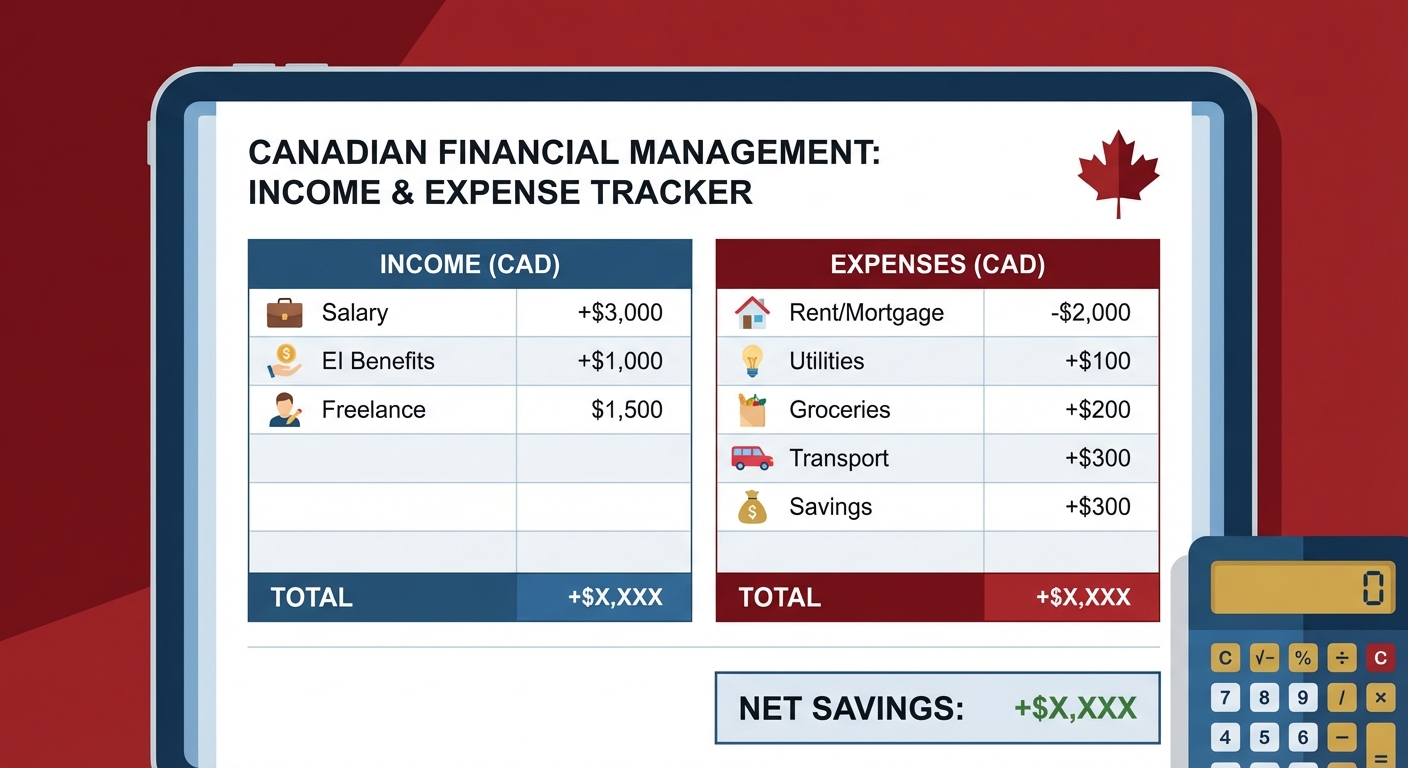
Pro Tip: Create a Detailed, Professional Income and Expense Spreadsheet
Create a detailed, professional income and expense spreadsheet. This visual proof of financial management can significantly strengthen your case, showing you've planned for this and can responsibly manage your funds, even with EI benefits.
Comparing the Benefits of a Co-Signer
Understanding the pros and cons of involving a co-signer is crucial for both parties.
| Benefit/Consideration | For the EI Applicant (Borrower) | For the Co-Signer |
|---|---|---|
| Approval Odds | Significantly increases your chances of approval, especially with EI income. | No direct benefit, but helps someone they care about. |
| Interest Rates | Likely qualifies you for a lower interest rate, saving you money over the loan term. | No direct benefit, but ensures the borrower gets a better deal. |
| Credit Building | Helps build or rebuild your credit score, provided payments are made on time. | Can slightly impact their debt-to-income ratio, potentially affecting their own future credit applications. |
| Responsibility | You are still primarily responsible for payments, but they are equally liable if you default. | Fully responsible for the loan if the primary borrower defaults, impacting their credit. |
| Relationship Impact | Can strengthen trust if managed well; can strain relationships if issues arise. | Can strain relationships if the borrower defaults or is irresponsible. |
| Risk | Lower risk of denial, but still responsible for the loan. | High financial risk, as they are on the hook for the entire loan amount. |
The Lender Labyrinth: Where to Find Your EI-Friendly Car Loan
Not all lenders are created equal, especially when it comes to non-traditional income sources like EI. Knowing where to look can save you time and frustration.
Tier 1: Traditional Banks & Credit Unions – The High Bar (and Best Rates)
These include major banks like RBC, TD, Scotiabank, BMO, CIBC, and local credit unions. They generally offer the lowest interest rates and most favourable terms. However, they also have the strictest lending criteria. While they *might* consider EI income, they will heavily scrutinize your credit score, debt-to-income ratio, and overall financial stability. A strong employment history prior to EI, a significant down payment, or a co-signer are almost essential here.
- Pros: Best rates, flexible terms for strong applicants.
- Cons: Very difficult to qualify with EI as primary income without significant mitigating factors.
Tier 2: Dealership Financing & Captive Lenders – The Flexible Middle Ground
Many dealerships offer financing directly through their own finance departments, often working with a network of lenders, including captive lenders (finance arms of car manufacturers like Ford Credit or GM Financial). These lenders can sometimes be more flexible than traditional banks, especially if the dealership wants to move a specific vehicle. They might have programs designed for various credit tiers and income situations. They often act as a bridge between prime and subprime lending.
- Pros: More flexible, convenient (one-stop shop), access to various lenders.
- Cons: Rates might be slightly higher than traditional banks, can feel pressured by sales staff.
Tier 3: Subprime & Specialty Lenders – Navigating the High-Interest Environment
These lenders specialize in approving individuals with less-than-perfect credit or non-traditional income sources, including EI. They are more willing to take on higher risk. The trade-off, however, is significantly higher interest rates, which can add thousands of dollars to the total cost of your loan. Examples include certain finance companies or specific programs offered by dealerships for challenged credit. While they offer a path to approval, it's crucial to understand the true cost.
- Pros: Higher approval odds for EI applicants or those with credit challenges.
- Cons: Much higher interest rates, potentially less favourable terms.
The Pre-Approval Advantage: Shop for the Loan *Before* the Car
This is perhaps the most critical strategy for any car buyer, but especially for those on EI. Getting pre-approved for a loan before you step onto a dealership lot offers several advantages:
- Know Your Budget: You'll know exactly how much you can afford, preventing you from falling in love with a car outside your price range.
- Negotiating Power: You become a cash buyer in the eyes of the dealership, giving you leverage to negotiate the car's price without being distracted by financing options.
- Compare Offers: You can compare the pre-approved rate from your bank/credit union with any offers the dealership presents, ensuring you get the best deal.
- Reduced Stress: You can focus solely on finding the right vehicle, knowing your financing is already in place.
Pro Tip: Always Secure Pre-Approval from at Least One External Lender
Always secure pre-approval from at least one external lender (bank/credit union) before stepping onto a dealership lot. This gives you leverage, a benchmark for interest rates, and confidence in your buying power.
The Vehicle Equation: Choosing a Car That Works With Your EI Budget (and Lenders' Comfort)
The type of car you choose plays a significant role in your approval odds and overall financial well-being, especially when you're on EI.
New vs. Used: Why a Pre-Owned Vehicle Is Often the Smarter Play
For individuals on EI, a used car is almost always the more prudent choice. Here's why:
- Lower Price Tag: Used cars are significantly cheaper, meaning a smaller loan amount and lower monthly payments. This directly translates to an easier time getting approved and managing your budget.
- Less Depreciation: New cars lose a substantial portion of their value the moment they're driven off the lot. Used cars have already taken that initial hit, meaning your investment depreciates more slowly.
- Lower Insurance Costs: Insurance premiums are typically lower for used vehicles compared to new ones.
- Wider Selection: The used car market offers a vast array of reliable, affordable options.
The 'Affordable' Sweet Spot: What Kind of Car Signals Financial Responsibility
Lenders look at the car you want to buy. A brand-new luxury SUV signals high risk if your income is EI. A reliable, moderately priced sedan or hatchback, on the other hand, signals financial prudence and a genuine need for transportation. Focus on vehicles in the $10,000 to $20,000 range. These cars are often:
- Practical: Known for reliability and fuel efficiency.
- Easier to Insure: Lower premiums.
- More Accessible: A wider range of lenders will be comfortable financing them.
Think about cars that are known for their longevity and low cost of ownership, like a Honda Civic, Toyota Corolla, Mazda3, or Hyundai Elantra. These models are often well-maintained and offer excellent value.
Depreciation & Resale Value: Thinking Beyond the Initial Purchase
Consider the car's depreciation rate and potential resale value. Choosing a model that holds its value well can be a smart move. If your financial situation changes unexpectedly, a car with good resale value gives you more options, whether it's selling it outright or using its equity for a trade-in.
Insurance Implications: An Often-Overlooked Cost Lenders Consider
Lenders don't just look at the car payment; they consider your total cost of ownership. Car insurance is a significant monthly expense in Canada, and it varies wildly based on the vehicle type, your driving record, and where you live. A car with high insurance premiums could push your overall debt-to-income ratio too high. Factor in insurance quotes for any potential vehicle before committing.
Pro Tip: Focus on Reliable, Fuel-Efficient Used Models
Focus on reliable, fuel-efficient used models from reputable brands. These often have lower insurance costs and maintenance, making your loan more manageable and appealing to lenders. Research models known for their longevity and lower operating costs.
Decoding the Fine Print: Interest Rates, Fees, and the True Cost of Your EI Loan
Understanding the terms of your car loan is paramount. When on EI, you might be offered less favourable terms, so scrutinize every detail.
APR vs. Interest Rate: What You're *Really* Paying and Why It Matters
- Interest Rate: This is the percentage charged on the principal amount of the loan.
- APR (Annual Percentage Rate): This is the true annual cost of borrowing, including the interest rate PLUS any additional fees (like administration fees, origination fees). The APR gives you a more accurate picture of the total cost. Always compare APRs when looking at different loan offers. A lower interest rate might look appealing, but a higher APR due to hidden fees can make it more expensive in the long run.
Hidden Fees & Add-ons: Rustproofing, Extended Warranties – When to Say No
Dealerships often try to upsell you on various add-ons. While some might have merit, many are overpriced or unnecessary, especially when you're on a tight budget:
- Rustproofing: Often not needed on modern vehicles, especially if you plan to keep the car for only a few years.
- Extended Warranties: Can be useful, but compare the coverage and cost to third-party options. Ensure it's not simply duplicating the manufacturer's warranty.
- Paint Protection/Fabric Protection: Usually high-margin items with questionable long-term value.
- Administration Fees: While some are standard, question excessively high "documentation" or "admin" fees.
Be firm in saying "no" to anything you don't genuinely need or understand. These add-ons inflate your loan amount and, consequently, your interest payments.
The Impact of Loan Term: Longer Terms, Lower Payments, Higher Total Cost
Car loan terms in Canada typically range from 24 to 84 months (2 to 7 years). While a longer term means lower monthly payments, it also means you pay more in interest over the life of the loan. This is a critical trade-off to consider, especially with EI income.
Loan Term Comparison: Short vs. Long
| Feature | Shorter Loan Term (e.g., 48 months) | Longer Loan Term (e.g., 72 months) |
|---|---|---|
| Monthly Payment | Higher | Lower |
| Total Interest Paid | Lower | Higher |
| Total Cost of Loan | Lower | Higher |
| Equity Build-Up | Faster (you own the car sooner) | Slower (risk of being "upside down" longer) |
| Financial Flexibility | Less monthly flexibility, but quicker debt freedom. |