Self-Employed? Your Income Verification Just Got Fired.
Table of Contents
- Key Takeaways
- The Self-Employed Paradox: Why Traditional Car Loans Feel Like a Personal Attack
- Welcome to the Club: Your Frustration is Valid
- Key Takeaways: Your Blueprint for Car Loan Approval
- Myth vs. Reality: What 'No Income Verification' *Really* Means for the Self-Employed
- The Traditional Hurdle: Why Lenders Cling to Pay Stubs
- Redefining 'No Verification': It's About Alternatives, Not Absence
- Your Financial Arsenal: Beyond the W-2 for Income Proof
- Bank Statements: The Unofficial Gold Standard for Self-Employed
- Tax Returns: The Double-Edged Sword (and How to Wield It)
- Contracts, Invoices, and Client Testimonials: Building a Narrative of Stability
- Letters from Your Accountant: A Professional Stamp of Approval
- The Unsung Heroes: Factors That Supercharge Your Approval Odds
- Your Credit Score: The Self-Employed's Most Powerful Ally
- The Power of the Down Payment: Speaking Volumes with Cash
- Leveraging a Co-Signer: When Two Incomes are Better Than One
- Vehicle Choice: How Your Car Can Help (or Hurt) Your Application
- Navigating the Lender Labyrinth: Who's Really Willing to Play Ball?
- Traditional Banks: The Uphill Battle (and When It's Worth It)
- Credit Unions: Your Flexible, Community-Focused Allies
- Dealership Financing: The Specialized Path to Approval
- Online Lenders & Fintech Platforms: Speed, Niche Solutions, and Potential Pitfalls
- Buy Here Pay Here (BHPH): The Last Resort (and Its True Cost)
- Crafting Your Application Story: Presenting Your Best Self to Lenders
- Organizing Your Documents: A Professional Presentation
- Writing a Compelling Cover Letter: Your Personal Financial Narrative
- Addressing Income Fluctuations: Honesty and Explanation
- Beyond Approval: The Hidden Costs and Smart Negotiation Tactics
- Understanding Interest Rates: Why Yours Might Be Different
- Scrutinizing Loan Terms: Don't Just Look at the Monthly Payment
- Avoiding Predatory Practices: Red Flags to Watch Out For
- The Truth About Dealer Add-Ons: Protecting Your Wallet
- Future-Proofing Your Finances: Building a Path to Better Loans
- Making Timely Payments: Your Best Investment in Future Credit
- Strategies for Refinancing: A Second Chance at Better Terms
- Improving Your Financial Health as a Self-Employed Individual
- Your Next Steps to Approval: A Self-Employed Car Buyer's Action Plan
- Step 1: Assess Your True Financial Picture
- Step 2: Gather and Organize Your 'Alternative' Proof
As a self-employed Canadian, you've likely experienced it: the frustrating eye-roll or the blank stare when you tell a traditional lender you don't have a tidy T4 slip to prove your income. It feels like the financial world is stuck in a bygone era, demanding a W-2 (or T4 in Canada) while you're out there building your own empire, navigating invoices, client contracts, and fluctuating cash flow. You're not unstable; you're an entrepreneur! And you need a reliable vehicle just as much, if not more, than someone with a predictable bi-weekly paycheque.
The good news? The landscape for self-employed car loans is evolving. While the myth of "no income verification" often conjures images of walking into a dealership and driving away with a new car based purely on a handshake, the reality is more nuanced – and far more achievable. This comprehensive guide from SkipCarDealer.com is designed to demystify the process, equip you with the knowledge, and empower you to secure the car loan you deserve, without the traditional pay stub hurdles.
Key Takeaways
- 'No income verification' rarely means *zero* proof; it means *alternative* proof. Lenders still need to assess your ability to repay, but they're increasingly open to non-traditional methods for the self-employed.
- Your credit score, down payment, and vehicle choice are amplified game-changers. These factors become even more critical in the absence of a standard T4.
- Specialized lenders (credit unions, some dealerships, online platforms) are your best bet. They are often more flexible and understanding of the self-employed financial narrative.
- Preparing a comprehensive financial narrative is more crucial than a simple pay stub. You need to tell your financial story clearly and convincingly with a range of documents.
- Understanding rates and terms is paramount to avoid hidden pitfalls. Self-employed individuals may face different terms, so careful scrutiny is essential.
The Self-Employed Paradox: Why Traditional Car Loans Feel Like a Personal Attack
Welcome to the Club: Your Frustration is Valid
If you're self-employed in Canada, you're part of a growing, vibrant segment of the workforce. From freelancers and consultants to small business owners and gig economy workers, your entrepreneurial spirit drives a significant portion of our economy. Yet, when it comes to securing financing for major purchases like a vehicle, you often hit a wall. Lenders, accustomed to the simplicity of an employee's T4 statement, struggle to categorize your income. They see variability, not viability. They see deductions, not cash flow. This often leads to a frustrating cycle of rejection or demands for documentation that simply doesn't fit your business model. You're not alone in feeling that the system isn't built for you.
Key Takeaways: Your Blueprint for Car Loan Approval
Navigating the car loan process as a self-employed individual requires a strategic approach. Consider these points your foundational blueprint for success:
- 'No income verification' rarely means *zero* proof; it means *alternative* proof.
- Your credit score, down payment, and vehicle choice are amplified game-changers.
- Specialized lenders (credit unions, some dealerships, online platforms) are your best bet.
- Preparing a comprehensive financial narrative is more crucial than a simple pay stub.
- Understanding rates and terms is paramount to avoid hidden pitfalls.
Myth vs. Reality: What 'No Income Verification' *Really* Means for the Self-Employed
The Traditional Hurdle: Why Lenders Cling to Pay Stubs
From a lender's perspective, traditional employment offers a clear, consistent, and easily verifiable income stream. A T4 slip, direct deposit statements, or employment letters provide tangible proof of a borrower's ability to make regular payments. This predictability significantly reduces the lender's risk. They can plug these numbers into their algorithms and quickly assess your debt-to-income ratio, a key metric in their decision-making process. The inherent variability of self-employment income – the ebb and flow of projects, seasonal dips, or the strategic write-offs that minimize taxable income – presents a challenge to this streamlined assessment, leading many traditional institutions to err on the side of caution.
Redefining 'No Verification': It's About Alternatives, Not Absence
When we talk about 'no income verification' for the self-employed, it's crucial to understand that it almost never means a lender will give you a loan without *any* proof of your financial capacity. Instead, it signifies a shift from the rigid demand for a T4 to a more holistic evaluation of your financial health through alternative documentation. This means demonstrating your income and stability through methods that reflect the reality of being your own boss. It's about presenting a compelling financial narrative that proves you have the consistent cash flow to manage a car payment, even if that cash flow doesn't arrive in neat, bi-weekly paycheques. For more in-depth information on how your banking activity can serve as proof, check out our guide on Self-Employed? Your Bank Account *Is* Your Proof. Get Approved.
Your Financial Arsenal: Beyond the W-2 for Income Proof
Since your T4 is out of the picture, you need to assemble a robust collection of documents that collectively paint a clear picture of your income and financial stability. Think of these as your new "pay stubs."
Bank Statements: The Unofficial Gold Standard for Self-Employed
For many lenders specializing in self-employed individuals, your bank statements are the most valuable piece of evidence. They offer a transparent look at your cash flow, showing actual money coming in and out of your accounts. Lenders typically look for:
- Consistency: Regular deposits that indicate ongoing income, even if the amounts vary.
- Positive Cash Flow: More money coming in than going out, demonstrating profitability.
- Average Balances: Stable or growing balances over time suggest financial health.
- Red Flags: Frequent overdrafts, excessive transfers between accounts, or large unexplained withdrawals can raise concerns.
Most lenders will request 3 to 12 months of bank statements to get a comprehensive view. For even more detail on how your banking activity can serve as your primary proof, read our article Self-Employed? Your Bank Doesn't Need a Resume.
Tax Returns: The Double-Edged Sword (and How to Wield It)
Your annual tax returns, particularly your T1 General and Statement of Business or Professional Activities (T2125 in Canada), provide an official record of your declared income. However, they can be a double-edged sword. While they show legitimate earnings, many self-employed individuals strategically maximize deductions to minimize their taxable income. This often results in a lower net income figure on your tax return than your actual gross cash flow, potentially understating your ability to repay a loan.
Lenders will scrutinize your gross revenue, expenses, and net income. If your declared net income is significantly lower than what you believe you can afford for a car payment, you'll need to be prepared to explain the discrepancies.
Contracts, Invoices, and Client Testimonials: Building a Narrative of Stability
Beyond the numbers, qualitative evidence can help build a compelling narrative of your business's stability. Active client contracts with clear payment terms demonstrate future income. A consistent history of invoicing shows ongoing work. Letters from long-term clients or even positive testimonials can attest to the health and reliability of your business. While these may not be direct "income proof," they support the story told by your bank statements and tax returns, showing a *pattern* of earnings and business viability.
Letters from Your Accountant: A Professional Stamp of Approval
A formal letter from a Certified Professional Accountant (CPA) or a Chartered Professional Accountant (CPA Canada) can carry significant weight with lenders. This professional verification adds credibility to your financial claims. The letter should ideally include:
- Confirmation of your self-employment status and the nature of your business.
- Verification of your average monthly or annual income, potentially differentiating between gross revenue and net income.
- A statement on the overall health and stability of your business.
- Any specific explanations for income fluctuations or recent growth that might not be immediately apparent from other documents.
The Unsung Heroes: Factors That Supercharge Your Approval Odds
Even with alternative income verification, other elements of your financial profile become even more critical when you're self-employed. These "unsung heroes" can significantly boost your chances of approval and potentially secure better loan terms.
Your Credit Score: The Self-Employed's Most Powerful Ally
When a lender has less traditional income data to rely on, your credit score becomes an even more prominent indicator of your financial responsibility and ability to manage debt. A strong credit score (generally 700 or higher in Canada) mitigates perceived risk, signaling to lenders that you have a history of making timely payments and managing credit wisely. It essentially compensates for the perceived "risk" of variable self-employment income. For a deeper dive into credit scores, explore our article on The Truth About the Minimum Credit Score for Ontario Car Loans.
The Power of the Down Payment: Speaking Volumes with Cash
A substantial down payment is perhaps one of the most effective ways to strengthen your loan application. It directly reduces the amount you need to borrow, lowering the lender's risk exposure. Furthermore, it demonstrates financial discipline and commitment on your part. Lenders see that you have skin in the game, making you a more attractive borrower. While there's no magic number, aiming for 20% or more of the vehicle's purchase price is generally considered "substantial" and can significantly improve your approval odds and potentially lead to better interest rates.
Leveraging a Co-Signer: When Two Incomes are Better Than One
If your own financial narrative isn't quite strong enough, or if you're looking to secure the best possible terms, a co-signer can be a game-changer. A co-signer, typically a family member or close friend with strong credit and stable income, agrees to be equally responsible for the loan. Their credit score and income will be considered alongside yours, effectively mitigating the lender's risk. However, it's crucial that both parties understand the responsibilities involved, as any missed payments will negatively impact both credit scores.
Vehicle Choice: How Your Car Can Help (or Hurt) Your Application
Your choice of vehicle also plays a role. Lenders assess the loan-to-value (LTV) ratio, comparing the loan amount to the vehicle's market value. Choosing a reasonably priced vehicle that aligns with your demonstrated income and financial stability sends a message of prudence. Attempting to finance a luxury vehicle with minimal or complex income proof, on the other hand, can raise red flags and make lenders hesitant. Opting for a newer, reliable used car or a mid-range new vehicle that holds its value well can make your application more appealing.
Navigating the Lender Labyrinth: Who's Really Willing to Play Ball?
Not all lenders are created equal, especially when it comes to self-employed individuals. Knowing where to focus your efforts can save you time and frustration.
Traditional Banks: The Uphill Battle (and When It's Worth It)
Large national banks are often the most challenging for self-employed individuals without conventional income verification. Their rigid approval processes and reliance on automated systems often struggle to accommodate the nuances of entrepreneurial income. They prefer clear-cut T4s and predictable employment histories. However, if you have a long-standing banking relationship with a particular institution, impeccable credit, and a very high, clearly demonstrable income (even if self-employed), they *might* be a viable option. In such cases, your established history and significant assets can sometimes override their standard requirements.
Credit Unions: Your Flexible, Community-Focused Allies
Credit unions, being member-owned and community-focused, often offer more personalized service and greater flexibility. They are generally more willing to look beyond strict algorithms and consider your individual circumstances, including alternative income documentation. Building a relationship with a credit union can be highly beneficial, as they may be more inclined to work with members they know and trust.
Dealership Financing: The Specialized Path to Approval
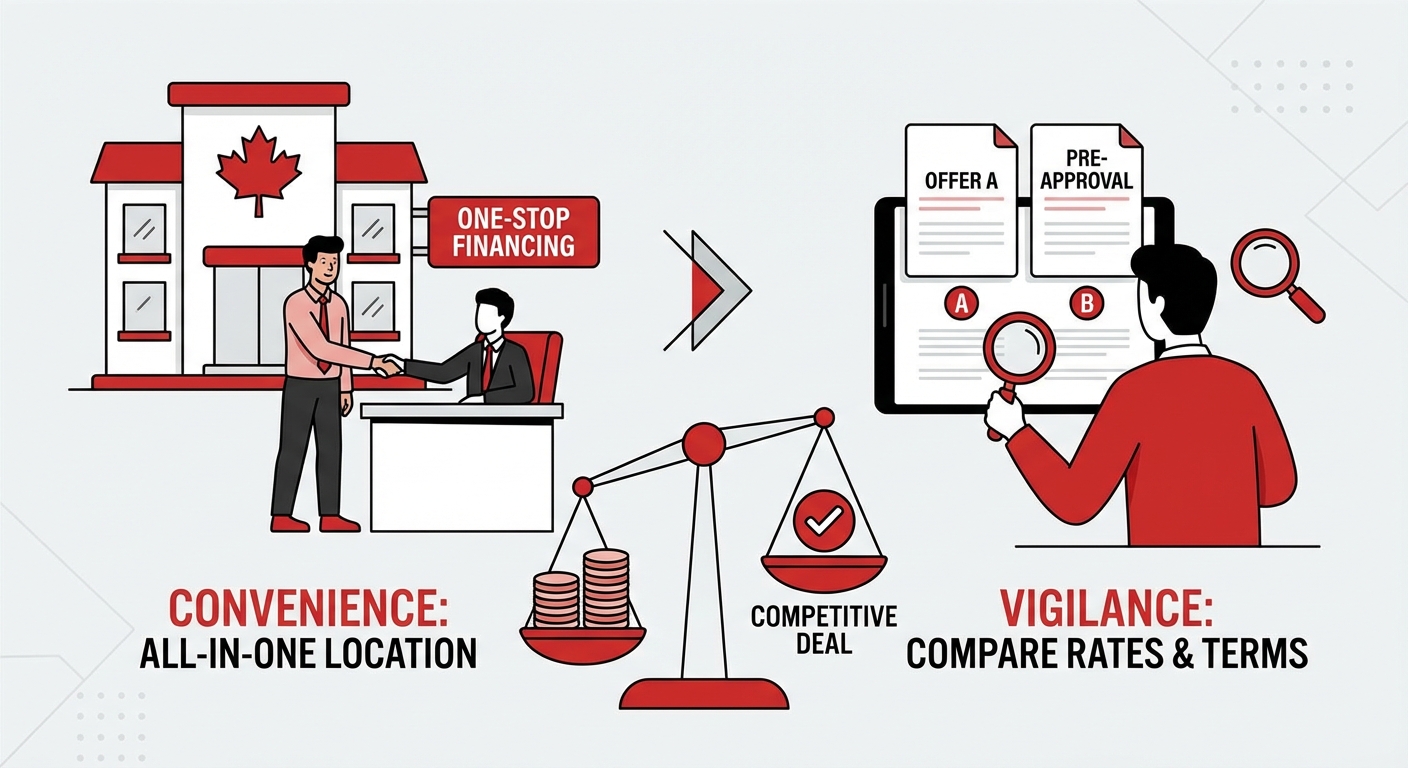
Many dealerships, like SkipCarDealer.com, have relationships with a wide network of lenders, including those specializing in non-traditional income. This can be a significant advantage. Dealership finance managers are often adept at packaging applications for self-employed individuals and know which lenders are most likely to approve them. The convenience of handling the entire process at one location is a major draw, but it's crucial to remain vigilant. Always compare their offered rates and terms with any pre-approvals you may have secured elsewhere to ensure you're getting a competitive deal.
Online Lenders & Fintech Platforms: Speed, Niche Solutions, and Potential Pitfalls
The digital age has brought a proliferation of online lenders and fintech platforms. Many of these leverage alternative data points and more sophisticated algorithms to assess creditworthiness, making them more accessible for self-employed individuals. They often boast quicker approval processes and may cater to niche markets. However, it's essential to exercise caution. Research reputable online lenders thoroughly, check reviews, and meticulously scrutinize their terms and conditions to avoid predatory practices or excessive fees.
Buy Here Pay Here (BHPH): The Last Resort (and Its True Cost)
Buy Here Pay Here (BHPH) dealerships are often touted as the solution for those with poor credit or no income verification. They finance the loan in-house, meaning the dealership is both the seller and the lender. While they offer a "no credit, no problem" approach, this convenience comes at a significant cost. BHPH loans typically carry extremely high interest rates (often at the maximum legal limit), restrictive terms, and may not report to credit bureaus, meaning you won't build credit history. They should generally be considered only as a last resort, after exhausting all other options, due to their potential to trap borrowers in a cycle of debt.
Crafting Your Application Story: Presenting Your Best Self to Lenders
Your application isn't just a collection of documents; it's your financial story. How you present it can make all the difference.
Organizing Your Documents: A Professional Presentation
A meticulously organized and complete documentation package speaks volumes about your professionalism and attention to detail. Create a clear checklist and gather all potential documents: bank statements, tax returns, contracts, invoices, and any letters from your accountant. Present them neatly, perhaps in a binder or a well-organized digital folder. Clarity and completeness demonstrate that you're a serious and responsible borrower.
Writing a Compelling Cover Letter: Your Personal Financial Narrative
Consider including a brief, professional cover letter with your application. This is your opportunity to humanize your financial situation and explain your business in your own words. In this letter, you should:
- Briefly introduce yourself and the nature of your self-employment.
- Explain your income stability and growth trajectory.
- Address any apparent fluctuations or unique aspects of your income.
- Clearly state why you are a reliable borrower, despite not having a traditional T4.
- Reiterate your commitment to timely payments.
Addressing Income Fluctuations: Honesty and Explanation
Self-employment often comes with income fluctuations – seasonal peaks and troughs, periods of rapid growth, or temporary dips due to market changes or client transitions. Transparency is key. Rather than trying to hide these, be prepared to explain them clearly and logically. For instance, if your income is seasonal, explain the annual cycle. If you've had a recent dip, explain the cause and how you've addressed it. If your business has just experienced significant growth, highlight that and provide supporting evidence. A clear, honest explanation with supporting documentation is always better than silence.
Beyond Approval: The Hidden Costs and Smart Negotiation Tactics
Getting approved is just the first step. Understanding the terms of your loan and negotiating effectively can save you thousands over the life of your car loan.
Understanding Interest Rates: Why Yours Might Be Different
As a self-employed individual, the perceived risk associated with your variable income can sometimes lead to higher interest rates compared to traditionally employed individuals with similar credit scores. Lenders factor in this additional risk. It's crucial to understand what constitutes a 'good' versus 'bad' rate for your specific situation. Shop around, get pre-approvals from multiple lenders, and compare the Annual Percentage Rate (APR) – which includes all fees – not just the advertised interest rate. Even a small difference in APR can translate to significant savings over a 5-7 year loan term.
Scrutinizing Loan Terms: Don't Just Look at the Monthly Payment
The monthly payment is important, but it's only one piece of the puzzle. You must deep dive into the entire loan agreement. Look at the:
- APR: The true cost of borrowing, including interest and fees.
- Loan Duration: Longer terms mean lower monthly payments but significantly higher total interest paid.
- Prepayment Penalties: Ensure you can pay off the loan early without penalty if your financial situation improves.
- Other Clauses: Read all the fine print regarding late fees, default terms, and any other conditions.
Avoiding Predatory Practices: Red Flags to Watch Out For
Unfortunately, some lenders or dealerships may prey on individuals with non-traditional income or challenging credit situations. Be wary of:
- Bait-and-Switch Tactics: An advertised rate that suddenly changes when you apply.
- Excessive Fees: Unexplained or unusually high administrative, origination, or documentation fees.
- Vague Terms: A refusal to clearly explain all aspects of the loan agreement.
- Pushy Sales Tactics: Pressure to sign immediately without time to review the contract.
If something feels off, trust your gut. It's always okay to walk away and seek other options. Your financial well-being is paramount.
The Truth About Dealer Add-Ons: Protecting Your Wallet
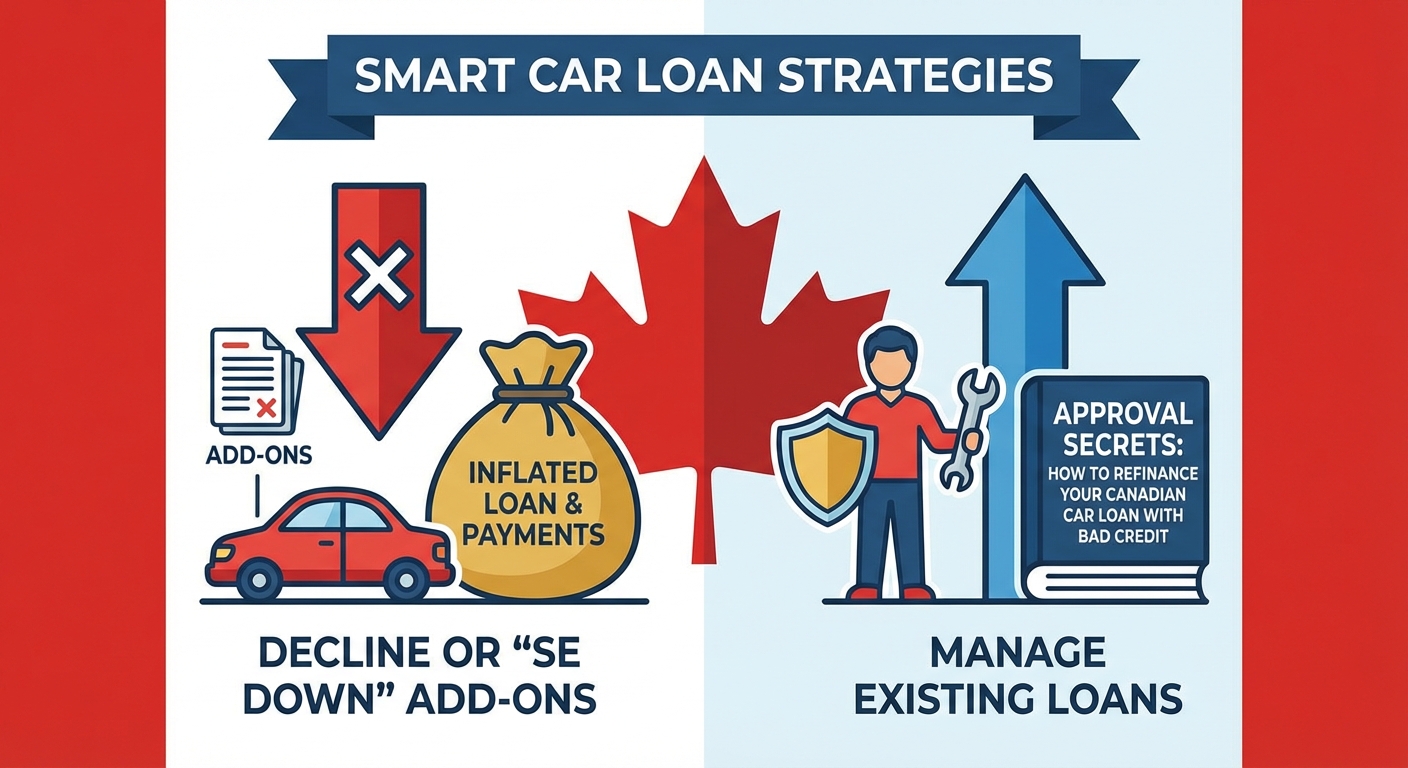
Dealerships often present various add-ons at the time of purchase, such as extended warranties, GAP insurance, etching, fabric protection, or rustproofing. While some of these might offer legitimate value, many are highly profitable for the dealership and may not be necessary or competitively priced. Evaluate each add-on carefully: do you truly need it? Can you get it cheaper elsewhere (e.g., GAP insurance from your own insurance provider)? Don't be afraid to negotiate these down or decline them entirely. They can significantly inflate your total loan amount and monthly payments. For strategies on managing existing car loans, consider reading Approval Secrets: How to Refinance Your Canadian Car Loan with Bad Credit.
Future-Proofing Your Finances: Building a Path to Better Loans
Securing your first car loan as a self-employed individual is a significant achievement. But it's also an opportunity to set yourself up for even better financial health and more favourable lending terms in the future.
Making Timely Payments: Your Best Investment in Future Credit
The single most impactful action you can take to improve your financial standing is to make every car loan payment on time, every single month. Your payment history is the most heavily weighted factor in your credit score. Consistent on-time payments will build a strong credit profile, demonstrate your reliability to all future lenders, and reduce the perceived risk associated with your self-employment. This investment in your credit today will pay dividends when you seek future loans, mortgages, or even better car loan terms.
Strategies for Refinancing: A Second Chance at Better Terms
If your initial car loan came with a higher interest rate due to your self-employment status or a less-than-perfect credit score, don't despair. After a year or two of consistent on-time payments and improved financial health, you may be in a prime position to refinance your loan. Refinancing allows you to secure a new loan with a lower interest rate or more favourable terms, potentially saving you a substantial amount of money over the remaining loan duration. Keep an eye on your credit score and market interest rates, and when the time is right, explore your refinancing options with various lenders.
Improving Your Financial Health as a Self-Employed Individual
Beyond the immediate goal of a car loan, focus on broader financial planning. Strive to separate your business and personal finances as much as possible, ideally with separate bank accounts. This creates clarity for you and for lenders. Build an emergency fund to cushion against income fluctuations. Consistently save and invest to strengthen your overall financial standing. The stronger your financial foundation, the easier it will be to secure any type of financing in the future.
Your Next Steps to Approval: A Self-Employed Car Buyer's Action Plan
Ready to get behind the wheel? Here’s a concise action plan to guide you through the process.
Step 1: Assess Your True Financial Picture
Before you approach any lender, take an honest look at your income, expenses, and credit score. Use a budget to understand your actual cash flow and how much you can comfortably afford for a car payment. Get a copy of your credit report from Equifax and TransUnion and note your scores.
Step 2: Gather and Organize Your 'Alternative' Proof
Assemble all your financial documents: 6-12 months of bank statements (personal and business, if separate), your last 2-3 years of tax returns (T1 General and T2125), active contracts, recent invoices, and any letters from your accountant. Organize them neatly and logically.