Variable Income Auto Loan 2026: Your Yes Starts Here.
Table of Contents
- Key Takeaways
- I. The Unpredictable Road Ahead: Securing Your Auto Loan with Fluctuating Earnings
- Why Variable Income Poses a Unique Challenge for Lenders
- The 'Yes Starts Here' Mindset: Turning Uncertainty into Opportunity
- II. Decoding Variable Income: Who Are We Talking About?
- Beyond the Pay Stub: Defining Freelancers, Gig Workers, Commission Earners, and Seasonal Professionals
- Understanding Your Income Patterns: The First Step to Loan Success
- III. Through the Lender's Looking Glass: What Financiers Really Assess
- Beyond Gross Income: The Critical Metrics of Stability and Repayment Capacity
- The Unseen Scorecard: Credit Health, Debt-to-Income, and Payment History
- IV. Crafting Your Financial Narrative: Demonstrating Reliability with Irregular Income
- The Power of Documentation: Tax Returns, Bank Statements, and Client Contracts as Your Allies
- Building a Consistent Financial Story: The 12-24 Month Income Trend Analysis
- V. Optimizing Your Financial Foundation: Pillars of Approval for Variable Earners
- Fortifying Your Credit Score: Strategies for Improvement and Maintenance
- Taming Your Debt-to-Income Ratio: Why Lower is Always Better
- The Advantage of a Down Payment: Reducing Risk and Loan Amounts
- Secured vs. Unsecured Auto Loans: Understanding the Differences and Implications
- VI. Navigating Loan Structures: Finding the Perfect Fit for Your Financial Flow
- Fixed vs. Variable Rates: A Deep Dive into Risk and Opportunity for Fluctuating Income
- Flexible Amortization and Payment Schedules: Beyond the Bi-Weekly Standard
- VII. The Application Journey: A Tailored Approach for Variable Income Borrowers
- Pre-Approval Power: Why It's Your Secret Weapon
- Gathering Your Arsenal: A Checklist of Essential Documents and Supporting Evidence
- The Art of Explanation: How to Confidently Present Your Income Story to Lenders
- VIII. Beyond Traditional Banks: Expanding Your Lending Horizons
- Credit Unions: Often More Flexible and Relationship-Focused
- Online Lenders and FinTech Platforms: Leveraging Data for Broader Access
- Dealership Financing vs. Direct Bank Loans: Weighing the Pros and Cons
- IX. Decoding the Fine Print: Unmasking Hidden Costs and Avoiding Pitfalls
- Interest Rate Traps: Understanding APR vs. Interest Rate
- Fees and Charges: What to Watch Out For in Your Loan Agreement
- The Allure of Long-Term Loans: Balancing Lower Payments with Higher Overall Costs
- Predatory Lending Practices: Red Flags to Immediately Avoid
- X. The 2026 Outlook: Future-Proofing Your Auto Loan Strategy
- Technology's Role: AI, Open Banking, and Alternative Credit Scoring Models
- Evolving Lender Attitudes: How the Gig Economy is Reshaping Loan Approvals
- Preparing for Future Economic Shifts: Building Financial Resilience
- XI. Your Next Steps to Approval: Negotiation, Closing, and Beyond
- Mastering the Negotiation Table: Securing Better Rates and Terms
- The Final Review: What to Double-Check Before Signing
- Post-Approval Management: Keeping Your Loan Healthy and Building Future Credit
- XII. Frequently Asked Questions (FAQ)
Navigating the world of auto loans can feel like a complex journey, especially when your income doesn't follow a predictable bi-weekly schedule. For the growing number of Canadians thriving in the gig economy, as freelancers, commission earners, or seasonal professionals, securing a car loan in 2026 might seem daunting. However, at SkipCarDealer.com, we believe that fluctuating earnings shouldn't put the brakes on your dreams of owning a reliable vehicle. Your variable income isn't a roadblock; it's just a different kind of path to approval, one that requires strategic preparation and the right lender. This comprehensive guide is designed to empower you with the knowledge and tools to confidently apply for an auto loan, ensuring your 'yes' starts here, even if your paycheque varies month to month.
Key Takeaways
- Proactive Documentation is Paramount: Gather 12-24 months of income statements, tax returns, and bank records to showcase consistency, not just peak earnings.
- Credit Health is Your Foundation: A strong credit score (650+ preferred) and a manageable debt-to-income ratio (below 40%) significantly boost your chances, even in Ontario.
- Strategic Lender Selection: Explore options beyond traditional banks, including credit unions and online platforms like SkipCarDealer.com, which may offer more flexibility for variable income.
- Understand Fixed vs. Variable Rates: Choose the loan structure that best aligns with your income flow and risk tolerance, with fixed rates often providing more stability.
- The Power of a Down Payment: A substantial down payment reduces lender risk, lowers your loan amount, and can secure better terms, even if you’re a gig worker. For more on this, check out our guide on Down Payment? We Prefer 'Empty Wallet' Car Loans for Gig Workers, Ontario.
- Future-Proof Your Application: Leverage emerging technologies like AI-driven credit assessments and be aware of evolving lender attitudes towards the gig economy in 2026.
I. The Unpredictable Road Ahead: Securing Your Auto Loan with Fluctuating Earnings
Securing an auto loan with variable income in Ontario, or anywhere in Canada, is entirely possible with the right approach. It means demonstrating a consistent ability to repay, despite the ebb and flow of your monthly earnings. The key is to present your financial story in a way that instills confidence in lenders, turning perceived risk into a clear opportunity.
Why Variable Income Poses a Unique Challenge for Lenders
Lenders, by nature, are risk-averse. Their primary concern is ensuring you can consistently make your monthly loan payments. For individuals with traditional, salaried employment, this assessment is straightforward: a regular pay stub offers clear proof of steady income. However, when income fluctuates due to freelancing, commissions, or seasonal work, lenders face a more complex puzzle. They see a potential for lean months where repayment might be difficult, increasing their exposure to default. This perceived inconsistency is why traditional banks often exercise more caution.
The 'Yes Starts Here' Mindset: Turning Uncertainty into Opportunity
Embrace a positive and proactive mindset. Your variable income isn't a barrier; it's a characteristic that requires a strategic approach. It's about preparedness, transparency, and demonstrating long-term financial stability, even if short-term numbers dance. By understanding the lender's perspective and presenting your financial narrative compellingly, you transform uncertainty into a clear path towards approval.
II. Decoding Variable Income: Who Are We Talking About?
Beyond the Pay Stub: Defining Freelancers, Gig Workers, Commission Earners, and Seasonal Professionals
Variable income isn't a monolith. It encompasses a broad spectrum of dynamic earning models. Are you a:
- Freelancer or Independent Contractor? Think graphic designers, writers, consultants, or IT specialists working project-to-project for various clients.
- Gig Worker? This includes ride-share drivers in Toronto or Vancouver, food delivery couriers, or those offering services through online platforms.
- Commission Earner? Sales professionals in real estate, automotive, or retail, whose income heavily depends on sales volume.
- Seasonal Professional? Landscapers, construction workers, tourism operators in British Columbia, or tax preparers who experience peak and trough periods throughout the year.
Each category has unique income patterns, but the common thread is the absence of a fixed, predictable salary.
Understanding Your Income Patterns: The First Step to Loan Success
Before you even think about applying, become an expert on your own income. This self-assessment is crucial. Analyze your financial history for at least the past 12-24 months. Identify your peak earning months and your slowest periods. Calculate your average monthly and annual income. Are there any predictable cycles or consistent trends? For instance, a construction worker in Calgary might see higher earnings in spring and summer, while a tax accountant in Montreal might peak during tax season. Knowing these patterns allows you to explain fluctuations confidently to lenders.
III. Through the Lender's Looking Glass: What Financiers Really Assess
Beyond Gross Income: The Critical Metrics of Stability and Repayment Capacity
Lenders don't just look at the top-line number on your income statement. They delve deeper to assess your true repayment capacity. They want to see:
- Consistent Cash Flow: Is money regularly coming into your accounts, even if the amounts vary?
- Discretionary Income: How much money do you have left after essential expenses? This indicates your buffer for loan payments.
- Ability to Meet Obligations During Lean Periods: Can you still afford your payments if your income drops to its historical low?
They are looking for a track record that suggests you can manage your finances responsibly, even when the income stream is less predictable.
The Unseen Scorecard: Credit Health, Debt-to-Income, and Payment History
These three pillars form the backbone of a lender's decision, often outweighing income consistency alone, especially for variable income earners. A strong performance here can compensate for income variability.
- Credit Health: Your credit score (e.g., Equifax, TransUnion) is a numerical representation of your creditworthiness. A higher score (generally 660+ for prime rates) indicates you are a lower risk.
- Debt-to-Income (DTI) Ratio: This is the percentage of your gross monthly income that goes towards debt payments. Lenders typically prefer a DTI below 40%, including the new car loan.
- Payment History: A clean record of on-time payments on all previous and current debts (credit cards, previous loans, mortgage) is paramount. It demonstrates reliability.
Pro Tip: Proactive Credit Monitoring Strategies
Don't wait until you apply to check your credit. Regularly monitor your credit report and score (at least annually) through services like Credit Karma or Equifax. Look for any errors and dispute them promptly. Understanding your credit profile before applying allows you to address weaknesses and present your best financial self to lenders. A strong credit score can be your secret weapon when your income fluctuates. For more insights into how your credit score can work for you, read our article: Your Low Credit Score *Earned* You a Hybrid Loan. Yes, in Ontario.
IV. Crafting Your Financial Narrative: Demonstrating Reliability with Irregular Income
The Power of Documentation: Tax Returns, Bank Statements, and Client Contracts as Your Allies
When you lack traditional pay stubs, your documentation becomes your voice. Prepare a comprehensive package:
- Tax Returns (Notice of Assessment - NOA): Provide at least the past two years (T1 General, T4A, T2125 Statement of Business or Professional Activities). These are gold standard, as they are verified by the CRA and show your true taxable income over a full year.
- Bank Statements: 12-24 months of personal and/or business bank statements. Lenders look for consistent deposits, evidence of client payments, and responsible money management.
- Client Contracts/Invoices: For freelancers, ongoing contracts or a portfolio of recent invoices can demonstrate current and future earning potential.
- Letters from Clients/Accountants: A letter from a long-term client confirming your ongoing engagement or a letter from your accountant summarizing your average income can be powerful.
Building a Consistent Financial Story: The 12-24 Month Income Trend Analysis
This is where you make your case for stability. Don't just dump documents on a lender. Organize them to tell a story. Highlight your average monthly income over the past one to two years. If there are dips, be ready to explain them positively (e.g., "I took a month off for a major project," or "This was a seasonal low, followed by a strong rebound"). Show growth over time if applicable. A well-organized trend analysis demonstrates your financial literacy and commitment.
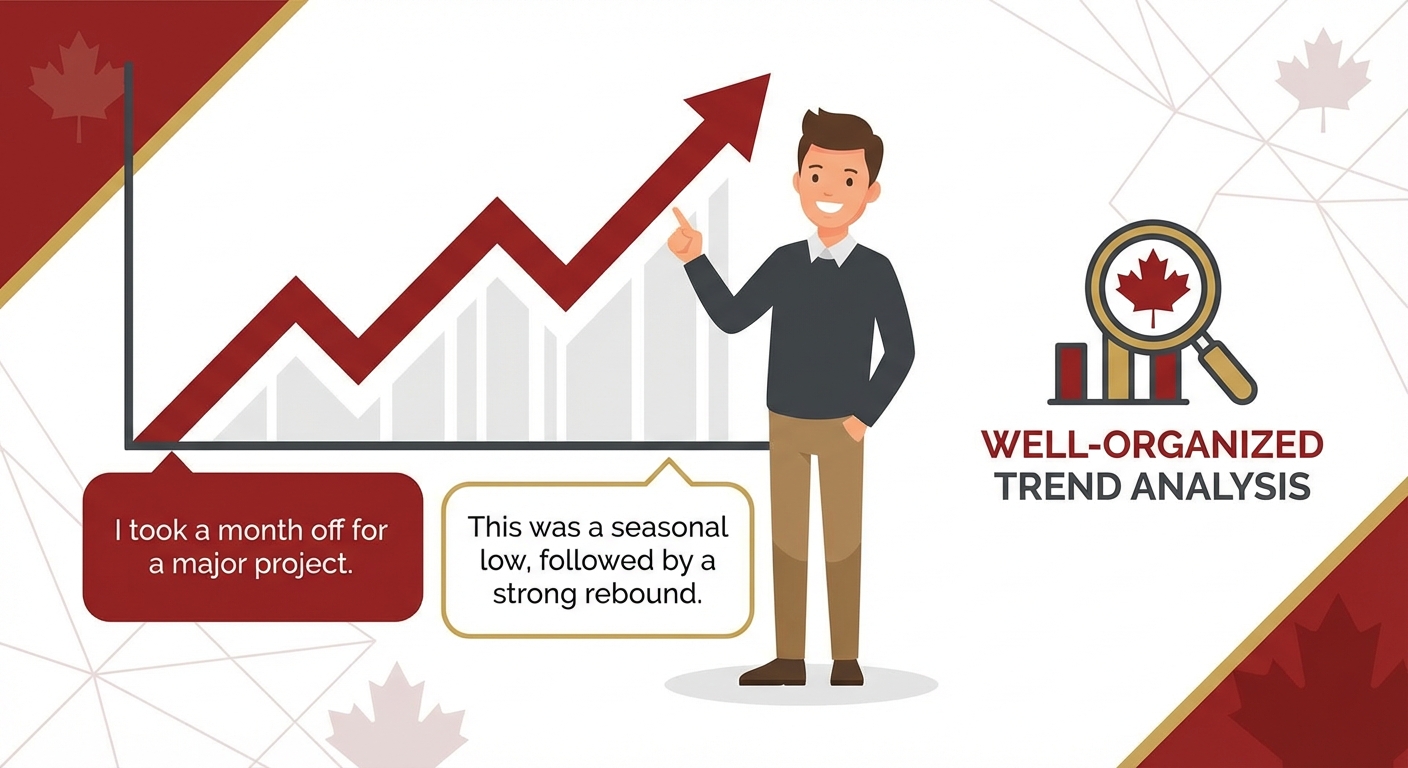 Context: A visual representation of income stability over time. This could be a line graph showing monthly income for 12-24 months, with annotations pointing out consistent average income despite monthly fluctuations, or highlighting upward trends and explaining dips due to specific projects/seasons. Title: 'Visualizing Your Income Journey: Demonstrating Stability to Lenders'.
V. Optimizing Your Financial Foundation: Pillars of Approval for Variable Earners
Fortifying Your Credit Score: Strategies for Improvement and Maintenance
A higher credit score can significantly offset the perceived risk of variable income. Here's how to boost it:
- Pay Bills On Time, Every Time: This is the single most important factor. Set up automatic payments.
- Reduce Credit Utilization: Keep your credit card balances below 30% of your available credit.
- Avoid New Debt: Don't open new credit accounts or take on significant new debt right before applying for an auto loan.
- Diversify Credit (Responsibly): A mix of credit (credit card, line of credit, small loan) can be beneficial, but only if managed well.
Taming Your Debt-to-Income Ratio: Why Lower is Always Better
Your DTI is calculated by dividing your total monthly debt payments (including the proposed car loan) by your gross monthly income. For variable income, lenders will often use an average of your income over 12-24 months. Aim for a DTI below 36%, ideally. Strategies to reduce it:
- Pay Down Existing Debts: Prioritize high-interest debts like credit card balances.
- Increase Income: While challenging in the short term, exploring additional gigs or projects can help.
- Consider a More Affordable Vehicle: A lower car payment directly reduces your DTI.
The Advantage of a Down Payment: Reducing Risk and Loan Amounts
A significant down payment is one of the most powerful tools for variable income earners. It signals financial responsibility and reduces the lender's risk significantly. Not only does it lower the total amount you need to borrow, but it also reduces your monthly payments and the total interest paid over the life of the loan. Aim for 10-20% of the vehicle's price, if possible. Even a smaller down payment can make a difference in Ontario.
Secured vs. Unsecured Auto Loans: Understanding the Differences and Implications
Most auto loans are secured loans, meaning the vehicle itself acts as collateral. If you default, the lender can repossess the car. This reduces risk for the lender, making them more willing to approve applicants, especially those with variable income. Unsecured loans (like personal loans) have no collateral and are generally harder to obtain for large amounts, especially with fluctuating income, and typically come with much higher interest rates. For auto financing, a secured loan is almost always the standard and most accessible option.
VI. Navigating Loan Structures: Finding the Perfect Fit for Your Financial Flow
Fixed vs. Variable Rates: A Deep Dive into Risk and Opportunity for Fluctuating Income
Choosing between a fixed and variable interest rate is a critical decision, especially with fluctuating income.
- Fixed Rate: Your interest rate and monthly payment remain constant for the entire loan term. This offers predictability and peace of mind, making budgeting much easier during lean months. For variable income earners, this stability often outweighs potential (but uncertain) savings from a variable rate.
- Variable Rate: Your interest rate can go up or down based on market conditions (e.g., prime rate + a margin). While you might benefit if rates drop, you face increased payments if rates rise. This introduces an element of risk that most variable income earners should carefully consider.
| Feature | Fixed Interest Rate (Example: 7.99%) | Variable Interest Rate (Example: Prime + 3.5% = 8.45% then 9.20%) |
|---|---|---|
| Monthly Payment Stability | Predictable & consistent | Fluctuates with market rates |
| Budgeting Ease | High, easy to plan for lean months | Low, requires more financial cushion |
| Risk Level | Low for borrower (no rate increase risk) | Higher for borrower (rate increase risk) |
| Potential Savings | None if market rates drop significantly | Possible if market rates drop |
| Best For | Variable income earners, risk-averse individuals | Stable income earners comfortable with risk, anticipating rate drops |
| Typical Rates (2026) | Prime: 6.99% - 8.99%; Subprime: 12.99% - 24.99% | Often slightly lower initial rate than fixed, but subject to change |
Flexible Amortization and Payment Schedules: Beyond the Bi-Weekly Standard
Don't assume a standard loan structure is your only option. Many lenders offer flexibility:
- Longer Amortization Periods: Loans up to 84 or even 96 months (7-8 years) can significantly lower your monthly payments. While this means paying more interest over time, it can provide crucial breathing room during slower income periods.
- Seasonal Payment Adjustments: Some specialized lenders (often credit unions or online platforms) may offer payment plans that align with your income cycle, allowing higher payments during peak season and lower during off-peak.
- Skip-a-Payment Options: While often incurring a fee or extending the loan term, having the option to skip a payment once or twice a year can be a lifeline during unexpected income dips.
Pro Tip: Stress-Testing Your Loan Payments Against Your Lowest Income Months
Before committing to any loan, calculate whether you can comfortably afford the monthly payment during your historically slowest income months. This isn't about your average income; it's about your absolute minimum. If the payment feels tight during your worst-case scenario, reconsider the vehicle price or loan terms. This realistic assessment prevents financial strain down the road.
VII. The Application Journey: A Tailored Approach for Variable Income Borrowers
Pre-Approval Power: Why It's Your Secret Weapon
Getting pre-approved for an auto loan before you step onto a dealership lot is incredibly beneficial, especially for variable income earners. It:
- Defines Your Budget: You know exactly how much you can afford, avoiding emotional overspending.
- Gives You Negotiation Leverage: With a pre-approval in hand, you're a cash buyer to the dealership, often leading to better vehicle pricing.
- Identifies Potential Issues Early: If a lender has concerns about your variable income, pre-approval brings these to light before you're deep into the car-buying process, allowing you time to address them.
Gathering Your Arsenal: A Checklist of Essential Documents and Supporting Evidence
Be over-prepared. Compile a folder (physical or digital) with:
- Government-issued ID (Driver's License)
- Proof of Residency (utility bill, lease agreement)
- Past 2-3 years of Tax Returns (T1 General, T4A, T2125)
- 12-24 months of Bank Statements (personal and/or business)
- Recent Client Contracts or Letters of Engagement
- Proof of any other income sources (e.g., rental income, disability benefits – for more on this, see Disability Income? Bad Credit? Your Car Loan Just Got Its Green Light, Toronto.)
- Balance sheet/income statement if you run a formal business
The Art of Explanation: How to Confidently Present Your Income Story to Lenders
Don't be shy about your variable income. Be proactive and confident. When speaking with a loan officer:
- Highlight Longevity: Emphasize how long you've been successfully working with variable income.
- Show Consistency: Point to your average income over the past year or two, rather than just the last month.
- Explain Fluctuations: If there's a significant dip, explain the reason (e.g., a planned vacation, a one-off project completion) and how you managed it.
- Stress Financial Management: Talk about your budgeting habits, emergency fund, and how you plan for slower periods.
VIII. Beyond Traditional Banks: Expanding Your Lending Horizons
Credit Unions: Often More Flexible and Relationship-Focused
Credit unions are member-owned financial institutions that often offer a more personalized approach. They may be more willing to look beyond rigid criteria and consider your individual circumstances, especially if you have an established banking relationship with them. Their underwriting can be more flexible, making them an excellent option for variable income borrowers in Ontario.
Online Lenders and FinTech Platforms: Leveraging Data for Broader Access
Digital lenders like SkipCarDealer.com utilize advanced algorithms and alternative data points to assess risk. This can sometimes lead to more approvals for non-traditional income profiles, as they might weigh factors beyond just a credit score and consistent pay stubs. They often offer a streamlined application process and quick decisions, which is convenient for busy gig workers in Vancouver or Montreal.
Dealership Financing vs. Direct Bank Loans: Weighing the Pros and Cons
- Dealership Financing: Offers convenience, as you can sort out the loan and the car purchase in one place. Dealerships work with a network of lenders, sometimes including those more open to variable income. However, they might add a markup to the interest rate.
- Direct Bank Loans: Applying directly to banks or credit unions often allows you to shop for the best rate independently. You have more control and transparency over the loan terms. However, traditional banks can be more rigid with variable income applicants.
| Factor | Dealership Financing | Direct Bank/Credit Union Loan |
|---|---|---|
| Convenience | High (one-stop shop) | Moderate (separate application process) |
| Rate Flexibility | Varies; potential for markup | Often more competitive, direct rates |
| Underwriting Flexibility | Good, especially with specialized lenders | Can be rigid for variable income (traditional banks) |
| Speed of Approval | Often very fast | Can be fast, but may require more documentation |
| Best For | Buyers prioritizing ease, those with complex situations | Buyers prioritizing lowest rate, pre-approval, strong financial profile |
Pro Tip: The Benefits of Co-Signing (and its responsibilities)
If you're facing challenges due to variable income or a weaker credit profile, a co-signer can dramatically improve your approval odds and loan terms. A co-signer with strong credit and stable income adds their creditworthiness to your application, reducing the lender's risk. However, understand that a co-signer is equally responsible for the loan. If you miss payments, it impacts their credit, and they are legally obligated to repay the debt.
IX. Decoding the Fine Print: Unmasking Hidden Costs and Avoiding Pitfalls
Interest Rate Traps: Understanding APR vs. Interest Rate
Don't be fooled by an advertised interest rate alone. The Annual Percentage Rate (APR) is the true cost of borrowing. It includes the interest rate plus any additional fees, like origination fees, documentation fees, or certain insurance costs. Always compare APRs, not just interest rates, to get an accurate picture of the total cost of your loan in 2026.
Fees and Charges: What to Watch Out For in Your Loan Agreement
Scrutinize your loan agreement for these common fees:
- Origination Fee: A fee for processing the loan.
- Documentation Fee: For preparing the loan paperwork.
- Late Payment Fees: Penalties for missed or late payments.
- Prepayment Penalties: Less common now, but some loans may charge you for paying off your loan early.
- Lien Registration Fees: For registering the lender's claim on the vehicle.
Always ask for a clear breakdown of all fees before you sign.
The Allure of Long-Term Loans: Balancing Lower Payments with Higher Overall Costs
While a 96-month (8-year) loan might offer appealingly low monthly payments, it comes with a significant trade-off: you'll pay substantially more in interest over the life of the loan. For example, a $30,000 loan at 8% interest:
| Loan Term | Estimated Monthly Payment | Total Interest Paid | Total Cost |
|---|---|---|---|
| 60 Months (5 Years) | $608 | $6,477 | $36,477 |
| 84 Months (7 Years) | $464 | $8,973 | $38,973 |
| 96 Months (8 Years) | $410 | $10,344 | $40,344 |
As you can see, the longer the term, the more you pay in total. Balance affordability with the overall financial burden.
Predatory Lending Practices: Red Flags to Immediately Avoid
Be vigilant. Avoid lenders who:
- Guarantee approval without checking your credit or income.
- Pressure you into signing immediately.
- Offer excessively high interest rates (e.g., 30%+ for non-subprime loans).
- Charge exorbitant upfront fees.
- Don't provide clear, written loan terms.
If something feels off, walk away. There are reputable lenders, like SkipCarDealer.com, who want to help you.
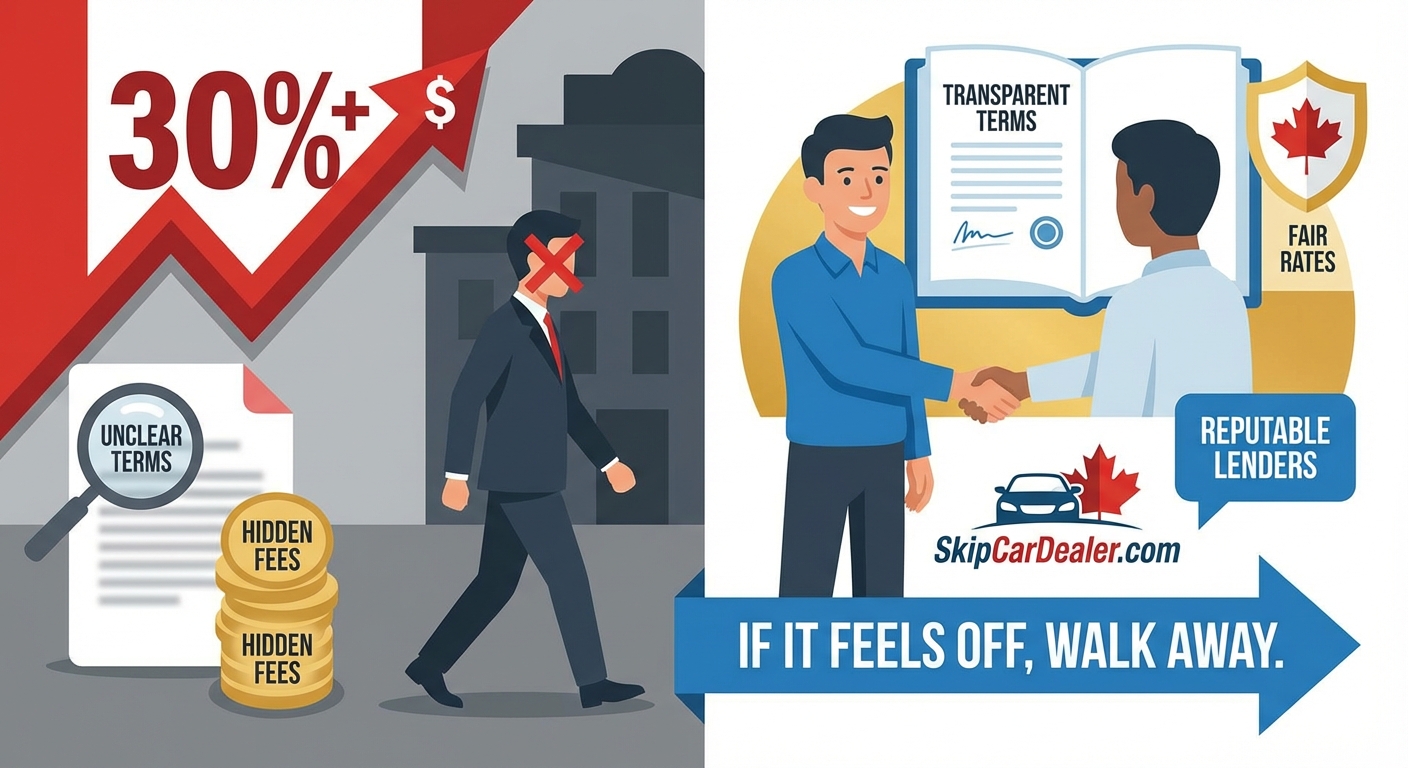 Context: An infographic illustrating common auto loan fees or a comparison of APR vs. interest rate. It could visually break down the components of an APR, showing how fees contribute to the overall cost, or compare a simple interest rate to an APR with added fees. Title: 'Beyond the Rate: Unpacking the True Cost of Your Auto Loan'.
X. The 2026 Outlook: Future-Proofing Your Auto Loan Strategy
Technology's Role: AI, Open Banking, and Alternative Credit Scoring Models
The lending landscape in 2026 is rapidly evolving. AI and machine learning are allowing lenders to process vast amounts of data, leading to more nuanced risk assessments. Open Banking initiatives could enable secure sharing of financial data (with your consent), giving lenders a more holistic view of your financial health, including consistent cash flow from variable income. Alternative credit scoring models are emerging, which might consider factors beyond traditional credit reports, potentially benefiting those in the gig economy in Toronto or Calgary.
Evolving Lender Attitudes: How the Gig Economy is Reshaping Loan Approvals
Financial institutions are increasingly recognizing the permanence and economic contribution of the gig economy. This shift is leading to more tailored products and a greater understanding of non-traditional employment. While traditional lenders might still lag, specialized online lenders and credit unions are adapting more quickly, developing underwriting processes that better accommodate variable income patterns. This is good news for you!
Preparing for Future Economic Shifts: Building Financial Resilience
Regardless of your income type, building financial resilience is key. Maintain an emergency fund (3-6 months of living expenses), keep your credit in good standing, and regularly review your budget. This preparation not only makes you a more attractive borrower in 2026 but also ensures you can weather any personal income fluctuations or broader economic downturns, keeping your car loan healthy.
XI. Your Next Steps to Approval: Negotiation, Closing, and Beyond
Mastering the Negotiation Table: Securing Better Rates and Terms
Don't be afraid to negotiate. Leverage any pre-approval offers you have. Inquire about lower interest rates, reduced fees, or more flexible payment terms. Be prepared to walk away if the offer isn't right. Lenders and dealerships have room to move, especially on interest rates, so always ask for their best offer. Remember, your strong documentation and financial story are your best negotiation tools. Also, consider the value of your trade-in as a negotiation chip; it can significantly impact your loan amount and terms. Learn more about this here: Your Trade-In Is Your Credit Score. Seriously. Ontario.
The Final Review: What to Double-Check Before Signing
Before you sign on the dotted line, meticulously review the entire loan agreement:
- Interest Rate & APR: Confirm they match what was discussed.
- Loan Term: Ensure the number of months is correct.
- Monthly Payment: Verify the exact payment amount.
- Total Loan Amount: Check for any unexpected additions.
- All Fees: Confirm all fees are disclosed and understood.
- Prepayment Penalties: Ensure there are none if you plan to pay early.
- Insurance Requirements: Understand any mandatory insurance.
If anything is unclear, ask for clarification. Don't rush this final step.
Post-Approval Management: Keeping Your Loan Healthy and Building Future Credit
Once approved, your journey continues. Make every payment on time. Consider setting up automatic payments to avoid missing a due date. This responsible loan management is crucial for:
- Maintaining a Healthy Credit Score: On-time payments are paramount.
- Building a Stronger Credit Profile: A successfully paid-off auto loan significantly boosts your credit history, opening doors to better rates for future loans (mortgages, lines of credit).
- Avoiding Penalties: Late payments incur fees and can impact your credit.
Pro Tip: Refinancing Opportunities for Improved Terms
Even if you secure a loan with less-than-ideal terms initially, your situation can improve. As you consistently make payments and your credit score improves (or if market interest rates drop), you might qualify for refinancing. Monitor rates and your credit profile regularly. Refinancing can lead to a lower interest rate, a reduced monthly payment, or a shorter loan term, saving you significant money over time.