Banks Need Pay Stubs. We Need Your Drive. Gig Worker Car Loans.
Table of Contents
- Key Takeaways: Your Fast Track to Gig Worker Car Loan Approval
- The Gig Economy Paradox: Why Banks See Stubs, But We See Drive
- Beyond the Pay Stub: Unlocking Your Income Story for Lenders
- Your Bank Statements: The New Pay Stub – How to Prove Consistency
- Tax Returns: Your Annual Income Affidavit – Leveraging Schedule C (or equivalent)
- Platform Earnings Reports: Direct from the Source – Uber, Lyft, DoorDash, Upwork, Fiverr
- Personal Financial Statements: Painting a Clearer Picture – For Complex Income Streams
- The Gig Worker's Financial Blueprint: What Lenders *Really* Analyze Beyond Income
- Credit Score: Your Financial Reputation – Why it Matters More for Gig Workers
- Debt-to-Income (DTI) Ratio: The Hidden Hurdle – How to Calculate and Present it Favorably
- Down Payment Power: The Ultimate Trust Signal – Why More Cash Upfront Changes Everything
- Assets and Collateral: Strengthening Your Hand – What Else Can You Bring to the Table?
- Navigating the Lender Landscape: Who's Truly Equipped for Your Drive?
- Traditional Banks: The Hard Sell (and How to Break Through)
- Credit Unions: Your Community Ally? – Flexibility and Relationship-Based Lending
- Specialized Online Lenders: Built for the Modern Workforce – Finding Niche Solutions
- Dealership Financing: Convenience vs. Cost – The Pros and Cons of One-Stop Shopping
- Crafting Your Application: The Art of the Gig Worker Loan Portfolio
- The Essential Document Checklist: No Stone Unturned – What to Gather Before You Apply
- Writing Your Financial Narrative: Explaining Income Fluctuations – Proactive Communication
- The Power of the Co-Signer: When a Helping Hand Makes All the Difference
- Decoding the Numbers: Rates, Terms, and the True Cost of Your Gig Worker Loan
- Understanding APR: More Than Just the Interest Rate – The Real Cost
- Loan Terms: Short vs. Long – Finding Your Sweet Spot for Monthly Payments and Total Cost
- Hidden Fees and Charges: Unmasking the Sneaky Surprises – What to Watch For
- Pre-Approval vs. Full Approval: Knowing the Difference and Leveraging Pre-Approval
- Smart Car Choices for the Savvy Gig Worker: Matching Wheels to Your Work
- Budgeting Realistically: What Can You Truly Afford Beyond the Monthly Payment?
- New vs. Used: The Gig Worker's Dilemma – Pros and Cons for Different Income Stability Levels
- Fuel Efficiency and Maintenance: Your Operational Costs – Critical for Profitability
- Resale Value and Depreciation: Thinking Long-Term – Impact on Future Flexibility
- Bumps in the Road? Strategies for Less-Than-Perfect Credit as a Gig Worker
- Credit Repair Basics: Laying the Foundation for Future Loans – Quick Wins and Long-Term Goals
- Secured Loans: Leveraging Assets for Approval – When This Might Be an Option
- Subprime Lenders: A Last Resort or a Stepping Stone? – Understanding Higher Costs and Risks
The Canadian gig economy is booming. From rideshare drivers navigating bustling city streets to freelance designers crafting digital masterpieces from their home offices, more and more Canadians are embracing the flexibility and autonomy of self-employment. You’re building your own path, setting your own hours, and defining your own success. But when it comes to a crucial asset like a car – often the very tool that makes your gig work possible – traditional financial institutions often throw up a roadblock: the dreaded pay stub.
At SkipCarDealer.com, we understand that your drive isn't measured in bi-weekly paycheques. It’s measured in hustle, in consistent effort, and in the tangible income you generate, even if it doesn't fit neatly into a bank's archaic boxes. We see your potential, your proven income, and your commitment to your craft. That's why we specialize in helping gig workers like you secure the car loan you need, turning your "impossible" into your "daily commute."
Key Takeaways: Your Fast Track to Gig Worker Car Loan Approval
- Bank Statements are Your New Pay Stub: Consistent deposits over 6-12 months can powerfully demonstrate your income stability.
- Leverage All Your Documents: Tax returns (T2125), platform earnings reports (Uber, DoorDash, Upwork), and even personal financial statements paint a complete picture.
- Credit Score is Crucial: A strong credit history becomes even more vital when income proof is non-traditional. Understand it, and work to improve it.
- Down Payment Power: A significant down payment signals commitment and reduces lender risk, substantially boosting your approval odds.
- Choose the Right Lender: Traditional banks might be a challenge; specialized online lenders and credit unions often offer more flexible solutions tailored for gig workers.
The Gig Economy Paradox: Why Banks See Stubs, But We See Drive
You're an innovator, a self-starter, a vital part of Canada's evolving economy. You drive for Uber, deliver for DoorDash, design on Fiverr, or code on Upwork. Your income is real, it's consistent for you, and it supports your life. Yet, when you walk into a traditional bank for a car loan, you're often met with blank stares or outright rejection because you don't have a traditional employer-issued pay stub.
This is the gig economy paradox. Banks are designed for a 20th-century workforce, where stable, salaried employment was the norm. Their algorithms and lending criteria are built around predictable, W-2 (or T4 in Canada) income. They look for direct deposits from a single employer, regular deductions, and a clear, unchanging income figure. Your dynamic, often multi-stream income, while perfectly legitimate and often substantial, simply doesn't fit their mould.
At SkipCarDealer.com, our perspective is different. We understand that your income might fluctuate from month to month, but your ability to generate income is constant. We don't just see a lack of pay stubs; we see your entrepreneurial spirit, your resilience, and your proven track record of earning. We focus on your 'drive' – not just your ambition, but your actual earning power, demonstrated through alternative documentation that tells your unique financial story. We bridge the gap between your modern income reality and the financing you need to keep moving forward.

Beyond the Pay Stub: Unlocking Your Income Story for Lenders
The good news is that "without traditional income proof" doesn't mean "without income proof." It simply means you need to present your financial story in a way that modern lenders, like those we partner with, can understand and trust. This requires a bit more preparation, but it's entirely achievable.
Your Bank Statements: The New Pay Stub – How to Prove Consistency
For gig workers, your bank statements are arguably the most powerful tool for demonstrating income. They provide a transparent, month-by-month record of your earnings and spending. Lenders look for consistency in deposits, not necessarily perfectly identical amounts, but a clear pattern that shows you're regularly generating income. Aim to provide 6 to 12 months of statements. This allows lenders to see past temporary dips and understand your average earning potential.
When reviewing your statements, lenders will assess:
- Regular Deposits: Are funds consistently entering your account from your gig work?
- Average Income: What is your monthly average income over the period?
- Spending Habits: Do your expenditures align with your income, indicating responsible financial management?
- Account Health: Are there frequent overdrafts or insufficient funds charges? (Avoid these if possible!)
For more on how your bank statements can serve as income proof, you might find our article Self-Employed? Your Bank Statement is Our 'Income Proof'. particularly helpful.
Tax Returns: Your Annual Income Affidavit – Leveraging Schedule C (or equivalent)
Your annual tax returns, specifically the T2125 Statement of Business or Professional Activities (the Canadian equivalent of the US Schedule C), are official government-verified documents of your self-employment income and expenses. These are gold for lenders, especially if you have several years of consistent filings. They provide a comprehensive overview of your gross income, business expenses, and net profit.
Providing at least two years of T2125s can demonstrate a long-term, stable income trend, which significantly boosts a lender's confidence. Even if your net income fluctuates, the gross income and the consistent filing itself show you're a legitimate, ongoing business entity.
Platform Earnings Reports: Direct from the Source – Uber, Lyft, DoorDash, Upwork, Fiverr
Many major gig platforms provide detailed earnings reports directly through their apps or web portals. These are highly credible as they come directly from the source of your income. For example, an Uber Driver Car Loan: Your Phone *Is* Your Pay Stub. This is particularly relevant for those in the rideshare or delivery sector. These reports typically show gross earnings, transaction details, and sometimes even specific hours worked or tasks completed.
Gathering reports from all platforms you work on (e.g., Uber, SkipTheDishes, Freelancer, etc.) can create a strong, multi-faceted picture of your total earnings. Lenders will appreciate the transparency and the direct verification these reports offer.
Personal Financial Statements: Painting a Clearer Picture – For Complex Income Streams
If your income streams are particularly diverse, or if you have significant assets and liabilities that aren't immediately obvious from bank statements, a personal financial statement can be invaluable. This is a document you compile (or have an accountant help with) that lists all your assets (cash, investments, property, vehicles) and liabilities (debts, mortgages, loans), along with your income and expenses. It provides a holistic view of your financial health and net worth, which can be particularly compelling for lenders, especially for larger loan amounts or if your credit history is less than perfect.
Pro Tip: Separate Business and Personal Accounts. Keeping your gig income and expenses in a dedicated bank account simplifies income verification and demonstrates financial organization to lenders. It makes it much easier to track your business revenue and expenses, which in turn makes your bank statements a clearer and more credible form of income proof.
The Gig Worker's Financial Blueprint: What Lenders *Really* Analyze Beyond Income
While income proof is paramount, it's only one piece of the puzzle. Lenders assess your overall financial health to determine your creditworthiness. For gig workers, these other factors often carry even more weight due to the non-traditional nature of your income.
Credit Score: Your Financial Reputation – Why it Matters More for Gig Workers
Your credit score is a numerical representation of your financial reliability. It tells lenders how responsibly you've managed debt in the past. For gig workers, a strong credit score becomes even more critical because it acts as a significant trust signal. When your income doesn't fit a traditional mould, a high credit score reassures lenders that you are a low-risk borrower who consistently pays obligations on time. If you're concerned about your credit, our guide No Credit? Great. We're Not Your Bank. offers valuable insights into alternative approval paths.
Strategies to understand and improve your credit score:
- Regularly check your credit report for errors.
- Pay all bills on time, every time.
- Keep credit utilization low (ideally below 30% of your available credit).
- Avoid opening too many new credit accounts simultaneously.
Debt-to-Income (DTI) Ratio: The Hidden Hurdle – How to Calculate and Present it Favorably
Your Debt-to-Income (DTI) ratio is the percentage of your gross monthly income that goes towards paying your monthly debt obligations. Lenders use this to gauge your ability to take on new debt. For gig workers, accurately calculating your DTI is crucial, as your 'gross income' might be your total deposits before expenses. Be ready to present your net income after business expenses for a more accurate picture if your lender requests it, or to explain the difference.
To calculate your DTI:
- Add up all your monthly debt payments (car loans, credit card minimums, student loans, mortgage/rent).
- Divide that sum by your average gross monthly income (from bank statements, tax returns, platform reports).
- Multiply by 100 to get a percentage.
Lenders generally prefer a DTI below 36%, though some may go higher depending on other factors. Managing existing debts by paying them down can significantly improve your DTI, making you a more attractive borrower.
Down Payment Power: The Ultimate Trust Signal – Why More Cash Upfront Changes Everything
A substantial down payment is one of the most effective ways for a gig worker to strengthen a car loan application. It demonstrates financial responsibility, reduces the loan amount, and signals to the lender that you are committed to the purchase. A larger down payment also reduces the lender's risk, as they have less money to lose if you default. For gig workers, a down payment of 10-20% or more can often overcome challenges related to non-traditional income or a less-than-perfect credit score.
Assets and Collateral: Strengthening Your Hand – What Else Can You Bring to the Table?
Beyond a down payment, other assets can bolster your application. Significant savings, investments, or even equity in real estate (though not typically used as direct collateral for a car loan) can indicate overall financial stability and responsibility. While these might not be directly pledged, they paint a picture of a financially secure individual, making you a more appealing borrower. Even if you're not using them as collateral, simply having these assets can improve a lender's perception of your ability to repay.
Pro Tip: Build a Strong Financial Buffer. Lenders appreciate seeing a healthy savings account, as it signals financial responsibility and the ability to weather income fluctuations, making you a less risky borrower. Aim for at least 3-6 months of living expenses in an accessible savings account.
Navigating the Lender Landscape: Who's Truly Equipped for Your Drive?
Not all lenders are created equal, especially when it comes to financing for gig workers. Understanding where to look can save you time, frustration, and potentially secure you better terms.
Traditional Banks: The Hard Sell (and How to Break Through)
Large, traditional banks often have the most rigid lending criteria. They prefer the simplicity of T4 income and may struggle to process complex gig worker applications. Breaking through requires impeccable documentation (as detailed above), a strong credit score, and potentially a significant down payment. If you have a long-standing relationship with a bank, they might be more flexible, but be prepared for a thorough and sometimes lengthy process.
Credit Unions: Your Community Ally? – Flexibility and Relationship-Based Lending
Credit unions are member-owned financial institutions known for their more personalized service and community focus. They often have more flexible lending criteria than big banks and may be more willing to consider your unique circumstances as a gig worker. Building a relationship with a local credit union can be beneficial, as they might be more inclined to look beyond strict algorithms and consider your overall financial picture and character.
Specialized Online Lenders: Built for the Modern Workforce – Finding Niche Solutions
This is where SkipCarDealer.com truly shines. Specialized online lenders, and platforms like ours that partner with them, are often the best bet for gig workers. These lenders are designed for the modern workforce. They use alternative data points, sophisticated algorithms, and a deeper understanding of the gig economy to assess creditworthiness. They are more accustomed to evaluating bank statements, platform earnings reports, and tax returns as primary income proof. Their processes are often faster and more streamlined than traditional institutions.
Dealership Financing: Convenience vs. Cost – The Pros and Cons of One-Stop Shopping
Many dealerships offer in-house financing or work with a network of lenders. This can be convenient, allowing you to handle the car purchase and financing in one place. However, it's crucial to compare these offers with external financing options. Dealerships might sometimes offer less favourable terms or higher interest rates, especially if they know you're struggling to get approved elsewhere. Always shop around and get pre-approved elsewhere before committing to dealership financing.
Pro Tip: Shop Around Aggressively for Rates. Don't settle for the first offer. Get quotes from at least 3-5 different lenders (banks, credit unions, online lenders) within a short timeframe (e.g., 14-30 days) to minimize impact on your credit score and secure the best terms. This competitive shopping can save you thousands over the life of the loan.
Crafting Your Application: The Art of the Gig Worker Loan Portfolio
Your application isn't just a form; it's your financial narrative. For gig workers, presenting a compelling and comprehensive application is an art form that significantly increases your chances of approval.
The Essential Document Checklist: No Stone Unturned – What to Gather Before You Apply
Being prepared is key. Before you even start applying, gather everything you might need. This proactive approach shows lenders you are organized and serious. Here's a comprehensive list:
- Identification: Valid Canadian driver's license, proof of residency.
- Proof of Income:
- 6-12 months of bank statements (personal and/or business).
- Last 2-3 years of filed tax returns (T1 General and T2125 Statement of Business or Professional Activities).
- Official earnings reports from gig platforms (Uber, DoorDash, SkipTheDishes, Upwork, Fiverr, etc.) for the last 6-12 months.
- Invoices or contracts for freelance work.
- Proof of Residence: Utility bill, rental agreement, or mortgage statement.
- Proof of Existing Debts: Statements for credit cards, student loans, other car loans.
- Down Payment Proof: Bank statement showing available funds.
- Personal References: Sometimes requested, especially for those with limited credit history.
Writing Your Financial Narrative: Explaining Income Fluctuations – Proactive Communication
It's common for gig income to fluctuate. Don't hide it; explain it. Prepare a brief, clear statement that addresses any significant dips or spikes in your income. For example, you might explain a seasonal slowdown, a period of illness, or a strategic decision to take on fewer gigs while focusing on a larger project. Proactive communication demonstrates financial awareness and transparency, building trust with the lender.
Be ready to discuss:
- Average monthly income over the past year.
- Reasons for any significant income variations.
- Your strategies for managing fluctuating income (e.g., savings buffer).
The Power of the Co-Signer: When a Helping Hand Makes All the Difference
If you're finding it difficult to get approved on your own, or if the interest rates are too high, a co-signer can be a game-changer. A co-signer, typically a family member or close friend with strong credit and stable income, agrees to be equally responsible for the loan. This reduces the lender's risk significantly, often leading to approval and better loan terms. Ensure both you and your co-signer understand the responsibilities involved before proceeding.
Pro Tip: Be Transparent and Proactive with Information. Don't wait for lenders to ask. Present a clear, organized 'financial portfolio' upfront, anticipating their questions about your income stability and financial health. This level of preparedness makes a strong impression.
Decoding the Numbers: Rates, Terms, and the True Cost of Your Gig Worker Loan
Understanding the financial specifics of your car loan is crucial. It's not just about the monthly payment; it's about the total cost and how it impacts your long-term financial health as a gig worker.
Understanding APR: More Than Just the Interest Rate – The Real Cost
The Annual Percentage Rate (APR) is the true annual cost of borrowing money. It includes not only the interest rate but also any additional fees or charges associated with the loan, expressed as a percentage. Always compare APRs, not just interest rates, when shopping for a loan. A lower interest rate might look appealing, but if it comes with high origination fees, the APR could be higher than a loan with a slightly higher interest rate but no fees.
Loan Terms: Short vs. Long – Finding Your Sweet Spot for Monthly Payments and Total Cost
The loan term is the length of time you have to repay the loan. Common terms range from 36 to 84 months. Here's a quick comparison:
| Loan Term | Monthly Payment | Total Interest Paid | Pros for Gig Workers | Cons for Gig Workers |
|---|---|---|---|---|
| Shorter (e.g., 36-48 months) | Higher | Lower | Pay off faster, less total interest, quicker equity build-up. | Higher monthly payments can strain fluctuating income. |
| Longer (e.g., 60-84 months) | Lower | Higher | More affordable monthly payments, easier on cash flow. | Pay more interest over time, slower equity build-up, risk of negative equity. |
For gig workers, longer terms might offer more comfortable monthly payments during leaner months, but weigh this against the increased total cost of interest. Find a balance that fits your income stability and budget.
Hidden Fees and Charges: Unmasking the Sneaky Surprises – What to Watch For
Always scrutinize your loan agreement for hidden fees that can inflate the total cost. Common fees include:
- Origination Fees: A charge for processing the loan.
- Documentation Fees: For preparing paperwork.
- Pre-Payment Penalties: A fee for paying off your loan early.
- Late Payment Fees: For missed or delayed payments.
Ask for a full breakdown of all fees before signing anything.
Pre-Approval vs. Full Approval: Knowing the Difference and Leveraging Pre-Approval
Pre-approval is when a lender gives you an estimate of how much you can borrow, at what rate, based on a preliminary review of your credit and stated income. It's not a final offer, but it gives you significant bargaining power at the dealership. Full approval is the final commitment after all documentation has been verified.
Obtaining pre-approval as a gig worker is highly recommended. It allows you to shop for a car with a clear budget in mind, negotiate prices like a cash buyer, and avoid the pressure of dealership finance offices. It also helps you compare rates from different lenders effectively.
Pro Tip: Always Read the Fine Print, Especially for Early Repayment Penalties. Some lenders penalize you for paying off your loan early. Understand all terms before signing, as your gig income might allow you to pay more than the minimum some months, and you don't want to be penalized for being financially responsible.
Smart Car Choices for the Savvy Gig Worker: Matching Wheels to Your Work
Your car is more than just transportation; it's an essential business tool. Making a smart vehicle choice is paramount for a gig worker's profitability and financial stability.
Budgeting Realistically: What Can You Truly Afford Beyond the Monthly Payment?
When budgeting for a car, look beyond just the monthly loan payment. Consider the total cost of ownership, which includes:
- Insurance: Often higher for rideshare or delivery drivers.
- Fuel: A major ongoing expense for high-mileage gig work.
- Maintenance and Repairs: Regular servicing is crucial for reliability.
- Tires: Will wear out faster with increased driving.
- Depreciation: The loss of value over time.
As a gig worker, your income can fluctuate, so building these costs into your budget with a buffer is essential for sustainable car ownership.
New vs. Used: The Gig Worker's Dilemma – Pros and Cons for Different Income Stability Levels
The choice between a new and used car carries different implications for gig workers:
| Factor | New Car | Used Car |
|---|---|---|
| Initial Cost | Higher | Lower |
| Depreciation | Faster in first few years | Slower rate after initial drop |
| Reliability | Generally higher, warranty coverage | Varies, can be excellent with proper inspection |
| Insurance | Potentially higher | Potentially lower |
| Maintenance | Lower initial, covered by warranty | Potentially higher, especially for older models |
| Financing | Often better rates (if qualified) | Rates can be higher, depending on age/mileage |
| Best for Gig Workers with: | Very stable, higher income; desire for latest tech/safety. | Fluctuating income, budget-conscious, focus on practicality. |
Fuel Efficiency and Maintenance: Your Operational Costs – Critical for Profitability
For many gig workers, your car is your primary income generator. Fuel efficiency is paramount. A vehicle that gets good kilometres per litre (or miles per gallon) will directly impact your net earnings. Similarly, choose a car known for its reliability and low maintenance costs. Japanese and some Korean brands often excel in this area. Research common issues and parts costs before committing.
Resale Value and Depreciation: Thinking Long-Term – Impact on Future Flexibility
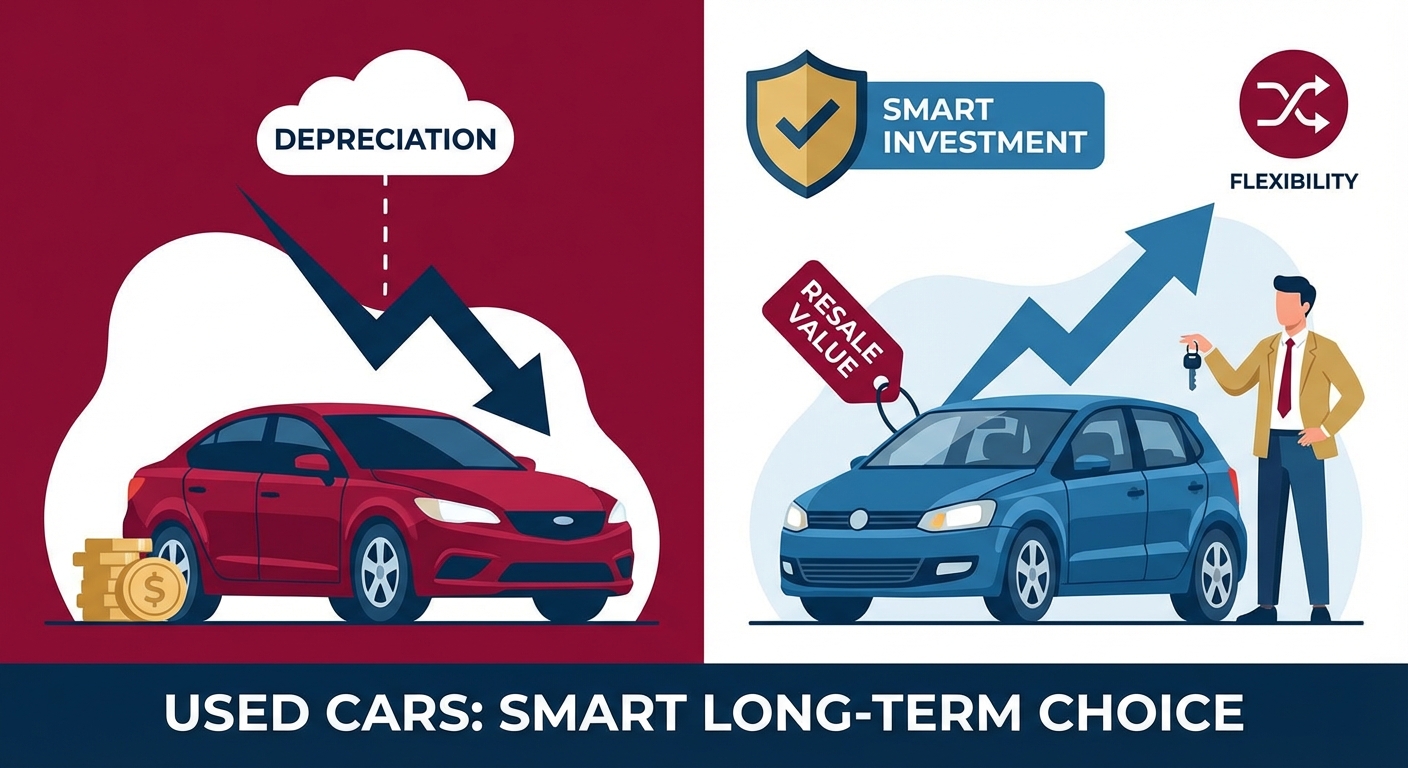
Consider a vehicle's depreciation rate. Some cars hold their value better than others. While a new car depreciates rapidly, a well-maintained used car with a good reputation for resale value can be a smart long-term investment. This flexibility can be important if your gig work changes, or if you need to upgrade or sell your vehicle in the future.
Bumps in the Road? Strategies for Less-Than-Perfect Credit as a Gig Worker
Having less-than-perfect credit alongside non-traditional income can feel like a double whammy, but it's not an insurmountable obstacle. SkipCarDealer.com specializes in these situations.
Credit Repair Basics: Laying the Foundation for Future Loans – Quick Wins and Long-Term Goals
If your credit isn't where you want it to be, start with the basics:
- Get Your Credit Report: Obtain free copies from Equifax and TransUnion and check for errors. Dispute any inaccuracies.
- Pay Bills On Time: Payment history is the biggest factor in your score. Set up reminders or automatic payments.
- Reduce Debt: Focus on paying down high-interest credit card balances.
- Avoid New Debt: Don't open new credit accounts unnecessarily.
- Become an Authorized User: If a trusted family member has good credit, being added to their card can boost your score, but ensure they manage it responsibly.
Secured Loans: Leveraging Assets for Approval – When This Might Be an Option
A secured loan uses an asset, like your savings or even the car itself (as collateral), to guarantee the loan. If you have poor credit, a secured loan can be an option because it reduces the lender's risk. The downside is that if you default, you could lose the asset. However, if managed responsibly, a secured car loan can be an excellent way to rebuild your credit.
Subprime Lenders: A Last Resort or a Stepping Stone? – Understanding Higher Costs and Risks
Subprime lenders specialize in approving loans for individuals with low credit scores or non-traditional income. While they offer a path to approval when traditional lenders won't, their loans typically come with significantly higher interest rates and potentially less favourable terms. It can be a stepping stone to better credit if you make all payments on time, but it's crucial to understand the higher cost involved. Always compare offers