Edmonton: Your EI Isn't Just for Groceries. Zero-Down EV?
Table of Contents
- Edmonton's Electric Dream: Is Zero-Down EV Ownership Possible While on EI?
- Key Takeaways: Your Snapshot Guide to Zero-Down EV Financing on EI in Edmonton
- Unpacking 'Zero-Down': The Realities of EV Financing Without an Upfront Payment
- The Myth vs. The Reality: When 'Zero-Down' Isn't Really 'Zero-Cost'
- Who Qualifies for Zero-Down? A Look at the Ideal Borrower Profile
- The Lender's Perspective: Risk Assessment and Why a Down Payment Mitigates Risk for Financial Institutions
- EI as 'Income': How Lenders in Alberta View Your Employment Insurance
- Income Stability vs. Income Source: Why a Lender Cares About How You Get Paid, Not Just How Much
- The 'Temporary' Perception: How the Finite Nature of EI Can Be a Red Flag for Lenders
- Documentation is Key: What Proof of EI Income You'll Need and How to Present It Effectively
- Beyond EI: Exploring Other Supplementary Income Streams That Can Bolster Your Application
- Navigating the Credit Maze: Building Your Case for Zero-Down EV Financing in Edmonton
- Your Credit Score: The Silent Partner: Understanding What Lenders See and Why It Matters Most for Zero-Down Options
- Strategies for Credit Improvement: Practical Steps Like Paying Bills on Time, Reducing Debt, and Correcting Errors on Your Credit Report
- The Power of a Co-Signer: When and How a Co-Signer (With Strong Credit) Can Bridge the Gap, Particularly in Edmonton's Competitive Market
- Building a Relationship: Why a Local Credit Union in Edmonton Might Be More Flexible Than a National Bank
- Beyond Federal: Provincial & Municipal EV Incentives (or the Lack Thereof) in Alberta
- The iZEV Program Pause: What It Means for Albertans
- Alberta's Stance on EV Incentives: A Look at Whether the Provincial Government Offers Direct Purchase Rebates or Other Support
- Edmonton-Specific Programs: Investigating Any Local Initiatives, Charging Infrastructure Grants, or Community-Based EV Programs
- Utility Company Incentives: Exploring Rebates from ATCO Electric, EPCOR, or Other Local Providers for Charging Station Installation
- The True Cost of Going Electric in Edmonton: Beyond the Monthly Payment
- EV Insurance in Alberta: Factors Affecting Premiums, and How They Compare to Gasoline Vehicles in Edmonton
- Charging Your EV in Edmonton: Home Charging Setup Costs, Public Charging Networks (e.g., FLO, Electrify Canada, Petro-Canada), and Average Electricity Rates in Edmonton
- Maintenance & Longevity: Reduced Maintenance Needs of EVs, Common EV-Specific Services, and Battery Warranty Considerations
- Registration & Licensing in Alberta: Any Specific Fees or Benefits for ZEVs
- The Fuel Savings Equation: Calculating How Much You Might Save on Gasoline, Especially With Edmonton's Current Fuel Prices
- Choosing Your Electric Ride Wisely: Affordable EVs for Edmontonians on a Budget
- Entry-Level EV Models: Highlighting New EVs With Lower MSRPs That Might Be More Accessible (e.g., Chevrolet Bolt, Nissan Leaf, Hyundai Kona Electric)
- The Used EV Market in Alberta: Benefits of Buying Pre-Owned, Where to Look (Edmonton Dealerships, Private Sales), and What to Inspect (Battery Health)
- Range Anxiety vs. Real-World Needs: Matching Vehicle Range to Daily Driving Habits in Edmonton
- The Importance of Efficiency: How Different EVs Consume Energy and What That Means for Your Charging Costs
- Your Roadmap to Driving Electric: Final Steps and Strategic Planning for Approval
- Step 1: Financial Self-Assessment: Honest Evaluation of Your EI Income, Credit Score, and Overall Budget
- Step 2: Credit Fortification: Actions to Improve Your Credit Standing or Secure a Strong Co-Signer
- Step 3: Research Lenders in Edmonton: Identifying Banks, Credit Unions (e.g., Servus Credit Union, ATB Financial), and Dealerships With Flexible Financing Options for Unique Income Situations
- Step 4: Prepare Your Documentation: Gathering All Necessary EI Statements, Bank Records, and Proof of Any Supplementary Income
- Step 5: Compare Offers: Don't Settle for the First Approval. Shop Around for the Best Rates and Terms.
- Step 6: The Smart Purchase: Negotiating the Best Vehicle Price and Understanding All Aspects of the Loan Agreement.
- FAQ: Your Edmonton EV & EI Financing Questions Answered
Edmonton's Electric Dream: Is Zero-Down EV Ownership Possible While on EI?
Living in Edmonton, Alberta, you understand the need for reliable transportation, especially when navigating our city's sprawling layout and diverse weather. The idea of owning an electric vehicle (EV) likely appeals for its environmental benefits and potential fuel savings. But if you're currently receiving Employment Insurance (EI), the thought of securing any car loan, let alone a zero-down EV loan, might seem like a distant dream, or even completely unrealistic. "My EI is for essentials, not a new car!" you might think. We get it. The skepticism is natural, and frankly, it's warranted. Financing a vehicle with no upfront payment while on a temporary income like EI presents unique challenges.
However, dismissing the possibility outright might mean missing an opportunity. This isn't about sugar-coating the situation; it's about providing a realistic roadmap. While it's certainly more challenging than for someone with a stable, long-term employment history and a hefty down payment, it's not an absolute impossibility. This article will dive deep into the specific hurdles, from lender perceptions of EI as income to the critical role of your credit score, and even the current landscape of EV incentives in Alberta. We'll explore strategies, reveal what lenders truly look for, and equip you with the knowledge to approach this goal strategically. Your journey to a zero-down EV in Edmonton, even on EI, begins with understanding the landscape, and we're here to illuminate that path.
Key Takeaways: Your Snapshot Guide to Zero-Down EV Financing on EI in Edmonton
- The Reality Check: Zero-down EV financing on Employment Insurance is challenging but not impossible. It requires strategic planning, a deep understanding of lender criteria, and often, a willingness to be flexible.
- EI as Income: While Employment Insurance provides a legitimate income, lenders often view it differently than traditional employment. Its temporary nature and duration are key concerns, making stability and potential future income crucial considerations for approval.
- Federal Incentives Update: The national iZEV program, which previously offered significant rebates, is currently paused. This means your focus must shift to exploring any provincial, municipal (if available in Alberta or Edmonton), or dealer-specific programs to reduce the overall cost of an EV.
- Credit is King: A strong credit score or the support of a reliable co-signer significantly improves your approval odds for any loan, especially a zero-down option. Lenders need assurance of your repayment capability, and your credit history is their primary indicator.
- Beyond the Payment: Always factor in the total cost of EV ownership. This includes insurance premiums, home or public charging infrastructure setup and ongoing costs, and routine maintenance. A comprehensive budget demonstrates financial responsibility.
- Local Edmonton Focus: Explore specific dealerships, brokers, and local credit unions in Edmonton, Alberta, such as Servus Credit Union or ATB Financial, that might be more flexible or have specialized programs for unique income situations. They often have a better understanding of the local economic landscape.
Unpacking 'Zero-Down': The Realities of EV Financing Without an Upfront Payment
The allure of "zero-down" financing is powerful. Imagine driving away in a brand-new, eco-friendly electric vehicle without handing over a single loonie upfront. It sounds fantastic, doesn't it? But like many enticing offers, the reality of 'zero-down' often comes with a few important caveats. It's crucial to understand that while you might not pay cash upfront, 'zero-down' doesn't necessarily mean 'zero-cost.' In fact, it can sometimes mean a higher overall cost over the life of your loan.
The Myth vs. The Reality: When 'Zero-Down' Isn't Really 'Zero-Cost'
The myth is that zero-down is a magical solution that makes car ownership instantly accessible without financial commitment. The reality is that skipping a down payment typically means you're financing the entire purchase price of the vehicle. This directly translates to larger monthly payments, a longer loan term, or most commonly, a higher interest rate. Lenders view a down payment as a sign of commitment and a reduction of their risk. When you put money down, you immediately build equity in the vehicle, reducing the amount the lender stands to lose if you default on the loan, particularly in the early stages when depreciation is highest.
Consider this: if you finance a $40,000 EV with zero-down, you're paying interest on the full $40,000. If you put down $5,000, you're only paying interest on $35,000. Over a 60 or 72-month term, that difference in interest can add up to thousands of dollars. So, while your wallet might feel lighter on day one, it could be heavier in the long run. For more insights on how down payments affect your loan, you might find our article Your Down Payment Went Missing. Your Interest Rate Didn't Get the Memo, Edmonton insightful.
Who Qualifies for Zero-Down? A Look at the Ideal Borrower Profile
Lenders reserve the most favourable zero-down offers for what they consider their "ideal" borrower. This individual typically boasts an excellent credit score (often 700+), a long and stable employment history with a high, verifiable income, and a low debt-to-income ratio. They represent minimal risk. Such applicants often have a proven track record of managing credit responsibly, making them a safe bet for a lender to extend a loan for the full vehicle price. They also usually have a cushion of savings, even if they choose not to use it for a down payment, which signals financial stability.
Unfortunately, individuals receiving Employment Insurance often fall outside this initial ideal bracket. While EI is a legitimate income, its temporary nature and the circumstances that lead to receiving it can flag concerns for lenders regarding long-term repayment stability. This doesn't mean zero-down is impossible, but it does mean the path will likely require more strategic planning and a stronger case built on other financial strengths.
The Lender's Perspective: Risk Assessment and Why a Down Payment Mitigates Risk for Financial Institutions
From a lender's viewpoint, every loan is a calculated risk. Their primary concern is whether you will repay the loan as agreed. A down payment acts as a significant risk mitigator for several reasons:
- Reduced Loan Amount: Less money loaned means less potential loss.
- Immediate Equity: A down payment ensures you have immediate equity in the vehicle, reducing the chance of being "underwater" (owing more than the car is worth) early in the loan term. This is crucial because vehicles depreciate quickly.
- Commitment: Putting your own money into the purchase demonstrates your commitment and financial stake in the vehicle, making you less likely to default.
- Lower Payment-to-Income Ratio: A smaller loan amount can result in lower monthly payments, which improves your debt-to-income ratio, a key metric for lenders.
Understanding this perspective is key. When you approach a lender without a down payment and with EI as your primary income, you're asking them to take on a higher level of risk. Your strategy must, therefore, focus on compensating for this increased risk through other means, such as a stellar credit history, a co-signer, or by demonstrating a clear plan for future income stability.
EI as 'Income': How Lenders in Alberta View Your Employment Insurance
This is arguably the most critical hurdle for Edmontonians looking to finance a vehicle while on Employment Insurance. While EI provides essential financial support, and you certainly perceive it as income (because it is!), lenders often categorize and assess it differently than traditional employment income. Understanding this distinction is vital to preparing a successful loan application.
Income Stability vs. Income Source: Why a Lender Cares About How You Get Paid, Not Just How Much
When you apply for a car loan, lenders aren't just looking at the dollar amount hitting your bank account each month. They're deeply concerned with the source and stability of that income. Traditional employment income, especially from a long-term employer, signals predictability and ongoing financial capacity. It suggests that your income will continue for the foreseeable future, allowing you to meet your monthly loan obligations without interruption.
Employment Insurance, by its very nature, is a temporary benefit. It's designed to bridge a gap between jobs, not serve as a long-term income replacement. While it's a legitimate and often substantial source of funds, its finite duration—typically up to 45 weeks in Alberta, depending on the unemployment rate in your region—is a red flag for lenders. They assess the risk of your income ceasing before your loan term concludes. This isn't a judgment on your financial responsibility, but a standard risk assessment based on the structure of the benefit.
The 'Temporary' Perception: How the Finite Nature of EI Can Be a Red Flag for Lenders
The temporary perception of EI is a significant factor. Lenders consider the maximum duration of your EI benefits and compare it to the proposed loan term. If your EI is projected to run out well before your 5 or 6-year car loan is repaid, they see a substantial risk gap. They want to ensure that even if your EI ends, you have a concrete plan for continued income. This is why having a job offer in hand, a clear timeline for returning to work, or other verifiable income streams can significantly strengthen your application.
Lenders also consider the reason for receiving EI. While not always directly asked, the underlying circumstances can influence their comfort level. However, focusing on your repayment capacity and future plans is always the most constructive approach. For more on navigating loans with government income, see our article EI Income? Your Car Loan Just Said 'Welcome Aboard!'.
Documentation is Key: What Proof of EI Income You'll Need and How to Present It Effectively
Even with the challenges, EI can be considered income for a car loan, especially with the right documentation. You'll need to provide clear, consistent proof of your EI benefits. This typically includes:
- EI Benefit Statements: Official documents from Service Canada showing your approved benefit amount, start date, and remaining weeks of eligibility.
- Bank Statements: Showing consistent direct deposits of your EI benefits into your account. This verifies that the funds are indeed being received.
- Notice of Assessment (NOA): While not directly showing EI income, your NOA from the Canada Revenue Agency can demonstrate a history of regular income prior to EI, which can support your overall financial picture.
When presenting this documentation, transparency and proactive communication are vital. Don't just hand over the papers; explain your situation. Be ready to discuss your job search efforts, any potential job offers, or your plans for re-employment. The more information you can provide to alleviate a lender's concerns about the temporary nature of your income, the better your chances.
Beyond EI: Exploring Other Supplementary Income Streams That Can Bolster Your Application
Rarely does an EI recipient rely solely on those benefits. Lenders are interested in your holistic financial picture. Think about any other verifiable income sources you might have:
- Part-time or Gig Work: Even a small, consistent part-time job or income from the gig economy can demonstrate ongoing earning potential. Ensure you have clear records (pay stubs, invoices, bank deposits).
- Spousal or Partner Income: If you have a spouse or partner with stable employment, their income can be used to bolster your household income on a joint application. This significantly reduces the perceived risk.
- Child Tax Benefits or Other Government Support: While some government benefits are less likely to be considered primary income for a loan, consistent, predictable payments can contribute to your overall household budget and demonstrate your ability to manage finances.
- Rental Income: If you own property and receive rental income, this is a strong asset.
- Savings and Investments: While not income, substantial savings can act as a financial buffer, showing lenders you have resources to fall back on.
Pro Tip: Compile a detailed financial statement showing all income sources, including EI, any savings, and a clear budget. This proactive step demonstrates financial responsibility and planning to potential lenders. It shows you've thought about how you'll manage payments even after your EI ends, which can be a significant differentiator.
Navigating the Credit Maze: Building Your Case for Zero-Down EV Financing in Edmonton
When you're seeking zero-down financing, especially with an unconventional income source like Employment Insurance, your credit score and history become paramount. Think of your credit report as your financial resume; it tells lenders how reliably you've managed debt in the past. In Edmonton's competitive auto financing market, a strong credit profile is your best asset.
Your Credit Score: The Silent Partner: Understanding What Lenders See and Why It Matters Most for Zero-Down Options
Your credit score is a three-digit number that summarizes your creditworthiness. In Canada, scores typically range from 300 to 900, with higher scores indicating lower risk. For zero-down financing, lenders are looking for scores generally in the "good" to "excellent" range (often 680+). Why is it so crucial for zero-down?
Without a down payment, the lender is taking on maximum risk. Your credit score is their primary tool to assess that risk. It tells them:
- Payment History: Do you pay your bills on time? (This is the most significant factor.)
- Credit Utilization: How much of your available credit are you using? High utilization can signal financial strain.
- Length of Credit History: A longer history with responsible usage is better.
- Types of Credit: A mix of credit (credit cards, lines of credit, previous loans) managed well is favourable.
- New Credit: Too many recent credit applications can be a red flag.
A strong score signals to lenders that even with EI as your current income, you have a proven history of financial responsibility, making you a more attractive candidate for a higher-risk zero-down loan. If your credit score is not where you'd like it to be, don't despair; there are steps you can take to improve it. For those looking to understand credit better, our article Approval Secrets: How to Refinance Your Canadian Car Loan with Bad Credit offers valuable insights into credit improvement that apply beyond refinancing.
Strategies for Credit Improvement: Practical Steps Like Paying Bills on Time, Reducing Debt, and Correcting Errors on Your Credit Report
Even while on EI, you can take steps to improve or maintain your credit score:
- Pay Bills On Time, Every Time: This is the single most impactful action. Set up reminders or automatic payments for all your bills, especially credit cards and any existing loans.
- Reduce Credit Card Balances: Aim to keep your credit utilization ratio below 30% (e.g., if you have a $10,000 credit limit, try to keep your balance below $3,000).
- Avoid New Debt: Resist the temptation to open new credit accounts or take on additional loans just before applying for an EV loan.
- Check Your Credit Report Regularly: Obtain free copies of your credit report from Equifax and TransUnion, Canada's two main credit bureaus. Review them meticulously for errors. Disputing and correcting inaccuracies can boost your score.
- Maintain Old Accounts: Don't close old, paid-off credit accounts, as the length of your credit history positively impacts your score.
These actions, even small ones, can collectively demonstrate a commitment to financial health, which is precisely what lenders want to see.
The Power of a Co-Signer: When and How a Co-Signer (With Strong Credit) Can Bridge the Gap, Particularly in Edmonton's Competitive Market
If your credit score or EI income situation isn't strong enough on its own, a co-signer can be a game-changer. A co-signer is someone with excellent credit and stable income who agrees to take on legal responsibility for the loan if you default. This significantly reduces the lender's risk, making them much more likely to approve your application, potentially even for a zero-down option.
In Edmonton's market, where lenders might be more conservative with high-value assets like EVs, a co-signer can:
- Improve Approval Odds: Their strong financial profile offsets your perceived risk.
- Secure Better Terms: You might qualify for a lower interest rate than you would on your own, saving you money over the loan term.
- Enable Zero-Down: What might be impossible alone becomes feasible with a strong co-signer.
However, co-signing is a serious commitment. The co-signer's credit will be affected by the loan, and they are fully responsible for payments if you cannot make them. Choose a co-signer carefully, ensuring they understand the implications, and maintain open communication about your repayment plan. For individuals with less conventional credit histories, such as those new to Canada, understanding how credit is assessed is vital. Our article Foreign Credit: Not Useless. Your Car Loan Starts Here, Edmonton, Alberta provides relevant context on building credit.
Building a Relationship: Why a Local Credit Union in Edmonton Might Be More Flexible Than a National Bank
While major national banks have strict, often rigid, lending criteria, local credit unions in Edmonton, such as Servus Credit Union or ATB Financial (though ATB is a provincial crown corporation, it operates similarly to a credit union in terms of community focus), often have more flexibility. They are typically community-focused and may be more willing to look beyond a strict credit score or income type to consider your overall financial picture and personal circumstances.
Why approach a credit union?
- Personalized Service: You're more likely to speak directly with a loan officer who can understand your unique situation rather than being processed by an automated system.
- Relationship Banking: If you already have accounts or other products with a local credit union, they have a history with you and may be more inclined to help.
- Community Focus: Their mission often includes supporting local residents, which can translate to more flexible lending practices for non-traditional applicants.
It's always worth exploring your options with local financial institutions. They might offer tailored solutions or advice that larger banks simply cannot.
Pro Tip: Before approaching any lender, pull your credit report from Equifax and TransUnion. Review it for accuracy and identify areas for improvement. Knowledge is power when negotiating financing terms, and understanding your starting point is crucial for building a strong case.
Beyond Federal: Provincial & Municipal EV Incentives (or the Lack Thereof) in Alberta
When considering an electric vehicle, incentives often play a significant role in making the switch more affordable. However, for those of us in Alberta, and specifically Edmonton, the landscape of EV incentives is quite different from other Canadian provinces. It's crucial to set realistic expectations, especially regarding federal programs.
The iZEV Program Pause: What It Means for Albertans
For several years, the federal government's iZEV (Incentives for Zero-Emission Vehicles) program offered significant rebates of up to $5,000 for eligible new ZEV purchases or leases. This program was a huge boon for EV adoption across Canada. However, as of late 2024, the iZEV program is currently paused and under review, with an announcement expected on its future status. This means that, for the time being, the federal rebate is not available. This is a crucial point for Albertans, as it removes a major financial incentive that many Canadians previously relied upon to make EVs more accessible.
What does this mean for you in Edmonton? It means that any financial planning for an EV purchase must proceed without the assumption of a federal rebate. This pause underscores the importance of focusing on other cost-saving strategies, such as securing the best possible financing terms and exploring more affordable EV models, which we will discuss later.
Alberta's Stance on EV Incentives: A Look at Whether the Provincial Government Offers Direct Purchase Rebates or Other Support
Unlike provinces like British Columbia or Quebec, the Government of Alberta currently does not offer any direct provincial rebates for the purchase or lease of electric vehicles. This is a significant difference that prospective EV owners in Edmonton need to be aware of. The provincial government's approach has historically focused more on broader energy strategies rather than consumer-level EV purchase incentives.
While the absence of direct rebates might seem discouraging, it doesn't entirely negate the financial benefits of EV ownership, particularly the long-term savings on fuel and potentially reduced maintenance. However, it does place a greater emphasis on finding the best vehicle price and financing terms possible.
Edmonton-Specific Programs: Investigating Any Local Initiatives, Charging Infrastructure Grants, or Community-Based EV Programs
While Alberta lacks provincial rebates, and the federal iZEV program is on hold, it's always worth investigating if the City of Edmonton or any local community organizations offer specific EV-related programs. Historically, municipal programs have been less about direct purchase rebates and more about supporting charging infrastructure or promoting EV adoption through awareness campaigns. As of now, there aren't widespread municipal purchase incentives in Edmonton. However, the landscape can change, so it's wise to check the City of Edmonton's official website or local environmental groups for any emerging initiatives.
Occasionally, some local businesses or employers might offer incentives for employees to switch to EVs, so keep an eye on those possibilities as well, though they are less common.
Utility Company Incentives: Exploring Rebates from ATCO Electric, EPCOR, or Other Local Providers for Charging Station Installation
Even if direct vehicle purchase rebates are scarce, you might find some financial relief through local utility companies. Companies like EPCOR (which serves electricity distribution and retail in Edmonton) or ATCO Electric (a major utility provider in Alberta) may occasionally offer rebates or programs related to home charging station installation. These incentives are designed to encourage the expansion of EV charging infrastructure, making it easier and more affordable for homeowners to install a Level 2 charger.
A Level 2 charger dramatically reduces charging times compared to a standard 120V outlet, making EV ownership much more practical for daily use. While these rebates don't lower the initial vehicle purchase price, they significantly reduce a key aspect of long-term EV ownership costs. It's recommended to check the websites of your local electricity provider for any current or upcoming programs. These can sometimes be overlooked but offer tangible savings.
Pro Tip: Even without direct purchase incentives, research local energy providers in Edmonton for rebates on Level 2 home charging station installation. This can significantly reduce the long-term cost of ownership and enhance the convenience of having an EV.
The True Cost of Going Electric in Edmonton: Beyond the Monthly Payment
When you're eyeing a zero-down EV in Edmonton, it's easy to fixate solely on the monthly car payment. However, to truly understand the financial implications of electric vehicle ownership, you need a holistic view of all associated costs. An EV can offer significant savings compared to a gasoline car, but it also comes with its own set of expenses that need to be budgeted for, especially when managing finances on Employment Insurance.
EV Insurance in Alberta: Factors Affecting Premiums, and How They Compare to Gasoline Vehicles in Edmonton
Electric vehicle insurance premiums in Alberta can sometimes be slightly higher than those for comparable gasoline vehicles. This is often due to several factors:
- Higher Purchase Price: EVs often have a higher initial MSRP, which translates to higher replacement costs for insurers.
- Specialized Parts and Repairs: EV components, particularly batteries and complex electrical systems, can be more expensive to repair or replace than traditional internal combustion engine (ICE) parts.
- Newer Technology: Insurers are still gathering data on EV claims, leading to a cautious approach for some models.
However, as EVs become more common and repair networks expand, these differences are beginning to narrow. Factors like your driving record, the specific EV model, your postcode in Edmonton, and the coverage you choose will still be the most significant determinants of your premium. Always get multiple insurance quotes before committing to an EV purchase to ensure you've budgeted accurately.
Charging Your EV in Edmonton: Home Charging Setup Costs, Public Charging Networks (e.g., FLO, Electrify Canada, Petro-Canada), and Average Electricity Rates in Edmonton
Charging is the "fuel" cost of an EV, and it's where you'll see significant savings. However, there are upfront costs and ongoing expenses:
- Home Charging Setup: Installing a Level 2 (240V) home charger typically costs between $500 to $2,000, including the unit and electrician's fees. This is a one-time investment that greatly enhances convenience and value. Remember to look for utility rebates (as discussed in the previous section).
- Public Charging Networks: Edmonton has a growing network of public chargers from providers like FLO, Electrify Canada, and Petro-Canada. These can include Level 2 chargers (slower, often hourly rates) and DC Fast Chargers (much faster, typically priced per minute or per kWh). Public charging is generally more expensive than home charging but offers flexibility for longer trips or when you can't charge at home.
- Electricity Rates in Edmonton: The cost of electricity in Edmonton varies based on your provider (e.g., EPCOR, ATCO) and chosen plan. As of recent data, residential electricity rates in Alberta average around $0.15-$0.20 per kWh, including distribution and other charges. This is significantly cheaper per "equivalent litre" than gasoline. For example, driving 100 km in an efficient EV might cost $2-4 in electricity, whereas a gasoline car could easily cost $10-15+ depending on fuel prices.
Maintenance & Longevity: Reduced Maintenance Needs of EVs, Common EV-Specific Services, and Battery Warranty Considerations
EVs are renowned for their lower maintenance requirements compared to ICE vehicles. They have far fewer moving parts:
- No Oil Changes: A major saving.
- Fewer Brake Pad Replacements: Regenerative braking reduces wear on physical brakes.
- No Spark Plugs, Belts, Hoses, or Exhaust Systems: Eliminating numerous potential failure points.
Typical EV-specific maintenance includes tire rotations, cabin air filter replacements, brake fluid checks, and occasional software updates. The battery is the most expensive component, but EV batteries typically come with long warranties (often 8 years/160,000 km in Canada), providing peace of mind. Many EVs are engineered for longevity, with components designed to last for hundreds of thousands of kilometres.
Registration & Licensing in Alberta: Any Specific Fees or Benefits for ZEVs
In Alberta, vehicle registration fees are generally the same for electric and gasoline vehicles. There are currently no specific fee reductions or additional benefits for ZEVs in terms of registration or licensing at the provincial level. You'll pay standard vehicle registration fees, which vary based on the type of vehicle but are not differentiated by fuel source.
The Fuel Savings Equation: Calculating How Much You Might Save on Gasoline, Especially With Edmonton's Current Fuel Prices
This is where the financial benefits of an EV truly shine. With gasoline prices in Edmonton fluctuating but often hovering around $1.50-$1.80 per litre (or higher), the savings from switching to electricity are substantial. Consider an average gasoline car consuming 9 L/100 km:
- Gasoline Cost: 9 L/100 km * $1.60/L = $14.40 per 100 km.
- EV Charging Cost (Home): An efficient EV might use 15 kWh/100 km. At $0.17/kWh, that's 15 kWh * $0.17/kWh = $2.55 per 100 km.
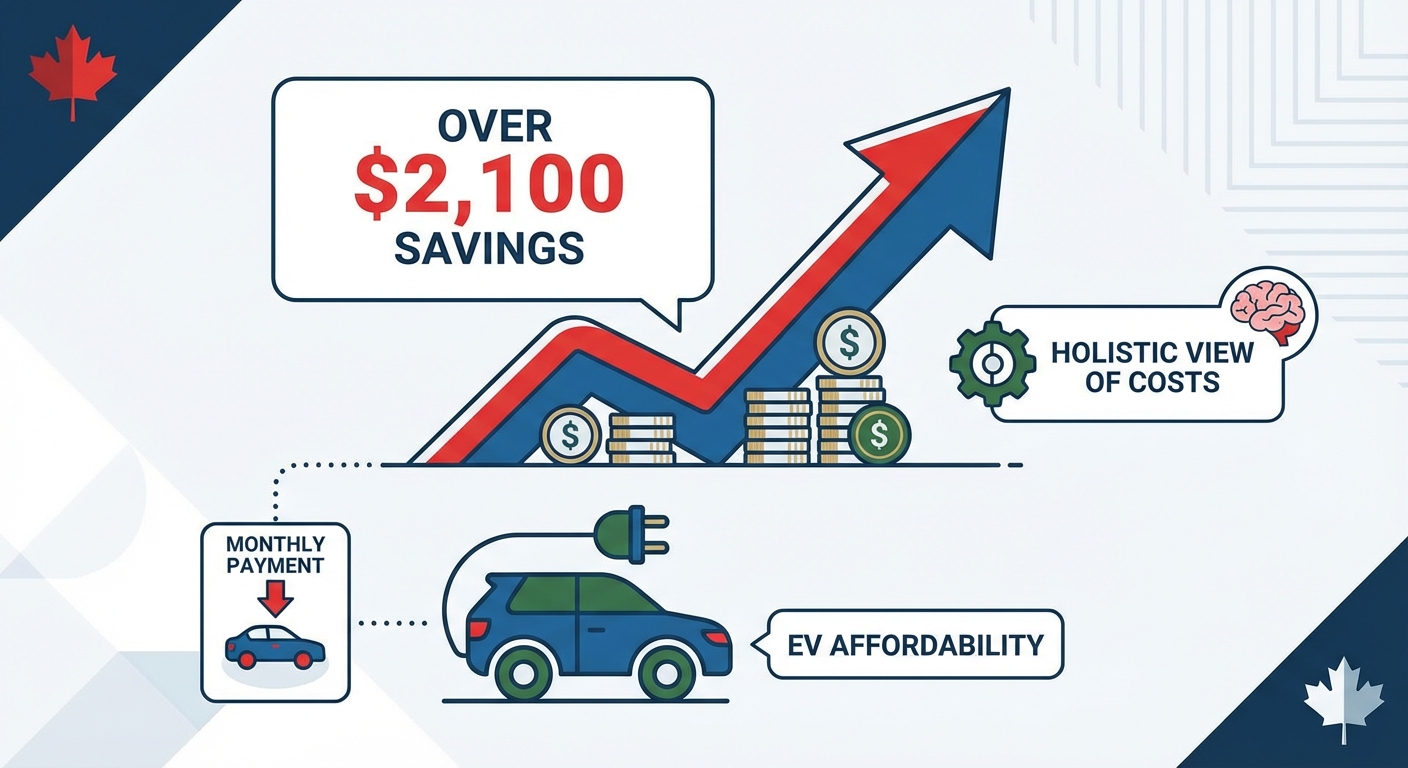
This represents a saving of nearly $12 per 100 km. If you drive 1,500 km a month, that's $180 in savings! Over a year, that's over $2,100. These savings can significantly offset a portion of your monthly car payment, making an EV more affordable in the long run, even with zero-down financing on EI. This calculation demonstrates why a holistic view of costs is so important.
Choosing Your Electric Ride Wisely: Affordable EVs for Edmontonians on a Budget
When financing an EV on a tight budget, especially with EI income, selecting the right vehicle is paramount. The goal isn't just to get an EV, but to get one that aligns with your financial capacity, both in terms of purchase price and ongoing operational costs. This often means looking beyond the premium models and focusing on value and practicality.
Entry-Level EV Models: Highlighting New EVs With Lower MSRPs That Might Be More Accessible (e.g., Chevrolet Bolt, Nissan Leaf, Hyundai Kona Electric)
While the EV market is expanding rapidly, there are still a few key players that consistently offer more accessible price points for new vehicles. These models are often excellent choices for first-time EV owners or those prioritizing affordability:
- Chevrolet Bolt EV/EUV: Known for its strong range-to-price ratio, the Bolt offers decent space and modern features for a competitive MSRP. The EUV (Electric Utility Vehicle) version provides a bit more utility and SUV-like styling.
- Nissan Leaf: One of the pioneers of the modern EV market, the Leaf offers a comfortable ride and practical hatchback design. While its range might be less than some newer competitors, it's often available at a lower price point.
- Hyundai Kona Electric: A popular choice for its compact SUV form factor, good range, and peppy performance. The Kona Electric delivers a strong value proposition, blending practicality with modern EV tech.
These models, while not always qualifying for zero-down without a strong credit profile or co-signer when on EI, represent the lower end of the new EV market, making the overall financing amount more manageable. Always compare their MSRPs, available trims, and standard features to find the best fit for your budget and needs.
The Used EV Market in Alberta: Benefits of Buying Pre-Owned, Where to Look (Edmonton Dealerships, Private Sales), and What to Inspect (Battery Health)
For budget-conscious Edmontonians, the used EV market presents an increasingly attractive option. Just like gasoline cars, used EVs are significantly cheaper than their new counterparts, making them more accessible for financing, especially when on EI.
- Benefits of Buying Pre-Owned: Depreciation hits new cars hardest in their first few years. Buying a used EV means someone else has absorbed that initial loss, offering you better value. You can often get a higher-trim model for the price of a base new one.
- Where to Look:
- Edmonton Dealerships: Many dealerships in Edmonton now carry used EVs. Buying from a reputable dealer often comes with the benefit of inspections, warranties (if the vehicle is recent enough), and easier financing options.
- Private Sales: Online marketplaces like Kijiji or Facebook Marketplace can offer lower prices, but require more due diligence on your part regarding inspection and financing arrangements.
- What to Inspect (Battery Health): The battery is the heart of an EV. When buying used, ask for a "battery health certificate" or a diagnostic report that shows the State of Health (SOH) of the battery. This indicates how much of its original capacity the battery retains. Look for vehicles still under battery warranty, which is often 8 years/160,000 km in Canada. A reputable dealer should be able to provide this information.
Pro Tip: Consider a reputable used EV from an Edmonton dealership that offers battery health certification. This can significantly lower your entry cost while providing peace of mind, making zero-down approval more attainable.
Range Anxiety vs. Real-World Needs: Matching Vehicle Range to Daily Driving Habits in Edmonton
One of the biggest concerns for potential EV owners is "range anxiety"—the fear of running out of charge. However, for most Edmontonians, real-world driving needs are often less demanding than imagined:
- Average Commute: The average daily commute in Canadian cities is well within the range of almost all modern EVs, even older used models. For example, a 200 km range EV can easily handle a 50 km round trip commute with plenty of charge to spare.
- Charging at Home: With a Level 2 home charger, you can "fill up" overnight, ensuring you start each day with a full "tank."
- Edmonton's Climate: Cold weather does reduce EV range. Factor in a 15-30% range reduction in winter. However, most EVs still offer sufficient range for daily tasks even in colder temperatures.
- Longer Trips: For occasional trips outside Edmonton, planning routes with public fast chargers becomes important.
Assess your actual daily driving needs. Do you really need 400+ km of range, or would 250-300 km suffice for 95% of your driving, saving you money on a cheaper EV with less range? Don't pay for range you don't need.
The Importance of Efficiency: How Different EVs Consume Energy and What That Means for Your Charging Costs
Just like gasoline cars vary in fuel efficiency, EVs vary in energy efficiency, measured in kWh/100 km. A more efficient EV will consume less electricity to travel the same distance, directly translating to lower charging costs.
- Lower kWh/100 km = Lower Costs: When comparing models, look for their efficiency ratings. For instance, an EV using 15 kWh/100 km will be cheaper to run than one using 20 kWh/100 km.
- Impact on Long-Term Budget: Over the years, small differences in efficiency can add up to significant savings, further enhancing the affordability of your EV, which is crucial when managing finances carefully.
Choosing an efficient, budget-friendly EV from the used market, combined with strategic financing, can make that zero-down dream in Edmonton a tangible reality, even while you're navigating your time on Employment Insurance.
Your Roadmap to Driving Electric: Final Steps and Strategic Planning for Approval
Achieving zero-down EV financing in Edmonton while on Employment Insurance is a challenging goal, but it's not insurmountable. It requires a methodical, strategic approach, combining all the insights we've discussed. This roadmap distils the process into actionable steps, empowering you to build the strongest possible case for approval.
Step 1: Financial Self-Assessment: Honest Evaluation of Your EI Income, Credit Score, and Overall Budget
Before you even step foot in a dealership or talk to a lender, take a hard, honest look at your financial situation. This is your foundation:
- EI Income: How much are you receiving weekly/bi-weekly? How many weeks of eligibility do you have left? Be realistic about its temporary nature.
- Other Income Sources: Do you have any part-time work, spousal income, or other stable benefits? Document every dollar.
- Credit Score & Report: Pull your reports from Equifax and TransUnion. Understand your current score and identify any discrepancies or areas for improvement.
- Detailed Budget: Create a comprehensive budget of all your monthly expenses (rent, utilities, groceries, existing debts, etc.). Can you truly afford an EV payment, insurance, and charging costs within your EI income and other funds? Be conservative.
This self-assessment will clarify your strengths and weaknesses from a lender's perspective, allowing you to address potential concerns proactively.
Step 2: Credit Fortification: Actions to Improve Your Credit Standing or Secure a Strong Co-Signer
Based on your self-assessment, prioritize credit improvement. If your score is low, focus on:
- Paying all bills on time.
- Reducing credit card balances (aim for under 30% utilization).
- Disputing any errors on your credit report.
If credit improvement will take too long, or if your EI income alone is insufficient, seriously consider securing a co-signer. A co-signer with excellent credit and stable income can dramatically enhance your application, making zero-down a much more viable option. Ensure they fully understand their responsibilities.
Step 3: Research Lenders in Edmonton: Identifying Banks, Credit Unions (e.g., Servus Credit Union, ATB Financial), and Dealerships With Flexible Financing Options for Unique Income Situations
Don't limit yourself to just one type of lender. Cast a wide net within Edmonton:
- Local Credit Unions: Servus Credit Union and ATB Financial are excellent starting points. Their community-focused approach often means more flexibility for unique income situations.
- Dealership Finance Departments: Many larger dealerships have relationships with multiple lenders, including those specializing in non-traditional income. They can often "shop around" for you.
- Specialty Auto Loan Providers: Some companies specialize in helping individuals with challenging credit or income situations. Do your research to find reputable ones.
Explain your situation upfront. Be honest about being on EI and your plans for re-employment. Ask specifically about their policies regarding temporary income and zero-down options.
Step 4: Prepare Your Documentation: Gathering All Necessary EI Statements, Bank Records, and Proof of Any Supplementary Income
Walk into any lender meeting fully prepared. Bring a binder or digital folder with:
- EI Benefit Statements (most recent and showing eligibility period).
- Bank Statements (showing EI deposits and general financial stability for 3-6 months).
- Proof of Other Income (pay stubs, invoices, government benefit letters).
- Proof of Employment Search (job applications, interview confirmations – this demonstrates your commitment to future stable income).
- Budget & Financial Statement (your self-assessment from Step 1).
- Credit Reports (from Equifax and TransUnion).
The more organized and thorough you are, the more seriously lenders will take your application, demonstrating your responsibility and planning.
Step 5: Compare Offers: Don't Settle for the First Approval. Shop Around for the Best Rates and Terms.
Even if you receive an initial approval, don't jump at it immediately. Because applying for a car loan can result in multiple inquiries on your credit report, it's beneficial to do all your rate shopping within a short window (typically 14-45 days), as credit bureaus will often count multiple inquiries for the same type of loan as a single inquiry. This allows you to compare offers without further damaging your credit score.
- Compare interest rates.
- Look at loan terms (shorter terms mean less interest paid overall).
- Understand any hidden fees or penalties.
A difference of even 1-2 percentage points on your interest rate can save you hundreds, if not thousands, of dollars over the life of the loan.
Step 6: The Smart Purchase: Negotiating the Best Vehicle Price and Understanding All Aspects of the Loan Agreement.
Once you have pre-approvals, it's time to choose your EV. Remember:
- Negotiate the Price: Always negotiate the vehicle's purchase price. A lower purchase price means a smaller loan amount, which can make financing more manageable.
- Understand the Agreement: Read every line of the loan contract. Understand the total amount financed, the interest rate, the monthly payment, and any clauses regarding default or early repayment. Don't be afraid to ask questions.
- Resist Add-Ons: Dealerships often offer extended warranties, rustproofing, or other add-ons. While some might be valuable, many are not necessary and add to your overall financed amount. Be selective.
By following these steps, you significantly increase your chances of securing a zero-down EV loan in Edmonton, even while on EI. It's about diligence, preparation, and presenting yourself as a responsible borrower with a clear plan for the future.