Your Irregular Income Just Qualified You for an EV. Seriously, Quebec.
Table of Contents
- Key Takeaways
- Chapter 1: The Quebec Advantage – Why Your Self-Employment and an EV Are a Perfect Match
- 1.1. Busting the Myth: Self-Employment Isn't a Financing Death Sentence (Especially Not for EVs)
- 1.2. Quebec's Green Edge: How Provincial & Federal Incentives Level the Playing Field for You
- 1.3. The Irregular Income Paradox: How EVs Can Actually Stabilize Your Finances
- Chapter 2: Decoding 'No Income Proof' – What Lenders *Really* Want to See from the Self-Employed
- 2.1. Beyond the Paystub: Acceptable Alternatives for Self-Employed Applicants
- 2.2. The 'No Income Proof' Misconception: When It's Truly a Barrier (and How to Overcome It)
- 2.3. Building Your Financial Narrative: Crafting a Compelling Application
- Chapter 3: The EV Landscape for the Self-Employed – From Budget-Friendly to Premium Rides
- 3.1. Entry-Level EVs: Your Gateway to Green Driving (and Easier Financing)
- 3.2. Mid-Range Marvels: Balancing Cost, Features, and Lender Appeal
- 3.3. Luxury Electrics: When Your Business Demands the Best (and How to Fund It)
- Chapter 4: Navigating the Labyrinth – Banks, Dealerships, and Alternative Lenders
- 4.1. Traditional Banks: The Gold Standard (and Their Stricter Criteria for Self-Employed)
- 4.2. Dealership Financing: Convenience, Manufacturer Programs, and Hidden Gems
- 4.3. Niche & Alternative Lenders: Your Secret Weapon for Approval (When Others Say No)
- Chapter 5: Unpacking the Numbers – Rates, Terms, and Hidden Costs of EV Ownership
- 5.1. Understanding Interest Rates: What Drives Them for the Self-Employed?
- 5.2. Beyond the Monthly Payment: The True Cost of EV Ownership for the Self-Employed
- 5.3. The Power of Your Down Payment: How It Opens Doors and Lowers Risk
- Chapter 6: Boosting Your Approval Odds – Strategies for Self-Employed Success
- 6.1. Credit Score: Your Unofficial Co-Signer
- 6.2. The Co-Signer Advantage: When a Partner or Family Member Can Make the Difference
- 6.3. Demonstrating Financial Responsibility: Proactive Steps
- Chapter 7: Real-World Scenarios – Self-Employed EV Owners Across Canada
- 7.1. Montreal's Freelance Graphic Designer: Securing a Lease with Irregular Contracts
- 7.2. Quebec City's Small Business Owner: Financing a Fleet EV for Deliveries
- 7.3. Beyond Quebec: How the Rules Shift in Ontario and British Columbia
- Your Next Steps to Approval: Charting Your Course to an Electric Future
As a self-employed individual in Quebec, you navigate a world of unparalleled freedom, innovation, and, let's be honest, unpredictable income streams. For too long, the traditional financial system has viewed this entrepreneurial spirit with skepticism, especially when it comes to big-ticket purchases like a new vehicle. But what if we told you that your irregular income, combined with Quebec's progressive stance on electric vehicles (EVs), could actually *qualify* you for an EV loan? Seriously, Quebec, it's time to bust some myths and electrify your commute.
At SkipCarDealer.com, we understand the unique financial landscape of Canada's self-employed. We know your bank account balance tells a story no pay stub ever could. And when it comes to EVs in Quebec, the stars are aligning for you to drive cleaner, save money, and finally get the financing you deserve.
Key Takeaways
- Quebec's robust EV incentives and supportive ecosystem create a unique advantage for self-employed individuals, even with irregular income.
- 'No income proof' doesn't mean 'no income'; it means leveraging alternative documentation like bank statements, tax returns, and business contracts to demonstrate financial viability.
- A strong credit score and a substantial down payment are paramount, acting as powerful mitigators for income irregularity.
- Understanding the nuances of traditional banks, dealership financing, and specialized alternative lenders is crucial for securing the best terms.
- EVs offer significant long-term savings on fuel and maintenance, which can enhance your financial stability and appeal to lenders.
Chapter 1: The Quebec Advantage – Why Your Self-Employment and an EV Are a Perfect Match
For many self-employed Canadians, the dream of a new car often collides with the reality of traditional lending criteria. Lenders typically prefer the predictable, bi-weekly pay stub of a salaried employee. However, the world is changing, and so too is the approach of innovative lenders, especially when it comes to the booming EV market in a province as green-conscious as Quebec.
1.1. Busting the Myth: Self-Employment Isn't a Financing Death Sentence (Especially Not for EVs)
Let’s be clear: the idea that being self-employed automatically disqualifies you from vehicle financing is an outdated misconception. While traditional banks might initially raise an eyebrow at fluctuating income, the financial industry is increasingly recognizing the immense contribution of the gig economy, freelance professionals, and small business owners. Canada, and Quebec in particular, is a hotbed of entrepreneurial activity, and lenders are adapting.
The key differentiator here is between "no job" and "self-employed with irregular income." The former implies a lack of any income source, which is indeed a barrier. The latter, however, represents a dynamic, often thriving, financial reality where income comes from diverse clients, projects, or seasonal work. Lenders are learning to look beyond the rigid pay stub and evaluate the broader financial health of self-employed individuals. They're seeking stability, not necessarily perfect consistency, and that's where your detailed financial records come into play.
1.2. Quebec's Green Edge: How Provincial & Federal Incentives Level the Playing Field for You
Quebec isn't just embracing the EV revolution; it's leading it in Canada. This creates a unique advantage for you, the self-employed individual. The provincial government's 'Roulez Vert' program offers substantial rebates, currently up to $7,000 for the purchase or lease of new eligible electric vehicles. This is in addition to the federal iZEV program, which provides up to $5,000 for new EVs. Combined, these incentives can reduce the upfront cost of an EV by as much as $12,000!
How does this help with financing? Directly. A lower net purchase price means you need to borrow less money. This improves your loan-to-value (LTV) ratio, making your application more attractive to lenders. Less money borrowed means less risk for them, and potentially better interest rates for you. Imagine financing a $50,000 EV that effectively costs you $38,000 after rebates. That’s a significantly different loan scenario in the eyes of any financial institution.
Beyond purchase incentives, Quebec also offers various programs for charging infrastructure. For instance, residents can receive financial assistance for the acquisition and installation of a 240-volt charging station at home. Cities like Montreal and Quebec City are also actively expanding public charging networks, reducing range anxiety and enhancing the practicality of EV ownership.
1.3. The Irregular Income Paradox: How EVs Can Actually Stabilize Your Finances
While the initial cost of an EV might seem daunting, especially with irregular income, the long-term financial benefits are profound and can actually help stabilize your financial profile. One of the most significant advantages is the drastic reduction in fuel costs. Electricity is significantly cheaper per kilometre than gasoline in Quebec, where hydro power is abundant and affordable. This translates to hundreds, if not thousands, of dollars in savings annually, freeing up crucial cash flow.
Furthermore, EVs typically have lower maintenance requirements. With fewer moving parts, no oil changes, spark plugs, or complex exhaust systems, routine servicing is simpler and less frequent. This predictability in expenses is a huge boon for someone with irregular income, as it removes the surprise of costly repairs that can derail a budget. These cumulative savings don't just put more money in your pocket; they indirectly strengthen your financial profile by demonstrating your ability to manage expenses and maintain a healthy cash flow, which lenders appreciate.
Chapter 2: Decoding 'No Income Proof' – What Lenders *Really* Want to See from the Self-Employed
The phrase "no income proof" can be misleading. For the self-employed, it rarely means you have no income; it typically means you don't have a traditional pay stub. Lenders, however, still need to assess your ability to repay a loan. This chapter explores how you can effectively demonstrate your financial viability using alternative documentation.
2.1. Beyond the Paystub: Acceptable Alternatives for Self-Employed Applicants
When you don't have a T4 slip or regular pay stubs, you need to paint a clear, consistent picture of your earnings. Here are the documents that become your most valuable assets:
- Bank Statements (6-12 months): These are often the first stop for lenders. Consistent cash flow into your account, even if amounts vary, demonstrates ongoing income. Lenders look for steady deposits, reasonable account balances, and an absence of frequent overdrafts. They want to see that money is coming in regularly enough to cover your expenses and the proposed loan payment. For more on this, check out our guide on Self-Employed? Your Bank Account *Is* Your Proof. Get Approved.
- Tax Returns (Notice of Assessment - NOA): The Canada Revenue Agency (CRA) Notice of Assessment (NOA) is the gold standard for self-employed income verification. Lenders typically prefer to see 2-3 years of NOAs to establish a pattern of earnings, even if there are fluctuations. Your gross and net business income, as declared to the CRA, provides an official record of your financial activity.
- Business Contracts & Invoices: For freelancers or consultants, current and upcoming contracts, along with a history of paid invoices, can prove ongoing work and future revenue streams. Long-term client agreements or retainer contracts are particularly strong evidence of stability.
- Accountant Letters: A professional letter from your certified accountant, verifying your income, business health, and projected earnings, carries significant weight. It adds a layer of professional validation to your financial claims.
- GST/HST Filings: If your business is registered for GST/HST, your filing history can corroborate your reported sales and income. This is especially useful for businesses with higher turnover.
To illustrate the effectiveness of these documents, consider this:
| Document Type | What it shows lenders | Ideal Scenario |
|---|---|---|
| Bank Statements (6-12 months) | Consistent cash flow, spending habits, financial stability | Regular, predictable deposits, positive balances, minimal overdrafts |
| Tax Returns (NOA - 2-3 years) | Official, verified income history, business profitability | Growing or stable net income over multiple years |
| Business Contracts/Invoices | Future income, active client base, business longevity | Long-term contracts, diverse client portfolio, prompt payment history |
| Accountant Letter | Professional validation of financial health and income | Signed letter on letterhead, detailed income verification |
| GST/HST Filings | Business revenue, operational consistency | Consistent filings aligning with reported income |
2.2. The 'No Income Proof' Misconception: When It's Truly a Barrier (and How to Overcome It)
When lenders say "no income proof," they're often referring to specific scenarios where even alternative documents are insufficient. This typically includes:
- Brand New Business: If your self-employment venture is less than 6-12 months old, you won't have the necessary bank statements or tax history to demonstrate consistency.
- No Tax History: If you haven't filed taxes as self-employed, or your declared income is very low, it's challenging for lenders to verify your earnings.
- Cash-Only Operations: Businesses that operate primarily in cash, without proper banking records or invoicing, present a significant hurdle as income is difficult to trace and verify.
In these challenging situations, you'll need to rely on other strengths. A very strong credit history, a substantial down payment, or a reliable co-signer with stable income can significantly improve your chances. For genuinely undeclared or unrecordable income, securing traditional financing becomes extremely difficult, often requiring a fundamental shift in how your business finances are managed.
2.3. Building Your Financial Narrative: Crafting a Compelling Application
Don't just hand over a pile of documents. Organize them meticulously. Create a clear, concise package that tells your financial story. Start with your most recent tax returns, followed by a chronological sequence of bank statements, and then any supporting contracts or letters. This proactive approach demonstrates professionalism and attention to detail, traits lenders appreciate.
Consider writing a brief cover letter outlining your business, its history, how you manage income fluctuations, and your commitment to the loan. Explain any gaps or anomalies in your income in a transparent manner. Emphasizing consistent banking practices – avoiding overdrafts, paying bills on time, and maintaining healthy account balances – reinforces your reliability as a borrower.
Chapter 3: The EV Landscape for the Self-Employed – From Budget-Friendly to Premium Rides
The electric vehicle market is rapidly expanding, offering a vast array of options for every budget and lifestyle. For the self-employed in Quebec, choosing the right EV isn't just about personal preference; it's also about finding a vehicle that aligns with your financial profile and makes the most sense for securing financing.
3.1. Entry-Level EVs: Your Gateway to Green Driving (and Easier Financing)
Starting your EV journey with a more affordable model can significantly ease the financing process, especially if your income is irregular or your credit history is still developing. Lower purchase prices mean smaller loan amounts, which inherently reduces the risk for lenders. This makes approvals more likely and interest rates potentially more favourable.
Popular entry-level EVs in Canada include the Chevrolet Bolt EV and its slightly larger sibling, the Bolt EUV, known for their respectable range and value. The Nissan Leaf, a pioneer in the EV space, continues to offer an accessible option. The Hyundai Kona Electric and Mini Cooper SE also provide compelling choices, blending practicality with a fun driving experience. These vehicles are perfectly suited for urban Quebec driving, whether you're navigating the bustling streets of Montreal for client meetings or commuting in and around Quebec City. Their range is typically sufficient for daily needs, and the provincial and federal incentives make them incredibly attractive.
3.2. Mid-Range Marvels: Balancing Cost, Features, and Lender Appeal
As your business grows and your financial stability strengthens, you might set your sights on a mid-range EV. These models strike an excellent balance between cost, advanced features, and impressive range, making them highly desirable and generally well-regarded by lenders, especially if you have a strong credit score and a decent down payment.
Examples include the ever-popular Tesla Model 3 (Rear-Wheel Drive variant), which offers a premium experience without breaking the bank, and the critically acclaimed Hyundai IONIQ 5 and Kia EV6, known for their distinctive styling and ultra-fast charging capabilities. The Ford Mustang Mach-E also falls into this category, blending iconic design with electric performance. These vehicles can be ideal for a growing freelance business owner or a consultant in Quebec City who needs a reliable, stylish, and long-range vehicle for business travel and personal use.
3.3. Luxury Electrics: When Your Business Demands the Best (and How to Fund It)
For self-employed professionals whose business demands a premium image or who have achieved significant financial success, luxury EVs represent the pinnacle of electric mobility. However, their higher price point naturally necessitates a much stronger financial profile, a substantial down payment, or an exceptional credit history.
Models like the Tesla Model S and Model X, Porsche Taycan, Mercedes-Benz EQS, and Audi e-tron GT offer unparalleled performance, luxury, and technological sophistication. Financing these vehicles will require impeccable financial records, several years of robust business income, and likely a significant equity injection. For certain self-employed professionals – perhaps a high-earning consultant, a successful entrepreneur, or a professional who uses their vehicle as a mobile office for high-profile clients – a luxury EV could be a legitimate and even tax-advantageous business expense. In such cases, the vehicle's role in projecting a strong business image and facilitating operations can be part of your financial narrative to lenders.
Chapter 4: Navigating the Labyrinth – Banks, Dealerships, and Alternative Lenders
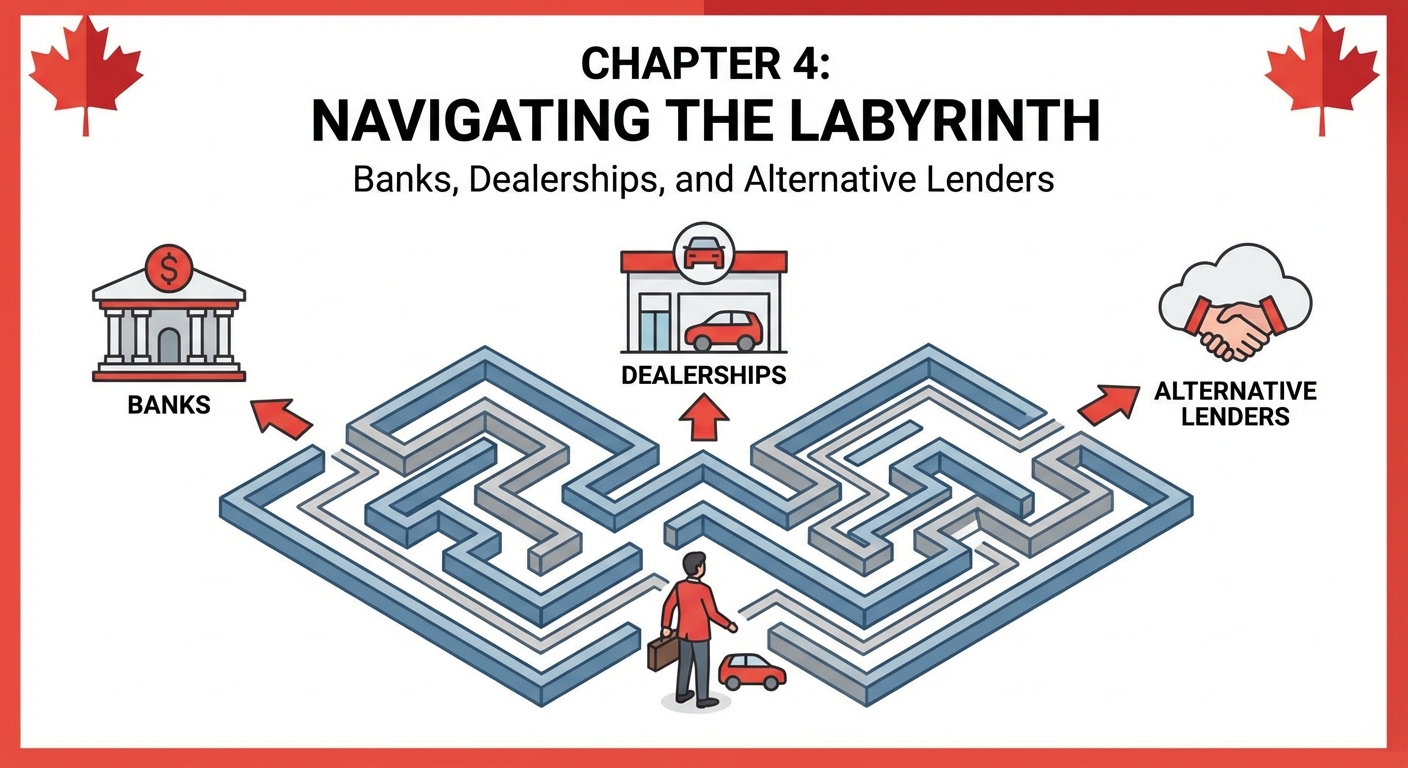
Securing an EV loan as a self-employed individual in Quebec means understanding the different avenues available for financing. Each option comes with its own set of criteria, benefits, and challenges. Knowing where to go and what to expect will significantly impact your approval odds and the terms of your loan.
4.1. Traditional Banks: The Gold Standard (and Their Stricter Criteria for Self-Employed)
Major Canadian banks like RBC, TD, Scotiabank, BMO, and CIBC are often the first choice for vehicle financing due to their competitive interest rates and established reputations. They represent the "gold standard" of lending. However, for self-employed individuals, their criteria can be the most stringent.
Pros: Generally offer the lowest interest rates, especially for applicants with excellent credit. Their large networks mean widespread accessibility. Cons: Typically require 2-3 years of consistent income history as demonstrated by tax returns. They are less flexible with 'no income proof' scenarios and prefer stable, verifiable income over fluctuating earnings, even if high. Tips: If you have a long-standing relationship with your current bank, where your business and personal accounts are held, they may be more willing to consider your application. They already have a history of your transactions and financial behaviour, which can work in your favour. Be prepared to provide extensive documentation.
4.2. Dealership Financing: Convenience, Manufacturer Programs, and Hidden Gems
Dealerships, like SkipCarDealer.com, offer in-house financing departments that act as intermediaries between you and a network of lenders. This includes major banks, specialized automotive lenders, and even the manufacturer's own captive finance arms (e.g., Hyundai Financial Services, Tesla Financing, Ford Credit).
Pros: Streamlined process – you can apply for financing and purchase your vehicle all in one place. Dealerships often have access to special manufacturer incentives and promotional interest rates on specific EV models, which can be highly advantageous. They can also be more flexible and willing to work with non-traditional income sources, as they have a vested interest in selling you a car. Cons: While convenient, the interest rates might occasionally be slightly higher than what you could secure directly from your bank, unless it's a special manufacturer program. Transparency on how many lenders they've shopped your application to can sometimes be limited.
4.3. Niche & Alternative Lenders: Your Secret Weapon for Approval (When Others Say No)
When traditional banks or even dealership financing proves challenging, niche and alternative lenders can be your secret weapon. These lenders specialize in non-traditional income situations, lower credit scores, or unique financial histories.
- Credit Unions: In Quebec, institutions like Desjardins and Caisses Populaires are community-focused and often more flexible with their members. If you have a long history with a local credit union, they might offer more personalized consideration for your self-employed income.
- Subprime Lenders: These lenders are designed to work with individuals who have a less-than-perfect credit history or non-traditional income. They take on higher risk, which means their interest rates will generally be higher. However, they offer a viable path to approval when other doors are closed.
Understanding the Trade-Off: The primary trade-off with alternative lenders is typically a higher interest rate for increased approval odds. This option makes sense when you need reliable transportation and traditional avenues have declined your application. It’s an investment in rebuilding your credit and establishing a positive payment history, which can lead to better rates in the future. For individuals who have gone through challenging financial periods like a consumer proposal, specialized lenders are often the key to getting back on track. For more insights into this, consider reading What If Your Consumer Proposal *Unlocks* Your Car Loan, Ontario?
Situations where alternative lenders are a good fit include new businesses without extensive financial history, individuals recovering from bankruptcy or a consumer proposal, or those with a very high debt-to-income ratio but demonstrated repayment capacity. Even if you have bad credit and are considering a private sale, specific lenders can help. Our article Bad Credit? Private Sale? We're Already Writing the Cheque. provides more details on how this works.
Chapter 5: Unpacking the Numbers – Rates, Terms, and Hidden Costs of EV Ownership
Understanding the financial specifics of an EV loan goes beyond the advertised monthly payment. For the self-employed, factors like interest rates, loan terms, and the true cost of ownership require careful consideration to ensure long-term financial stability.
5.1. Understanding Interest Rates: What Drives Them for the Self-Employed?
Interest rates are a critical component of your loan's total cost. For self-employed individuals, several factors play an outsized role:
- Credit Score's Paramount Impact: Your credit score is your unofficial co-signer. A strong score (generally 700+) mitigates the perceived risk associated with irregular income, often qualifying you for the best rates. A lower score, conversely, will lead to higher rates.
- Loan Term Length: This is the duration over which you repay the loan. Shorter terms (e.g., 36-48 months) mean higher monthly payments but less interest paid overall. Longer terms (e.g., 72-84 months) lower your monthly payments, making them more manageable with irregular income, but result in significantly more interest paid over the life of the loan.
- Down Payment Size: A larger down payment reduces the principal loan amount, lowering the lender's exposure and demonstrating your financial commitment. This often translates directly into better interest rates.
- The Self-Employed Premium: Unfortunately, irregular income *can* sometimes lead to a slightly higher interest rate compared to a traditionally employed individual with an identical credit score. Lenders view the income unpredictability as an added risk. To minimize this, focus on presenting robust income documentation and a strong down payment.
5.2. Beyond the Monthly Payment: The True Cost of EV Ownership for the Self-Employed
While fuel savings are a major perk of EVs, it's essential to consider all ownership costs:
- Insurance Considerations: EVs, particularly newer models with advanced technology and specialized components, can sometimes have higher insurance premiums. Repair costs for battery packs or complex sensors can be higher. Always get insurance quotes for specific EV models before committing to a purchase.
- Charging Infrastructure Costs: While public charging networks are expanding, most EV owners benefit from a Level 2 home charger. Installation can cost anywhere from $1,000 to $3,000, although Quebec's 'Roulez Vert' program often offers rebates for this. Factor in public charging network fees if you'll rely on them frequently.
- Maintenance & Warranty: EVs generally have lower maintenance costs due to fewer moving parts. However, understanding the battery degradation warranty (typically 8 years/160,000 km in Canada) is crucial. Other components like tires, brakes (which last longer due to regenerative braking), and cabin air filters still require attention.
- Registration and Licensing Fees: These are standard vehicle ownership costs in Quebec and should be factored into your annual budget.
5.3. The Power of Your Down Payment: How It Opens Doors and Lowers Risk
For self-employed applicants, a significant down payment is often the single most impactful factor in securing a favourable loan. It directly addresses the lender's primary concern: risk.
- Reduces Lender's Exposure: A larger down payment means the lender is financing a smaller portion of the vehicle's value. This reduces their potential loss if you default.
- Demonstrates Financial Commitment: Saving up a substantial down payment shows financial discipline and a serious commitment to the purchase, signaling responsibility to the lender.
- Improves Loan-to-Value (LTV): A lower LTV ratio is always more attractive. With a 20% or more down payment, you're starting with equity in the vehicle, which is a strong position.
Chapter 6: Boosting Your Approval Odds – Strategies for Self-Employed Success
While irregular income might present challenges, there are concrete steps you can take to significantly strengthen your loan application and boost your approval odds. These strategies focus on demonstrating financial responsibility and minimizing perceived risk for lenders.
6.1. Credit Score: Your Unofficial Co-Signer
Your credit score is often the first thing lenders look at, acting as a snapshot of your financial reliability. For self-employed individuals, a strong credit score (generally 700 or above) is paramount, as it can effectively offset some of the concerns related to income irregularity.
- Detailed Steps to Improve: Pay all your bills on time, every time. Payment history is the most significant factor in your score. Keep your credit utilization low (ideally below 30% of your available credit). Avoid opening too many new credit accounts at once.
- Understanding Canadian Agencies: In Canada, your credit score is primarily managed by two reporting agencies: Equifax and TransUnion. You are entitled to a free copy of your credit report from both annually. Review these reports carefully for any errors or discrepancies that could be negatively impacting your score and dispute them immediately.
- How a High Score Helps: A high credit score signals to lenders that despite income fluctuations, you are responsible with debt. It suggests you'll prioritize loan payments, making you a less risky borrower and potentially qualifying you for better interest rates and terms.
6.2. The Co-Signer Advantage: When a Partner or Family Member Can Make the Difference
If you're finding it difficult to secure a loan on your own, bringing in a co-signer can dramatically improve your approval chances. A co-signer is someone with stable income and a good credit history who agrees to be equally responsible for the loan payments if you're unable to make them.
- How It Boosts Chances: The co-signer's strong financial profile essentially acts as a guarantee for the lender, significantly reducing their risk. This can be particularly beneficial for new self-employed individuals or those with a developing credit history.
- Responsibilities and Risks: It's crucial for both parties to understand the gravity of this arrangement. The co-signer is legally obligated to repay the loan if you default, and their credit score will also be affected by any missed payments. This should only be considered with someone you trust implicitly and after thorough discussion.
- When to Consider: This option is ideal when you're confident in your ability to make payments but lack the established income history or credit score that lenders prefer. It's a bridge to building your own credit and track record.
6.3. Demonstrating Financial Responsibility: Proactive Steps
Beyond your credit score, your overall financial behaviour matters. Proactive steps to demonstrate responsibility can sway a lender in your favour.
- Maintaining a Low Debt-to-Income Ratio: Lenders look at your total monthly debt obligations relative to your gross monthly income. A high ratio indicates you might be overextended. Work to reduce other outstanding debts (credit cards, lines of credit) before applying for an EV loan.
- Ensuring a Stable Banking History: A clean banking record, free of overdrafts, bounced cheques, or frequent low balances, shows responsible money management. Consistent positive balances are key indicators of financial health.
Chapter 7: Real-World Scenarios – Self-Employed EV Owners Across Canada
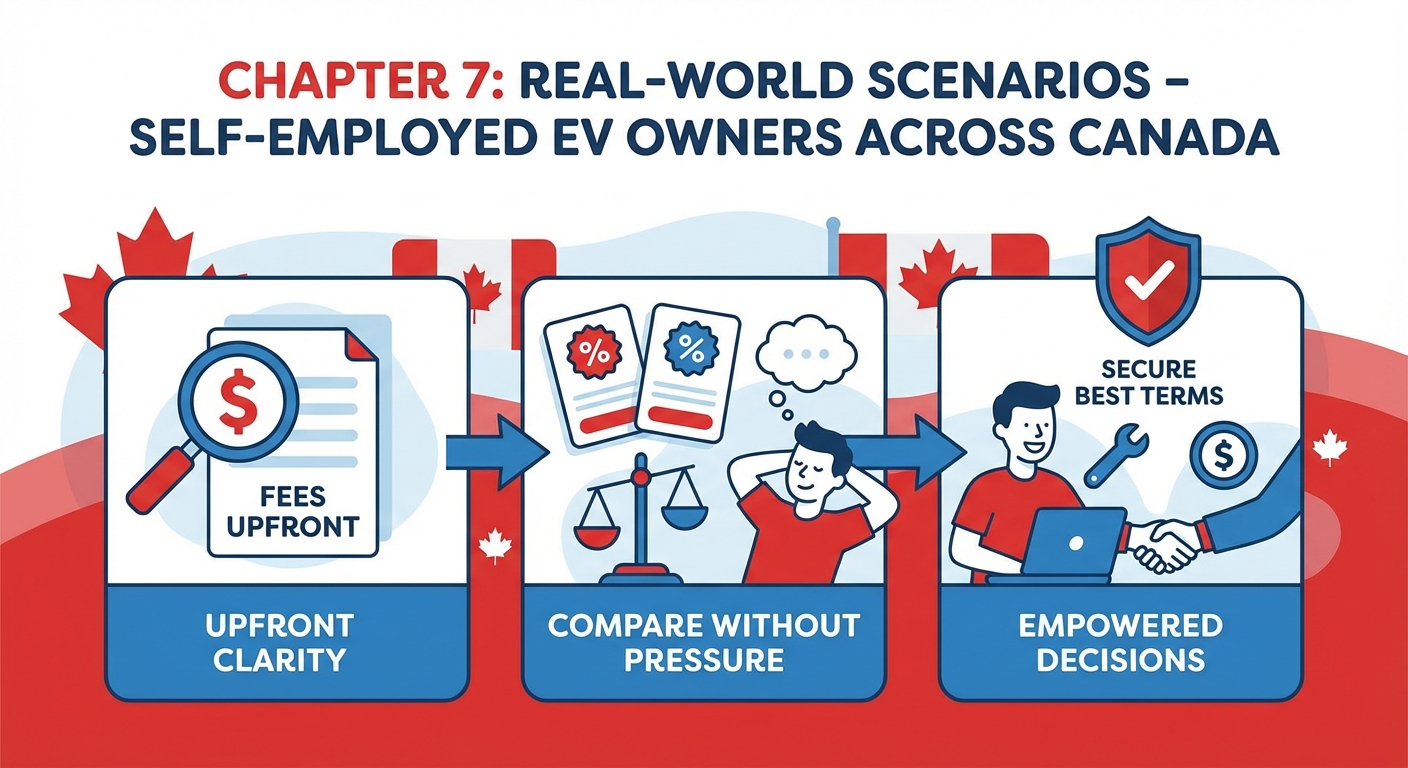
It's one thing to talk about strategies in theory, but seeing how they play out in real life can be incredibly motivating. Here are a few hypothetical scenarios illustrating how self-employed individuals in various Canadian cities, particularly Quebec, have successfully financed their EVs.
7.1. Montreal's Freelance Graphic Designer: Securing a Lease with Irregular Contracts
Meet Amélie, a talented freelance graphic designer in Montreal. Her income fluctuates based on project volume, with some months bringing in substantial revenue and others being leaner. She wanted a Hyundai Kona Electric for her city commutes and occasional trips to clients outside the downtown core.
Her Strategy: Amélie had a strong credit score (760) and meticulously kept her personal and business finances separate. While she didn't have traditional pay stubs, she presented 12 months of detailed bank statements showing consistent deposits from various clients, even if the amounts varied. She also provided copies of her last two years of CRA Notices of Assessment, which, despite showing some income fluctuation, demonstrated an overall upward trend in her declared business income. By leveraging the Quebec 'Roulez Vert' rebate and the federal iZEV incentive, the net cost of the Kona Electric was significantly reduced. This, combined with a modest down payment from her savings, allowed her to secure a 48-month lease through a dealership's captive finance arm, which was more accustomed to reviewing self-employed applications than her traditional bank.
Outcome: Approved for a lease with manageable monthly payments, demonstrating how consistent client payments, even if varied, can paint a positive financial picture when combined with strong credit and incentives.
7.2. Quebec City's Small Business Owner: Financing a Fleet EV for Deliveries
Jean-Pierre runs a popular artisanal bakery in Quebec City. He wanted to add a Ford E-Transit electric van to his fleet for environmentally friendly deliveries, aligning with his brand's sustainability values. As a small business owner, his income was tied to the bakery's performance.
His Strategy: Jean-Pierre had been in business for 7 years and had excellent business tax returns (T2s) showing consistent profitability. He also provided his personal NOAs, which reflected a stable income drawn from the business. Crucially, he made a significant down payment (25%) using business savings. He approached a dealership that specialized in commercial vehicle sales and had strong relationships with lenders who understood small business financing. He emphasized the business write-off benefits of a commercial EV, including depreciation and reduced operating costs, which further solidified his financial case.
Outcome: Approved for a commercial vehicle loan with a favourable interest rate, showcasing how established business history, substantial down payment, and strategic use of business write-offs can secure financing for larger EV purchases.
7.3. Beyond Quebec: How the Rules Shift in Ontario and British Columbia
While Quebec offers a uniquely advantageous environment for self-employed EV buyers, it's worth noting how the landscape differs in other major Canadian provinces:
- Ontario (Toronto, Ottawa): Self-employed individuals in Ontario face a slightly tougher uphill climb when financing an EV. This is primarily due to the absence of a provincial EV incentive program. While the federal iZEV incentive (up to $5,000) is still available, the lack of an additional provincial rebate means the net purchase price of an EV remains higher. This translates to a larger loan amount, potentially making lenders more cautious about irregular income. Strong credit, a significant down payment, and robust income documentation are even more critical in cities like Toronto and Ottawa, where the cost of living is already high.
- British Columbia (Vancouver): British Columbia offers a more supportive environment than Ontario but less generous than Quebec. BC's Go Electric rebates provide up to $4,000 for new EVs, which, when combined with the federal incentive, can reduce the cost by up to $9,000. This creates an environment somewhat similar to Quebec's, making EV financing more accessible for self-employed individuals in Vancouver and other BC cities. Lenders in British Columbia, like those in Quebec, are generally more familiar with EV financing and the associated benefits, but the criteria for self-employed applicants remain focused on verifiable income and creditworthiness.
This comparison highlights the 'Quebec Advantage' – the province's generous incentives significantly lower the barrier to entry, making it an ideal place for self-employed individuals to go electric.
Your Next Steps to Approval: Charting Your Course to an Electric Future
Navigating the world of EV financing as a self-employed individual with irregular income in Quebec is absolutely achievable. It requires preparation, transparency, and a strategic approach. Here's your roadmap to an electric future:
- Consolidate Your Documents: Gather all your tax returns (2-3 years of NOAs), 6-12 months of bank statements, and any relevant business contracts or invoices. Organization is key.
- Boost Your Credit: Pay bills on time, keep credit utilization low, and regularly check your credit report for accuracy. Your credit score is your most powerful asset.
- Save for a Down Payment: Aim for 10-20% or more. A substantial down payment significantly reduces lender risk and can improve your interest rate. Don't forget to factor in your trade-in vehicle's value.
- Shop Around: Don't settle for the first offer. Explore options with traditional banks, leverage dealership financing programs, and consider niche or alternative lenders if needed.
- Leverage Incentives: Actively factor in Quebec's 'Roulez Vert' and the federal iZEV rebates. These dramatically reduce the net cost of your EV, making it easier to finance.
- Be Transparent: Openly communicate your financial situation with lenders. Explain your income structure, how you manage seasonality, and your commitment to repayment. Honesty builds trust.
Your irregular income is not a weakness; it's a testament to your entrepreneurial spirit and adaptability. With the right strategy, an EV in Quebec is not just a dream, but a tangible and sustainable reality that SkipCarDealer.com is here to help you achieve. Get ready to plug in and drive into your electric future!