Quebec Bad Credit Car Title Loans: Legit Cash for Your Ride.
Table of Contents
- Key Takeaways
- Unlocking Your Vehicle's Hidden Value: A Lifeline for Urgent Cash Needs
- The Modern Financial Landscape: Why Traditional Doors Close for Some
- Defining Vehicle Collateral Loans: More Than Just a Loan, It's an Asset-Backed Solution
- Dispelling Myths vs. Uncovering Realities: A Candid Overview
- Who Benefits Most? Identifying the Ideal Borrower Profile
- The Mechanics of Vehicle Collateral Lending: How Your Car Becomes Your Cash Key
- Title Transfer vs. Lien Placement: Understanding Ownership Dynamics
- Collateral Assessment: What Lenders Look For in Your Ride
- Loan-to-Value Ratios: Maximizing Your Borrowing Potential
- The Role of Vehicle Condition and Age: Beyond Just 'Having a Car'
- PRO_TIP_1: Documenting Your Vehicle's True Worth: Appraisal Strategies
- Beyond Credit Scores: Decoding Eligibility and the Path to Approval
- The 'Bad Credit' Misconception: What Lenders Truly Prioritize
- Income Verification: Proving Your Repayment Capacity
- Residency and Age Requirements: The Baseline for Application
- Vehicle Ownership Verification: Ensuring a Clear Title
- The No-Credit/Thin-Credit Scenario: A Different Lens for Approval
- The Application Journey: From Initial Inquiry to Funds in Hand
- Initial Contact: Online Forms vs. In-Person Consultations
- Required Documentation Checklist: What You'll Need to Gather
- The Vehicle Inspection Process: What Happens Under the Hood (and Outside)
- Understanding the Loan Agreement: Key Clauses and Fine Print
- Receiving Your Funds: Speed, Methods, and Accessibility
- The Real Cost of Borrowing: Deconstructing Interest, Fees, and the APR Puzzle
- Decoding the Annual Percentage Rate (APR): Your True Cost Indicator
- Beyond Interest: Unpacking Origination Fees, Processing Fees, and Administrative Charges
- The Trap of Rollovers and Extensions: How Short-Term Can Become Long-Term Debt
- Late Payment Penalties and Default Fees: The Escalation of Costs
- Prepayment Penalties: The Surprising Cost of Early Repayment
- Illustrative Scenarios: Real-World Examples of Total Repayment
- PRO_TIP_2: The Power of Comparison: Shopping for the Best Rates and Terms
- Navigating the Lender Landscape: Identifying Trustworthy Providers in an Alternative Market
- Why Banks and Credit Unions Don't Offer These Loans: Understanding the Niche
- Online Lenders vs. Brick-and-Mortar Establishments: Pros and Cons
- Indicators of a Reputable Lender: Transparency, Licensing, and Reviews
- Red Flags to Watch For: High-Pressure Tactics, Hidden Fees, and Unclear Terms
- The Importance of Clear Communication: Questions to Ask Before Signing
- Safeguarding Your Investment: Understanding Provincial Regulations and Consumer Protection
- The Decentralized Regulatory Framework: Why Provincial Rules Matter
- Licensing and Registration Requirements: Ensuring Lender Accountability
- Interest Rate Caps and Fee Limitations: Protecting Borrowers from Exploitation
- Disclosure Requirements: What Lenders Must Tell You
- Your Rights as a Borrower: Repossession Procedures and Recourse Options
- Where to Seek Assistance: Consumer Affairs Offices and Advocacy Groups
- PRO_TIP_3: Verifying Lender Credentials: A Crucial Pre-Application Step
- Managing Your Repayment Journey: Strategies to Avoid Default and Protect Your Vehicle
- Budgeting for High Payments: Integrating Loan Repayment into Your Financial Plan
- Communication is Key: When to Talk to Your Lender About Difficulties
- Avoiding the Roll-Over Cycle: Strategies for Timely Repayment
- Understanding Default Consequences: The Path to Vehicle Repossession
- Proactive Steps to Prevent Default: Emergency Funds and Alternative Solutions
- Weighing Your Options: When a Vehicle Collateral Loan Isn't the Answer
- Exploring Alternatives for Bad Credit: Personal Loans, Secured Credit Cards, and Credit Building Strategies
- Community Resources and Non-Profit Assistance: Local Support Networks
- The Cost-Benefit Analysis: Is the Risk Worth the Reward?
- When to Walk Away: Recognizing Unsustainable Loan Terms
- Building Future Financial Resilience: Long-Term Strategies Beyond Immediate Needs
- PRO_TIP_4: The 'What If' Scenario: Always Have a Contingency Plan
- Empowering Your Financial Drive: Navigating Your Next Steps with Clarity
- Recap: Key Considerations Before Committing
- Your Decision Framework: A Checklist for Readiness
- The Path Forward: From Information to Action
- Frequently Asked Questions About Vehicle Collateral Loans
Life in Canada, especially in vibrant provinces like Quebec, can present unexpected financial hurdles. When traditional lending avenues close due to a less-than-perfect credit score, many Canadians find themselves searching for alternative solutions. One option that frequently surfaces is a vehicle title loan, often seen as a legitimate lifeline for urgent cash needs in 2026.
Key Takeaways
- The Core Principle: Your Vehicle as Your Financial Bridge
Vehicle title loans leverage the equity in your car as collateral. This means your approval is primarily based on your vehicle's value and your ability to repay, rather than solely on your credit score. - Bad Credit? Understanding Your Unique Approval Pathway
Even with bad credit, approval is possible. Lenders for these loans prioritize clear vehicle ownership, the car's market value, and proof of steady income to ensure repayment capacity. - The Cost Equation: Beyond the Advertised Rate
Be prepared for higher Annual Percentage Rates (APRs) compared to traditional loans. Scrutinize all fees—origination, processing, and potential rollover charges—as these significantly impact the total cost of borrowing. - Provincial Safeguards: Knowing Your Rights and Responsibilities
In Quebec, specific provincial regulations govern vehicle title loans, including licensing requirements for lenders and caps on interest rates and fees. Understanding these safeguards protects you as a borrower. - Making Informed Choices: Is This Your Best Path Forward?
While a title loan can offer quick cash, it carries risks, including potential vehicle repossession. Always compare alternatives, understand all terms, and ensure it aligns with your financial capacity before committing.
Unlocking Your Vehicle's Hidden Value: A Lifeline for Urgent Cash Needs
Are vehicle title loans legitimate in Quebec with bad credit? Yes, vehicle title loans are legitimate in Quebec for individuals with bad credit, provided they are obtained from a licensed and regulated lender. These loans offer a way to access funds by using your vehicle's clear title as collateral, making them a viable option for those who might not qualify for traditional bank loans due to credit history.
The modern financial landscape can be unforgiving. For many Canadians, an unexpected expense – a sudden home repair, a medical emergency, or an urgent bill – can plunge them into a desperate search for immediate funds. When credit scores are low or non-existent, the doors of traditional banks and credit unions often remain firmly shut. This is where the concept of a vehicle title loan, or collateral loan, steps into the spotlight as a potential solution.
The Modern Financial Landscape: Why Traditional Doors Close for Some
In 2026, the criteria for traditional lending remain stringent. Banks typically rely heavily on credit scores, debt-to-income ratios, and a stable employment history. For individuals who have faced financial setbacks, job loss, or simply haven't had the chance to build a robust credit history, these requirements can feel insurmountable. The need for quick, accessible capital often outweighs the desire to navigate complex, time-consuming applications that may ultimately lead to rejection.
Defining Vehicle Collateral Loans: More Than Just a Loan, It's an Asset-Backed Solution
A vehicle collateral loan is a secured loan where your car's clear title serves as security. Instead of relying primarily on your credit score, lenders assess the value of your vehicle and your ability to repay the loan from your income. This unique structure allows borrowers with bad credit to access funds they otherwise couldn't. It's not just a loan; it's a strategic use of a tangible asset to bridge a financial gap.
Dispelling Myths vs. Uncovering Realities: A Candid Overview
There are many misconceptions surrounding vehicle title loans. Some believe they are always predatory, while others see them as a magic bullet. The reality lies somewhere in between. They are a legitimate financial product, regulated differently across provinces, and designed for short-term, urgent needs. The key is understanding their mechanics, costs, and provincial regulations to make an informed decision. For more insights into navigating financial challenges, you might find our article on Bad Credit Car Loan: Consolidate Payday Debt Canada 2026 helpful.
Who Benefits Most? Identifying the Ideal Borrower Profile
Vehicle title loans are best suited for individuals who:
- Own their vehicle outright with a clear title.
- Have an urgent, short-term need for cash.
- Possess a verifiable source of income to repay the loan.
- Have exhausted other, lower-cost borrowing options due to bad credit.
- Fully understand the terms, conditions, and risks involved.
They are not a long-term financial solution or a substitute for responsible budgeting.
The Mechanics of Vehicle Collateral Lending: How Your Car Becomes Your Cash Key
Understanding how vehicle title loans work is paramount. It's a distinct process from unsecured personal loans or traditional car financing. Your vehicle isn't just a mode of transport; it's a valuable asset that can unlock immediate liquidity.
Title Transfer vs. Lien Placement: Understanding Ownership Dynamics
When you take out a vehicle title loan, you retain possession and use of your car. However, the lender places a lien on your vehicle's title. This means they become the legal lienholder until the loan is fully repaid. In some cases, particularly with certain lenders or higher loan amounts, the physical title may be temporarily transferred to the lender's name. It's crucial to clarify this specific point with your chosen lender in Quebec.
Collateral Assessment: What Lenders Look For in Your Ride
Lenders evaluate your vehicle based on several factors to determine its collateral value:
- Make and Model: Popular, reliable brands often fetch higher values.
- Year: Newer vehicles generally have higher market values.
- Mileage: Lower kilometres usually mean higher value.
- Condition: The car's physical and mechanical state is critical.
- Market Value: Lenders use appraisal guides (e.g., Canadian Black Book, Kelley Blue Book) to determine the wholesale or resale value.
Loan-to-Value Ratios: Maximizing Your Borrowing Potential
Lenders typically offer a loan amount based on a percentage of your vehicle's wholesale value, known as the Loan-to-Value (LTV) ratio. This usually ranges from 50% to 80%. For example, if your car is valued at $10,000, you might be offered a loan between $5,000 and $8,000. This ratio protects both the borrower (by not over-lending) and the lender (by ensuring sufficient collateral).
The Role of Vehicle Condition and Age: Beyond Just 'Having a Car'
While having a car is the first step, its condition and age significantly impact the loan amount. A well-maintained, newer model with lower kilometres will qualify for a much higher loan than an older, high-mileage vehicle with cosmetic or mechanical issues. Regular maintenance records can also bolster your vehicle's perceived value.
PRO_TIP_1: Documenting Your Vehicle's True Worth: Appraisal Strategies
Before approaching a lender, gather all documentation related to your vehicle's value. This includes maintenance records, recent repair receipts, and any aftermarket upgrades. Consider getting an independent appraisal if you believe your vehicle's unique features or exceptional condition warrant a higher valuation. This proactive step can help you negotiate a better loan-to-value ratio and ultimately secure a larger loan amount.
Beyond Credit Scores: Decoding Eligibility and the Path to Approval
One of the primary appeals of vehicle title loans, particularly in 2026, is their accessibility for individuals with less-than-perfect credit. While a credit check may still occur, it's rarely the deciding factor.
The 'Bad Credit' Misconception: What Lenders Truly Prioritize
The term 'bad credit' can be misleading in this context. While traditional lenders see it as a red flag, vehicle title loan providers shift their focus. Their main concerns are:
- Clear Title: Do you own the car outright, free of any existing liens?
- Vehicle Value: Is your car valuable enough to secure the desired loan amount?
- Repayment Capacity: Can you realistically afford the monthly payments?
Your credit score takes a backseat to these critical factors.
Income Verification: Proving Your Repayment Capacity
Even if your credit score isn't a barrier, your income certainly isn't ignored. Lenders need assurance that you can make the scheduled payments. This involves providing proof of income, which can include:
- Pay stubs from employment.
- Bank statements showing regular deposits.
- Proof of government benefits (e.g., disability, pension).
- For self-employed individuals, tax returns or business bank statements.
Lenders want to see a stable, predictable income stream. For those with non-traditional income, our article Self-Employed? Your Income Verification Just Got Fired. offers more detailed guidance.
Residency and Age Requirements: The Baseline for Application
To qualify for a vehicle title loan in Quebec, you must meet basic eligibility criteria:
- Age: Be at least 18 years old (the age of majority in Quebec).
- Residency: Be a permanent resident or citizen of Canada, with proof of residency in Quebec.
These are standard requirements across most Canadian provinces for financial services.
Vehicle Ownership Verification: Ensuring a Clear Title
The cornerstone of a vehicle title loan is the clear title. This means:
- The vehicle must be registered in your name.
- There must be no existing liens or outstanding loans against the vehicle.
- The vehicle must be fully paid off.
Lenders will typically perform a lien search (e.g., through the SAAQ in Quebec) to confirm this before approving any loan.
The No-Credit/Thin-Credit Scenario: A Different Lens for Approval
For those with no credit history or a 'thin' credit file, vehicle title loans can be particularly advantageous. Since the loan is secured by your asset, lenders are more willing to approve applicants without a traditional credit footprint. They rely more heavily on your income stability and the vehicle's value. This is a significant distinction from unsecured loans, where credit history is paramount. If you're new to Canada or have zero credit, our guide Zero Credit Score. Zero Problem. Your Car Loan Starts Now, Vancouver. provides further insights into alternative financing.
The Application Journey: From Initial Inquiry to Funds in Hand
The process of obtaining a vehicle title loan is designed to be streamlined, often allowing for quick access to funds. Knowing what to expect can help you prepare and expedite your application.
Initial Contact: Online Forms vs. In-Person Consultations
Most reputable vehicle title loan providers offer both online and in-person application options. Online forms provide convenience, allowing you to apply from home and often get pre-approved quickly. In-person consultations, however, can be beneficial for asking detailed questions and having a direct dialogue with the lender. Choose the method that best suits your comfort level and urgency.
Required Documentation Checklist: What You'll Need to Gather
To ensure a smooth application process, have the following documents ready:
- Valid Government-Issued ID: Driver's license or passport.
- Proof of Residency: Utility bill or lease agreement.
- Vehicle Ownership: Original vehicle registration and clear title (certificat d'immatriculation from SAAQ).
- Proof of Income: Recent pay stubs, bank statements, or other income verification.
- Proof of Vehicle Insurance: Current policy details.
- References: Some lenders may ask for personal or professional references.
The Vehicle Inspection Process: What Happens Under the Hood (and Outside)
A crucial step is the vehicle inspection. This can be done in person at the lender's office or sometimes through digital submission of photos and videos. The lender will assess:
- The exterior and interior condition.
- Mileage.
- Any damage or modifications.
- The VIN (Vehicle Identification Number) to verify its identity.
This inspection helps the lender finalize the vehicle's market value and thus the maximum loan amount they can offer.
Understanding the Loan Agreement: Key Clauses and Fine Print
Before signing, meticulously review the loan agreement. Pay close attention to:
- APR (Annual Percentage Rate): The true cost of borrowing, including interest and fees.
- Repayment Schedule: Dates and amounts of each payment.
- Fees: All origination, administrative, late payment, and potential rollover fees.
- Default Terms: What happens if you miss payments, including repossession clauses.
- Prepayment Penalties: Are there fees for paying off the loan early?
Do not hesitate to ask questions until you fully understand every clause.
Receiving Your Funds: Speed, Methods, and Accessibility
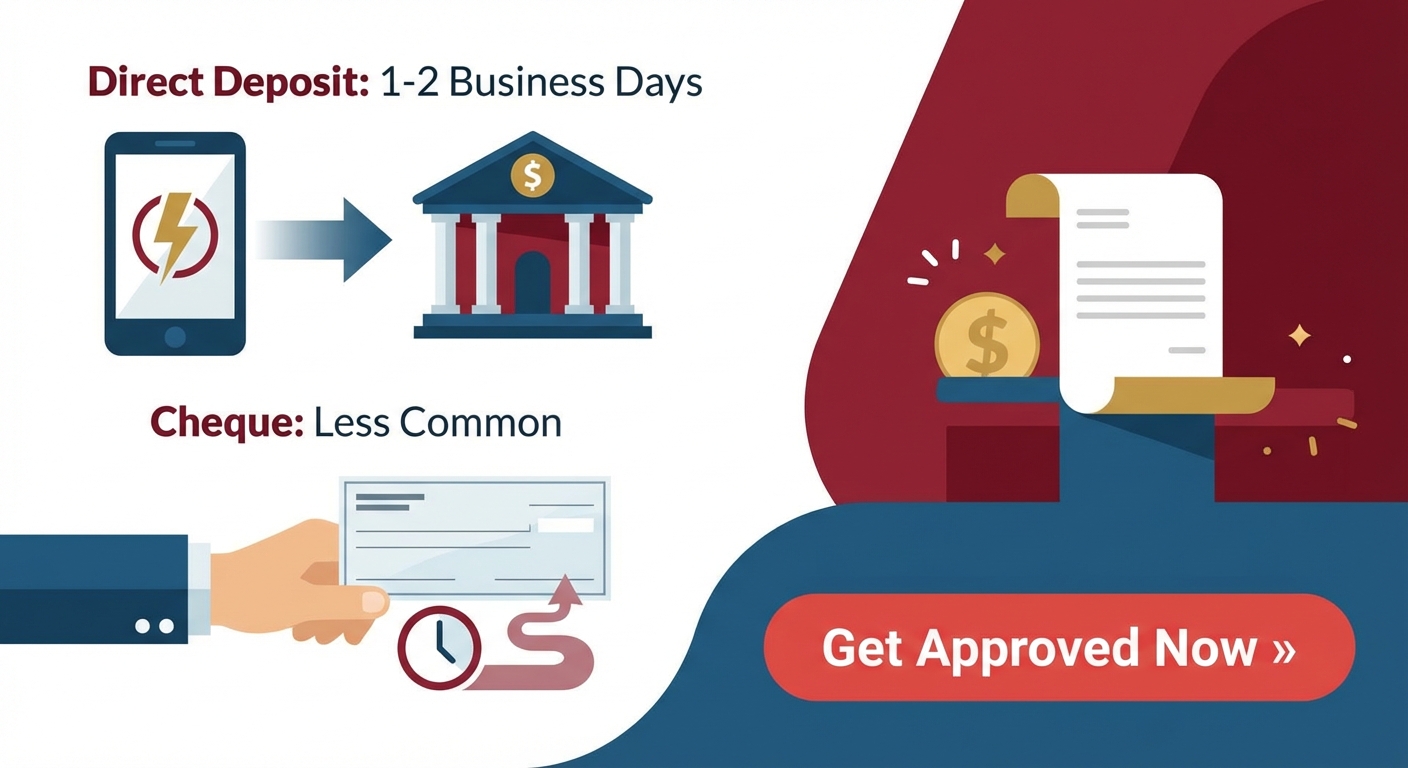
Once your application is approved and the agreement signed, funds can be disbursed quickly. Common methods include:
- E-transfer: Often the fastest method, with funds available within hours.
- Direct Deposit: Funds transferred directly to your bank account, typically within 1-2 business days.
- Cheque: Less common, but some lenders may offer this.
The speed of funding is often a major draw for individuals facing urgent financial situations.
The Real Cost of Borrowing: Deconstructing Interest, Fees, and the APR Puzzle
While the accessibility of vehicle title loans is appealing, it's vital to have a clear understanding of the full financial implications. These loans often come with a higher cost than traditional bank loans due to the increased risk lenders assume.
Decoding the Annual Percentage Rate (APR): Your True Cost Indicator
The Annual Percentage Rate (APR) is the most critical figure to understand. It represents the total cost of borrowing over a year, including both the interest rate and certain fees. For vehicle title loans, especially for those with bad credit, APRs can range significantly, typically from 30% to 70% or even higher, depending on the province and lender. A lower APR directly translates to a lower overall repayment amount.
Consider this illustrative comparison of APRs:
| Loan Type | Typical APR Range (2026) | Primary Factors for Approval |
|---|---|---|
| Prime Traditional Bank Loan | 6.99% - 12.99% | Excellent Credit Score, Low DTI |
| Subprime Car Loan (Bad Credit) | 15.99% - 29.99% | Credit Score (secondary), Income, Vehicle Value |
| Vehicle Title Loan | 30.00% - 70.00%+ | Vehicle Value, Income (primary), Clear Title |
Beyond Interest: Unpacking Origination Fees, Processing Fees, and Administrative Charges
The APR captures some fees, but it's crucial to ask about all additional charges:
- Origination Fees: A fee charged for processing the loan, often a percentage of the loan amount (e.g., 1-5%).
- Processing Fees: Flat fees for administrative work, documentation, and lien registration.
- Administrative Charges: Ongoing fees for managing the loan account.
These fees can add hundreds of dollars to your total repayment, so insist on a detailed breakdown before committing.
The Trap of Rollovers and Extensions: How Short-Term Can Become Long-Term Debt
If you cannot make a payment on time, some lenders may offer a 'rollover' or 'extension.' This allows you to pay only the interest and fees, extending the loan term for another payment cycle. While it provides immediate relief, it significantly increases the total cost, as you're essentially paying interest on interest. This cycle can quickly escalate into a debt trap, making it harder to repay the principal.
Late Payment Penalties and Default Fees: The Escalation of Costs
Missing a payment incurs late payment penalties, which are typically flat fees (e.g., $25-$50). If you default on the loan, additional fees will apply, and the lender may begin repossession procedures for your vehicle. Understanding these consequences is vital for responsible borrowing.
Prepayment Penalties: The Surprising Cost of Early Repayment
Ironically, some lenders charge a penalty for paying off your loan early. This is because they lose out on potential interest income. Always check your loan agreement for any prepayment penalties. A transparent lender will clearly state if such fees apply.
Illustrative Scenarios: Real-World Examples of Total Repayment
Let's look at how fees and APR impact a $5,000 vehicle title loan over 12 months:
| Scenario | Loan Amount | APR | Origination Fee | Monthly Payment (approx.) | Total Repaid | Total Cost of Loan |
|---|---|---|---|---|---|---|
| Standard Loan (35% APR, no origination fee) | $5,000 | 35% | $0 | $486 | $5,832 | $832 |
| Higher APR Loan (50% APR, no origination fee) | $5,000 | 50% | $0 | $515 | $6,180 | $1,180 |
| Loan with Fees (35% APR, 3% origination fee) | $5,000 | 35% | $150 | $500 | $6,000 + $150 (fee) | $1,150 |
As these scenarios illustrate, even seemingly small fees and differences in APR can add up significantly over the loan term.
PRO_TIP_2: The Power of Comparison: Shopping for the Best Rates and Terms
Never accept the first offer you receive. Contact multiple licensed vehicle title loan providers in Quebec and request detailed quotes, including the full APR and a breakdown of all fees. Use these quotes to compare not just the monthly payment, but the total cost of the loan. A few hours of comparison shopping can save you hundreds, if not thousands, of dollars.
Navigating the Lender Landscape: Identifying Trustworthy Providers in an Alternative Market
The alternative lending market, including vehicle title loans, requires careful navigation. Distinguishing between reputable lenders and predatory operators is crucial for your financial safety.
Why Banks and Credit Unions Don't Offer These Loans: Understanding the Niche
Traditional financial institutions like banks and credit unions typically do not offer vehicle title loans. This is because their business models are structured around lower-risk, credit-score-dependent lending. Vehicle title loans operate in a higher-risk niche, catering to borrowers who don't fit conventional profiles. This specialized market is served by dedicated alternative lenders who understand the nuances of asset-backed lending.
Online Lenders vs. Brick-and-Mortar Establishments: Pros and Cons
- Online Lenders:
- Pros: Convenience, faster application process, wider geographic reach, often competitive rates due to lower overhead.
- Cons: Less personal interaction, potential for less transparent practices if not thoroughly vetted.
- Brick-and-Mortar Establishments:
- Pros: Face-to-face interaction, immediate answers to questions, physical presence can build trust.
- Cons: Limited hours, may require travel, potentially higher overhead costs reflected in rates.
Indicators of a Reputable Lender: Transparency, Licensing, and Reviews
When evaluating lenders, look for these crucial indicators:
- Transparency: Clear disclosure of all terms, fees, and APR without hidden clauses.
- Licensing: The lender must be properly licensed to operate in Quebec. This is a non-negotiable requirement.
- Positive Reviews and Reputation: Check online reviews, testimonials, and ratings with consumer protection agencies.
- Professionalism: Clear communication, responsive customer service, and a well-structured application process.
Red Flags to Watch For: High-Pressure Tactics, Hidden Fees, and Unclear Terms
Be wary of any lender exhibiting these red flags:
- Guaranteed Approval: No legitimate lender can guarantee approval without any assessment.
- High-Pressure Sales Tactics: Rushing you to sign without allowing time to read the agreement.
- Lack of Transparency: Reluctance to provide a detailed breakdown of all fees and the full APR.
- Requests for Upfront Fees: Asking for money before the loan is disbursed (beyond a legitimate application fee, which should be clearly stated).
- Unclear or Vague Terms: An agreement filled with jargon or ambiguous language.
The Importance of Clear Communication: Questions to Ask Before Signing
Empower yourself by asking specific questions:
- What is the exact APR, including all fees?
- Are there any prepayment penalties?
- What are the consequences of a late payment or default?
- What is the process if I face difficulty making a payment?
- Can I get a copy of the loan agreement to review before signing?
Safeguarding Your Investment: Understanding Provincial Regulations and Consumer Protection
The legitimacy and safety of vehicle title loans are heavily influenced by provincial regulations. In Canada, consumer protection laws and lending regulations are primarily a provincial responsibility, meaning rules can vary. For Quebec, specific frameworks are in place to protect borrowers.
The Decentralized Regulatory Framework: Why Provincial Rules Matter
Unlike a single federal law, each Canadian province, including Quebec, has its own legislation governing high-cost credit products like vehicle title loans. This decentralized approach means that interest rate caps, licensing requirements, and disclosure rules can differ significantly across the country. Understanding Quebec's specific framework is essential for anyone considering a title loan in the province.
Licensing and Registration Requirements: Ensuring Lender Accountability
In Quebec, lenders offering high-cost credit, including vehicle title loans, must be licensed and registered with the appropriate provincial authorities. This ensures they operate under a legal framework and are accountable for their practices. Always verify a lender's licensing status before proceeding with an application. Operating without a proper license is illegal and a major red flag.
Interest Rate Caps and Fee Limitations: Protecting Borrowers from Exploitation
Quebec, like other provinces, has regulations designed to protect consumers from excessively high interest rates and predatory fees. While interest rates on title loans are typically higher than traditional loans, there are often legal caps on the maximum allowable interest or total cost of borrowing. For example, some provinces cap the annual interest rate, or limit specific fees. It's crucial for Quebec borrowers to be aware of these caps to ensure they are not being overcharged.
Disclosure Requirements: What Lenders Must Tell You
Quebec's consumer protection laws mandate that lenders provide clear, comprehensive disclosure of all loan terms and costs. This includes:
- The principal loan amount.
- The total interest payable.
- All fees and charges (e.g., administrative, processing).
- The total cost of borrowing.
- The Annual Percentage Rate (APR).
- The repayment schedule.
- Information about default and repossession procedures.
This transparency allows you to make an informed decision.
Your Rights as a Borrower: Repossession Procedures and Recourse Options
Even in default, borrowers have rights. Lenders must follow specific legal procedures for vehicle repossession, which vary by province. In Quebec, these procedures are governed by provincial laws, ensuring a fair process. If you believe your rights have been violated or you've been subjected to unfair practices, you have recourse options.
Where to Seek Assistance: Consumer Affairs Offices and Advocacy Groups
If you have concerns about a lender or believe you've been treated unfairly, contact:
- Office de la protection du consommateur (OPC) in Quebec: This provincial body is responsible for enforcing consumer protection laws and can provide guidance and mediate disputes.
- Financial Consumer Agency of Canada (FCAC): While federal, they offer general information and resources on financial products.
- Non-profit credit counselling agencies: These organizations can provide free or low-cost advice on managing debt and understanding loan agreements.
PRO_TIP_3: Verifying Lender Credentials: A Crucial Pre-Application Step
Before sharing any personal information or signing documents, always verify that the lender is properly licensed to operate in Quebec. You can usually do this by checking the website of the Office de la protection du consommateur (OPC) or relevant provincial registry. A legitimate lender will proudly display their licensing information and be transparent about their regulatory compliance.
Managing Your Repayment Journey: Strategies to Avoid Default and Protect Your Vehicle
Securing a vehicle title loan is only half the battle; successfully repaying it is the ultimate goal. Proactive management of your repayment schedule is critical to avoid default and ensure you retain ownership of your vehicle.
Budgeting for High Payments: Integrating Loan Repayment into Your Financial Plan
Given the typically higher APRs of vehicle title loans, monthly payments can be substantial. It's imperative to integrate these payments into your budget immediately. Create a detailed financial plan that accounts for the loan payments alongside your other essential expenses. Missing even one payment can trigger significant penalties and accelerate the path to default.
Communication is Key: When to Talk to Your Lender About Difficulties
Life happens, and sometimes, despite your best intentions, you might face unforeseen financial difficulties. If you anticipate missing a payment or are struggling, contact your lender immediately. Honest and proactive communication can sometimes lead to temporary payment arrangements, extensions, or modified plans, potentially preventing default and repossession. Don't wait until the last minute.
Avoiding the Roll-Over Cycle: Strategies for Timely Repayment
As discussed, rollovers can quickly inflate your total debt. To avoid this trap:
- Prioritize Payments: Make your title loan payment a top financial priority.
- Seek External Help: If possible, explore other short-term solutions (e.g., borrowing from family, selling non-essential items) to avoid a rollover.
- Emergency Fund: Build a small emergency fund, even if it's just a few hundred dollars, to cover unexpected payment shortfalls.
Understanding Default Consequences: The Path to Vehicle Repossession
Defaulting on a secured loan like a vehicle title loan carries serious consequences. If you fail to repay, the lender has the legal right to repossess your vehicle. Once repossessed, the car can be sold to recover the outstanding debt. You could also be responsible for any remaining balance if the sale price doesn't cover the full loan amount and associated fees.
Proactive Steps to Prevent Default: Emergency Funds and Alternative Solutions
Beyond budgeting, consider these proactive steps:
- Rainy Day Savings: Even a modest savings account can act as a buffer.
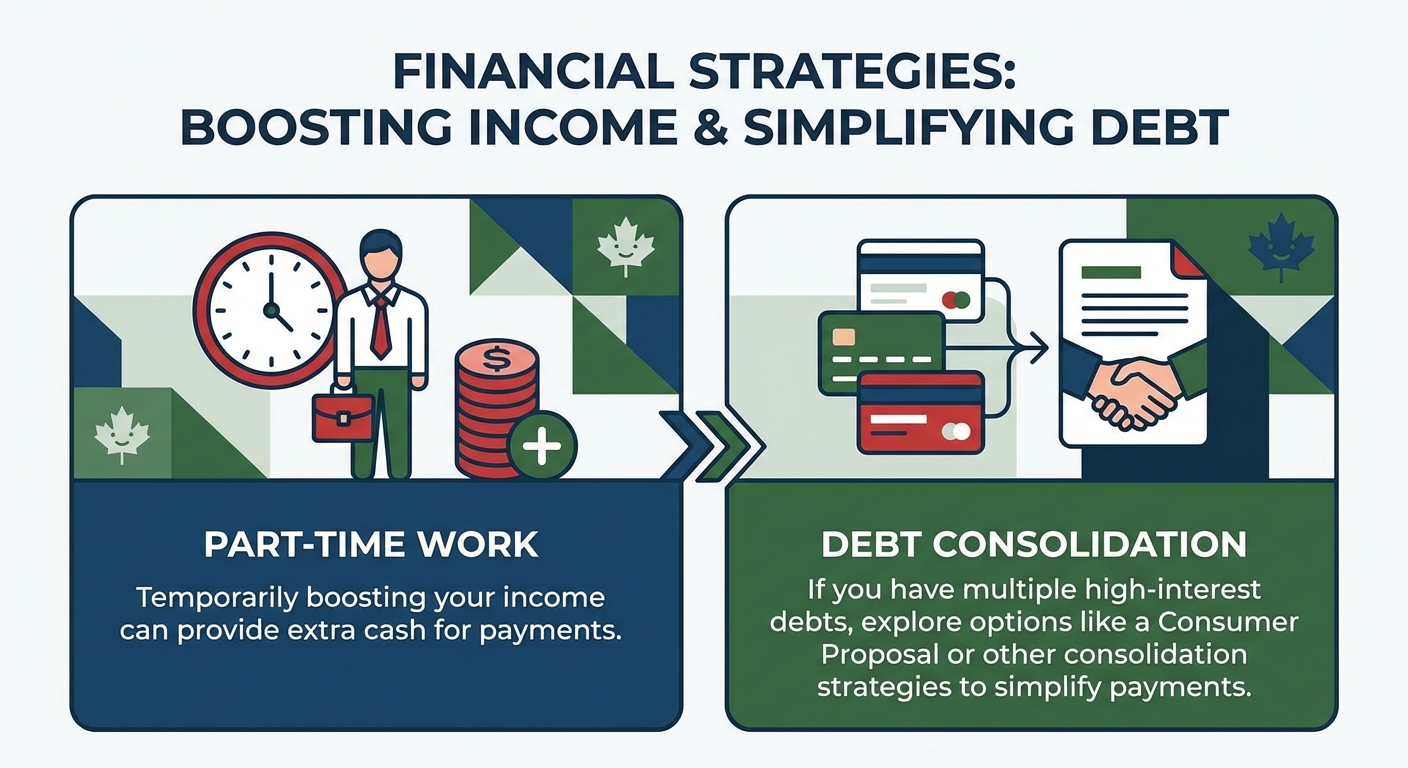
- Part-Time Work: Temporarily boosting your income can provide extra cash for payments.
- Debt Consolidation: If you have multiple high-interest debts, explore options like a Consumer Proposal or other consolidation strategies to simplify payments.
Weighing Your Options: When a Vehicle Collateral Loan Isn't the Answer
While vehicle title loans can be a viable solution for urgent cash needs, they are not always the best or only option. It’s crucial to conduct a thorough cost-benefit analysis and explore alternatives, especially for individuals with bad credit.
Exploring Alternatives for Bad Credit: Personal Loans, Secured Credit Cards, and Credit Building Strategies
Before committing to a vehicle title loan, consider these alternatives:
- Secured Personal Loans: If you have other assets (e.g., GICs, savings accounts), a secured personal loan from a credit union or alternative lender might offer lower interest rates.
- Secured Credit Cards: These require a cash deposit as collateral but can help build credit over time, opening doors to better financial products.
- Credit-Builder Loans: Offered by some financial institutions, these small loans are designed specifically to help improve credit scores.
- Bad Credit Car Loans: If your need is specifically for a vehicle, a bad credit car loan might be more appropriate, allowing you to get a car without using your existing one as collateral.
Community Resources and Non-Profit Assistance: Local Support Networks
Many communities in Quebec and across Canada offer non-profit financial assistance programs. These can include:
- Credit Counselling Agencies: Provide free or low-cost advice, debt management plans, and budgeting assistance.
- Local Charities and Social Services: May offer emergency financial aid for essential needs like rent, utilities, or food.
- Government Programs: Explore provincial or federal programs designed to assist low-income individuals or those facing specific hardships.
The Cost-Benefit Analysis: Is the Risk Worth the Reward?
Before proceeding, ask yourself:
- Is the immediate need for cash truly urgent and unavoidable?
- Have I exhausted all other, lower-cost options?
- Can I comfortably afford the high monthly payments and associated fees without jeopardizing other essential expenses?
- Am I prepared for the risk of losing my vehicle if I default?
If the answers to these questions are not a resounding yes, a vehicle title loan may not be the right fit.
When to Walk Away: Recognizing Unsustainable Loan Terms
You should walk away if:
- The APR is excessively high, making repayment nearly impossible.
- The lender is not transparent about all fees or terms.
- You feel pressured or rushed into signing.
- The monthly payments will strain your budget to an unsustainable degree.
- There are significant prepayment penalties that prevent early repayment.
Building Future Financial Resilience: Long-Term Strategies Beyond Immediate Needs
Regardless of your decision, use this experience as a catalyst for long-term financial health. Focus on:
- Budgeting: Create and stick to a realistic budget.
- Saving: Build an emergency fund to cushion against future shocks.
- Credit Building: Actively work on improving your credit score through responsible credit use.
- Debt Reduction: Prioritize paying down high-interest debts.
PRO_TIP_4: The 'What If' Scenario: Always Have a Contingency Plan
Before taking out a vehicle title loan, mentally (or even better, on paper) run through a 'what if' scenario. What if you lose your job? What if an unexpected expense arises? Having a backup plan or identifying potential resources (e.g., family support, temporary side hustle) can provide a crucial safety net and prevent default if your financial situation changes.
Empowering Your Financial Drive: Navigating Your Next Steps with Clarity
Navigating the world of alternative lending, especially with bad credit, can feel daunting. However, armed with comprehensive information, you are better positioned to make decisions that truly serve your financial well-being.
Recap: Key Considerations Before Committing
Remember these critical points:
- Vehicle title loans are legitimate in Quebec for bad credit, but they come with high costs.
- Your vehicle's value and your income are primary for approval.
- Always verify the lender's licensing and review all terms and fees, especially the APR.
- Be aware of provincial regulations designed for your protection.
- Have a clear repayment plan and communicate with your lender if difficulties arise.
Your Decision Framework: A Checklist for Readiness
Before you apply, ask yourself:
- Do I own my vehicle outright with a clear title?
- Do I have a stable, verifiable income to cover payments?
- Have I thoroughly compared offers from multiple licensed lenders?
- Do I fully understand the APR, all fees, and the consequences of default?
- Is this truly my best and only viable option for urgent cash?
The Path Forward: From Information to Action
Your journey towards financial stability is a continuous one. Whether you decide a vehicle title loan is right for your immediate needs or you choose to explore other alternatives, the goal remains the same: to make informed, responsible choices that contribute to your long-term financial health. Drive forward with confidence, knowing you have the knowledge to make smart decisions.