Vancouver Auto Loan with Child Benefit Income.
Table of Contents
- How to get an auto loan with Canada Child Benefit income in Vancouver?
- Key Takeaways
- Unlocking Mobility: Leveraging Canada Child Benefit for Your Next Vehicle
- The Evolving Landscape of Personal Income and Lending
- Why CCB Recipients Are a Unique and Growing Borrower Segment
- Dispelling Myths: CCB as a Legitimate Income Stream for Loan Applications
- The CCB Advantage: How Lenders View Your Child Benefit Payments
- CRA's Stance vs. Lender's Reality: Is CCB 'Income'?
- Stability and Predictability: Why Monthly CCB Payments Can Be Appealing to Lenders
- Calculating Your Lending Power: How CCB Factors into Debt-to-Income Ratios
- The 'Lifespan' Consideration: Age of Children and Loan Term Implications
- Pro Tip: Documenting Your CCB – What Lenders Really Need to See
- Navigating the Lending Ecosystem: Who's Willing to Finance with CCB?
- Traditional Banks and Credit Unions: The Uphill Battle and Niche Opportunities
- Dealership Financing: Leveraging In-House Options and Manufacturer Programs
- Specialized Auto Loan Providers: Where Non-Traditional Income Shines
- Online Lenders: Convenience vs. Scrutiny for CCB Applicants
- Understanding Lender Tiers: Prime, Subprime, and No-Credit Options
- Pro Tip: The Power of Local – Why Community Lenders Might Be More Flexible
- Strategic Pre-Approval: Boosting Your Odds Before You Shop
- Credit Score Deep Dive: Why It Matters and How to Improve It (Even with CCB)
- Understanding Your Debt-to-Income Ratio: The Unspoken Approval Metric
- The Co-Signer Conundrum: When and How to Utilize a Guarantor
- Budgeting Beyond the Payment: Accounting for Insurance, Fuel, and Maintenance
- The Benefits of a Down Payment: Lowering Risk and Interest
- The Application Blueprint: Documents, Details, and Due Diligence
- Proof of CCB: Bank Statements, CRA Notices, and Why Consistency is Key
- Income Verification Beyond CCB: The Importance of Supplementary Sources
- Identity and Residency Documents: The Standard Requirements
- Common Application Pitfalls and How to Avoid Them
- Pro Tip: Organize Everything – A Digital Folder for Stress-Free Applications
- Demystifying Auto Loan Rates: What to Expect When CCB is a Factor
- APR Explained: Beyond the Headline Interest Rate
- Factors Influencing Your Rate: Credit Score, Loan Term, and Lender Risk Assessment
- The 'CCB Premium': Are Rates Higher for Non-Traditional Income?
- Negotiating Your Rate: Strategies for Securing Better Terms
- Variable vs. Fixed Rates: Which is Right for Your Financial Picture?
- Pro Tip: Don't Settle – How to Shop for the Best Rate Without Harming Your Credit
- Beyond the Monthly Payment: Unmasking the True Cost of Your Loan
- Loan Fees and Charges: Origination, Documentation, and Early Payout Penalties
- Insurance Imperatives: Understanding Mandatory Coverage and Premium Impact
- Extended Warranties and Add-Ons: Are They Worth the Investment?
- Depreciation: The Silent Cost of Car Ownership
- The 'Total Cost of Ownership' Calculation for CCB Recipients
- Smart Wheels, Smarter Choices: Matching Your Vehicle to Your Budget
- New vs. Used: Weighing the Pros and Cons for Your Wallet
- The Sweet Spot: Reliable Models That Hold Their Value
- Fuel Efficiency and Maintenance Costs: Long-Term Savings Considerations
- Resale Value: Planning for Your Next Vehicle
- Pro Tip: Test Drive Your Budget – Not Just the Car
- Future-Proofing Your Finances: Managing Your Loan and Building Credit
- Making Payments On Time, Every Time: The Golden Rule of Credit Building
- Strategies for Early Loan Repayment: Saving on Interest
- Understanding Your Credit Report and Score: Monitoring Your Progress
- Leveraging Your Auto Loan to Build a Stronger Financial Future
- The Path to Financial Independence: Reducing Reliance on CCB for Future Loans
- The Road Ahead: Anticipating 2026 Changes in Child Benefit and Auto Lending
- Potential Policy Adjustments to the Canada Child Benefit Program
- Economic Forecasts: How Broader Trends May Impact Auto Loan Accessibility
- Technological Innovations in Lending: AI, Algorithms, and Alternative Data
- Lender Adaptations: Evolving Criteria for Non-Traditional Income Sources
- Preparing for Future Shifts: Financial Resilience Strategies
- Your Next Steps to Approval: A Personalized Roadmap
- Assess Your Financial Health: A Pre-Application Checklist
- Research and Compare Lenders: Don't Just Take the First Offer
- Gather Your Documents: Be Prepared and Organized
- Seek Professional Advice: When to Consult a Financial Advisor
- The Confidence to Drive Forward: Empowering Your Decision
- Frequently Asked Questions (FAQ) About Auto Loans with CCB Income
Navigating the path to vehicle ownership in Vancouver can feel daunting, especially when your income sources don't fit the traditional mould of a steady paycheque. For many Canadian families, the Canada Child Benefit (CCB) is a vital, consistent source of financial support. The good news? This benefit isn't just for daily expenses; it can be a legitimate and powerful component of your income profile when applying for an auto loan.
At SkipCarDealer.com, we understand that life in British Columbia, particularly vibrant cities like Vancouver, often requires reliable transportation. We also recognize that financial realities are diverse. This comprehensive guide will demystify how you can leverage your Canada Child Benefit income to secure an auto loan, giving you the keys to mobility and independence.
How to get an auto loan with Canada Child Benefit income in Vancouver?
Securing an auto loan with Canada Child Benefit (CCB) income in Vancouver involves demonstrating the stability and consistency of your CCB payments, often alongside other income sources, to lenders who specialize in non-traditional income. Success hinges on a strong overall financial profile, careful documentation, and choosing the right lender, as CCB is recognized as a predictable income stream that can support monthly car loan payments.
Key Takeaways
- CCB is recognized income, but its stability and amount are key for lenders.
- Specialized lenders and dealerships often offer more flexibility than traditional banks.
- Building a strong overall financial profile (credit score, low debt) significantly boosts approval odds.
- Understanding interest rates and hidden fees is paramount to avoiding costly mistakes.
- Proactive financial planning and vehicle selection aligned with budget are essential for long-term success.
Unlocking Mobility: Leveraging Canada Child Benefit for Your Next Vehicle
The dream of owning a reliable vehicle in Vancouver is a common one, offering freedom, convenience, and access to job opportunities, schools, and essential services. Yet, for many Canadians, traditional auto loan applications can present a significant hurdle, particularly when their income doesn't come solely from a standard employment salary.
The Evolving Landscape of Personal Income and Lending
The Canadian economy is dynamic, and so too are the ways people earn and manage their money. Gig economies, contract work, and government benefits like the Canada Child Benefit are increasingly common income streams. Lenders are slowly but surely adapting to this evolving landscape, recognizing that a steady, predictable income source, regardless of its origin, can support a loan.
For families in Vancouver, relying on CCB means a guaranteed monthly infusion of funds. This predictability is a valuable asset in the eyes of many lenders, a stark contrast to the often-fluctuating nature of some self-employment or contract roles. It represents a stable foundation upon which loan repayments can be built.
Why CCB Recipients Are a Unique and Growing Borrower Segment
Families receiving CCB payments are a distinct and growing demographic. These individuals are often responsible, budget-conscious, and have a clear need for transportation to support their households. They are not simply looking for a luxury item; a vehicle often represents a critical tool for family logistics, employment access, and community engagement.
Lenders who understand this demographic see an opportunity to serve a deserving market. They recognize that CCB recipients, while perhaps not fitting a traditional "prime" borrower profile, often possess strong payment ethics and a desire to build or rebuild their credit. This understanding paves the way for more inclusive lending practices.
Dispelling Myths: CCB as a Legitimate Income Stream for Loan Applications
One of the biggest misconceptions is that government benefits, including CCB, are not considered "real" income by lenders. This is simply not true. While some traditional banks might be more rigid, a growing number of specialized auto loan providers and dealerships view CCB as a legitimate, verifiable, and consistent income source.
The key lies in how the CCB is presented and documented. When you can demonstrate its regularity and amount, it becomes a powerful part of your financial profile, proving your capacity to manage monthly payments. This article will guide you through exactly how to do that, ensuring you approach lenders with confidence and all the necessary information.
The CCB Advantage: How Lenders View Your Child Benefit Payments
Understanding how financial institutions perceive your Canada Child Benefit payments is crucial for a successful auto loan application. It's not just about having the income; it's about how that income fits into a lender's risk assessment model.
CRA's Stance vs. Lender's Reality: Is CCB 'Income'?
From the Canada Revenue Agency's (CRA) perspective, the Canada Child Benefit is a tax-free payment, meaning it isn't taxed like employment income. However, for a lender, the definition of "income" extends beyond what's taxable. Lenders are primarily concerned with your ability to make consistent loan payments. Since CCB payments are regular and predictable, they absolutely qualify as a source of income for loan approval purposes.
The CRA's tax treatment of CCB doesn't negate its value as a financial resource. What matters to lenders is the reliable flow of funds into your bank account, month after month, year after year, until your children reach adulthood.
Stability and Predictability: Why Monthly CCB Payments Can Be Appealing to Lenders
The stability of CCB payments is its greatest strength. Unlike fluctuating hourly wages or commission-based earnings, CCB amounts are largely fixed for a tax year, based on your previous year's income. This predictability allows lenders to confidently assess your repayment capacity.
- Guaranteed Monthly Deposits: CCB is deposited directly into your bank account on a specific day each month, making it easy to track and verify.
- Government-Backed: The source of income is the Canadian government, providing a high level of security and reliability compared to private employers.
- Budgeting Tool: Its consistent nature makes it an excellent foundation for budgeting, which lenders appreciate as a sign of financial responsibility.
Calculating Your Lending Power: How CCB Factors into Debt-to-Income Ratios
Lenders use a critical metric called the Debt-to-Income (DTI) ratio to evaluate your ability to manage monthly payments. This ratio compares your total monthly debt payments (including the proposed car loan) to your gross monthly income. Your CCB payments are added to your other income sources (if any) to calculate your total monthly income.
For example, if you receive $500 in CCB, and have other income of $1,500, your total monthly income for DTI purposes is $2,000. Lenders typically look for a DTI ratio below 40-45% for prime borrowers, though specialized lenders may go higher for those with non-traditional income or weaker credit.
The 'Lifespan' Consideration: Age of Children and Loan Term Implications
An important factor for lenders is the "lifespan" of your CCB payments. The benefit continues until your children turn 18. If you have younger children, the CCB income stream is likely to continue for many years, aligning well with typical 5-7 year auto loan terms. However, if your children are nearing 18, a lender might view the CCB as a short-term income source.
In such cases, lenders might prefer a shorter loan term to ensure the loan is repaid before the CCB payments cease, or they may require a stronger co-signer or additional income sources. This is a nuanced area where specialized lenders often have more flexible approaches.
Pro Tip: Documenting Your CCB – What Lenders Really Need to See
To showcase the strength of your CCB income, gather at least 3-6 months of bank statements clearly showing the direct deposits from the Canada Revenue Agency. Also, provide your most recent CCB notice from the CRA, which details your annual entitlement. This comprehensive documentation proves consistency and verifies the amount, giving lenders the confidence they need.
Navigating the Lending Ecosystem: Who's Willing to Finance with CCB?
The lending landscape for auto loans is diverse. Knowing where to look for financing when Canada Child Benefit is a key part of your income can save you time and increase your chances of approval. Not all lenders are created equal when it comes to non-traditional income sources.
Traditional Banks and Credit Unions: The Uphill Battle and Niche Opportunities
Major banks (like RBC, TD, BMO, CIBC, Scotiabank) and many credit unions often have stricter lending criteria. They prefer stable, verifiable employment income with a long history. While some might consider CCB as supplementary income, it's often difficult to get approved if it's your primary or sole income source, especially if your credit score isn't stellar.
However, if you have a long-standing relationship with a local credit union in Vancouver or another city, and a strong overall financial history, they might be more flexible. They often have a deeper understanding of their members' individual circumstances. It's worth inquiring, but be prepared for a potentially conservative approach.
Dealership Financing: Leveraging In-House Options and Manufacturer Programs
Dealerships, like SkipCarDealer.com, are often your best bet. They work with a network of lenders, including those who specialize in various financial situations. Many dealerships have in-house finance departments that understand the nuances of non-traditional income. They can submit your application to multiple lenders, increasing the likelihood of finding one willing to consider your CCB.
Manufacturer-backed financing programs (e.g., Ford Credit, GM Financial) might also be available through dealerships. While often geared towards prime borrowers, they sometimes have programs for those building credit or with unique income profiles, especially for used vehicles.
Specialized Auto Loan Providers: Where Non-Traditional Income Shines
This is where CCB recipients often find the most success. Specialized auto loan providers and subprime lenders are set up to assess applications that don't fit the rigid criteria of traditional banks. They look beyond just credit scores and employment history, focusing more on your current ability to pay.
These lenders are accustomed to working with individuals on government benefits, fixed incomes, or those rebuilding credit. They understand the stability of CCB and are more likely to approve your application. For more on how non-traditional income sources are viewed, check out our guide on Approval Secrets: Financing a Vehicle on AISH or Disability in Alberta, which shares many parallels with CCB applications.
Online Lenders: Convenience vs. Scrutiny for CCB Applicants
Online lenders offer convenience and speed, often providing pre-approvals within minutes. Many online platforms also cater to a wider range of credit scores and income types, including CCB. However, always exercise caution. Research their reputation, read reviews, and understand their terms and conditions fully before committing.
While convenient, the scrutiny for non-traditional income might still be present, so ensure you have all your documentation ready for verification. Some online lenders might have higher interest rates to compensate for perceived higher risk, so compare offers diligently.
Understanding Lender Tiers: Prime, Subprime, and No-Credit Options
Lenders categorize borrowers into tiers based on creditworthiness, which directly impacts the interest rates and terms offered:
- Prime Borrowers: Excellent credit (700+), stable employment, low DTI. Typically get the best rates (e.g., 6.99% - 8.99%).
- Subprime Borrowers: Fair to poor credit (580-699), may have past credit issues, or non-traditional income. Rates are higher (e.g., 12% - 25% or more). CCB recipients often fall into this category, especially if it's their primary income or if they have limited credit history.
- No-Credit Options: For those with no credit history at all. Often involve higher rates, shorter terms, or a requirement for a co-signer or significant down payment. Our article No Credit? Great. We're Not Your Bank. offers more insights into these options.
Pro Tip: The Power of Local – Why Community Lenders Might Be More Flexible
Don't overlook smaller, local credit unions or community-focused lenders in Vancouver, Surrey, or even further afield in the Fraser Valley. These institutions often have a more personalized approach and may be more willing to understand your unique financial situation, including consistent CCB income, especially if you're a long-term resident of the area.
Strategic Pre-Approval: Boosting Your Odds Before You Shop
Getting pre-approved for an auto loan is like having a financial superpower. It gives you confidence, negotiation leverage, and a clear understanding of your budget before you even step onto a dealership lot. This is especially crucial when using CCB income, as it validates your financial standing upfront.
Credit Score Deep Dive: Why It Matters and How to Improve It (Even with CCB)
Your credit score is a three-digit number that tells lenders how reliably you've managed debt in the past. A higher score generally means lower interest rates. Even with CCB income, a good credit score is invaluable.
- Importance: Lenders use your score to assess risk. A lower score suggests higher risk, leading to higher interest rates or even denial.
- Improving It:
- Pay all bills on time, every time (rent, utilities, phone).
- Keep credit utilization low (don't max out credit cards).
- Avoid opening too many new credit accounts at once.
- Check your credit report regularly for errors.
- Consider a secured credit card or a small credit-builder loan.
Understanding Your Debt-to-Income Ratio: The Unspoken Approval Metric
As mentioned, your DTI ratio is critical. It's your total monthly debt payments divided by your gross monthly income. Lenders want to see that you have enough disposable income to comfortably make your car payments.
To calculate your DTI for an auto loan with CCB: Add your total CCB payments to any other monthly income. Then, list all your fixed monthly debt payments (credit card minimums, existing loan payments, rent/mortgage). Divide total debt by total income. Aim for a DTI below 40% if possible. Even if your CCB is your primary income, showing a low DTI is a powerful argument for approval.
The Co-Signer Conundrum: When and How to Utilize a Guarantor
If your credit score is low, your DTI is high, or your CCB is a short-term income source, a co-signer can significantly boost your approval odds. A co-signer (guarantor) is someone with good credit who agrees to be responsible for the loan if you default.
- When to Consider: If you've been denied, or offered very high rates.
- How to Utilize: Choose someone with excellent credit and a stable income. They understand their responsibility and trust your ability to pay. It’s a serious commitment for them.
Budgeting Beyond the Payment: Accounting for Insurance, Fuel, and Maintenance
An auto loan payment is just one piece of the puzzle. When budgeting, always consider the total cost of ownership:
- Insurance: Mandatory in British Columbia through ICBC. Premiums vary widely based on your driving history, location (Vancouver can be pricier), vehicle type, and coverage. Get quotes before committing to a car.
- Fuel: Gas prices in Vancouver are among the highest in Canada. Factor in your daily commute and weekend trips.
- Maintenance: Oil changes, tire rotations, unexpected repairs. Set aside a small amount monthly.
Failing to budget for these can quickly lead to financial strain, even if your CCB covers the loan payment.
The Benefits of a Down Payment: Lowering Risk and Interest
Even a small down payment can make a big difference, especially for CCB recipients or those with less-than-perfect credit. A down payment:
- Reduces Loan Amount: Lower monthly payments.
- Lowers Lender Risk: Shows your commitment and reduces the amount the lender is financing, making them more likely to approve.
- Potentially Lower Interest Rates: Less risk often translates to better terms.
Even $500 or $1,000 can significantly improve your application's appeal. For those in Vancouver with fluctuating income, our guide Your Paycheque Does a Waltz? We Still Fund Your Car, Vancouver. offers more insights into securing loans with varied financial situations.
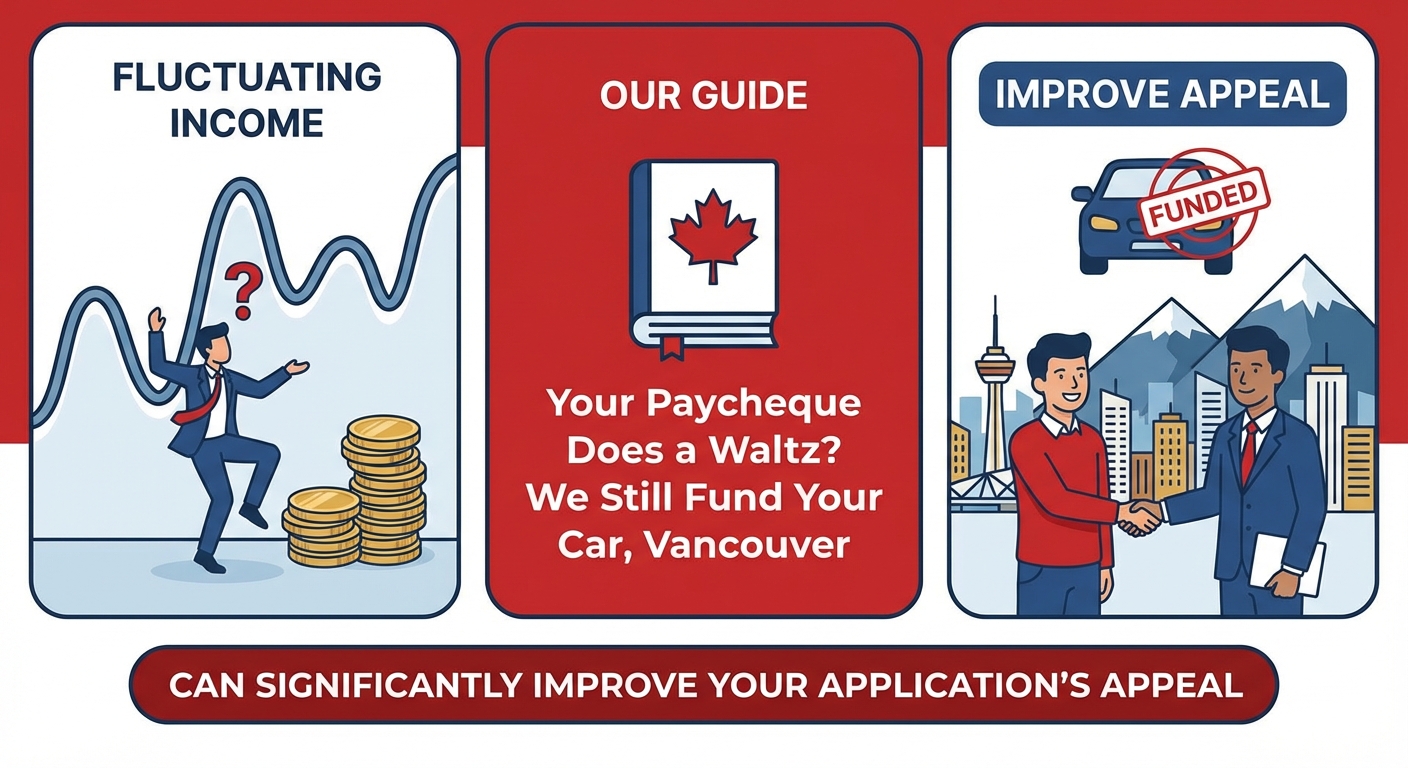 : Visualizing the Impact of Credit Score on Loan Offers (Context: Infographic showing different interest rates for varying credit scores).
The Application Blueprint: Documents, Details, and Due Diligence
When applying for an auto loan with CCB income, being prepared with the right documentation is key. A complete and organized application speeds up the process and presents you as a responsible borrower.
Proof of CCB: Bank Statements, CRA Notices, and Why Consistency is Key
This is your primary evidence of income. Lenders need to see a clear, consistent history.
- Bank Statements: Provide 3-6 months of statements showing direct deposits from "Canada Child Benefit" or "CRA". Highlight these entries.
- CRA Notices: Your annual CCB notice (e.g., Notice of Determination for Canada Child Benefit) from the Canada Revenue Agency is crucial. It verifies your entitlement amount for the current benefit year.
- Consistency: The goal is to show a reliable, uninterrupted flow of funds. Any gaps or discrepancies will raise red flags.
Income Verification Beyond CCB: The Importance of Supplementary Sources
While CCB can be a primary income source, any additional income strengthens your application. Even small, consistent amounts matter.
- Part-time Employment: Pay stubs.
- Gig Work/Self-Employment: Bank statements, invoices, tax returns. For self-employed individuals, our article Self-Employed? Your Bank Doesn't Need a Resume. offers valuable tips on income documentation.
- Spousal Income: If applicable, provide their income verification and consider a joint application.
- Other Benefits: Disability benefits, pension, etc.
The more verifiable income you can demonstrate, the lower the perceived risk to the lender.
Identity and Residency Documents: The Standard Requirements
These are standard for any loan application:
- Valid Photo ID: Driver's license (must be valid in BC), passport, or provincial ID card.
- Proof of Residency: Utility bill (electricity, gas, internet) or rental agreement with your current address. This shows you are a stable resident of Vancouver or the surrounding area.
- Social Insurance Number (SIN): Required for credit checks.
Common Application Pitfalls and How to Avoid Them
- Incomplete Documentation: Missing bank statements or an outdated CRA notice can cause significant delays or rejection.
- Inaccurate Information: Always double-check all details on your application. Discrepancies can lead to mistrust.
- Applying Everywhere: Multiple hard inquiries on your credit report in a short period can lower your score. Aim for pre-approval first, and work with a dealership that can shop your application to multiple lenders efficiently.
- Lack of Budgeting: Not knowing your total budget (including insurance, fuel, maintenance) can lead to applying for too much, which is a common pitfall.
Pro Tip: Organize Everything – A Digital Folder for Stress-Free Applications
Before you even start applying, create a dedicated digital folder (or physical one) containing scans or copies of all necessary documents. Label them clearly. This organization will make the application process much smoother, faster, and less stressful, allowing you to quickly provide whatever the lender requests.
Demystifying Auto Loan Rates: What to Expect When CCB is a Factor
The interest rate on your auto loan significantly impacts your total cost. When Canada Child Benefit is part of your income profile, understanding how rates are determined and what to expect is vital for making an informed decision.
APR Explained: Beyond the Headline Interest Rate
APR stands for Annual Percentage Rate. It's more than just the interest rate; it's the total cost of borrowing expressed as a yearly percentage. APR includes the interest rate plus any additional fees, like administrative or origination fees, rolled into the loan. Always compare APR, not just the interest rate, to get the true cost of different loan offers.
Factors Influencing Your Rate: Credit Score, Loan Term, and Lender Risk Assessment
Several factors converge to determine your final APR:
- Credit Score: The single biggest factor. Higher scores (700+) unlock prime rates. Lower scores (below 650) push you into subprime territory with higher rates.
- Loan Term: Shorter terms (3-4 years) often have slightly lower rates but higher monthly payments. Longer terms (6-7 years) have lower monthly payments but typically higher overall interest paid and sometimes higher rates due to increased long-term risk for the lender.
- Down Payment: A larger down payment reduces the amount financed and the lender's risk, which can lead to a lower rate.
- Vehicle Age/Type: Newer vehicles often qualify for better rates than older, higher-mileage used cars.
- Lender Risk Assessment: For CCB recipients, lenders assess the stability of the benefit, the age of your children, and any supplementary income. If CCB is your sole income or your credit history is limited, it might be viewed as higher risk, resulting in a higher rate.
The 'CCB Premium': Are Rates Higher for Non-Traditional Income?
It's possible. While CCB is stable, some lenders might still categorize it as a non-traditional income source, which can carry a slightly higher risk premium compared to a long-standing, high-salary employment income. This doesn't mean you'll get exorbitant rates, but you might find yourself in the mid-to-high subprime range if other factors (like credit score) aren't strong.
Here's a simplified comparison of potential interest rates based on credit profile and income type:
| Borrower Profile | Credit Score Range | Income Type Example | Estimated APR Range | Typical Monthly Payment (on $20,000, 60-month loan) |
|---|---|---|---|---|
| Prime Borrower | 700+ | Full-time employment + CCB | 6.99% - 8.99% | $400 - $418 |
| Near-Prime Borrower | 650-699 | Stable part-time employment + CCB | 9.99% - 14.99% | $428 - $475 |
| Subprime Borrower (CCB primary) | 580-649 | CCB as primary income, some credit history | 15.99% - 22.99% | $485 - $565 |
| High-Risk Subprime/No Credit | Below 580 / No history | CCB as sole income, poor/no credit | 23.99% - 29.99%+ | $575 - $640+ |
*Note: These are estimates. Actual rates depend on individual circumstances, lender, and market conditions in Vancouver.
Negotiating Your Rate: Strategies for Securing Better Terms
Don't be afraid to negotiate! Here's how:
- Get Pre-Approved: Having a pre-approval in hand gives you leverage. If a dealership offers a higher rate, you can counter with your pre-approved rate.
- Compare Offers: Shop around. Get quotes from at least 2-3 different lenders or dealerships.
- Highlight Strengths: Emphasize your consistent CCB payments, any supplementary income, and a strong payment history on other bills.
- Consider a Down Payment: Even a modest down payment can sometimes nudge the rate down.
- Be Prepared to Walk Away: If the terms aren't right, don't feel pressured. There are always other options.
Variable vs. Fixed Rates: Which is Right for Your Financial Picture?
- Fixed Rate: Your interest rate and monthly payment remain the same for the entire loan term. This provides predictability and is generally recommended for those on fixed incomes like CCB, as it makes budgeting easier.
- Variable Rate: Your interest rate can fluctuate with market rates. While sometimes starting lower, it carries the risk of payments increasing. Generally not recommended if you're on a tight budget or rely heavily on stable income like CCB.
Pro Tip: Don't Settle – How to Shop for the Best Rate Without Harming Your Credit
When shopping for auto loans, multiple inquiries within a 14-45 day window (depending on the credit bureau) are usually treated as a single inquiry, minimizing impact on your score. Use this window to get several rate quotes from different lenders or through a dealership's finance department. This smart shopping can save you thousands over the life of the loan.
Beyond the Monthly Payment: Unmasking the True Cost of Your Loan
Many first-time car buyers, or those on a fixed income, focus solely on the monthly payment. However, a responsible approach demands understanding the full spectrum of costs associated with vehicle ownership and your loan.
Loan Fees and Charges: Origination, Documentation, and Early Payout Penalties
Beyond interest, loans can come with various fees:
- Origination/Administrative Fees: A fee for processing the loan, sometimes rolled into the APR.
- Documentation Fees: Charged by dealerships for preparing paperwork. In BC, these are regulated but can still add a few hundred dollars.
- Lien Registration Fees: For registering the lender's interest in the vehicle.
- Early Payout Penalties: Some loans charge a fee if you pay off your loan significantly ahead of schedule. Always ask about this if you plan to make extra payments.
Always ask for a full breakdown of all fees before signing. These can vary significantly between lenders and provinces (e.g., Alberta vs. British Columbia).
Insurance Imperatives: Understanding Mandatory Coverage and Premium Impact
Auto insurance is not optional in Canada. In British Columbia, basic auto insurance is provided by ICBC. You'll need:
- Basic Autoplan: Mandatory liability and accident benefits coverage.
- Optional Coverage: Collision, comprehensive, extended liability, etc. These significantly increase your premium but offer greater protection.
Premiums are influenced by your driving record, the type of vehicle, where you live (Vancouver rates can be higher due to traffic density and theft rates), and how much you drive. Get an insurance quote before you buy a car. A higher premium can quickly make an affordable car payment unaffordable.
Extended Warranties and Add-Ons: Are They Worth the Investment?
Dealerships often offer extended warranties, rustproofing, paint protection, and other add-ons. While some might offer peace of mind, they also significantly increase the total loan amount and monthly payment.
- Extended Warranties: Can be useful for older used cars, but compare costs and coverage carefully. Read the fine print.
- Other Add-Ons: Often high-profit items for dealerships. Consider if you truly need them. Many can be purchased cheaper aftermarket or are unnecessary.
For someone on a fixed income like CCB, adding thousands of dollars to your loan for optional items might not be the wisest financial decision. Prioritize the core need: the vehicle itself.
Depreciation: The Silent Cost of Car Ownership
Vehicles lose value over time, a process called depreciation. A new car can lose 20-30% of its value in the first year alone. While this isn't a direct out-of-pocket expense like a loan payment, it impacts your equity in the vehicle and its trade-in value down the line.
Choosing a reliable used car that holds its value well can mitigate the impact of depreciation, offering better long-term financial stability.
The 'Total Cost of Ownership' Calculation for CCB Recipients
To truly understand if a car is affordable, calculate the total cost of ownership (TCO) per month:
Monthly Car Payment + Insurance + Fuel + Estimated Maintenance + Parking (if applicable) = TCO
Compare this TCO against your total monthly income (including CCB) to ensure it fits comfortably within your budget, leaving room for other essential expenses and savings.
Smart Wheels, Smarter Choices: Matching Your Vehicle to Your Budget
Choosing the right vehicle is paramount when your income includes the Canada Child Benefit. It's not just about getting approved; it's about choosing a vehicle that remains affordable and reliable throughout the loan term.
New vs. Used: Weighing the Pros and Cons for Your Wallet
- New Car Pros: Latest features, full warranty, no prior owner issues, often lower initial interest rates for prime borrowers.
- New Car Cons: Rapid depreciation, higher purchase price, higher insurance premiums. For CCB recipients, new car loans can be harder to secure and often require stronger credit or a significant down payment.
- Used Car Pros: Significantly lower purchase price, less depreciation, often lower insurance. Many reliable options are available.
- Used Car Cons: Potential for unknown maintenance issues, shorter or no warranty, higher interest rates for older models with some lenders.
For most CCB recipients, a reliable used vehicle (3-7 years old) offers the best balance of affordability, reliability, and lower overall cost of ownership.
The Sweet Spot: Reliable Models That Hold Their Value
Focus on vehicles known for their reliability and strong resale value. Brands like Honda (Civic, CR-V), Toyota (Corolla, RAV4), Mazda (3, CX-5), and certain Hyundai/Kia models consistently rank well. These vehicles typically have lower maintenance costs and are easier to sell when you're ready for an upgrade.
Avoid less common or luxury brands that can have exorbitant repair costs and depreciate quickly. Stick to practical, family-friendly options that meet your needs without breaking the bank.
Fuel Efficiency and Maintenance Costs: Long-Term Savings Considerations
With gas prices in Vancouver often high, fuel efficiency is a major factor. A vehicle that gets 7 L/100km will save you hundreds of dollars per year compared to one that gets 12 L/100km. Consider hybrids or smaller, efficient gasoline engines.
Research common maintenance issues for any model you're considering. Online forums and consumer reports (e.g., JD Power, Consumer Reports) are great resources. Opt for models with readily available, affordable parts and a good reputation for durability.
Resale Value: Planning for Your Next Vehicle
While you're focused on buying now, thinking about resale value is a smart long-term strategy. A car that holds its value well means you'll have more equity to put towards your next vehicle, potentially reducing future loan amounts. This also helps if your financial situation changes and you need to sell the car before the loan is fully paid.
Pro Tip: Test Drive Your Budget – Not Just the Car
Before falling in love with a car, calculate its total monthly cost (loan + insurance + fuel + maintenance). Then, mentally "pay" that amount from your CCB and other income for a month or two. See if it leaves you comfortable. This "budget test drive" can prevent buyer's remorse and financial strain.
Future-Proofing Your Finances: Managing Your Loan and Building Credit
Securing an auto loan with Canada Child Benefit income is a significant achievement. However, the journey doesn't end there. Effectively managing your loan and proactively building your credit will pave the way for greater financial stability and future opportunities.
Making Payments On Time, Every Time: The Golden Rule of Credit Building
This cannot be stressed enough. Your payment history is the single most important factor (35%) in your credit score. Every on-time payment on your auto loan demonstrates responsibility and actively builds your credit profile.
- Set Up Auto-Pay: Link your bank account for automatic withdrawals to avoid missing payments.
- Calendar Reminders: Set digital reminders a few days before each payment is due.
- Buffer Funds: Ensure your account always has sufficient funds, especially around payment dates, to prevent NSF fees and missed payments.
Consistency is key. Even one late payment can negatively impact your credit score and remain on your report for years.
Strategies for Early Loan Repayment: Saving on Interest
If your financial situation improves, consider paying off your loan faster. This can save you a substantial amount in interest over the loan's life.
- Bi-Weekly Payments: Instead of monthly, pay half your monthly payment every two weeks. This results in 26 half-payments per year, equivalent to 13 full monthly payments, effectively shaving time and interest off your loan.
- Lump Sum Payments: Whenever you receive a bonus or unexpected funds (e.g., tax refund), apply it directly to your loan principal.
- Extra Principal Payments: Even an extra $25 or $50 per month can make a difference. Ensure these extra payments are applied directly to the principal, not just towards the next month's payment.
Always check your loan agreement for any early repayment penalties before making large lump sum payments.
Understanding Your Credit Report and Score: Monitoring Your Progress
Your credit report is a detailed history of your borrowing and repayment activities. Your credit score is a snapshot derived from that report.
- Get Your Free Report: You're entitled to a free credit report annually from Equifax and TransUnion, Canada's two major credit bureaus. Review it for accuracy.
- Monitor Your Score: Many banks and credit card companies offer free credit score monitoring. Watch it improve as you consistently make on-time payments.
- Spot Errors: If you find any inaccuracies on your report, dispute them immediately. Errors can negatively impact your score.
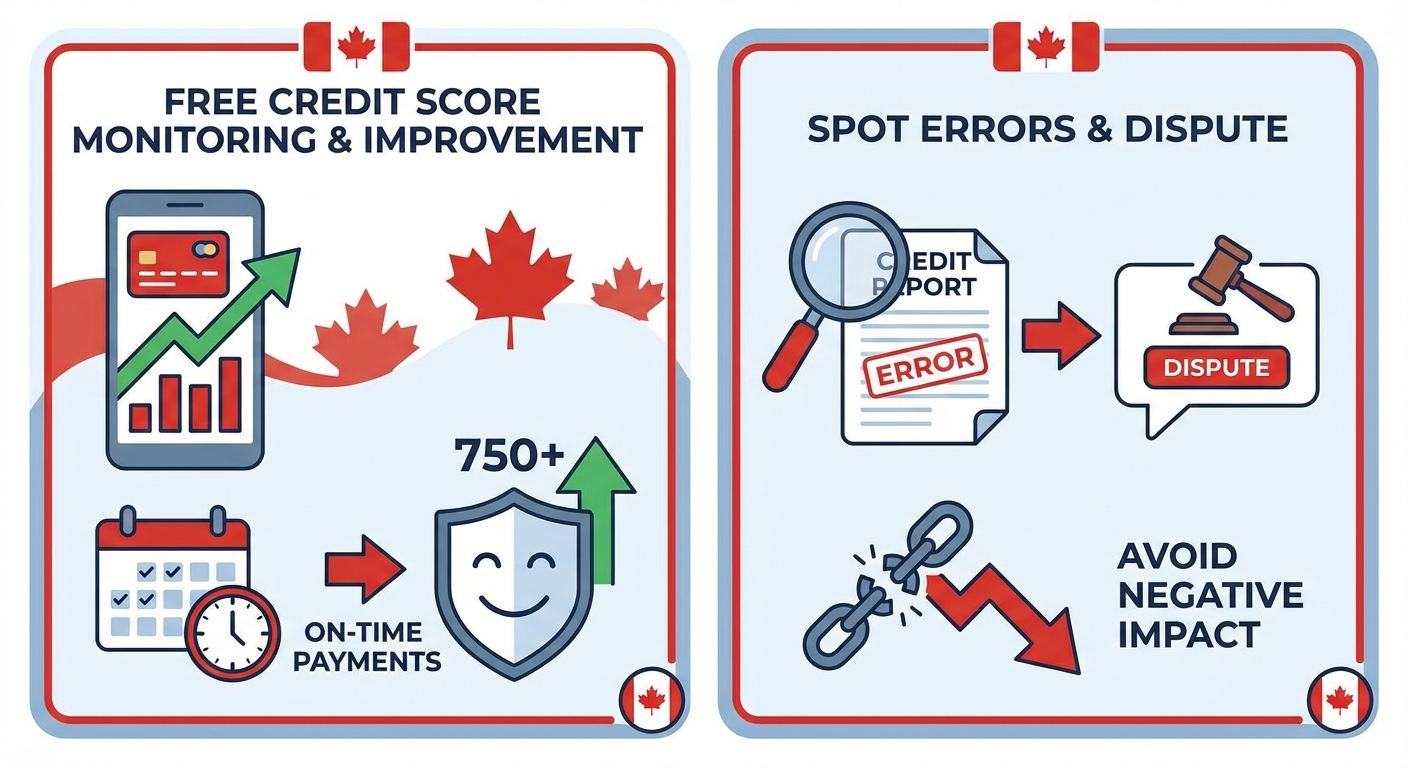 : Illustrating the Journey of Credit Improvement with Consistent Payments (Context: A line graph showing credit score increase over time with on-time payments).
Leveraging Your Auto Loan to Build a Stronger Financial Future
A successfully managed auto loan can be a powerful tool for financial growth. It diversifies your credit mix (showing you can handle different types of credit) and significantly boosts your credit score. This improved credit profile can open doors to:
- Better rates on future loans (mortgages, personal loans).
- Easier approval for credit cards with better terms.
- Lower insurance premiums.
- Improved financial flexibility and opportunities.
The Path to Financial Independence: Reducing Reliance on CCB for Future Loans
While CCB is a valuable income source, long-term financial independence means ideally reducing your reliance on it for major purchases like vehicles. Use this auto loan as a stepping stone.
- Explore Supplementary Income: Consider part-time work, gig economy opportunities, or skill development.
- Build Savings: Create an emergency fund and a savings fund for future down payments.
- Financial Literacy: Continuously educate yourself on budgeting, investing, and debt management.
The goal is to move towards a financial position where your CCB can truly be a benefit for your children's needs, rather than a necessity for securing basic transportation.
The Road Ahead: Anticipating 2026 Changes in Child Benefit and Auto Lending
The financial landscape is always evolving, and it's prudent to consider potential future shifts that could impact both the Canada Child Benefit program and the auto lending market in Vancouver and across Canada.
Potential Policy Adjustments to the Canada Child Benefit Program
Government programs, including the Canada Child Benefit, are subject to periodic review and potential adjustments based on economic conditions, social priorities, and political mandates. While the core benefit is likely to remain, changes could include:
- Income Thresholds: Adjustments to the income levels at which the CCB begins to phase out.
- Benefit Amounts: Minor increases or indexing adjustments to keep pace with inflation, or conversely, reductions in times of fiscal austerity.
- Eligibility Criteria: While less likely for the core program, minor tweaks to residency or family status definitions could occur.
Staying informed via official government channels (CRA website) is crucial for understanding how any changes might affect your monthly income and, consequently, your loan repayment capacity.
Economic Forecasts: How Broader Trends May Impact Auto Loan Accessibility
The broader Canadian economy directly influences the auto lending market:
- Interest Rate Environment: The Bank of Canada's benchmark interest rate affects all lending rates. If rates rise, auto loans will become more expensive.
- Inflation: High inflation can erode purchasing power, making it harder to afford car payments and increasing the cost of vehicle ownership (fuel, maintenance).
- Supply Chain Issues: Ongoing disruptions can impact vehicle availability (especially new cars) and drive up prices for both new and used vehicles.
- Job Market Strength: A strong job market provides more supplementary income opportunities for CCB recipients, improving their loan prospects.
These economic factors can affect not only the rates you're offered but also the types of vehicles available within your budget.
Technological Innovations in Lending: AI, Algorithms, and Alternative Data
The lending industry is rapidly embracing technology. This could be a significant advantage for non-traditional income earners like CCB recipients:
- AI-Powered Risk Assessment: Artificial intelligence and machine learning algorithms can analyze a broader range of data points beyond traditional credit scores and employment history. This "alternative data" might include utility payment history, rent payments, and even consistent government benefit deposits.
- Streamlined Applications: Technology can make the application and verification process faster and more seamless.
- Personalized Offers: More sophisticated algorithms could lead to more tailored loan offers that better reflect individual financial realities, potentially benefiting CCB recipients.
Lender Adaptations: Evolving Criteria for Non-Traditional Income Sources
As the Canadian workforce continues to diversify, lenders are increasingly adapting their criteria. This means:
- Increased Acceptance of Benefit Income: More lenders may explicitly include CCB, disability benefits, and pensions as recognized income sources.
- Focus on Cash Flow: Greater emphasis on consistent cash flow into bank accounts rather than just pay stubs.
- Partnerships: Dealerships like SkipCarDealer.com will continue to forge relationships with specialized lenders who cater to these evolving borrower profiles.
Preparing for Future Shifts: Financial Resilience Strategies
To navigate these potential changes, building financial resilience is key:
- Maintain Excellent Payment History: Your credit score is your best asset.
- Build an Emergency Fund: A cushion for unexpected expenses or income fluctuations.
- Diversify Income: If possible, explore additional income streams beyond CCB.
- Stay Informed: Keep abreast of economic news and government policy changes.
Your Next Steps to Approval: A Personalized Roadmap
You now have a comprehensive understanding of how to approach an auto loan with Canada Child Benefit income. The journey to driving off in your next vehicle, whether it's for family trips around Vancouver Island or daily commutes within the city, starts with informed action.
Assess Your Financial Health: A Pre-Application Checklist
Before you even begin looking at cars, take stock of your current financial situation:
- What is your total monthly income, including CCB and any other sources?
- What are your total monthly expenses (rent, utilities, food, existing debts)?
- What is your current credit score? (Get it for free from Equifax or TransUnion)
- Do you have any savings for a down payment or an emergency fund?
- What is your debt-to-income ratio?
Being honest with yourself about these points will set realistic expectations.
Research and Compare Lenders: Don't Just Take the First Offer
Don't jump at the first approval you receive. Take the time to:
- Compare interest rates (APR), loan terms, and any fees from multiple sources (dealerships, specialized lenders, credit unions).
- Read reviews and check the reputation of lenders.
- Understand the fine print of each offer, especially regarding early payment penalties or hidden charges.
A little research can save you thousands of dollars over the life of your loan.
Gather Your Documents: Be Prepared and Organized
As highlighted earlier, organization is your friend. Have all your necessary documents ready and easily accessible:
- Proof of CCB (bank statements, CRA notices).
- Other income verification (pay stubs, tax returns).
- Photo ID and proof of residency.
- Reference contacts (if required).
A well-prepared application signals responsibility and can expedite the approval process.
Seek Professional Advice: When to Consult a Financial Advisor
If your financial situation is particularly complex, or if you're unsure about the best path forward, don't hesitate to consult a non-profit credit counselor or financial advisor. They can offer personalized advice, help you create a budget, and guide you through debt management strategies. While most dealerships offer finance professionals, an independent advisor can provide an unbiased perspective.
The Confidence to Drive Forward: Empowering Your Decision
Securing an auto loan with Canada Child Benefit income is not just possible; it's a reality for many Canadian families. By understanding the process, preparing diligently, and choosing the right vehicle and lender, you can confidently achieve your goal of vehicle ownership.
At SkipCarDealer.com, we are committed to helping Vancouver residents and families across Canada find the right financing solutions for their unique needs. We believe everyone deserves access to reliable transportation.