Who Needs Good Credit? Your Home Equity Just Approved Your Car, British Columbia.
Table of Contents
- Key Takeaways
- The Canadian Credit Conundrum: When Traditional Car Loans Hit a Dead End
- The Frustration of the 'No': Why Good People Get Denied Auto Financing
- The Vicious Cycle: Needing a Car for Work, But Unable to Get One
- Unlocking Your Home's Hidden Power: The Home Equity Car Loan Explained
- Demystifying Home Equity: Your Collateral for Automotive Freedom
- HELOCs vs. Second Mortgages: Which Path to Your New Car?
- Why British Columbia's Real Estate Market Makes This Strategy a Game-Changer
- Beyond the Dealership: How Home Equity Car Loans Actually Work for Bad Credit Borrowers
- The Mechanics of Collateral: Why Your Home's Value Trumps Your Credit Score
- Interest Rates & Repayment: Navigating the Financial Landscape in British Columbia
- Approval Odds: What Lenders Really Look For (Beyond Your Credit Score)
- Finding Your Wheels: What Kinds of Cars Can Home Equity Buy?
- Weighing Your Options: Home Equity Car Loans Versus the Alternatives in Canada
- The Road Less Traveled: Home Equity Car Loans Versus Traditional Vehicle Financing
- A Crucial Distinction: Why Home Equity Offers a Different Path Than 'Vehicle Title Loans'
- Exploring Other Provinces: How This Strategy Plays Out Beyond British Columbia
- Your Blueprint for Approval: A Step-by-Step Guide to Securing Your Loan
- Step 1: Assessing Your Equity – Know Your Leverage
- Step 2: Gathering Your Documents – Prepare for Success
- Step 3: Choosing the Right Lender – Banks, Credit Unions, or Mortgage Brokers?
- Step 4: The Application and Approval Process – What to Expect
- Step 5: Funding Your Purchase – From Loan to Keys
- Navigating the Risks: What You Need to Know Before You Borrow Against Your Home
- The Ultimate Stakes: Understanding the Risk of Foreclosure
- The Danger of Over-Leveraging: When Too Much is Too Much
- Impact on Future Financial Flexibility and Your Home's Value
- Building a Robust Repayment Plan: Your Shield Against Default
- Driving Towards a Brighter Financial Future: Leveraging Your Home Equity Responsibly
- Beyond the Car: How This Loan Can Be a Stepping Stone to Credit Repair
- Future Considerations: Refinancing, Property Value Changes, and Financial Health
- Your Next Steps to Approval: Turning Home Equity into Automotive Freedom
- Frequently Asked Questions (FAQ): Clearing the Road Ahead
Imagine this: You’re standing on the doorstep of vehicle ownership, but your credit score, a silent gatekeeper, has slammed the door shut. Perhaps past financial challenges, a job loss, or even just a few missed payments have painted a picture that traditional lenders simply don't like. You need a reliable car to get to work, shuttle the kids, or simply enjoy the vast beauty of British Columbia, from the bustling streets of Vancouver to the serene landscapes of the Okanagan. But how do you get approved when your credit history is working against you?
For homeowners in British Columbia, there’s a powerful, often overlooked solution right beneath their feet: their home equity. In a province boasting some of Canada's most valuable real estate, your home isn't just a place to live; it's a significant financial asset. This article will reveal how that asset can become your golden ticket to a new set of wheels, even when your credit score says "no."
Key Takeaways
- Empowerment Through Equity: Your home's value can override a low credit score, offering a viable path to vehicle ownership.
- British Columbia's Unique Advantage: High property values in areas like Vancouver, Surrey, and Victoria often mean substantial untapped equity.
- Lower Rates, Flexible Terms: Home equity loans typically offer significantly better interest rates and more accommodating repayment schedules than traditional bad credit car loans or vehicle title loans.
- Not Without Risk: Borrowing against your home carries the ultimate risk of foreclosure if you default, demanding careful financial planning.
- Beyond the Car: Responsible use can be a strategic step towards improving your overall financial health and credit standing in Canada.
The Canadian Credit Conundrum: When Traditional Car Loans Hit a Dead End
The Frustration of the 'No': Why Good People Get Denied Auto Financing
The journey to secure a car loan in Canada can feel like navigating a labyrinth, especially when your credit history isn't pristine. Why do so many good, hardworking individuals find themselves facing rejection from traditional auto lenders? The reasons are diverse and often deeply personal: a past business venture that didn't pan out, an unexpected medical emergency, divorce, or even a period of unemployment during an economic downturn. These life events, though common, can leave indelible marks on your credit report, leading to a low credit score.
Traditional lenders, whether major banks or dealership financing departments, rely heavily on credit scores as their primary indicator of risk. A score below 650, for instance, often flags you as a high-risk borrower. This isn't just about eligibility; it profoundly impacts the interest rates you're offered. Someone with excellent credit might qualify for rates as low as 0-3%, while someone with poor credit could be staring down rates of 15% or even higher. This disparity makes vehicle ownership unattainable or prohibitively expensive for many, perpetuating a cycle of financial strain. For more insights on navigating these challenges, you might find our article 'Your 'Bad Credit' Isn't a Wall. It's a Speed Bump to Your New Car, Toronto' particularly helpful.
The Vicious Cycle: Needing a Car for Work, But Unable to Get One
The problem is often circular. You need a car to access better-paying jobs, to get to work reliably, or to manage family responsibilities. In sprawling urban centers like Metro Vancouver, the Fraser Valley, or even parts of Greater Victoria, public transportation networks, while extensive, don't always cover every need. For residents in communities like Langley, Chilliwack, or Nanaimo, a personal vehicle isn't a luxury; it's a necessity for daily life, commuting, and even accessing essential services.
Without a car, your job opportunities might be limited to what's accessible by bus or SkyTrain, potentially forcing you into lower-paying positions or longer, more arduous commutes. This, in turn, makes it harder to save money, improve your financial standing, and ultimately, qualify for the very loan you need. It’s a frustrating trap that many Canadians find themselves in, feeling stuck between the need for a vehicle and the inability to secure financing through conventional means.
Unlocking Your Home's Hidden Power: The Home Equity Car Loan Explained
Demystifying Home Equity: Your Collateral for Automotive Freedom
What exactly is home equity, and why is it such a potent tool for securing financing, especially when your credit score isn't ideal? Simply put, home equity is the portion of your home that you truly own, free and clear. It's calculated by subtracting the outstanding balance of your mortgage (and any other liens) from your home's current market value. So, if your home is worth $800,000 and you owe $300,000 on your mortgage, you have $500,000 in equity.
This accumulated value isn't just theoretical; it's a tangible asset that can be leveraged. For lenders in Canada, your home equity represents robust collateral. Unlike an unsecured personal loan or a traditional car loan where the vehicle itself is the primary collateral, a home equity loan uses your property as security. This significantly reduces the lender's risk, making them far more willing to approve loans and offer more favourable terms, even to borrowers with less-than-perfect credit histories. They see the substantial value of your home as a reliable guarantee of repayment, outweighing concerns about past credit missteps.
HELOCs vs. Second Mortgages: Which Path to Your New Car?
When tapping into your home equity, you typically have two main avenues: a Home Equity Line of Credit (HELOC) or a second mortgage (also known as a home equity loan). While both utilize your home as collateral, they function quite differently:
Home Equity Line of Credit (HELOC)
- Structure: A HELOC is a revolving line of credit, much like a credit card, but secured by your home. You're approved for a maximum borrowing limit, and you can draw funds as needed, repaying and re-borrowing over time.
- Interest Rates: Typically variable, meaning the interest rate can fluctuate with the prime rate. This offers flexibility but also introduces uncertainty regarding your monthly payments.
- Flexibility: High flexibility. You only pay interest on the amount you've actually borrowed, not the entire approved limit. This is ideal if you need access to funds over time or for various projects.
- Suitability for a Car: While you *can* use a HELOC for a car, its variable rate and revolving nature might not be the most straightforward for a one-time, lump-sum purchase. You'd draw the full amount for the car, but then your payments could change based on rate fluctuations.
Second Mortgage (Home Equity Loan)
- Structure: A second mortgage is a lump-sum loan. You receive the full amount upfront after approval. It has a fixed repayment schedule with consistent monthly payments over a set term.
- Interest Rates: Often fixed, providing predictability in your monthly payments over the life of the loan. This is a significant advantage for budgeting.
- Flexibility: Less flexible than a HELOC in terms of accessing funds, as it's a single disbursement. However, the repayment terms are more rigid and predictable.
- Suitability for a Car: For a one-time, lump-sum purchase like a car, a fixed-rate second mortgage is often the preferred choice. It offers predictable payments, allowing you to budget effectively and know exactly what your car financing will cost each month.
Why British Columbia's Real Estate Market Makes This Strategy a Game-Changer
British Columbia's real estate market is unique in Canada, characterized by sustained growth and exceptionally high property values, particularly in major metropolitan areas. Cities like Vancouver, Burnaby, Richmond, Surrey, and Victoria have seen property values skyrocket over the past decades. This means that many homeowners in the province, even those who purchased their homes years ago, are sitting on substantial amounts of untapped home equity.
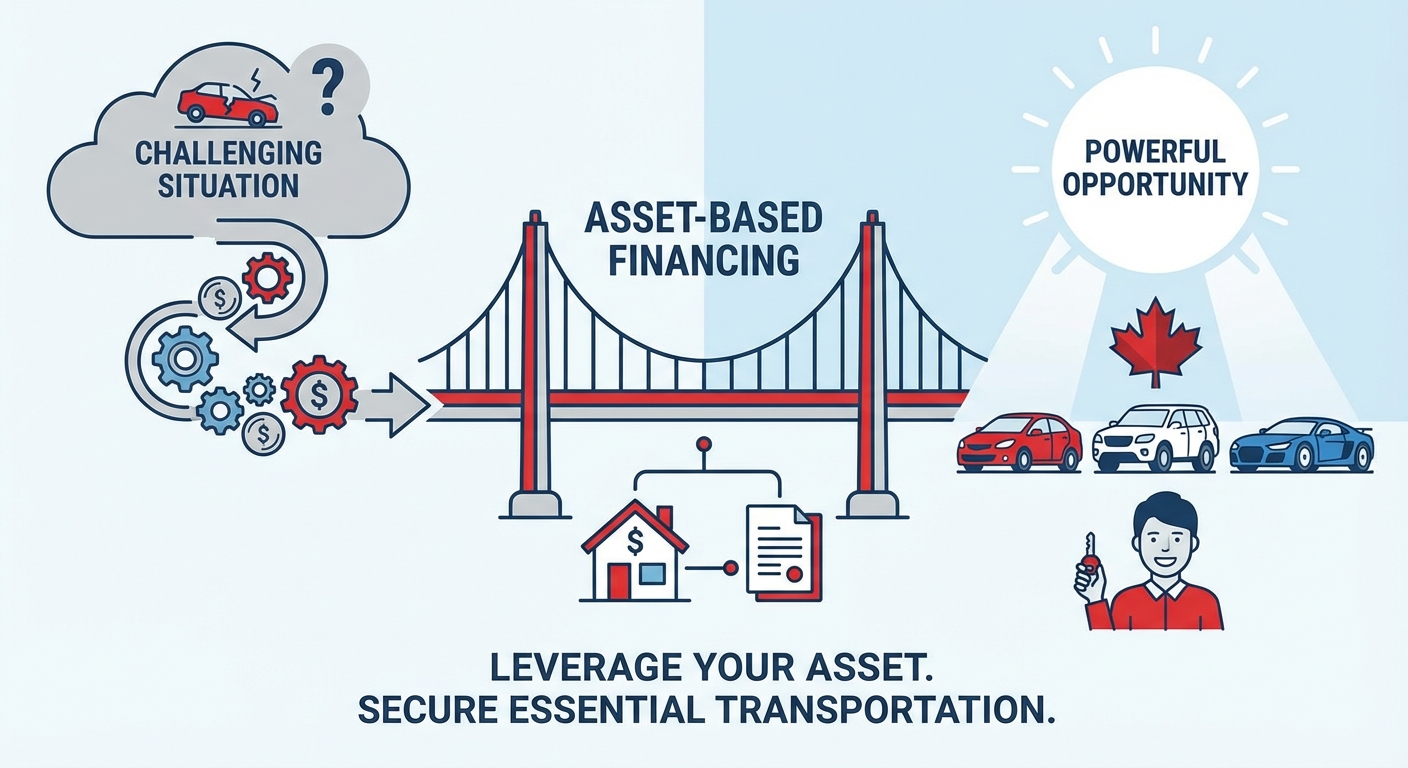
This robust equity position is precisely what makes a home equity car loan a game-changer for British Columbia residents. Where a homeowner in a more stable or lower-value market might have limited equity to draw upon, a British Columbia homeowner often has tens or even hundreds of thousands of dollars in available equity. This significant collateral can easily cover the cost of a new or used vehicle, from an economical sedan to a family SUV or even a luxury car. It transforms an otherwise challenging financing situation into a powerful opportunity, allowing individuals to leverage their most valuable asset to secure essential transportation.
 (Context: A modern, diverse Canadian family happily stepping out of a new car in front of a house, symbolizing financial empowerment through home equity. The house should look distinctly Canadian, perhaps with West Coast architecture cues if possible.)
Beyond the Dealership: How Home Equity Car Loans Actually Work for Bad Credit Borrowers
The Mechanics of Collateral: Why Your Home's Value Trumps Your Credit Score
At the heart of a home equity car loan's appeal for bad credit borrowers is the fundamental principle of collateral. When you apply for a traditional car loan, the lender primarily assesses your credit score and history to gauge your repayment risk. Your credit score is a numerical representation of your past borrowing behaviour, and if it's low, lenders assume a higher risk of default.
However, with a home equity loan, the game changes. Your home, a substantial and generally appreciating asset, acts as the primary collateral. Lenders prioritize the security that your property provides over your credit history. They look at your Loan-to-Value (LTV) ratio, which compares the amount you want to borrow against your home's appraised value. For example, if your home is valued at $900,000 and you have a first mortgage of $400,000, and you want to borrow an additional $50,000 for a car, your combined loan amount would be $450,000. The LTV would be $450,000 / $900,000 = 50%. Lenders are typically comfortable lending up to 80% or even 85% LTV, which means if your equity is strong, your credit score becomes a secondary concern.
This shift in focus from your credit history to the tangible value of your home is why these loans are so accessible to those with imperfect credit. The lender knows that if you were to default, they have a valuable asset to recover their funds, significantly mitigating their risk. This makes home equity loans one of the most viable options for securing significant financing with a challenging credit profile in Canada.
Interest Rates & Repayment: Navigating the Financial Landscape in British Columbia
One of the most compelling advantages of using your home equity for a car loan is the significantly lower interest rates compared to high-risk auto loans. While a traditional bad credit car loan could easily carry an interest rate of 10-25% or more, a home equity loan or second mortgage typically falls into the range of 5-10%, sometimes even lower depending on the market and your financial profile. This difference can translate into thousands of dollars in savings over the life of the loan.
Repayment terms are also generally more flexible. You can often choose a longer amortization period, spreading your payments over 10, 15, or even 20 years, which results in lower monthly payments. This flexibility can be tailored to your financial situation, making the loan more manageable. While a longer term means more interest paid overall, it provides crucial breathing room in your monthly budget. It's important to compare the rate environment in British Columbia with national averages; while the cost of living is often higher in BC, the robust real estate market can sometimes lead to more competitive rates for secured lending.
Approval Odds: What Lenders Really Look For (Beyond Your Credit Score)
While your credit score takes a back seat, it doesn't mean lenders don't scrutinize your financial situation. Here’s what they really look for:
- Sufficient Home Equity: This is paramount. Lenders will assess your home's current market value and determine how much equity you have available. They typically lend up to a certain LTV (e.g., 80-85% of your home's value, minus your existing mortgage).
- Stable Income: You'll need to demonstrate a consistent and reliable source of income to prove your ability to make the monthly payments. This could be employment income, self-employment income (for insights into this, check out 'Your 'Impossible' Car Loan Just Got Approved. Self-Employed, Poor Credit.'), or other verifiable income streams.
- Manageable Debt-to-Income Ratio (DTI): Lenders want to ensure your total monthly debt payments (including the new home equity loan payment) don't consume too large a portion of your gross monthly income. A common guideline is to keep your DTI below 40-43%.
- Solid Repayment Plan: While not a formal document, your overall financial picture should indicate a clear ability and intention to repay the loan. This includes a stable financial history (even if credit-challenged), responsible budgeting, and a clear purpose for the funds.
These elements collectively paint a picture of your current financial responsibility and capacity to repay, even if your credit history has blemishes. Lenders are more concerned with your current ability to manage debt when the loan is secured by such a significant asset.
Finding Your Wheels: What Kinds of Cars Can Home Equity Buy?
This is where the true freedom of a home equity car loan shines. Unlike traditional dealership financing, which might limit you to certain makes, models, or even specific dealerships, a home equity loan essentially turns you into a cash buyer. Once the funds are disbursed, they are yours to use as you see fit. This opens up a world of possibilities:
- New vs. Used: You can purchase a brand-new vehicle directly from a dealership, or find a high-quality used car from a private seller or an independent lot.
- Luxury vs. Economy: Whether you need a dependable, fuel-efficient commuter car for traversing the busy streets of Burnaby or a premium SUV for family adventures in the Okanagan, your options are virtually limitless.
- Better Negotiation: Being a cash buyer gives you significant leverage at the dealership. You can often negotiate a better price because the dealer isn't making money on financing markups. This can save you hundreds, if not thousands, of dollars. For advice on buying a car independently, you may want to read 'Skip the Dealership. Pre-Approved for Your Neighbour's Car, Ontario.'
- Avoid Dealership Financing Traps: You bypass the often-complex and sometimes predatory financing options offered by dealerships, especially to those with bad credit. You control the purchase, not the lender or the dealer.
Essentially, your home equity provides the financial muscle to buy the car you truly need or desire, without the usual restrictions and headaches associated with bad credit auto financing.
Weighing Your Options: Home Equity Car Loans Versus the Alternatives in Canada
The Road Less Traveled: Home Equity Car Loans Versus Traditional Vehicle Financing
When you have imperfect credit, the contrast between a home equity car loan and traditional vehicle financing is stark. Let's break down the key differences:
| Feature | Home Equity Car Loan | Traditional Bad Credit Car Loan |
|---|---|---|
| Interest Rates | Significantly lower (e.g., 5-10%) due to home as collateral. | Much higher (e.g., 10-25%+) due to higher perceived risk. |
| Collateral | Your home (primary residence). | The vehicle itself. |
| Approval Odds | High, if sufficient equity and stable income exist. Credit score less critical. | Lower, heavily dependent on credit score and history. |
| Loan Amount | Potentially much higher, limited by home equity and LTV. | Limited by vehicle value and lender's risk assessment. |
| Repayment Terms | Flexible, often longer terms (10-20 years) resulting in lower monthly payments. | Typically shorter terms (3-7 years) resulting in higher monthly payments. |
| Flexibility of Purchase | Funds disbursed to you, allowing you to buy from any seller (new/used, private/dealer). | Often tied to specific dealerships or vehicle types approved by the lender. |
| Impact on Credit | Responsible repayment can positively impact credit score over time. | Can improve credit, but high interest can make payments difficult, risking default. |
The benefits of a home equity loan are clear: significantly lower interest rates mean less money wasted on interest, and the freedom to choose your vehicle without dealership restrictions. The potential for higher loan amounts also means you might be able to afford a more reliable or suitable vehicle than what a bad credit auto loan would allow. Plus, responsible repayment of a home equity loan can act as a powerful tool for credit repair, opening doors to better financial opportunities in the future.
A Crucial Distinction: Why Home Equity Offers a Different Path Than 'Vehicle Title Loans'
It's vital to distinguish home equity loans from "vehicle title loans," a high-risk alternative often marketed to individuals with bad credit. While both involve using an asset as collateral, the similarities end there, and the implications for default are vastly different.
- Collateral: With a home equity loan, your home is the collateral. With a vehicle title loan, your car's title is the collateral.
- Risk of Loss: Default on a home equity loan means you could lose your home – a life-altering consequence. Default on a vehicle title loan means you could lose your car. While losing a car is devastating, it doesn't compare to losing your primary residence.
- Interest Rates: Home equity loans offer significantly lower interest rates. Vehicle title loans are notorious for their extremely high interest rates, often in the triple digits (e.g., 50% to 300% APR or more), making them one of the most expensive forms of borrowing.
- Terms: Home equity loans typically have longer, more manageable repayment terms. Vehicle title loans usually have very short terms (e.g., 30 days), designed to be repaid quickly, but often leading to rollovers and spiraling debt.
Choosing a home equity loan, despite its serious risks, is generally a far more financially sound decision than resorting to a vehicle title loan. The latter is often a last resort that can trap borrowers in a cycle of debt, quickly leading to the loss of their vehicle.
Exploring Other Provinces: How This Strategy Plays Out Beyond British Columbia
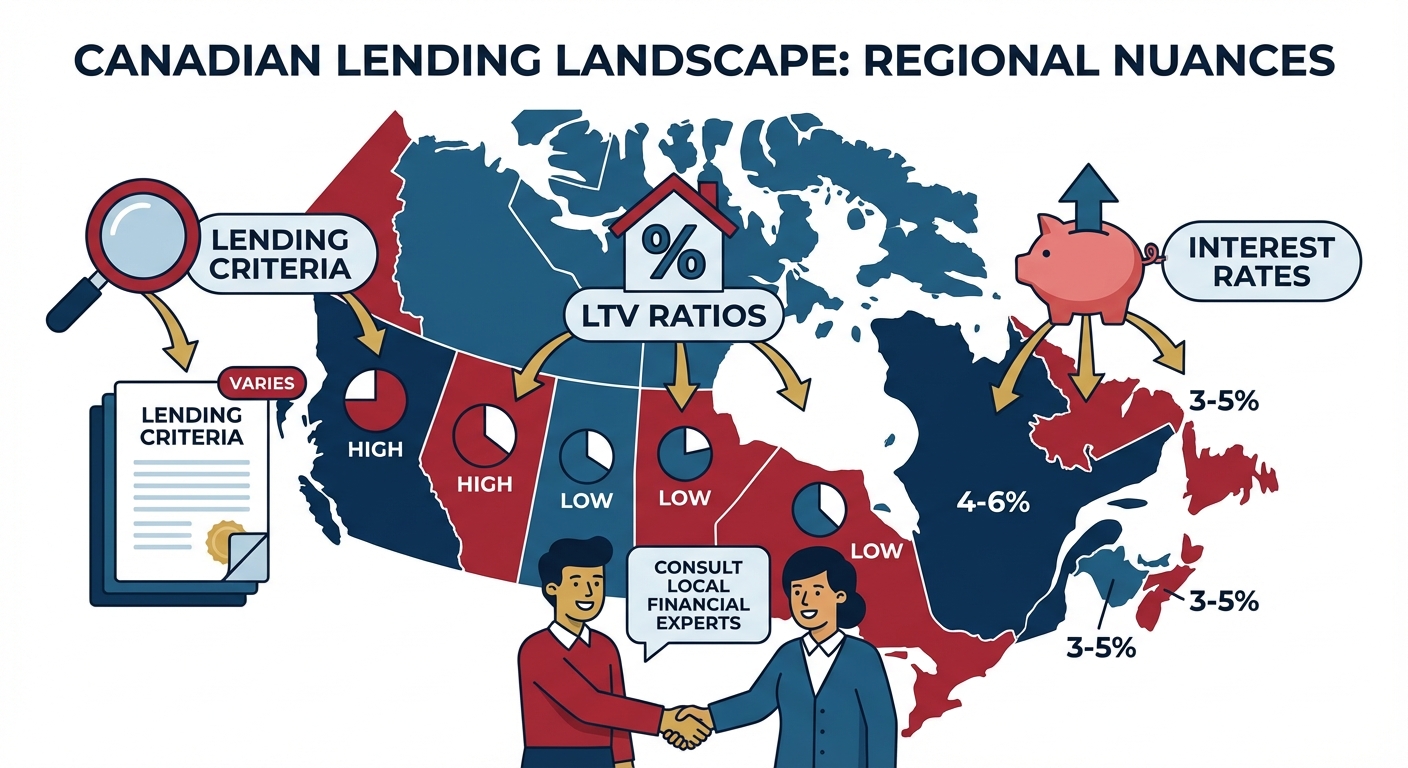
While this article focuses on British Columbia due to its unique real estate market, the strategy of leveraging home equity for a car loan is applicable across Canada. In high-value areas like the Greater Toronto Area (GTA) in Ontario, or even in growing markets such as Calgary and Edmonton in Alberta, many homeowners also possess substantial equity. The principles remain the same: your home's value acts as powerful collateral, enabling access to more favourable loan terms than traditional bad credit financing.
However, regional differences in property values and lending practices are important. What constitutes "substantial equity" in Vancouver might be different from what it means in Winnipeg, Manitoba, or Halifax, Nova Scotia. Lending criteria, typical LTV ratios, and even available interest rates can vary between provinces and even between specific lenders within those provinces. Always consult with local financial experts to understand the nuances of your specific market.
 (Context: A split image or infographic clearly comparing a house key and a car key, visually representing the fundamental difference in collateral for home equity loans versus vehicle title loans. Text overlays could highlight 'Lower Rates, Home as Collateral' vs. 'Higher Rates, Car as Collateral'.)
Your Blueprint for Approval: A Step-by-Step Guide to Securing Your Loan
Step 1: Assessing Your Equity – Know Your Leverage
Before you even approach a lender, the first crucial step is to understand how much equity you actually have. Start by getting a realistic estimate of your home's current market value. You can do this by looking at recent comparable sales in your neighbourhood, using online valuation tools, or consulting with a local real estate agent for a comparative market analysis. Once you have an estimated value, subtract your outstanding mortgage balance (and any other liens on the property) to get a rough idea of your available equity.
For example, if your home in Surrey is valued at $1,200,000 and your mortgage balance is $500,000, you have $700,000 in equity. Lenders will typically allow you to borrow up to a certain Loan-to-Value (LTV) ratio, often 80-85% of your home's appraised value. So, if the LTV limit is 80%, you could potentially borrow up to $960,000 ($1,200,000 * 0.80). Subtracting your existing mortgage ($500,000) leaves you with a maximum additional borrowing capacity of $460,000. Knowing this number gives you a realistic idea of your borrowing potential for a vehicle.
Step 2: Gathering Your Documents – Prepare for Success
Being organized with your paperwork will streamline the application process. Lenders will require a comprehensive set of documents to assess your eligibility and verify your financial standing. Here's a checklist of what you'll typically need:
- Property Documents: Your property deed, recent mortgage statements (for all mortgages on the property), and property tax assessments.
- Income Verification: Recent pay stubs (for employed individuals), T4 slips, and tax returns (Notice of Assessment from the CRA for the past two years, especially crucial for self-employed individuals).
- Financial Statements: Bank statements (typically 3-6 months) to show cash flow and savings.
- Identification: Government-issued photo ID (e.g., driver's license, passport).
- Proof of Home Insurance: Lenders will require proof that your home is adequately insured.
Having these documents ready and organized will demonstrate your preparedness and seriousness as a borrower, helping to expedite the approval process.
Step 3: Choosing the Right Lender – Banks, Credit Unions, or Mortgage Brokers?
Selecting the right lender is a critical step, especially when you have bad credit. In Canada, you have several options:
- Major Banks (e.g., RBC, TD, BMO, Scotiabank, CIBC): They typically offer competitive rates for home equity products. However, they often have stricter lending criteria and may be less flexible for applicants with significant credit challenges.
- Local Credit Unions (e.g., Vancity, Coast Capital Savings in British Columbia): Credit unions are member-owned and often more community-focused. They can sometimes be more flexible and willing to work with members who have imperfect credit, especially if you have an established relationship with them.
- Specialized Private Lenders or Mortgage Brokers: Mortgage brokers act as intermediaries, working with a network of lenders, including major banks, credit unions, and private lenders. They can be invaluable for bad credit applicants because they know which lenders are more likely to approve your specific situation. Private lenders often focus less on credit scores and more on the equity in your home, though their rates might be slightly higher than traditional banks.
It's highly recommended to consult with a mortgage broker. They can shop around for you, present your application in the best light, and significantly increase your chances of finding an approval with favourable terms.
Step 4: The Application and Approval Process – What to Expect
Once you’ve chosen a lender, you’ll submit your application and supporting documents. Here’s a general overview of what to expect:
- Application Submission: Complete the lender's application form, providing all requested financial and personal details.
- Appraisal: The lender will arrange for a professional appraisal of your home to confirm its market value. You typically pay for this.
- Underwriting: The lender's underwriters will review your entire financial profile, including your income, debt, and the appraised value of your home, to assess risk and determine your eligibility. They might ask for additional documentation or clarification during this stage.
- Approval/Conditional Approval: If approved, you’ll receive a loan offer detailing the terms, interest rate, and repayment schedule. Sometimes it’s a conditional approval, pending final verification of certain items.
- Legal Review: Your lawyer will review the loan documents before you sign them. This is crucial as you are borrowing against your home.
The timeline for approval can vary. In British Columbia, it might take anywhere from 2-4 weeks for a straightforward application with a traditional lender, and potentially quicker with a private lender or if you have all your documents perfectly aligned.
Step 5: Funding Your Purchase – From Loan to Keys
Once your home equity loan is approved and all legal documents are signed, the funds will be disbursed. For a second mortgage, this is typically a lump sum deposited directly into your bank account. For a HELOC, the line of credit becomes active, and you can draw funds as needed.
With the funds in hand, you become a cash buyer. You can now confidently approach dealerships or private sellers, negotiate the best price for your desired vehicle, and complete the purchase. Remember to factor in additional costs like sales tax, registration fees, and insurance. The final steps involve registering your new car with ICBC (Insurance Corporation of British Columbia) and securing appropriate insurance coverage before you can hit the road with confidence.
Navigating the Risks: What You Need to Know Before You Borrow Against Your Home
The Ultimate Stakes: Understanding the Risk of Foreclosure
While a home equity car loan offers a powerful solution for bad credit borrowers, it comes with the highest stakes: the risk of foreclosure. Unlike an unsecured loan or even a traditional car loan where the worst outcome is damage to your credit or loss of a vehicle, defaulting on a home equity loan means you could lose your home. Your primary residence, the roof over your head, is the collateral. This is not a risk to be taken lightly.
It is absolutely paramount that you approach this type of loan with a realistic budget and a robust repayment plan. Ensure your income is stable, and you have an emergency fund to cover payments in case of unexpected circumstances like job loss or illness. The consequences of not being able to make your payments are severe and life-altering, emphasizing the need for meticulous financial planning and a clear understanding of your obligations.
The Danger of Over-Leveraging: When Too Much is Too Much
Another significant risk is over-leveraging your home. It can be tempting to borrow the maximum amount of equity available, especially when faced with other financial pressures. However, borrowing more than you can comfortably repay puts immense strain on your financial stability. If your home's value were to decline (a possibility even in historically strong markets like British Columbia), or if interest rates on a HELOC were to rise significantly, you could find yourself with a mortgage balance that exceeds your home's value, known as being "underwater."
Over-leveraging limits your financial flexibility for future needs, makes it harder to sell your home if required, and can create a constant source of stress. Always borrow only what you truly need and what you are absolutely confident you can repay without stretching your budget to its breaking point.
Impact on Future Financial Flexibility and Your Home's Value
Taking on additional debt against your home can have long-term implications for your financial flexibility. If you later need to refinance your first mortgage, take out another loan for home renovations, or sell your home, having a second mortgage or a large HELOC balance can complicate these processes. It reduces the amount of equity you retain, which might limit future borrowing options or reduce the profit you make when selling.
Consider the potential for market fluctuations in British Columbia's real estate. While the market has been robust, it's not immune to downturns. A decrease in your home's value after you've borrowed against it could leave you with less equity than anticipated or, in a worst-case scenario, negative equity. This highlights the importance of not just looking at today's value, but also considering future market stability and your long-term plans for your property.
Building a Robust Repayment Plan: Your Shield Against Default
To mitigate these risks, a robust and realistic repayment plan is your strongest shield against default. Start by creating a detailed budget that accounts for all your income and expenses, including the new loan payment. Ensure you have a clear surplus each month to cover the payment comfortably, with some room to spare.
Consider setting up automatic payments from your bank account to ensure you never miss a due date. Building a financial cushion – an emergency fund covering 3-6 months of essential expenses, including your loan payments – is also critical. This fund acts as a buffer against unexpected financial setbacks, giving you time to recover without jeopardizing your home. If you're struggling with existing loans and looking to manage them better, you might find valuable information in 'Approval Secrets: How to Refinance Your Canadian Car Loan with Bad Credit'.
Driving Towards a Brighter Financial Future: Leveraging Your Home Equity Responsibly
Beyond the Car: How This Loan Can Be a Stepping Stone to Credit Repair
While the immediate goal of a home equity loan might be to secure a vehicle, its responsible management can have significant long-term benefits for your overall financial health, particularly your credit score. A home equity loan or second mortgage is a substantial form of secured debt, and making consistent, on-time payments demonstrates strong financial responsibility to credit bureaus. Over time, this positive payment history will contribute to improving your credit score.
As your credit score improves, doors that were previously closed will begin to open. You might qualify for better rates on other loans, lower insurance premiums, or even better terms on future mortgages. This loan, therefore, isn't just about getting a car; it can be a strategic stepping stone towards rebuilding your credit and achieving greater financial stability. For those looking to specifically improve their credit after financial difficulties, our guide 'Post-Proposal Car Loan: Your Credit Score Just Got a Mulligan.' offers further advice.
Future Considerations: Refinancing, Property Value Changes, and Financial Health
As you move forward, it's wise to keep an eye on your long-term financial health. Monitor your home's value in British Columbia's dynamic market. If your home appreciates significantly and your credit score improves, you might eventually explore options to refinance your home equity loan into your first mortgage, potentially securing an even lower interest rate or consolidating debts. This can simplify your finances and free up cash flow.
Regularly review your financial situation, including your debt-to-income ratio and overall budget. Integrating this home equity loan into your broader financial strategy means understanding how it affects your ability to save, invest, and meet other financial goals. With careful planning and disciplined repayment, leveraging your home equity can be a powerful tool not just for immediate needs like a car, but for building a more secure and prosperous financial future.
Your Next Steps to Approval: Turning Home Equity into Automotive Freedom
For British Columbia residents facing the challenge of bad credit, your home equity represents an incredible opportunity to secure the vehicle you need. It’s a path that offers lower interest rates, more flexible terms, and the freedom to choose your car, empowering you to navigate life’s demands with greater ease. However, this power comes with significant responsibility and the ultimate risk of your home.
The journey starts with due diligence and careful planning. Begin by assessing your home’s equity, understanding your borrowing potential. Gather all necessary documents to present a complete and compelling application. Most importantly, consult with trusted financial professionals, like a qualified mortgage broker, who can guide you through the process, help you compare options, and ensure you make a decision that aligns with your long-term financial well-being. Don't let a challenging credit score hold you back from the mobility you deserve. Your home equity just might be the key to unlocking your automotive freedom today.